Persiaran Gurney and Pulau Tikus seeing incremental changes to discourage illegal roadside parking, promote walkability
Traffic congestion in Persiaran Gurney and Pulau Tikus is part of daily life in George Town, Penang.
It is a consequence of ever-growing private vehicle ownership, narrow roads, haphazard roadside parking and the area’s popularity among locals and tourists.
But a series of incremental changes in both areas suggests that authorities are proactively tackling the issue.
This is being done not through massive road expansions, but smaller interventions aimed at improving motorist discipline, pedestrian safety, and traffic dispersal.
Major traffic changes
Pulau Tikus assemblyman Joshua Woo told StarMetro that some of these traffic-related transformations would be unfolding along the coast at Persiaran Gurney.
The iconic roundabout near the Anjung Gurney (Gurney Drive) open-air hawker centre had recently been boarded up, prompting speculation among motorists.
Woo clarified that the closure was tied to ongoing underground sewer piping redevelopment works, and integration into the new multi-lane expressway connecting to Andaman Island.
At the same time, authorities are also studying whether roadside parking along Persiaran Gurney should eventually be rationalised or removed altogether as part of a broader, traffic management plan in conjunction with the recently opened Gurney Bay Phase Two.
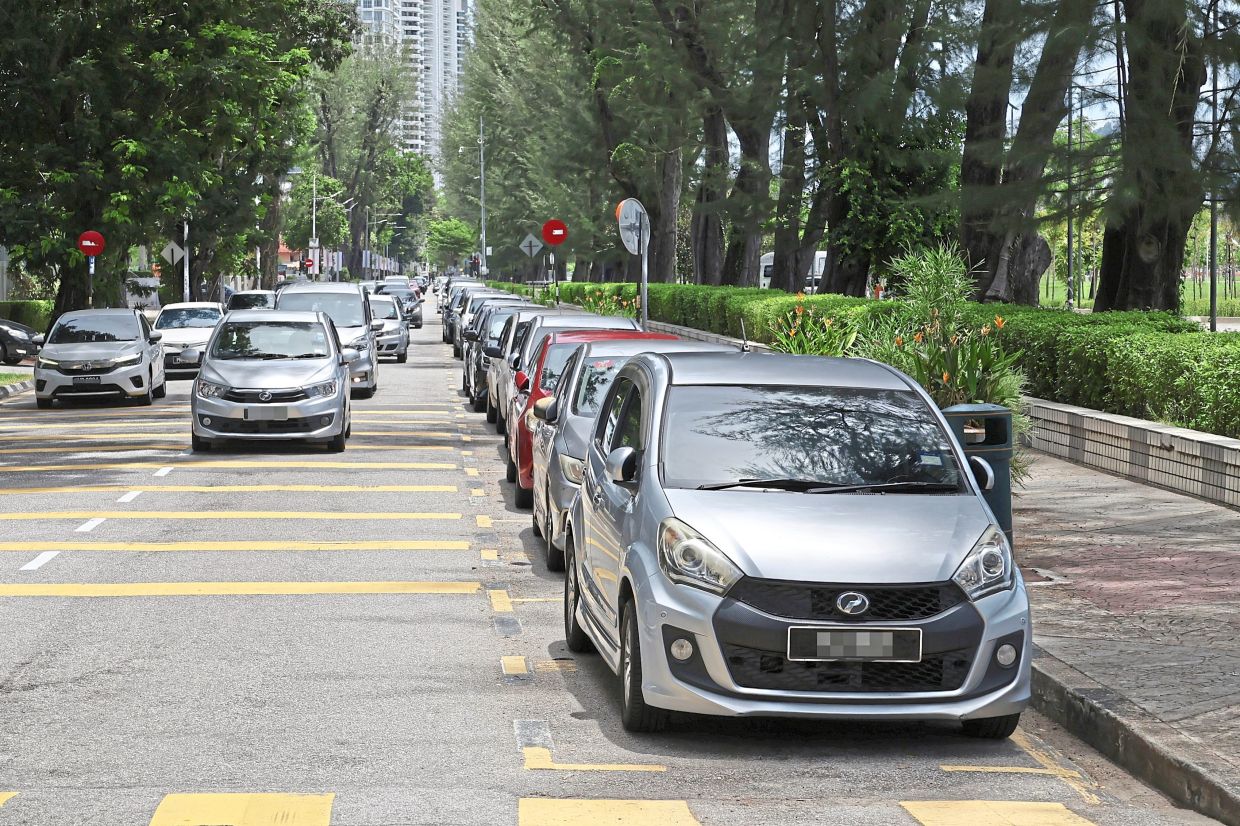
Several dozen roadside parking bays − from near the roundabout to opposite Gurney Plaza − were removed in early May.
“The move is part of an ongoing traffic management plan for the area,” said Woo.

“We will wait till the city council finalises its technical assessment before making a formal announcement.
“But the principle is clear. If roadside parking is causing lane obstruction, unsafe movement or serious congestion, then we must consider better alternatives.”
Traffic congestion along that stretch gets worse during weekends, school holidays and festive periods.
Vehicles stopping, waiting or double-parking effectively reduce the two-lane roads into a single lane.
“Moving lanes become parking lanes, waiting or drop-off areas. Once that happens, capacity is effectively halved,” Woo noted.
He believes directing motorists into designated parking facilities can significantly improve traffic dispersal.
But, he stressed that enforcement, pedestrian accessibility, signage and parking availability must all work together for any new plan to succeed.
Figures provided by his office show that there are a total of 193 roadside parking bays along Persiaran Gurney and several adjacent roads.
In contrast, Gurney Bay now offers substantially greater parking capacity for vehicles.
Phase One provides 68 parking bays, while Phase Two includes 143 ground-level bays opposite the Bali Hai restaurant.
There will be a further 602 bays in the upcoming multi-storey parking facility.
For motorcyclists, a total of 233 bays are provided, comprising 62 in Phase One, 71 in Phase Two and a further 100 at the multi-storey parking facility.
To accommodate the growing number of tourists, a total of 12 bus parking bays have also been allocated in Phase Two of Gurney Bay.
Designing a better system
Beyond traffic flow, the broader planning philosophy for Pulau Tikus and Persiaran Gurney is focused on safety, liveability and walkability.
Woo said future improvements being mulled included pedestrian crossings, traffic light coordination, loading and unloading management, public transport connectivity and better last-mile access.
“We cannot solve traffic by only widening roads.
“We need disciplined motorists, enforcement, public transport, safer walking routes and better urban design.”
Woo said the wider transformation also extended to the long-awaited relocation of the Anjung Gurney (Gurney Drive) hawker centre into a purpose-built facility at Gurney Bay.
Existing hawkers are expected to move into the new centre by the first quarter of 2027.

The facility will have 127 food stalls, seven beverage stalls, 17 retail units and 43 kiosk sites.
The relocation would help alleviate long-standing traffic congestion issues around the hawker centre and the roundabout, due mainly to haphazard parking and the dropping and picking up of passengers, said Woo.
“My vision is for Pulau Tikus and Persiaran Gurney to become a model liveable urban district in Penang; a place with safer streets, smoother traffic, stronger local businesses, better public spaces and a more pleasant walking environment.
“We want traffic to move, pedestrians to feel safe, businesses to remain vibrant and locals and tourists alike to enjoy the areas,” he added.
Safety railings
A visible change was the installation of safety railings along Jalan Burma − from the Jalan Cantonment to Lebuhraya Codrington intersections − in Pulau Tikus late last year.
“The railings were a necessary intervention to reduce illegal parking, sudden mid-road pedestrian crossings and vehicles slowing down unpredictably.
“So far, it has helped to foster discipline,” Woo said.
“Pedestrians are guided to safer crossing points, motorists face fewer sudden disruptions and enforcement against illegal parking becomes clearer.”
The move initially drew criticism from business owners in the area who were concerned that restricting roadside stopping would reduce footfall and impact their livelihoods.
Woo acknowledged those concerns but pointed to the availability of an open-air carpark with 190 bays beside the Pulau Tikus police station.
“Customers of those businesses can park here and use a designated pedestrian crossing on Jalan Burma to reach the shops.”
While a handful of dissenters remained, Woo said the broader public response has largely been supportive.
“Residents and motorists have told us that traffic is smoother.
“More importantly, the road feels safer.
“My approach is simple – we must protect local businesses, but we cannot build a city around illegal parking and unsafe crossings,” Woo stressed.
While the railing installation covered a stretch identified as the most problematic, he said the Penang Island City Council (MBPP) and related agencies would continue monitoring traffic patterns, pedestrian behaviour, and enforcement needs before deciding on further refinements.
Old habits persist
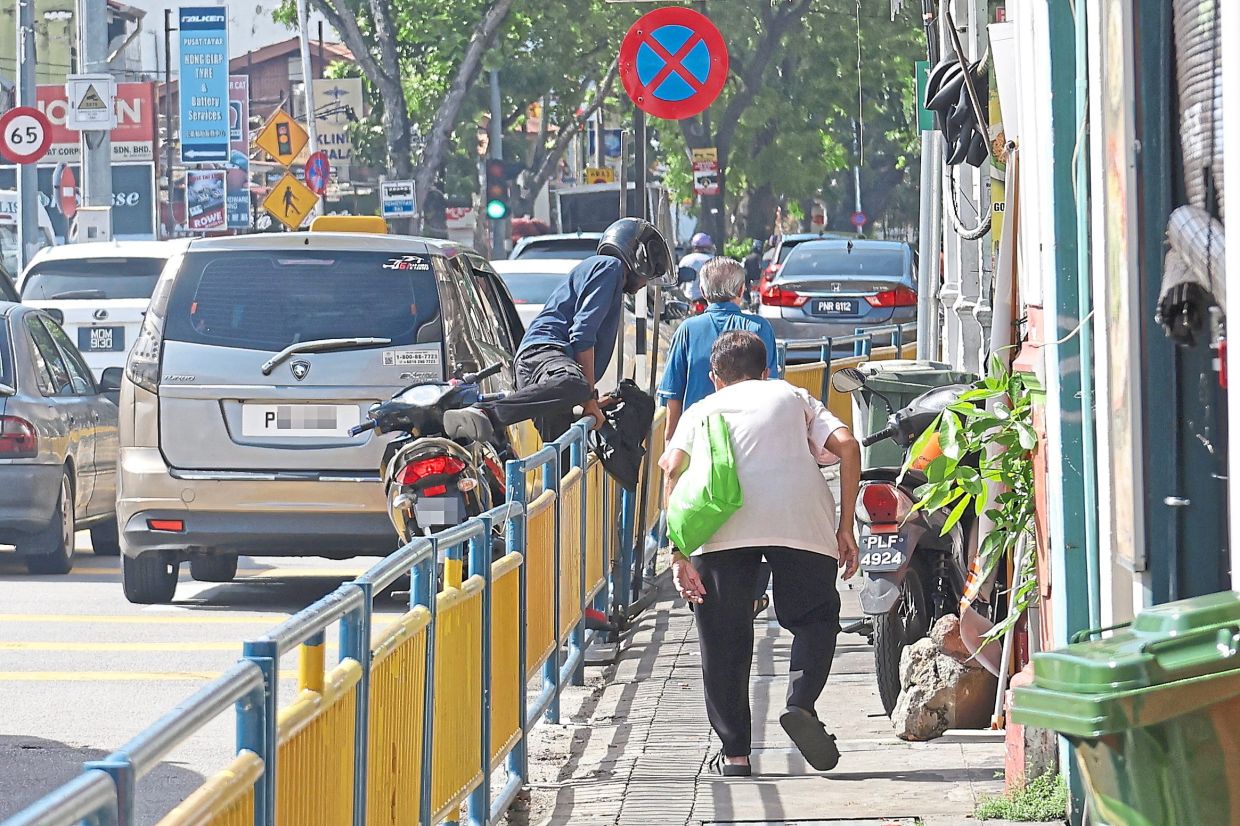
Checks by StarMetro found that motorists still stop by the roadside outside the Jalan Burma barriers to make purchases in Pulau Tikus.
Some were even seen climbing over the barriers to access shops, while others waited for shop operators to bring items over.
Some motorcyclists entered pedestrian walkways within the barrier area to reach the shops.
Signboards warning against stopping and parking along the road were largely ignored.
Medicine shop owner Chew Kok Ying, who inherited the business from his father, said the shop has been serving the local community for decades.
“Customers found it convenient to stop outside and make purchases.
“Now with the barriers, they cannot reach our shop and business has dropped by about 40%.
“Although traffic is smoother, vehicles are speeding and creating a dangerous situation.
“I hope they will instal openings between the barriers for quick access, especially during emergencies,” said Chew.
“There was an emergency in the past and the ambulance could not directly reach the front of the shop to take a patient, because of the barrier.”
Regular shopper Tan Eng Tiong said one lane on the three-lane Jalan Burma could still be allocated for motorists to stop outside shops.
“Barriers can be installed to regulate traffic flow while leaving one lane for vehicles to stop.
“It only becomes congested during peak hours from 7am to 9am and at lunchtime.
“At other times, traffic here is light,” said Tan.
However, a shopowner, who declined to be named, said that although many long-time business operators were unhappy, the barriers could represent a step forward.
“There is a parking lot opposite and nearby, so customers can still park and walk.
“What needs improvement are the pedestrian walkways.
“Obstructions should be removed to make walking easier.
“Deliveries can be done using carts too,” the shopowner pointed out.
He added that better pedestrian infrastructure could encourage mobility on foot.
MBPP installed the barriers along the stretch of shophouses on Jalan Burma to improve traffic flow and address long-standing bottlenecks caused by illegal roadside parking.