FOR most Malaysians, water is a resource so cheap and seemingly infinite that its existence is only acknowledged in its absence. We turn a tap and expect fresh, treated water, delivered instantly for a fraction of the cost of a cup of coffee.
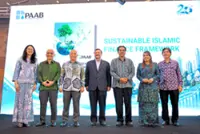
But behind that effortless turn of the handle lies a massive, ageing machine under immense pressure. As Pengurusan Aset Air Bhd (PAAB) marks its 20th anniversary on May 5, 2026, the organisation is pulling back the curtain on the invisible infrastructure that keeps Malaysia running.
With over RM46bil invested in national water infrastructure since 2006, PAAB’s footprint is everywhere, yet its role remains one of the most misunderstood in the country.
To its chairman Datuk Seri Jaseni Maidinsa, a veteran in the sector, this milestone is less about celebration and more about educating the rakyat that water should not be taken for granted.
Navigating water jurisdictions
To understand the challenges facing Malaysia’s water, one must first navigate what Jaseni describes as a fragmented ministerial landscape. For the average citizen, a dry tap is a singular problem, but the solution is spread across a complex web of jurisdictions.
“Water is under the Energy Transition and Water Transformation Ministry (Petra), but the source (raw water) is under the states and the Natural Resources and Environmental Sustainability Ministry (NRES),” Jaseni points out.
This means that while Petra manages the transformation of water, the forests and catchments that provide the source are managed by a different federal house and the respective state governments. Jaseni argues that for water security to be effective, it requires a unified strategic focus where water is treated as a strategic commodity.
PAAB, the engine
A common public misconception is confusing PAAB with the National Water Services Commission (SPAN). While SPAN is the regulator, PAAB is the powerhouse that finds the funding and builds the assets.
Jaseni says: “There is a lot of misunderstanding. We (PAAB) are the beginning of the water supply value chain. We ensure the infrastructure is there for the operators to use.”
PAAB’s unique mandate allows it to act where commercial banks cannot. It takes on the multi-billion ringgit debt needed to build treatment plants and removes the burden of capital expenditure (capex) from state operators.
To date, PAAB has executed 310 projects nationwide, from massive new treatment plants to critical reservoir upgrades, ensuring that even if a state faces cash flow constraints, the pipes still get laid and the reservoirs still get built to achieve a critical 15% treated water reserve margin.
The story of Malaysia’s water begins in the catchments, such as forests, river basins, which are the natural filters of our environment. Jaseni is a firm believer that the quality of our food is a direct reflection of environmental policy.
“There’s a reason nasi kandar in Penang tastes better than anywhere else in the world. Its water is essentially as pure as spring water,” he says with a chuckle.
Maintaining this quality, however, requires administrative grit rather than high-cost engineering.
“If the catchment is not protected, the cost of treatment spikes. More chemicals are required, resulting in terrible-tasting water.”
The solution is what he calls black and white governance. While the government often marks these areas for protection, the process frequently fails at the final, most critical step, official registration.
Unless the water catchment label is physically stamped onto land titles and master plans by the Land Office, the protection remains invisible.
Without this official record, a developer could buy a plot simply because it looks “empty” on the map, leading to construction that destroys our natural water filters.
By finishing this paperwork, the government creates a permanent legal shield that costs almost nothing to maintain but saves billions in future water treatment costs.
Keeping tariffs low
Perhaps the most important educational aspect for the rakyat is the concept of full cost recovery (FCR). In the water industry, this is a formula for stability protected by the 10% regulated return rule.
“What is FCR? That means the tariff is at a level where the water operator can fund their operating costs (opex), fund their capex, and earn not exceeding 10%,” Jaseni clarifies.
This 10% cap ensures that while water operators remain financially viable to fix leaks and upgrade pumps, they are legally barred from profiteering.
By capping the return, PAAB and SPAN ensure that every sen in the tariff is reinvested back into the system rather than being siphoned off as runaway profit.
To support this 10% model, PAAB acts as a conduit, acquiring the debts of state operators and leases assets back to them over a nearly half-century horizon.
“We are the only bank in the world with a 45-year payback period. This unrivalled term is a primary reason water tariffs in Malaysia remain among the lowest in the region.
“By spreading the cost over 45 years, PAAB ensures that necessary upgrades, part of a massive national investment, do not result in sudden price shocks for the consumer. Because the amount gets small, the tariff increase becomes small. That benefits the rakyat,” says Jaseni.
Curbing the silent thief
Even with perfect financing, a leaky system is a failing system. This brings us to Non-Revenue Water (NRW), the water produced but lost to leaks, theft or inaccurate meters.
The scale of the problem is massive: 39,287km of Asbestos Cement (AC) pipes nationwide are now beyond their lifespan, and replacing them will cost between RM55.5bil and RM57.8bil.
“NRW is water produced at the treatment plant, but never reaches the customer meter,” Jaseni explains.
PAAB has set a definitive deadline: “We are aiming to replace all the AC pipes by 2050. When the gear in a meter gets worn out, it does not register accurate metering. Our target is to achieve NRW less than 20% by 2050.”
However, infrastructure is only half of the equation. While PAAB fixes the pipes, the rakyat must fix their habits.
“Malaysia is 225 litres per capita per day (LCD). We are using too much water. Singapore only uses 142 LCD.” says Jaseni, who believes this shift toward a water-saving society must start with the next generation.
To close this gap, Jaseni is recommending that the Education Ministry integrate water conservation into the national curriculum.
Transforming sludge to bricks
PAAB is also engineering a shift toward a circular economy through residue management. Traditionally, the sludge from water treatment is seen as a waste headache. PAAB wants to turn it into an asset.
“All water treatment plants should have a dewatering plant. If it is declassified, then we can make more economic goods. We can use it for bricks, construction materials, roadside pavements and land reclamation material.”
This innovative spirit extends to climate change. With rainfall patterns becoming more intense, PAAB is pushing for a shift in dam design. While dams were traditionally built to store 100 days of water, PAAB is advocating for a new 6-month (180-day) storage standard to withstand prolonged droughts.
A legacy of integrity
In an industry where multi-billion ringgit contracts are the norm, PAAB’s most valuable asset is its reputation.
Jaseni is adamant that PAAB’s AAA-rated sukuk programme and the Platinum rating of its Sustainable Islamic Finance Framework – which facilitates the issuance of blue sukuk – enables PAAB to secure the lowest possible financing rates, creating cost-efficiency that is passed directly to the rakyat through more stable tariffs.
This culture of integrity as the number one behaviour has transformed PAAB into a global benchmark, earning a long list of local and international accolades.
As PAAB enters its third decade, Jaseni believes its true success is measured by the fact that millions of Malaysians can turn on a tap every day without a second thought.
This is the ultimate testament to the silent, reliable engine PAAB has built.
“I would like to be remembered as the person who succeeded in achieving national water supply by restructuring and achieving full cost recovery,” Jaseni concludes.