I don't recall exactly how I learned about Trowulan, Penataran Temple, and Kediri, but it certainly wasn’t from tourist guidebooks or travel websites.
Most likely, I read about them during one of my many visits to the National Library in Kuala Lumpur, while researching the history of the Majapahit Empire.
I became fascinated with the Majapahit maritime empire because it once controlled a vast territory including present-day Indonesia, and parts of Malaysia, Thailand, the Philippines, Brunei, and Timor-Leste. It was a Hindu-Buddhist civilisation whose traces can still be found in some of the cultures and festivals in said countries today, perhaps more prominently in Indonesia’s Bali.
When I discovered that Trowulan was the ancient empire’s capital, I knew I wanted to see the place for myself.
So I flew to Surabaya, Indonesia a few months back to do just that. I had arrived early, and since my hotel was only open for check in at 2pm, I thought I would go straight to Trowulan – which is about 70 km from the airport – before making my way to central Surabaya where my hotel is.
My first stop at Trowulan was the Trowulan Museum. I had phoned ahead to find out if they would be open on Dec 25 and the person on the phone said yes.
Unfortunately, upon arrival, it was closed. Perhaps the person I spoke with misunderstood my inquiry.
Regardless, I set off for the next few locations: Candi Tikus, Candi Bajang Ratu, Candi Brahu and Gopura Wringin Lawang, all located within Trowulan.
I had lunch at an eatery facing the Sleeping Buddha. It was a nice experience, and the vegetarian meal I had was delicious.
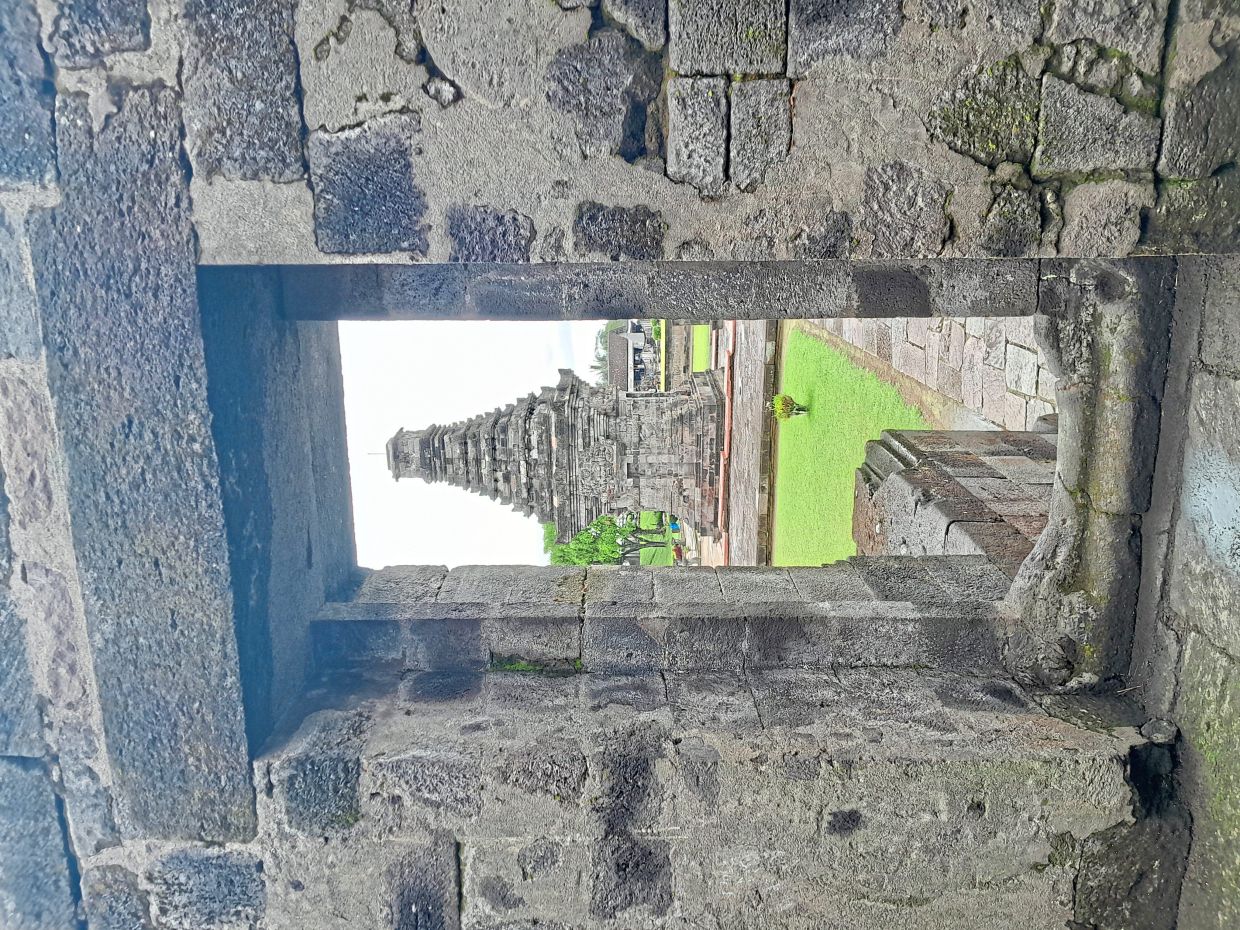
The next day, I woke up very early as I had to travel quite some distance to visit a few temples. My target was the largest temple complex in East Java, Penataran Temple, which served as the state temple of Majapahit.
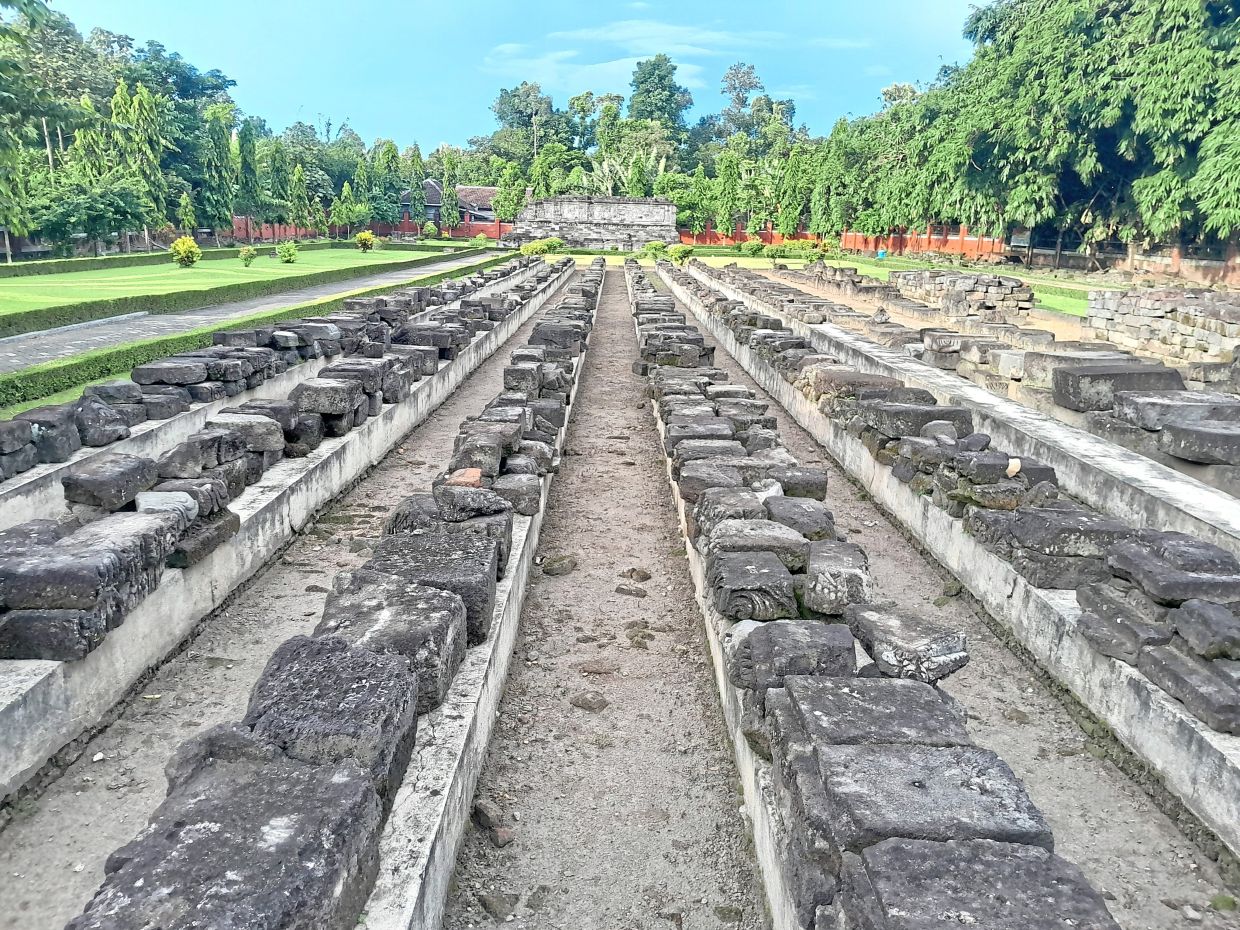
I also wanted to visit a few others in Kediri, the ancient capital of the Kediri Kingdom. These include sites like Candi Surawana and Candi Tigowangi which are famous for their sophisticated “Panji” reliefs, considered masterpieces of Javanese narrative art.
I made a slight detour along the way to visit Singosari Temple. Located roughly 12km north of Malang, Singosari was once the ancient capital of the Singosari Kingdom.
At Penataran, you are required to sign a guestbook before entering. There are two separate books: one for locals and another for foreigners.
I noticed that while the local book had visitors signing every day, the one for foreigners had not been signed in months. This was strange considering the temple is a true jewel, boasting brilliant bas-reliefs on its walls with stories from the Ramayana, Krishnayana and local Javanese folk tales.
When I got back to Surabaya, it was raining heavily. In fact, it rained every night during the four days I was there.
But the rain did not stop me from checking out the famous Rawon Setan restaurant, which served delicious food.
I reserved the third day to explore the city. As the son of a railway man, I always try to visit the local train stations whenever I travel; this time, I visited both Surabaya Gubeng and Surabaya Kota, the city’s major railway stations.
I also spent a good amount of time in the old town, wandering the alleys between white Dutch buildings from the colonial era.
I had a cup of coffee at the iconic Hotel Majapahit, a heritage building, before heading to the Surabaya Zoo.
The zoo’s conservation programme is a vital component of the global efforts to conserve the endangered Komodo dragon species. They have the largest captive population of Komodo dragons outside their animal’s native habitat.
I didn’t have much planned for my final day in Surabaya, so I just went cafe-hopping around the city, where I found a few cool cafes.
The views expressed are entirely the writer’s own.