
At the edge of a trail in Germany’s picturesque Black Forest region, waterlogged steps sink into ankle-deep water and mud, requiring careful footing.
An ocean away, a sandy trail in the ponderosa forests of northern Arizona in the United States demands treading just as deliberately when walkers reach a line of tree stumps arranged as stepping stones.
The pathways are located nearly 9,700km apart but share a notable feature: they were designed for visitors to use without wearing socks or shoes.
Barefoot trails exist around the world, inviting people to get closer to nature through sounds and sensations. Feeling cool mud squish between toes, stepping on pine needles and exploring meditation caves, scent stations and dark rooms transform a routine walk into an immersive experience.
Walking shoeless on varied surfaces also may contribute to emotional well-being and overall foot health, according to podiatrists and barefoot enthusiasts.
Gaining popularity
Theories about the benefits of going barefoot have gained popularity among runners and other athletes in recent decades, as well as with environmentalists and as an alternative mental health treatment, but the idea has been around for well over a century.
Sebastian Kneipp, a 19th century German Catholic priest and early pioneer of naturopathy, promoted nature exposure, water therapy and barefoot walking as exercise, and a way to stimulate circulation and support overall health, including immune function. He recommended walking barefoot over “dew-wet grass” or snow, and is said to have called shoes “foot-bending machinery”.
His philosophy inspired trails and paths across Europe, where they are sometimes known as Kneipp paths, and to a lesser extent in the US.
In Asia, reflexology trails made of stones, pebbles and grass are intended to stimulate acupressure points on the soles of the feet, a concept linked to traditional medical therapies.
Germany’s Park mit allen Sinnen, which in English translates to “park with all senses”, reflects a broader focus on wellness tourism in the Black Forest, which covers more than 6,000sq m. This is where visitors can breathe mountain air, soak in thermal baths and visit spas offering treatments that incorporate local plants and herbs.
The park charges an admission fee. Its website says that meandering barefoot over the 2km-long trail’s different surfaces “... is ideal for exercising your back and spine, and at the same time, it’s a perfect foot reflexology massage in the fresh air”.
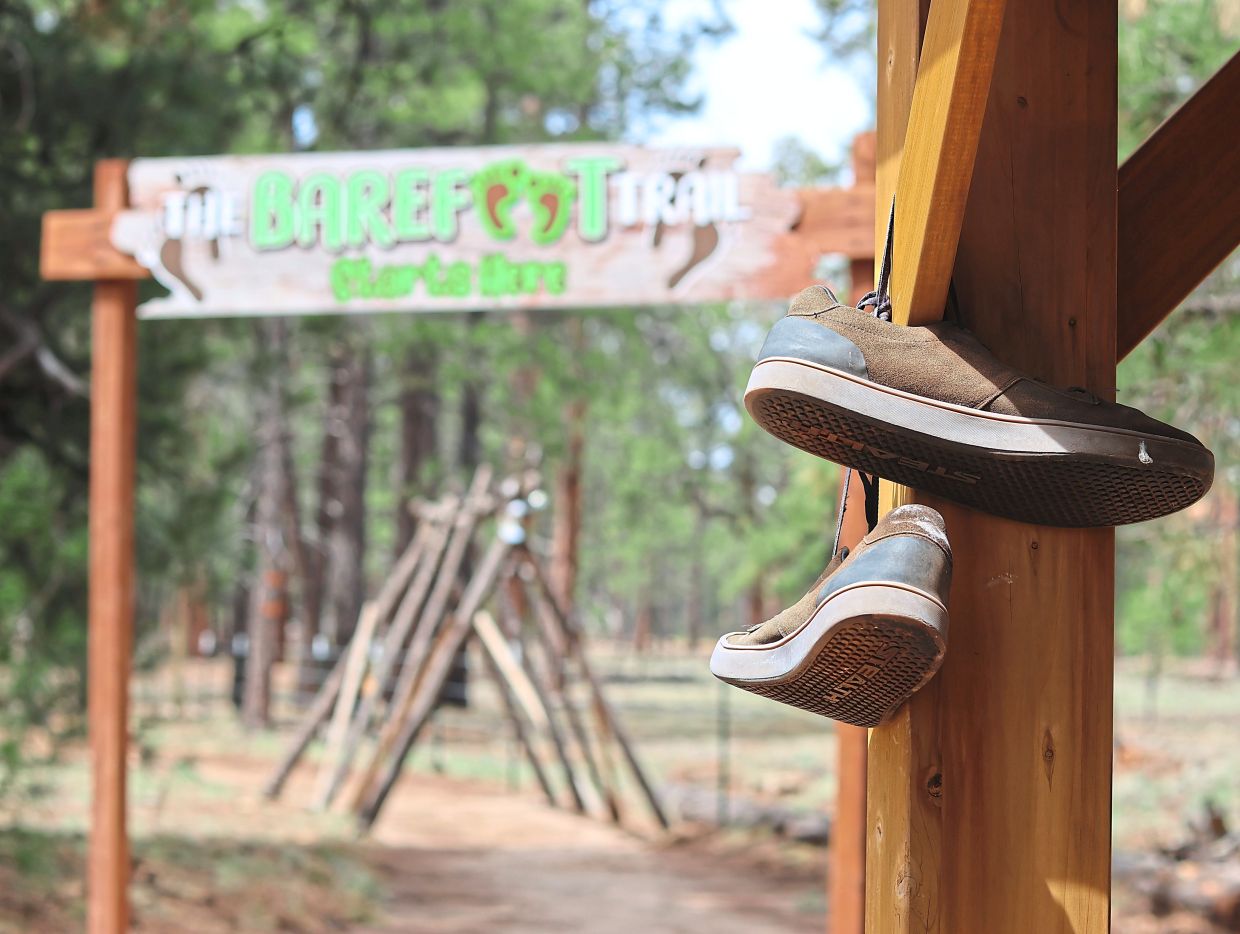
Leah Williams, the owner of The Barefoot Trail park near Flagstaff, Arizona, opened a manicured trail of the same length near Route 66 two years ago after a family trip in Europe. Tickets are required, though Williams operates the park as a non-profit charitable foundation.
Williams said her mother, who is from Germany, encouraged her to go barefoot as a child climbing trees and playing in the forests and creeks around Seattle – a practice Williams carried into adulthood and passed on to her own children.
While living in the Netherlands, her family visited a barefoot trail in Belgium.
“I loved everything about it. I saw all ages, and I loved seeing older people at the park because you don’t see that here in the US,” Williams said.
“I thought, ‘Wow, when I get back to the US, I’m going to build one of these parks myself’.”
She offers educational materials for schools, summer programmes and camps to children who visit the park.
“Being good stewards of nature is really our job as human beings, and we have taken 5ha of land at our park for our community enjoyment ... for local, statewide and regional enjoyment,” Williams said, her eyes moist with emotion.
Most people don’t walk outside barefoot regularly, and exposing their tender feet to different textures, temperatures and types of contact can take getting used to.
“You should see people’s faces when they start walking,” Williams said, chuckling at the thought.
Choose your path
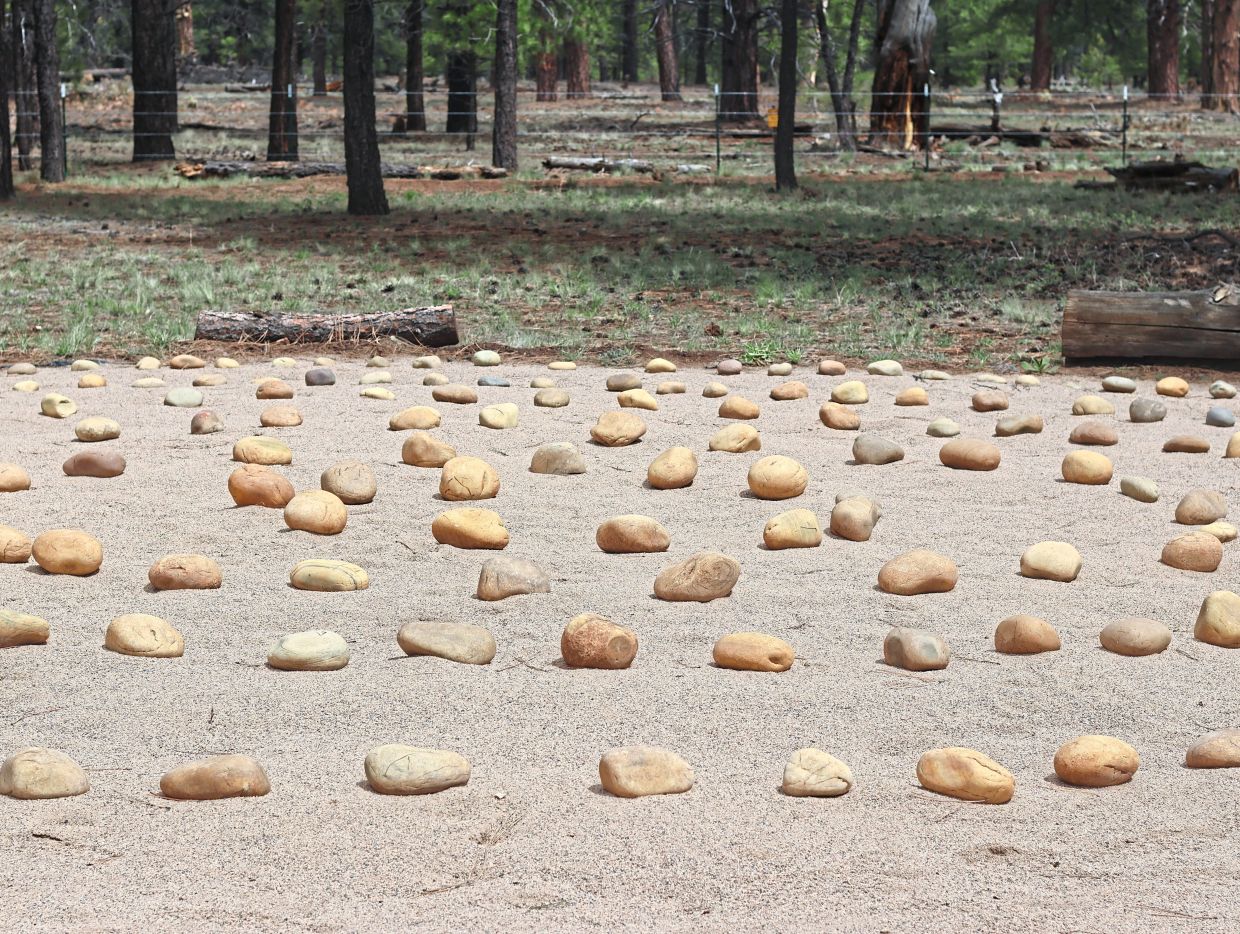
While many parks with barefoot trails encourage users to walk the paths sans shoes, naked feet are not required. Guests with neuropathy, diabetes or other foot conditions are welcome to keep their shoes on at the parks in Arizona and Germany.
Some barefoot trails are designed to engage multiple senses.
At Park mit allen Sinnen, a sign that reads “Please be quiet” in German identifies a spot described as a meditation cave. Inside, a long bench faces tall windows overlooking the forest, and soft music plays through hidden speakers.
Elsewhere at the park, visitors can squeeze red bulbs to release the scent of papaya or apricots, or place their hands inside a box filled with wild boar fur.
Austria, Denmark, France, Hungary, Switzerland and Britain are among other European countries with barefoot trails. Some are meant for local residents and not tourists, so finding them can prove difficult. Searching the terms “barefoot” or “barefoot paths” in the local language might help.
In Hong Kong, Singapore and Japan, some public parks have pebble trails, which are walkways with smooth stones cemented into place that can be used for reflexology and foot massage.
Similarly, there are so-called wellness parks and informal barefoot hikes on regular trails in the US. But because of how rare they are in the US, Williams plans to expand the The Barefoot Trail concept elsewhere.
The foundation recently received about 8ha of land in a commercial and residential area of college town Lawrence, Kansas, to develop a park similar to the one she opened in Arizona.
“The park will be one of the components of a larger commercial space being developed,” Williams said.
“It’s about integrating those natural environments into people’s daily lives and providing those safe spaces for people to enjoy.” – AP