Planning for a cherry blossom experience depends entirely on Mother Nature. Official tourism websites will let you know when blooming season starts, but these are usually estimates.
The season lasts about four weeks – one each for partial blooming, full bloom, petal showering and waning periods.
Jinhae, a town 40km west of Busan in South Korea, is famous for its Gunhangje Festival or cherry blossom festival which draws millions of visitors. During this time, there are street parades, fireworks, cultural performances, music shows, and lots of street food to savour.
However, we decided to go after the festival.
Jinhae is accessible from Busan. You don’t need to join expensive tours or go through complicated transfers to get there, and you can just use the public transportation.
We decided to take the bus to Jinhae from Busan. Buses in South Korea are safe and efficient, and are the most budget- friendly way to travel. The route meanders through suburbs, hills and coastal roads, with cherry blossoms everywhere.
We were the only foreign tourists at the Jinhae bus terminal. We went to the ticket counter and the employee immediately knew what we wanted to do.
She pointed on a map the route which we had to follow to get to our destination, and showed us the bus schedule.
We followed the red line marker on the street to Yeojwacheon Stream, just like she said. This is where we could take the local bus to Gyeonghwa Station.
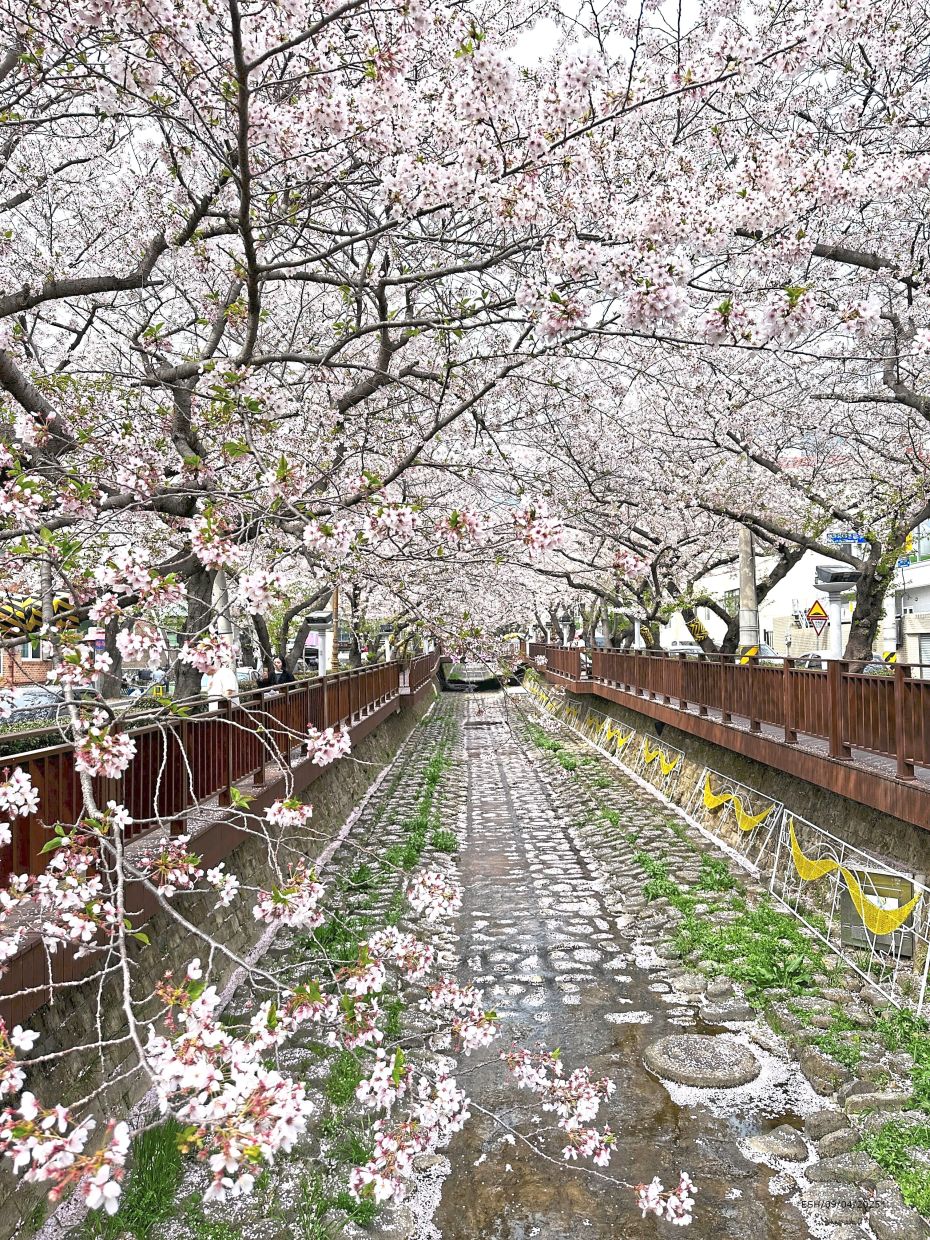
The sidewalks in Jinhae were lined with cherry trees, their branches full of flowers. Every gentle breeze sent petals fluttering, carpeting the ground in pink and white.
Cafes served cherry blossom-themed drinks and snacks, including pink lattes and flower-shaped cookies. There were hardly any queues when we were there, so we happily tried some treats.
There were a number of restaurants around that were getting ready for the lunch crowd. We enjoyed a warm and comforting Korean meat porridge – simple, tasty, and satisfying.
The cherry blossom tunnel, one of the most photographed areas in Jinhae, arched overhead at Yeojwacheon Stream. Without the festival crowds, it was easy for us to stroll along the stream and linger on the bridges.
We watched the petals falling slowly into the stream, then took lots of pictures, uninterrupted.
There was no rush at all.
Later that afternoon, we made our way to the Gyeonghwa Station, where we were greeted by a magnificent sight of even more cherry trees towering over the building. This place is also popular with tourists.
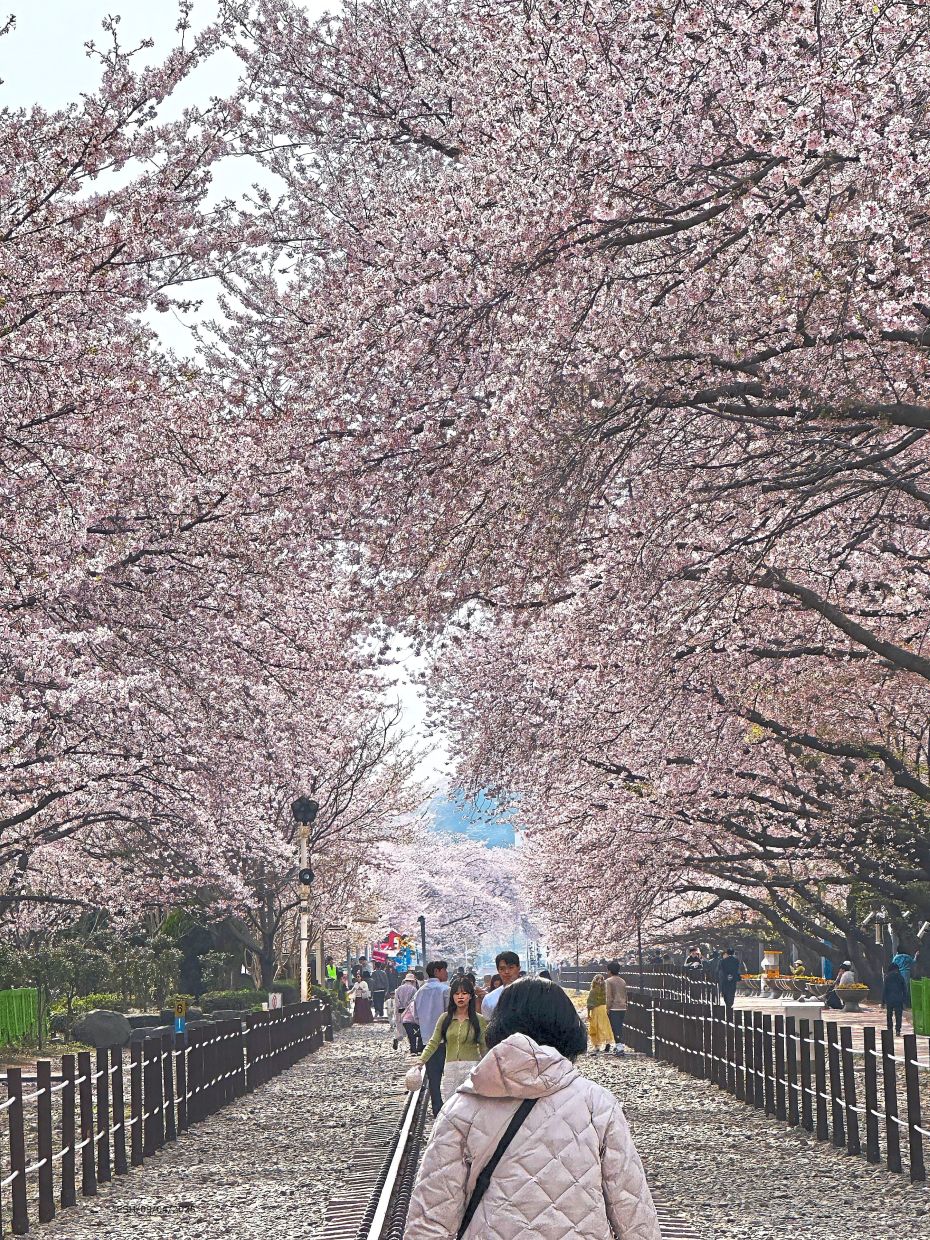
The cherry trees had formed a canopy overhead, their branches stretching wide, heavy with blossoms.
Walking along the tracks was like a scene in a romantic film. The late cherry blossom season made it seem more charming – the petals were constantly falling, though slowly, blanketing the rails in pink.
Couples posed for pictures, children played among the petals, and photographers crouched low to capture the perfect shot.
Gyeonghwa Station somehow felt grander than Yeojwacheon Stream, but both are worth checking out.
We were right to visit during this period. The flowers were still in full bloom, and both the trees and grounds were covered in pink, making the whole scene seem more enchanting.
There were fewer tourists too, which is always great, and less traffic.
At the same time, the hotels were cheaper so we managed to save quite a bit.
We had plenty of time and space to truly enjoy nature’s best moments. The moments and experiences we had were magical and deeply personal.
The views expressed here are entirely the writer’s own.