On the first day of Hari Raya, I found myself travelling to Salekhard, the capital city of Yamalo-Nenets Autonomous Okrug in Russia, some 2,400km northeast of Moscow.
I was part of a delegation from Moscow that included the ambassadors of Malaysia, Kyrgyzstan, Pakistan, Singapore, Slovakia and Turkiye, as well as diplomats from China.
The four-day trip was organised by the Russian Ministry of Foreign Affairs, the government of Yamalo-Nenets and Gazprom, Russia’s largest gas company.
We took a chartered flight to Salekhard; the flight was just under three hours. There are also commercial flights (on Yamal Airlines) available for this route.
Packing for the trip was a challenge; the organiser told us to pack our warmest winter gear.
Salekhard prides itself for being the only city in the world that’s located on the Arctic Circle, so you can imagine just how cold it can get.
Plus, Salekhard and Novy Urengoy (which we also visited during our trip) are situated in northwestern Siberia where winter usually lasts for eight months.
We left Moscow with a spring temperature of 10°C. The same spring day in Salekhard was -12°C, though it felt like -19°C.
Deputy Governor Alexander Alexandrovich Podoroga greeted us upon arrival and presented each spouse in the group a bouquet of flowers.
I imagine these precious bouquets were flown in from somewhere because there is no way any flower or plant could grow in this weather condition.
Some areas even experience permafrost throughout the year.
What can you do in Yamal – as the locals call it – over a long weekend?
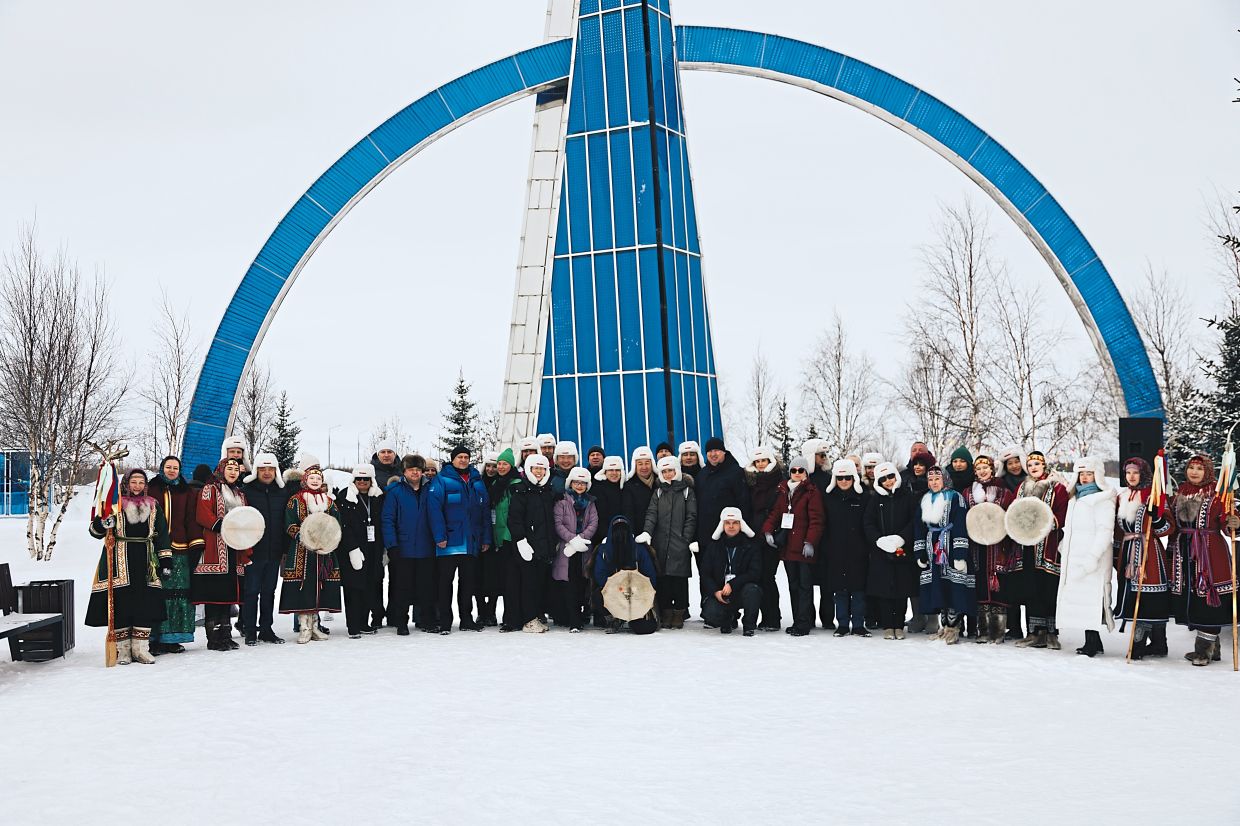
For one thing, we were eager to cross the Arctic Circle at the 66th Parallel Stele (a monument built on the 66° mark of Earth’s geographical latitude).
When we got there, we were greeted by a tribal performance.
Members of the delegation also participated in a ceremony in which we had to cross an “imaginary” line and make a wish.
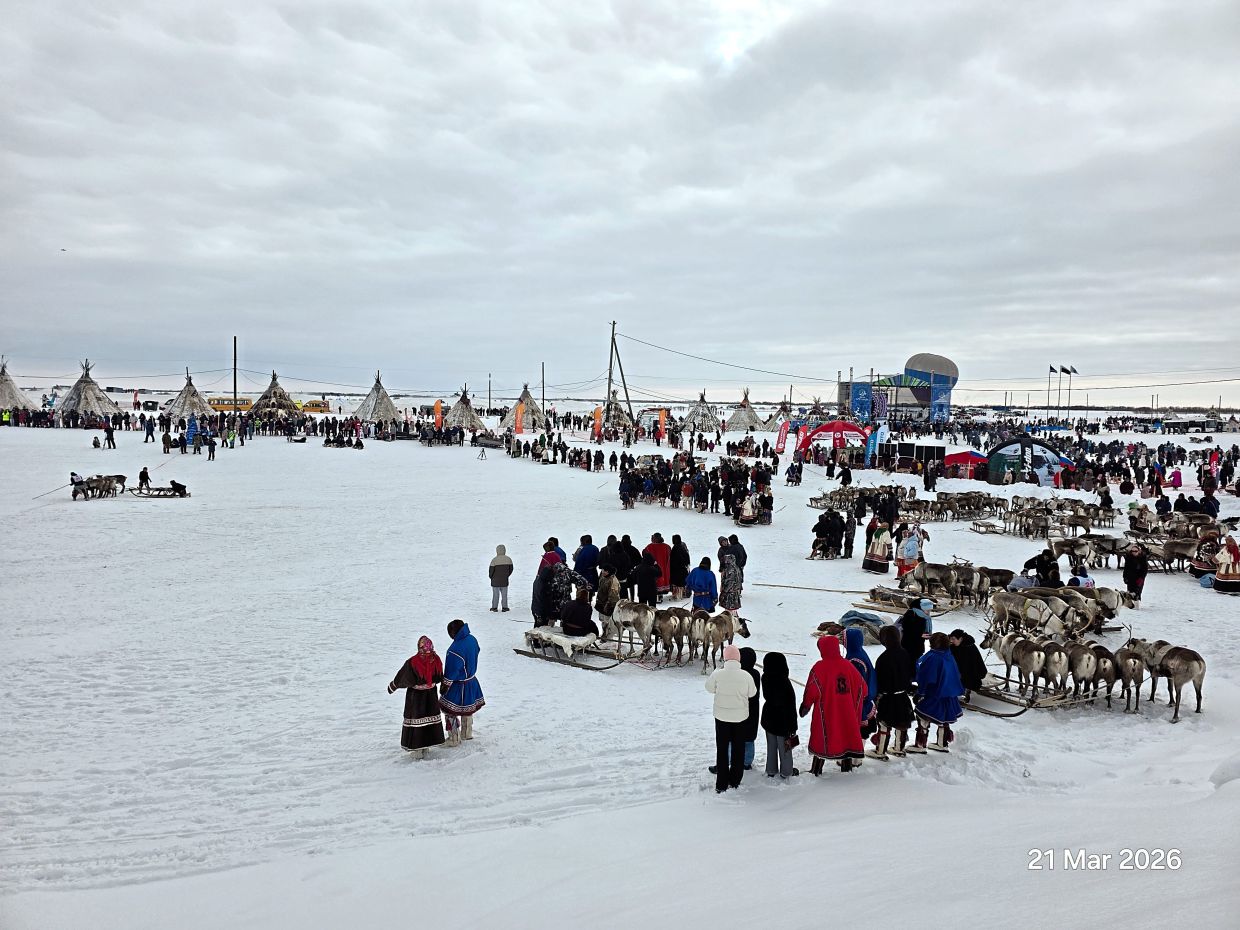
Reindeer and ice
We were in Salekhard during its biggest festival of the year, Reindeer Herders' Day, celebrated annually from March to mid-April. The festival began in 1825 as a small fair in Obdorsk (the former name of Salekhard) to primarily trade fur.
It was subsequently renamed Salekhard Fair and evolved into the festival it is today, where Indigenous folks gather and compete in games, while trading their produce and products.
Our visit was significant as it coincided with the Year of Unity of the Peoples of Russia 2026, which celebrates the many ethnic groups and Indigenous people in the country.
We headed to the festival site not too far from the city centre.
It may be herders' day but the reindeer were definitely the star of the festival. There were reindeer races (where winners receive ... reindeer), reindeer sleigh rides, reindeer fur products and reindeer meat too. People were clad in clothing made from reindeer hide.
Yamal has a population of half a million, but according to official data, there are 1.5 reindeer for each citizen!
Statistics also show there are some 50,000 Indigenous people in Yamal, with the main group being the Nenets. We learned that some 17,000 of Indigenous people still lead a nomadic lifestyle in the tundra, moving every four days in search of food for the reindeer, which is moss.
While the men hunt, the women cook, care for the children and assemble or rebuild their traditional tent called chum. A chum is typically made of long wooden poles and at least 160 reindeer hides, which provide layers of protection from the harsh winter.
We were given a “national reception” in a chum.
About two dozen of us crowded into a large cone-shaped tent, sat on low benches and hovered over two tables abundantly filled with food.
Our feast had a variety of cold cuts, warm soup and fresh pastries. There was also a special treat called “stroganina”, an Arctic delicacy of long, thinly- sliced raw frozen fish.
We got the chance to try the reindeer sled and snowmobile, which are typical modes of transportation in the tundra.
I hopped onto the snowmobile and sat behind the rider, holding on tight as he sped away from the festival grounds and into a vast open space.
Time momentarily stood still for me as I soaked in the scenic snowy landscape.
Despite the roaring sound of the engine, I felt a sense of calm, being surrounded by pristine white. It was a moment that will forever be etched in my mind.
I later learnt that this beautiful space was a frozen river; a huge part of the festival actually sat on the frozen Ob River.
Big things are coming
We met with Yamal Governor, Dmitry Artyukhov, who proudly told us of the many achievements of Yamal – economically, socially and culturally.
One of the things he talked about was the Snowflake International Arctic Station, the world’s first hydrogen-powered scientific and educational complex. This station conducts research on climate change and other life support systems in the Arctic.
There’s also the Northern Sea Route, which Artyukhov said is set to become a prominent shipping lane in the Arctic.
Meanwhile, the Yamal government’s initiative of providing young Indigenous families with their first chum will help maintain their traditional lifestyle and heritage.
Artyukhov is actually a native of Novy Urengoy (population 127,000), the largest city in the Okrug that is two times larger than Salekhard (56,000).
We went to the Polaris Art Residency in Salekhard, one of four centres in Yamal that was created for youth development.
It offers conducive spaces and modern facilities for young people to hold workshops and discussions, as well as cultivate artistic development in various fields.
There, we met with members of the Young Diplomats’ Club.
Some of them later served as guides when we visited the Shemanovsky Yamal-Nenets Museum and Exhibition Complex, the oldest museum in Yamal.
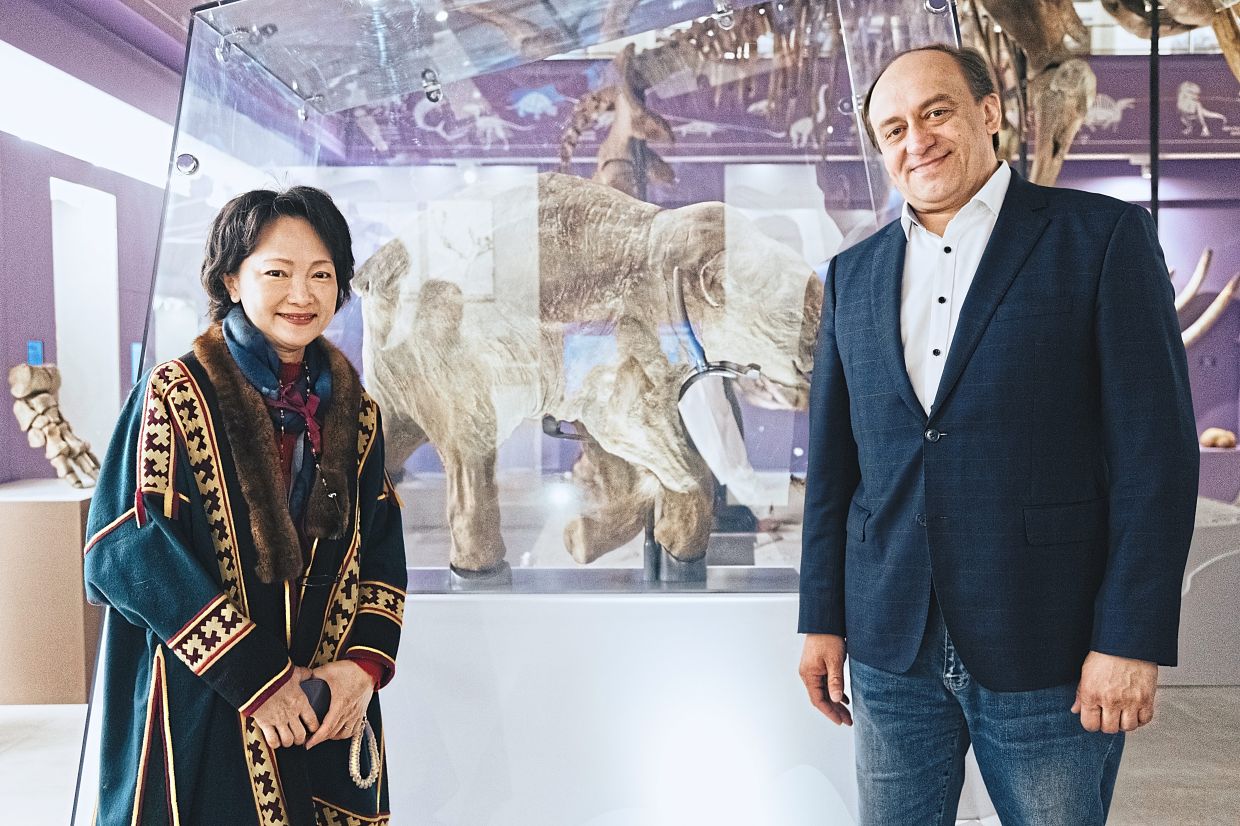
Founded in 1906, it has an ethnographic collection that preserves the cultural heritage of the Indigenous peoples of the Ob North; it is also a natural history museum. Its famous exhibits include a month-old baby mammoth named Lubya that lived more than 42,000 years ago.
Lubya was discovered in the Yuribey River in 2007 and is described as the most complete and well-preserved woolly mammoth ever found. Lubya is quite a star having been exhibited in Hong Kong, Britain, Canada and Australia.
I feel very privileged to have seen Lubya in her homeland.
From Salekhard, we took an hour’s flight to Novy Urengoy, where there was more snow and a temperature of -20°C.
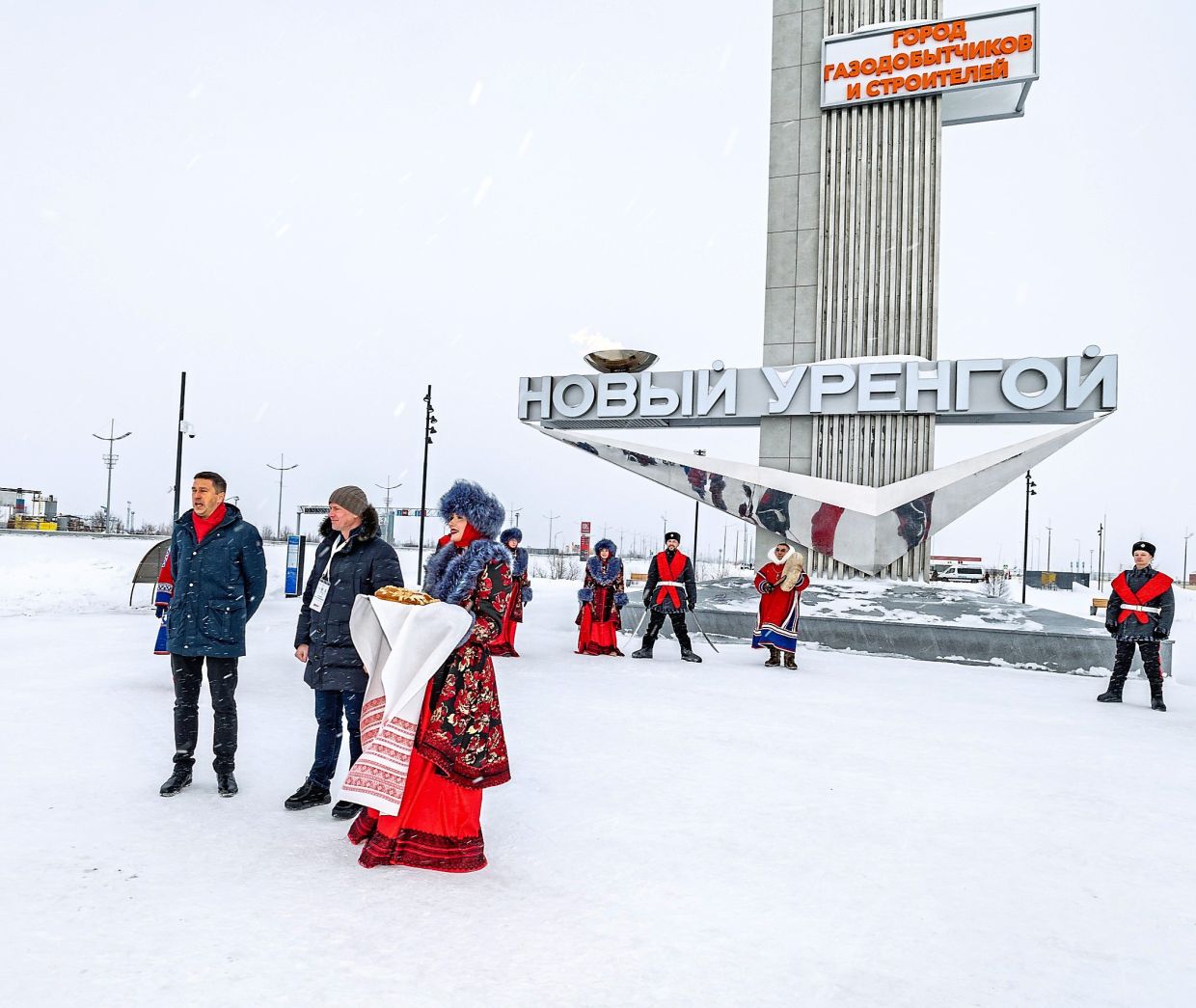
Mayor Anton Kolodin was on hand to greet us at the Novy Urengoy Stele.
Following a short cultural performance, we received a traditional welcome of bread and salt, a symbolic gesture of friendship, health and prosperity.
Novy Urengov is the largest city in Yamal, and Russia’s gas capital that celebrated its 50th anniversary last year. We visited an energy production site, a museum and a training centre.
This city is also the world’s largest gas transmission system, with trunklines exceeding 180,000km, servicing the nation of 143 million people in 11 time zones.
Industrialisation aside, efforts have also been put in to create a wholesome environment for the growth of the young population. We visited the sports centre Fakel Arena which opened in March, and the GAZ Art Centre which will open in August. We also toured the Laboratory Technical Park, an innovative centre for supplementary education and intellectual development.
Here, children between the ages of seven and 18 are provided with early career guidance.
We met young scientists at work – some growing tomatoes and creating codes for robots and electronic board games, others designing benches for the city and more.
The lab helps these children develop their creativity and inculcate their sense of involvement from a very young age.
Overall, my time in this cold Arctic region was memorable.
I was fascinated by the “clean” snow and the many good developments and cool innovations that I saw.
I was also impressed by the people I met – young and bright, friendly folks who were full of prospects.
I left with many lasting memories, something I had wished – as I crossed the Arctic Circle – for others to one day enjoy the same experiences as I did.
Lim Bee Ling is the spouse of Malaysian Ambassador to the Russian Federation, Datuk Cheong Loon Lai.