
Long before Melaka rose to prominence in the 15th century, an ancient kingdom flourished in the north of the peninsular. After its downfall, it left behind temples, trade artefacts and other physical evidences – clues to one of South-East Asia’s oldest civilisations.
According to historical records, this great civilisation was said to be known as either Kadaram, Kataha or Checha.
More famously, it was known as “Kedah Tua”, and at the heart of it lies Bujang Valley.
Believed to have spanned across 1,000sq km from Cherok Tok Kun in Bukit Mertajam, Penang to Bukit Choras in Yan, Kedah, Kedah Tua dates back to 788 BCE, records suggest.
This not only predates the Melaka Sultanate but also the Roman Empire.
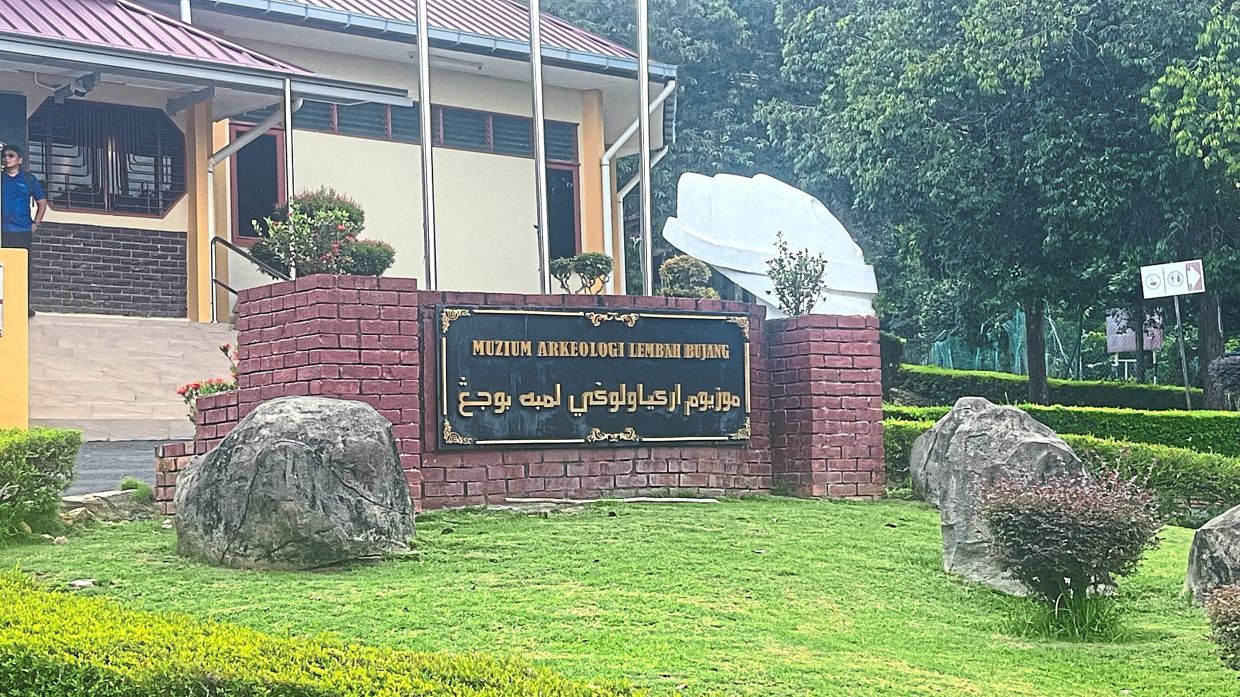
The findings of this ancient civilisation are preserved at the Bujang Valley Archaeological Museum, located at Bukit Batu Pahat in Merbok, Kedah.
The two galleries here are not just home to the various findings discovered during archaeological excavations around Bujang Valley – the museum also showcases four distinct religious monuments known as candi, or temple.
The only other places where these ancient candi are found in the region are Angkor Wat in Cambodia, and Borobudur in Indonesia.
Amid the cool breeze blowing through the hilltop sits the Bukit Batu Pahat Candi. Sitting below the shadow of the towering Mount Jerai, this candi has been identified as a Hindu temple owing to its structure which has a vimana (inner sanctum) and mandapa (pillared hall or pavilion).
The temple is believed to be built of granite and wood with 68 pillar bases.
There are three other Candi located within Bujang Valley – Candi Kampung Pendiat, Candi Bendang Dalam and Candi Pengkalan Bujang – which were respectively named after their places of discovery.
They were relocated to the Bujang Valley Archaeological Museum site through an extremely careful and time- consuming process where the materials of each part of the building were marked and later reassembled at their new home in order to preserve the original shape and design.
At one of the galleries, there is a plethora of artefacts on display that are testaments to Kedah Tua’s role as a major iron producer in the ancient world. Much of its produce have even been traced to reach India and China.
The gallery also houses artefacts related to the influence of Hinduism and Buddhism.
Indian, Arab and Chinese historical records have highlighted the role of Bujang Valley as an inter-regional centre for exchange, too. This is seen through the presence of ceramics originating from China, South-East Asia and West Asia in the valley.
By 8 BCE, Bujang Valley, namely the kingdom based in Sungai Batu about 10km from the museum, had grown to be a main entrepot in South-East Asia through trade activities conducted with China, India, West Asia and Europe.
Mohd Faudzi Sulaiman, a senior assistant at the Bujang Valley Archaeological Museum, said there has been a growing interest in Bujang Valley among the younger generation of late.
“We’ve recorded an increase in the number of visitors coming annually to our museum,” he said.
“We hold various programmes not just to attract younger visitors, but to inculcate an appreciation for our historical sites,” he added.
However, he said that one of the biggest challenges the museum faces is not knowing how many ancient sites currently lie under existing establishments such as homes or agricultural lands.
“We are hopeful for a greater appreciation towards the oldest civilisation in the region.
“We want visitors to come and experience the site, and to help preserve it for generations to come,” he said.
For visitors willing to venture beyond the usual tourist trails in the northern states in Peninsular Malaysia, Bujang Valley gives you the chance to walk through remnants of a civilisation that thrived more than two millennia ago. The museum is located about 30 minutes from Sungai Petani, and is open daily from 9am to 5pm.