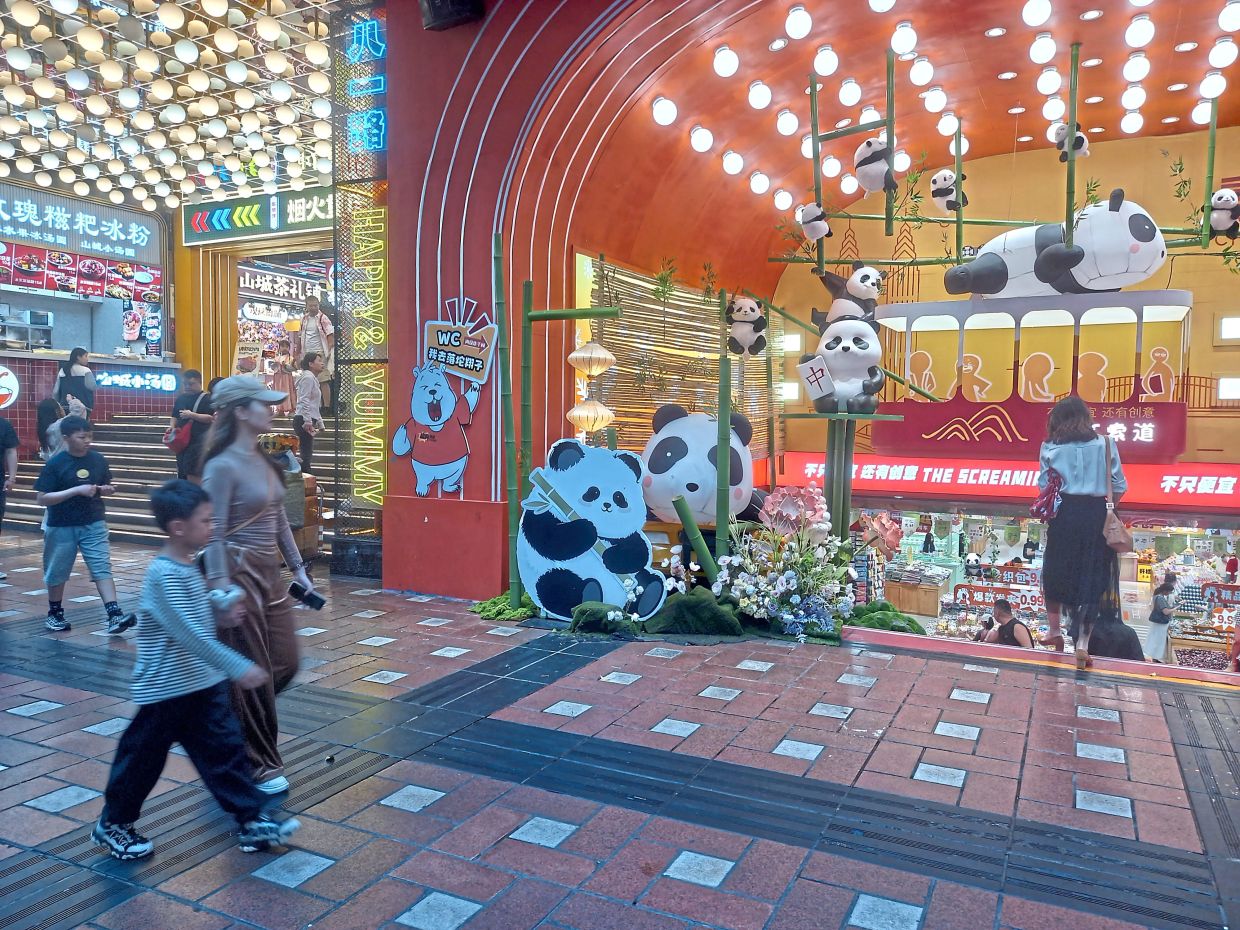
Most of the reviews about Chongqing, China call it a “cyberpunk” or “8D city”. It should also be pointed out, though, that it is a mountainous city of steps and stairs.
To navigate its uneven, hilly terrain, this megacity gets around by building flights of stairs everywhere. Let’s not even get started on its escalators, tunnels and mind-boggling flyovers.
Over at Jiefangbei pedestrian street, it isn’t uncommon to climb a staircase to get to a restaurant. But right next door, you would need to descend a flight of steps to reach a souvenir shop.
So it’s a case of up, down, up, down in Chongqing, a south- western Chinese city built on mountains.
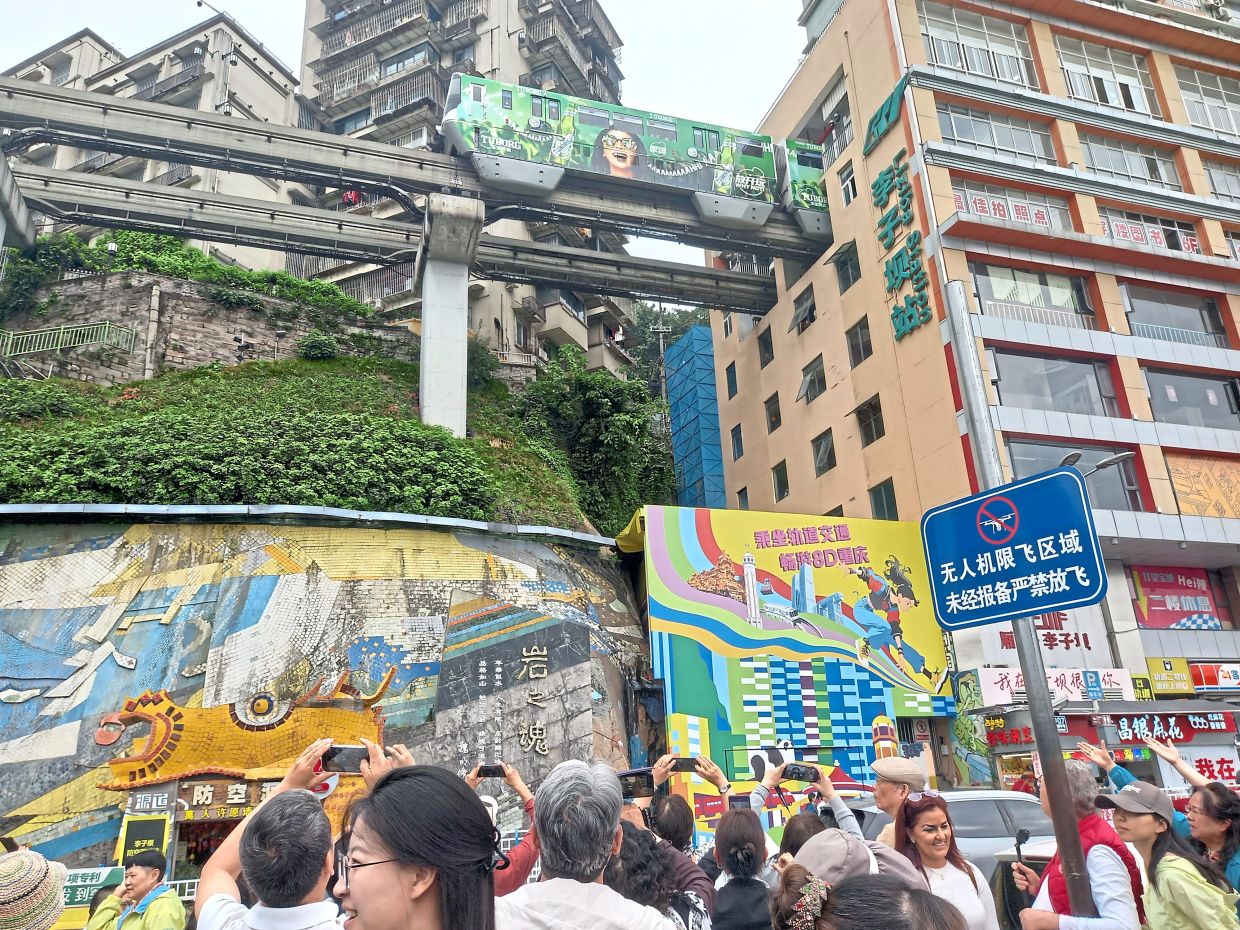
In March, a CNN report put it this way: “Chongqing has had nowhere to go but up, to the point where one building even has a train running through the middle of it.”
That is in reference to the Liziba monorail station, which attracts countless tourists each day who want to photograph the train as it enters a 19-storey residential building.
The train station has gone viral due to the inexplicable nature of the beast that is social media.
Liziba station is about 2km from Eling Park, a huge garden that offers many attractions if you have enough leg power to cover all of them.
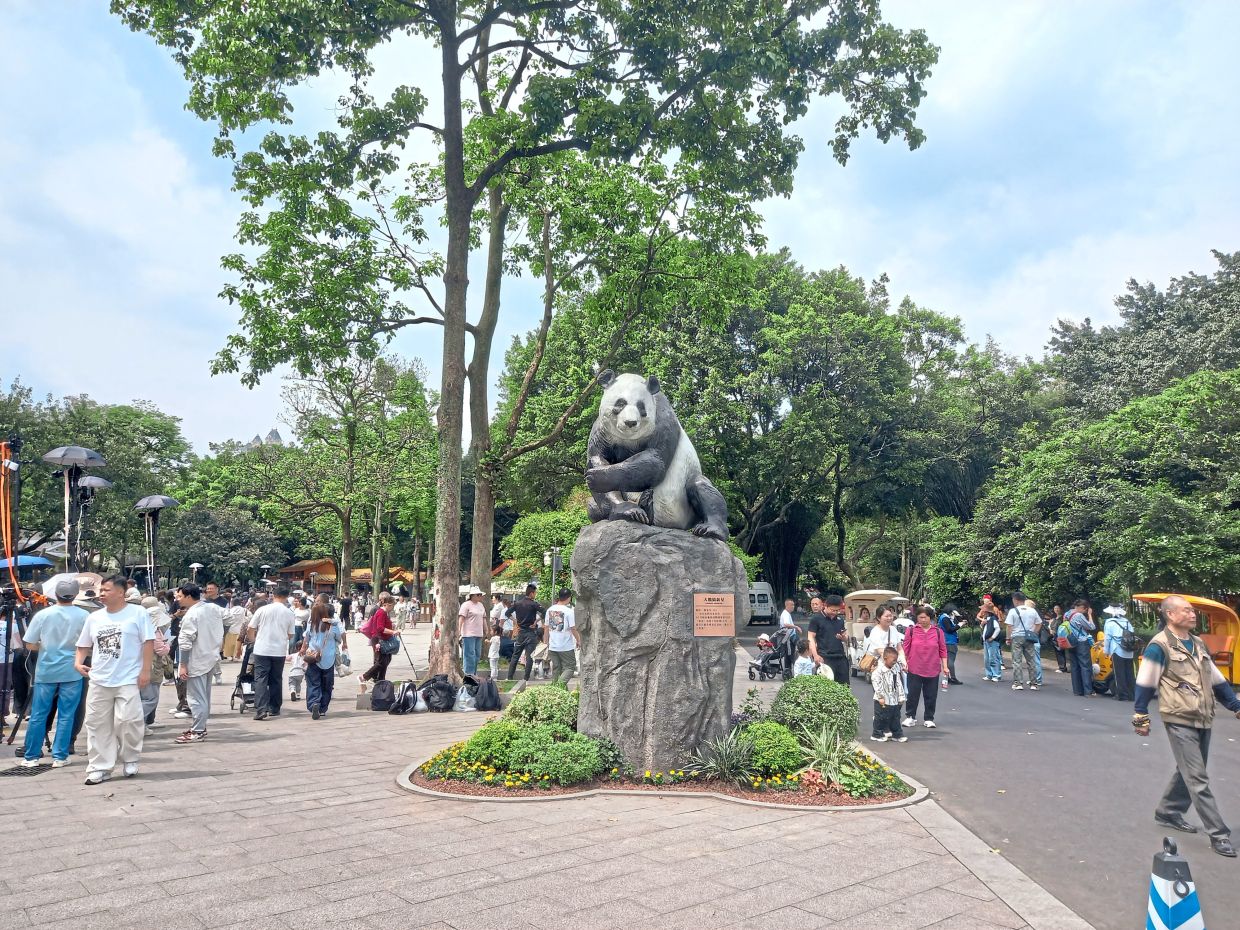
Another sprawling attraction is the zoo. You may think that Chengdu is synonymous with pandas but Chongqing is just as proud of its giant bears. Its zoo is hugely popular with visitors, especially domestic travellers. Tickets for adults cost CNY25 (RM15.30) but the price varies depending on the season.
Although the zoo hosts a wide range of animals from hornbills to hippopotamuses and reticulated pythons, the giant pandas are the star of the show.
Photographers set up their cameras on tripods, ready to capture the pandas’ every move.
The zoo is a wonderful attraction to check out but it is quite frustrating to see some visitors not abiding by the rules written on the signboards around the place. The instruction was clear – do not feed the animals – yet a bunch of kids kept throwing snacks into a fish pond with their parents doing nothing to stop them.
Even adults do not seem to heed the dos and don’ts.
One woman crossed over a rope barrier meant to prevent people from getting too close to a bird enclosure.
The magical place for visitors to Chongqing would have to be, hands down, the Hongya Cave or Hongyadong, a historic 11-storey complex built on stilts that was previously an ancient city gate.
It is now a hub of food and culture along the banks of the Yangtze River.
Go at night when it is gorgeously and dazzlingly lit up. You would run out of adjectives to describe the scene.
Indeed, the sea of humanity near the Qiansimen Bridge across Jialeng River is a testament of Hongyadong’s popularity, as the spot is among the best places to capture a good shot of Hongyadong.
A word of caution: Eating there can be more expensive than dining anywhere in the city.
That does not seem to put off many people, though, as there are still long lines outside some restaurants in Hongyadong.
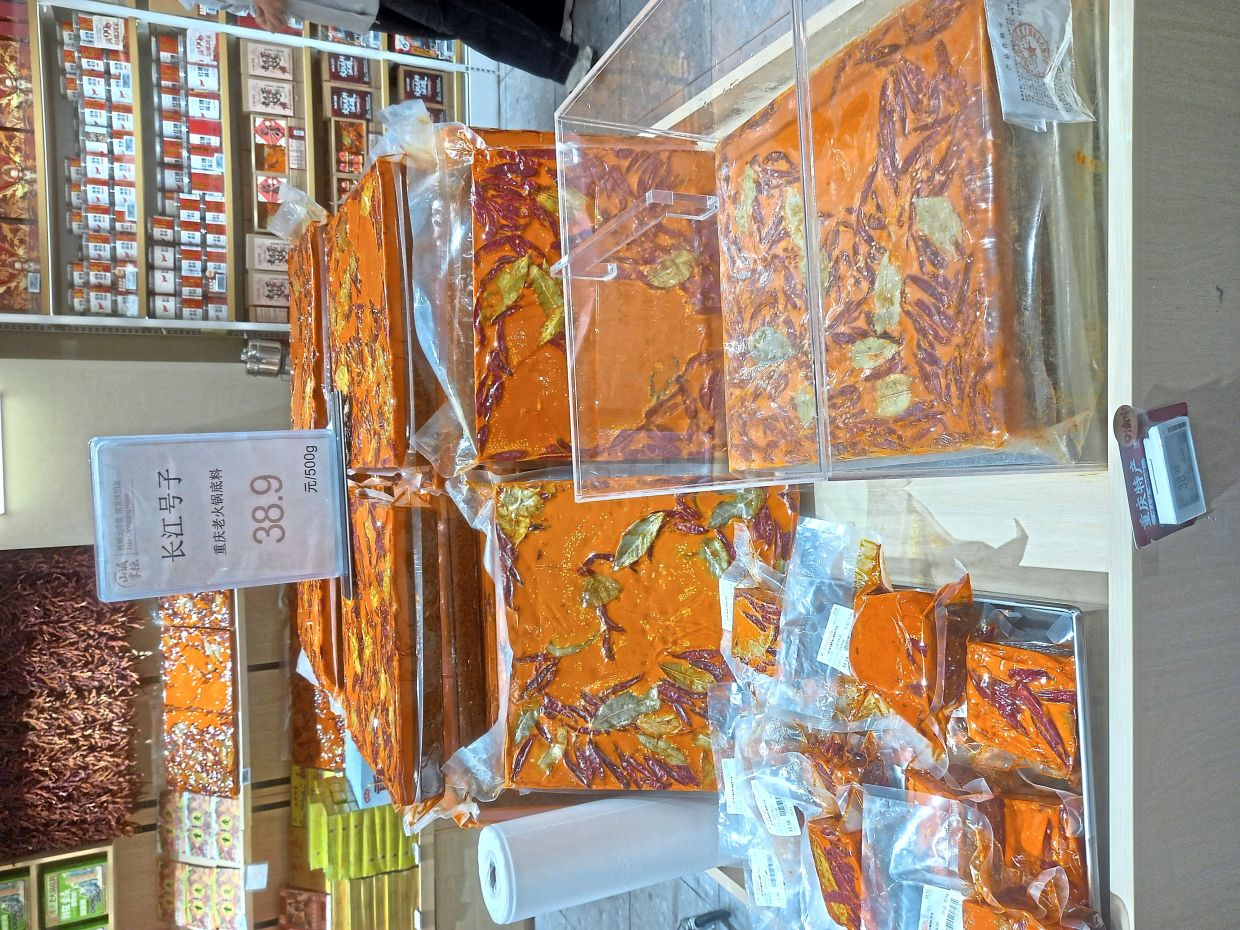
Speaking of food, the fiery hotpot featuring Sichuan peppercorns and chili oil, an essential in Chongqing’s dining scene, is served everywhere.
According to China Daily last year, Chongqing, known as “China’s Hotpot City”, has about 39,600 hotpot restaurants. This generated a revenue of CNY82.4bil (RM50.35bil), accoun-ting for 33% of the city’s dining income.
But this meal isn’t for everyone, though. One friend remarked that she isn’t fond of the smell of the peppercorn and spices used in the hotpot meals.
A popular street food alley in Chongqing – Bayi Road – is often teeming with people. The Gui Baozi shop, for example, has a perpetual queue as it is famed for freshly steamed pork and meat buns.
A common stop for visitors near this alley is the historic landmark of Chongqing, the People’s Liberation Monument, located at the Jiefangbei central business district.
Surrounded by brightly coloured blooms, the tower which was built to mark China’s victory in the Sino-Japanese war, is busy from morning till evening with visitors clicking away on their smartphones.
And speaking of history, Ciqikou Ancient Town, which was built 1,000 years ago during the Northern Song Dynasty – featuring traditional architecture – is truly a tourist magnet.
Though it is commercialised now with snack shops and tea houses aplenty, the crowds never seem to thin out.
This is the place to try the popular “mahua” (fried dough twist) snack which originated from the Qing Dynasty.
The addictive snack is made from flour, walnut oil, sesame seeds, and sugar, among others.
As for “mall rats”, Chongqing shopping complexes will offer plenty of Instagram-worthy moments.
Ring Mall (Middle Ring Beauty Street), for instance, features a huge indoor garden that rises to 42m in height, complete with a waterfall.
Over at Starlight 68 mall, you can find a giant cylindrical aquarium that offers a 360° view. Going by reports, it can contain about 1,500 tonnes of seawater.
Chongqing surely doesn’t do things by halves.
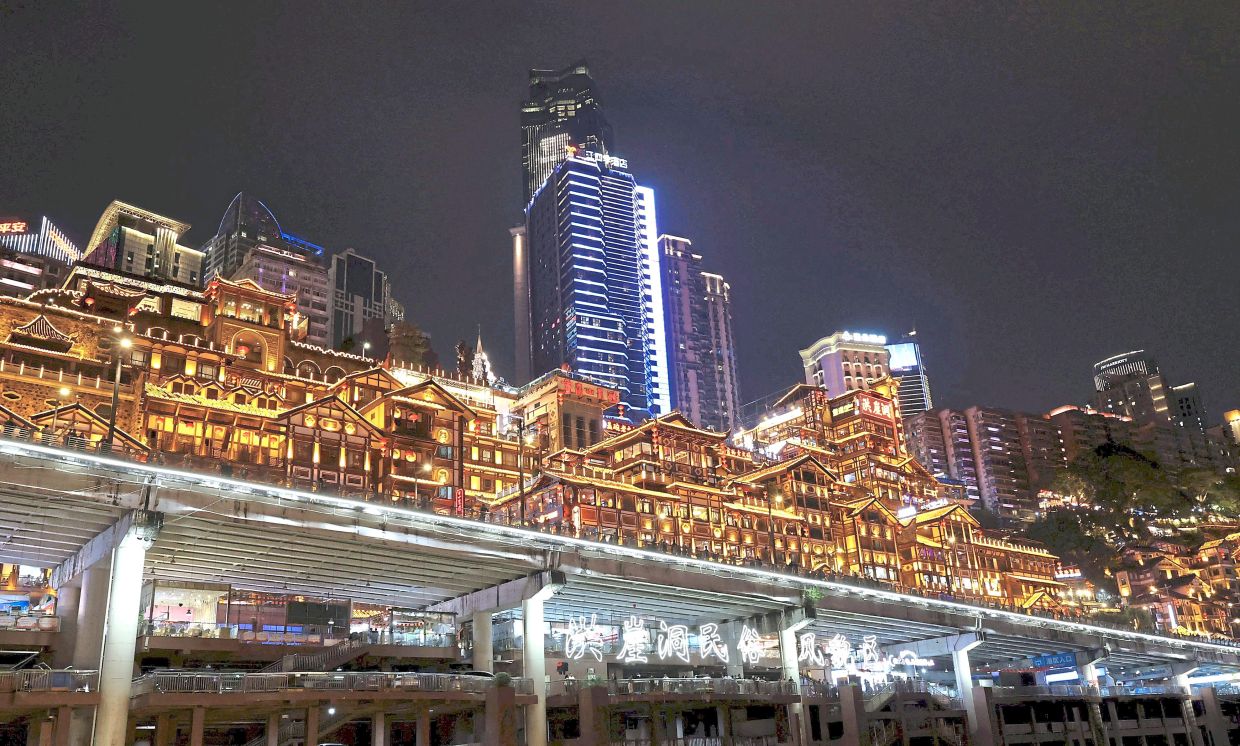
This megacity, which is on high gear from morning till night, practically glows when night falls with its brightly lit buildings.
The crowning glory of its skyscrapers has to be Raffles City Chongqing located at the confluence of the Yangtze and Jialing Rivers.
Besides office space and residential apartments, it plays host to a shopping mall and high end hotels.
Its most eye-catching feature is a skywalk that was built across four towers.
Raffles City is right next to the Chaotianmen wharf, where people gather in late evenings for the spectacular night view by the river.
Chongqing, a city of 32 million people, is often ranked among the top Chinese destinations by travellers. Big names like US basketball star Stephen Curry and Senegalese-Italian content creator Khaby Lame have all visited Chongqing over the past year.
But amid its neon lights and sweeping panorama, the simple things in life are equally as charming in the city.
For instance, there is a quiet and narrow lane near the busy Jiefangbei business district where you would find three women seated on stools a few feet apart from one another. They have sewing tools with them.
Their trade? These street tailors provide alteration services or quick fixes and repairs that you may need while on the go.
Old or new vibes, Chongqing is a fascination both day and night.