More than a decade ago, Fazleen Nazri began noticing a challenge that many women who spend time outdoors quietly face.
“There are many women-only spaces, like spas and salons, where women can feel comfortable and at ease,” says the 35-year-old.
“It made me wonder: why isn’t there a dedicated outdoor space where women can enjoy nature and hiking the same way?”
Determined to change this, she set out to create a space where nature-loving women like herself could connect and share their passions. The result: Pajelintrip.
“Pajelintrip began in 2017 as something very small,” says Fazleen, describing it as “more of a personal hobby and passion project” when she started it.
At the time, she was just three years into her corporate career in audit, accounting, and finance, dedicating 95% of her energy to it and only 5% to Pajelintrip. It wasn’t until 2024 that she decided to make Pajelintrip her full-time focus.
The career shift was not without its challenges, but Fazleen persevered.
Thanks to her efforts, countless female adventurers and travellers can now enjoy the outdoors on their own terms. Fazleen’s dedication to creating a safe space for women perfectly embodies the theme of International Women’s Day 2026: “Give to Gain”.
Celebrated annually on March 8, IWD is a global day that celebrates women’s social, economic, cultural and political achievements.
This year’s theme, according to the IWD website, “...encourages a mindset of generosity and collaboration.” By giving selflessly, women can lift and empower one another.
In Fazleen’s case, she’s created a platform where women can be themselves without judgement. From 10 participants in her first year, now over 5,000 women have gained empowerment through her community.

Confidence and independence
Amirah K, a 31-year-old traveller from Cheras, Kuala Lumpur, is one of the women who discovered support and camaraderie within the community Fazleen created.
Once a student who travelled annually, Amirah had stopped exploring altogether after entering the workforce.
“I have been so focused on my career for the past five years,” she says, adding that this made her feel like “something was missing.”
Her return to travelling was sparked in early 2025, though not as a result of occupational burnout.
“I was ready to settle down, but instead I experienced a bad breakup,” says Amirah.
At a low point in her life, she had begun to withdraw from others. But she soon found a sense of “healing” on a trip with Pajelintrip.
Amirah had been searching for a group tour to the Balkans, but none met her key requirement: a visit to the Unesco-listed Plitvice Lakes National Park in Croatia.
When she discovered that Pajelintrip had dedicated an entire day to the park, she booked immediately – finally fulfilling a decade-long dream of seeing Plitvice Lakes.
Amirah has since joined three more Pajelintrip programmes: a hiking trip, The Great Womencamp (a 3D2N camping experience) and a New Zealand tour.
In New Zealand, her mission was to see the lupin blooms in person.
“I’ve had the photograph of lupin flowers from Lake Tekapo as my wallpaper for years,” says Amirah.
“The feeling was just indescribable,” she adds, recalling the moment when she finally saw a field of vibrant purple, pink and blue blooms in front of her eyes.

The trip was “extra special” for Amirah. Travelling in a campervan, she had “the best time, the best travel mates, and by the end of it, none of us wanted to go home,” she says.
“Being part of the Pajelintrip community feels like I’ve finally found my place – and my people,” she adds.
Amirah also finds that being part of a women-only platform has boosted her confidence and independence. She used to put off travelling, often citing the lack of friends to join her. Now, she can travel on her own with ease.
In a sense, she experiences solo travel even on group tours – booking trips independently but never feeling alone, thanks to the company of other like-minded women around her.
“Solo travel in a group” is by no means a novel concept. Platforms that let solo travellers connect with one another have long existed, though not all are exclusive to women.
Among them are platforms such as Couchsurfing (hosts offer their homes as free accommodation to travellers), TrustedHousesitters (originally conceived as a way for travellers to pet-sit for homeowners who are away) and Host-A-Sister.
Founded in 2019 by digital creator Rashvinda Kaur – whose Instagram profile describes her as a “Sikh Malaysian in New Orleans”– Host-A-Sister connects women from around the world for travel.
Rashvinda launched the platform after noticing that female travellers often face harassment at male-hosted accommodations.
Today, Host-A-Sister’s private Facebook group has over 700,000 members, highlighting the strong demand for safe, women-focused travel networks.
Kavinah Maniam, 36, is a solo female traveller who has used Host-A-Sister on her journeys. While she hasn’t yet organised a women-only trip through the platform, she is eager to do so.
Her confidence comes from having successfully found a travel partner via the group and witnessing firsthand the strong support and camaraderie among its members.
She recalls one trip where, after connecting through the platform, she and her host travelled together – only to become “...stranded in India during the Covid-19 pandemic lockdown,” she remembers.
Fortunately, they were eventually able to turn things around after seeking help through the Facebook group.

Safety sisters
For 23-year-old Adelle Lim, she has never joined a women-only guided group tour – but she is keen to try one.
“I would love to try it,” she says. “It offers the opportunity to meet new friends and people, especially since sometimes friends can be busy and you might not feel like going on a solo trip.”
Her first experience travelling without men in the group came in June 2024.
“My girlfriends from primary school decided to do an impromptu trip,” she recalls.
They had always wanted an all-girls getaway and finally found the time, taking a 2D1N train journey to Ipoh, Perak.
Like many Gen Z travellers, social media played a part in inspiring Lim. “Seeing trips with friends, especially girls, portrayed online makes it look so fun. After watching, you just want to do the same with your friends,” she explains.
Coordinating schedules has made it tricky to repeat the experience, but Lim is already planning another trip with a close female friend she previously travelled with to Guangzhou, China.
“Honestly, I was scared about our safety but we managed well,” she says.
Safety is always a key concern for female travellers. Lim notes that when travelling with only women, she and her friends made it a point to return to their accommodation before midnight.
“However, with the boys around, we get to stay out a little longer,” she says.
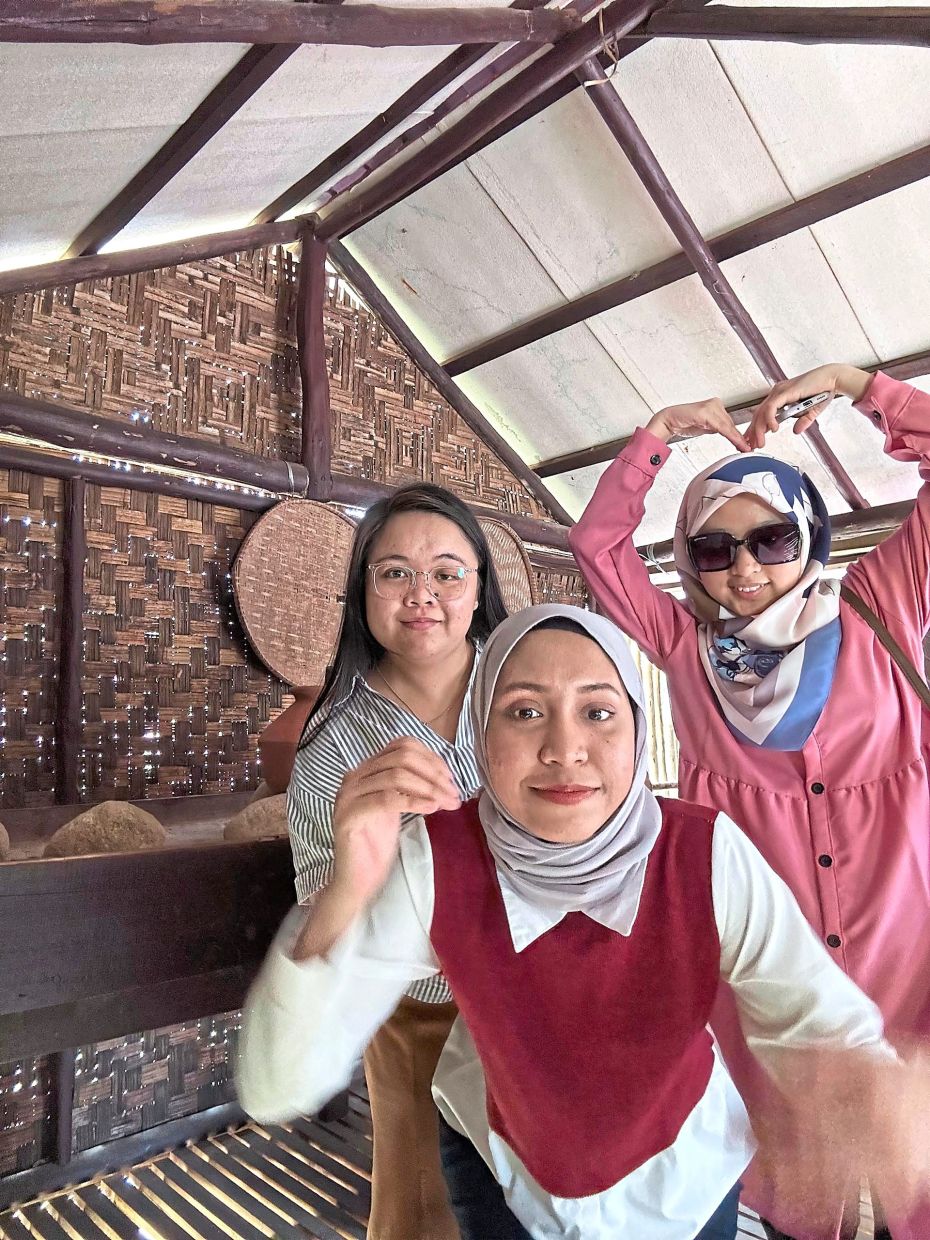
Veronica R., 32, is also interested to join a women-only tour. The Sabahan native has travelled both internationally and domestically with only female companions, though never as part of an organised tour group.
Her most recent trip to Penang with friends was a relaxed mix of cafe-hopping, journalling, and hiking. She says travelling exclusively with women allows her to feel more at ease, open, and fully herself.
“Sometimes I’m more conscious of how I present myself and of my own safety,” she says of travelling in mixed-gender groups.
That’s why women-only tours appeal to her.
“You don’t have to worry about privacy, comfort or harassment,” she explains.
Relaxed environment
Unwanted attention, unwelcome advances, unsolicited interest – no matter the form, harassment is something Fazleen knows all too well.
When she first started Pajelintrip, it wasn’t exclusively for women.
“In the early days, I organised mixed-gender hiking groups,” says Fazleen.
But over time, she began “noticing situations within the outdoor community that made me reflect deeply,” she adds.
Most women, she explains, simply want to enjoy nature and be present in the moment, “not deal with unwanted attention, flirting, or unnecessary social complications.”
When Fazleen started hiking more frequently with women-only groups, she noticed a marked difference: the experience felt calmer, safer and more genuine.
Wanting to offer this relaxed environment to others, she shifted her focus to women-only hiking and tours in 2018. She emphasises that the decision “was not driven by ideology, but by a sincere intention to provide comfort, safety and emotional ease.”
The shift to women-only experiences was met with relief by both single and married participants.
As Fazleen notes, many had “gradually stopped pursuing outdoor hobbies because they didn’t have a suitable group to join.”
Today, women at any stage of life can enjoy the outdoors: singles join to build confidence and explore independently, while married women take the opportunity to reconnect with themselves and carve out personal time away from daily responsibilities.
“That said, we don’t focus on participants’ marital status unless they choose to share it,” says Fazleen, highlighting the respect for personal boundaries.
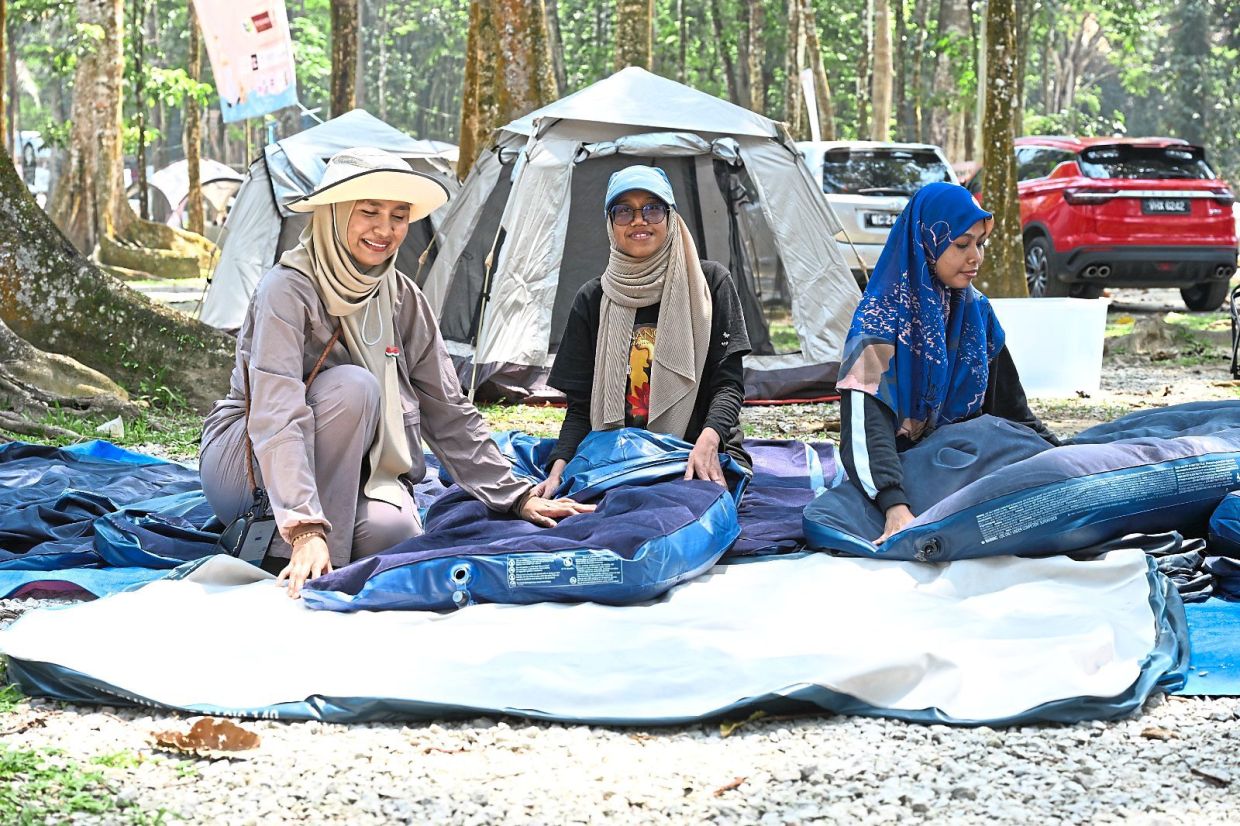
In 2020, despite the pandemic, she successfully launched Womencamp, a camping programme where the entire site is reserved exclusively for women, allowing them peace of mind while staying outdoors.
Since then, Womencamp has been held across Johor, Melaka, Negri Sembilan, Selangor, Perak, Perlis and Pahang.
Another flagship initiative is the Women 1 Month 1 Hike Club, which, despite its name, actually meets weekly. For those wishing to hike beyond Malaysia, Womentrip offers a ground-handled, private travel experience designed specifically for women.
Womentrip journeys fall into two categories. Adventure trips cater to those drawn to mountains and nature trails, with destinations including Mount Kinabalu in Sabah, Indonesia’s Mount Prau and Mount Rinjani, and Nepal’s Everest and Annapurna Base Camps.
Leisure and cultural trips, on the other hand, focus on slow exploration, scenic road trips and immersive experiences, with destinations such as Vietnam, India, Georgia, Turkey and Bosnia and Herzegovina.
“Each destination is chosen intentionally, often for its natural beauty, calm scenery, and meaningful experiences,” says Fazleen.
She notes New Zealand as one of the most women-friendly countries they’ve visited, citing its safety, accessibility and welcoming environment.
Regardless of location, careful planning remains central: trusted local partners, secure accommodations, clear itineraries and strong group coordination ensure a smooth, safe journey.
“When travelling as a women-only group, structure and communication are key to making everyone feel secure and supported,” she adds.
Pajelintrip also attracts international participants, hosting women from Singapore, Indonesia and the Middle East who are keen to discover Malaysia’s charms.
Nearly a decade after founding her platform, Fazleen has navigated challenges including the pandemic and the passing of her mother.
In 2024, when her “hobby” became a full-time venture, she celebrated by opening the Pajelintrip studio in Kelana Jaya in Petaling Jaya.
Looking ahead, she hopes female-first travel becomes more established in Malaysia.
Meanwhile, she takes pride in the growth of her community: women who initially joined feeling nervous and unsure have gradually gained confidence, now travelling abroad, hiking mountains and embarking on trips independently.
“That transformation is something I deeply value,” concludes Fazleen with pride.