
Rain throughout most of the day resulted in a much cooler evening. Instead of being drenched in perspiration, we only had to dab our foreheads lightly every now and again.
Not bad for a two-hour walking tour around the usually hot and humid Kuala Lumpur.
“If you join the morning walk, it’s even cooler,” said one of our guides. “So cool that you can even see mist still floating in the air.”
We’ll have to do another round of the “Buku Jalanan Chow Kit (BJCK) Walk Tour in KL” to verify the validity of this statement. At the moment, all we can attest to is that the evening session itself is certainly cool enough – and we don’t mean just temperature-wise.
Neither of us is a stranger to walking tours, but the ones we’d participated in often take place when the sun is out. This was our first experience with a night walking tour (and not a horror-themed one at that).
At precisely 7.45pm, with the rain having fortunately subsided by then, we stood outside of the BJCK centre, located on the once infamous Lorong Haji Taib area in KL’s Chow Kit sub-district. (Participants are asked to arrive at least 15 minutes before the scheduled tour.)
Farah, a 24-year-old project manager at the centre, came down to greet us, smiling warmly.
Soon, we were joined by three more members. Epul, 16, is a student at BJCK. Nafisah and Mei, both 19, are alumnae who are now part of the BJCK staff.
Mei was our main guide for the evening. The others would chime in from time to time throughout the walk. Clear and spirited in her delivery, Mei taught us plenty that evening.
Rich with history
Our guided night walk kicked off from Sup Kawah Hitam, the eatery occupying the ground floor of the BJCK building. As part of the institution, the eatery provides career opportunities for the underprivileged, as a way to support the community.
This aligns with BJCK’s mission of helping underprivileged children escape the community’s cycle of poverty, which it does by empowering them through education.
The walking tour plays a part in this initiative. Students and alumni take turns to step into the role of “guides”, each with their own enlightening anecdotes to share. This lends a novelty that makes each tour different yet the same.
The route takes participants to the same stops (“check points”, as they are referred to by the guides). But there’s a flexibility to it – the route can be customised to some degree, as we would personally experience.
With each stop, the historical facts remain the same but personal stories differ based on the guides.
Mei, a BJCK graduate who’s lived for nearly two decades in Chow Kit, pulls from her own experiences to bring the neighbourhood’s history to life, while leading us down winding, dimly-lit alleys.
She didn’t simply point and narrate rehearsed lines; At the designated stops, she would first encourage us to look around.
“Why do you think we’re here?” Her question prompted us to speculate on the reasons, before she would eventually divulge them.
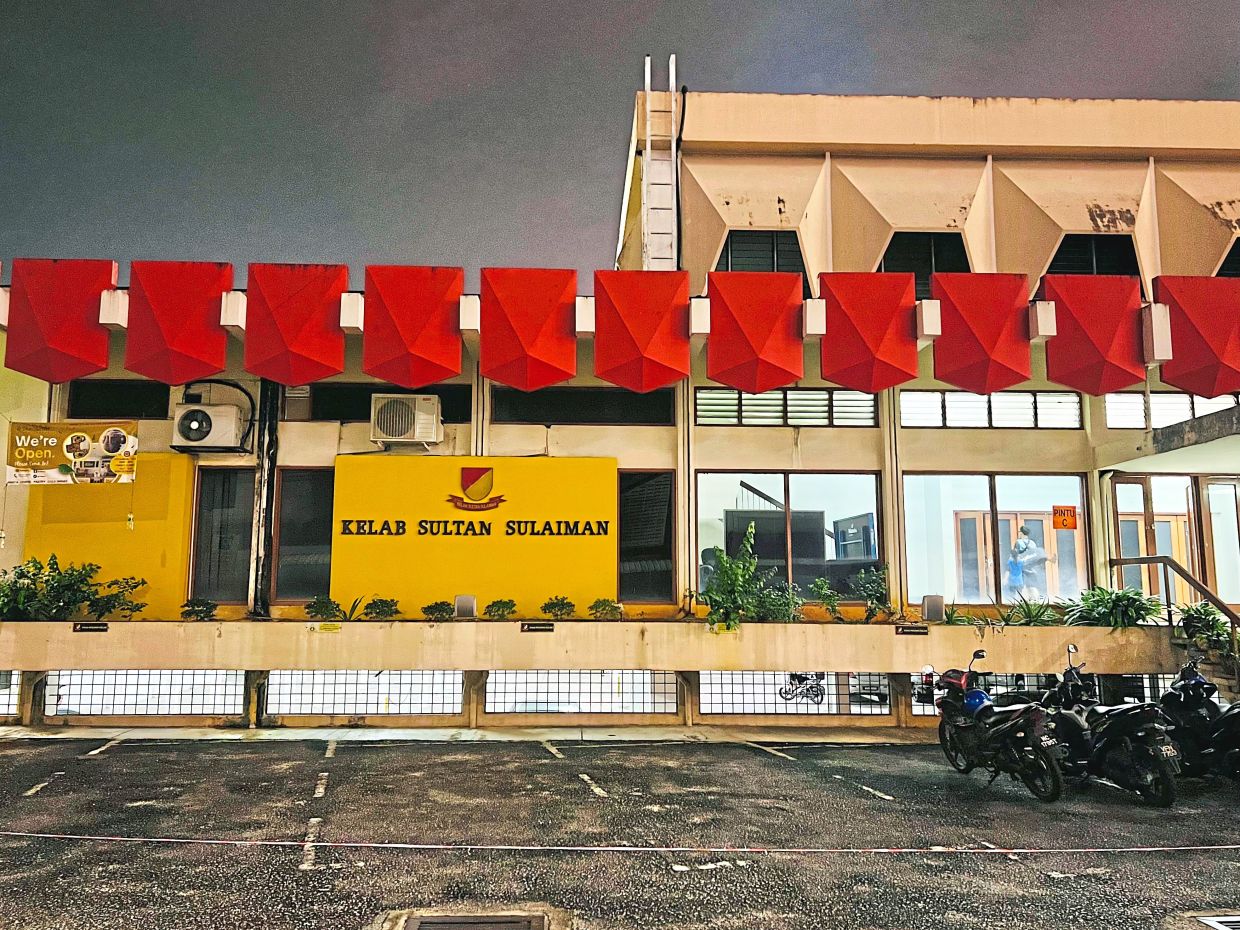
One of the stops was Kelab Sultan Sulaiman. Located in Kampung Baru, Kelab Sultan Sulaiman started in 1909 as a Malay social club and meeting venue. It had witnessed key moments in history, such as the Journalist Congress in 1940 and Pan-Malayan Malay Congress in 1946.
The concrete building we were standing across from was not the original clubhouse, however – that was long gone.
This not-quite-new iteration was built in 1969. It now houses one of Malaysia’s oldest football fields, and functions as a sports hub for the community.
Epul shared a personal memory with us: “I used to play football here before I joined BJCK.”
He momentarily took over from Mei, telling us about the professional footballers that trained on the grounds, while guiding us through the door. We stopped at a small section filled with framed photographs.
We scanned the wall of photos alongside him. Finally, he spotted the legendary footballer he had been telling us about. “Mokhtar Dahari trained here,” he said with pride.
Better known as “Supermokh”, striker Mokhtar Dahari was recognised as one of Asia’s best football players in the 1970s.
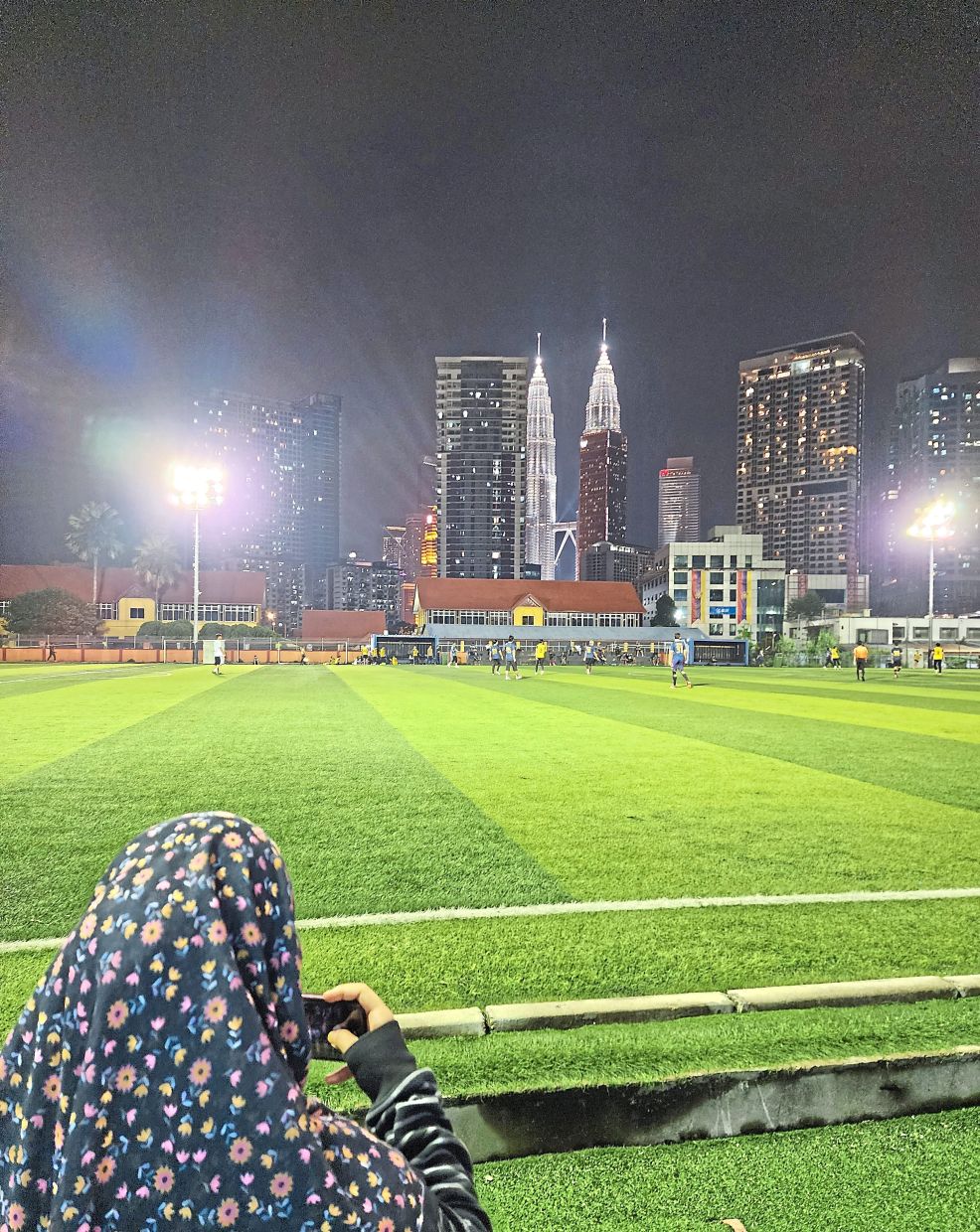
Exiting the building, we headed toward the brightly lit football field. It wasn’t just the practice match that caught our attention – standing tall in the background was the PETRONAS Twin Towers.
Despite the numerous times we’ve seen the iconic landmark, in both daylight and nighttime, it never fails to impress. Once again, we pulled out our smartphones to capture the view.
Yes, this wasn’t the first time we snapped multiple photos of the twin towers that evening – and it won’t be the last.
If you’ve ever noticed the moon “following” your car during your night drives, this experience is akin to that. The 451.9m-tall landmark seemed to be accompanying us on our walk. It peeked through buildings, loomed in the background; almost everywhere we turned, there it stood.
We couldn’t have asked for a better companion.
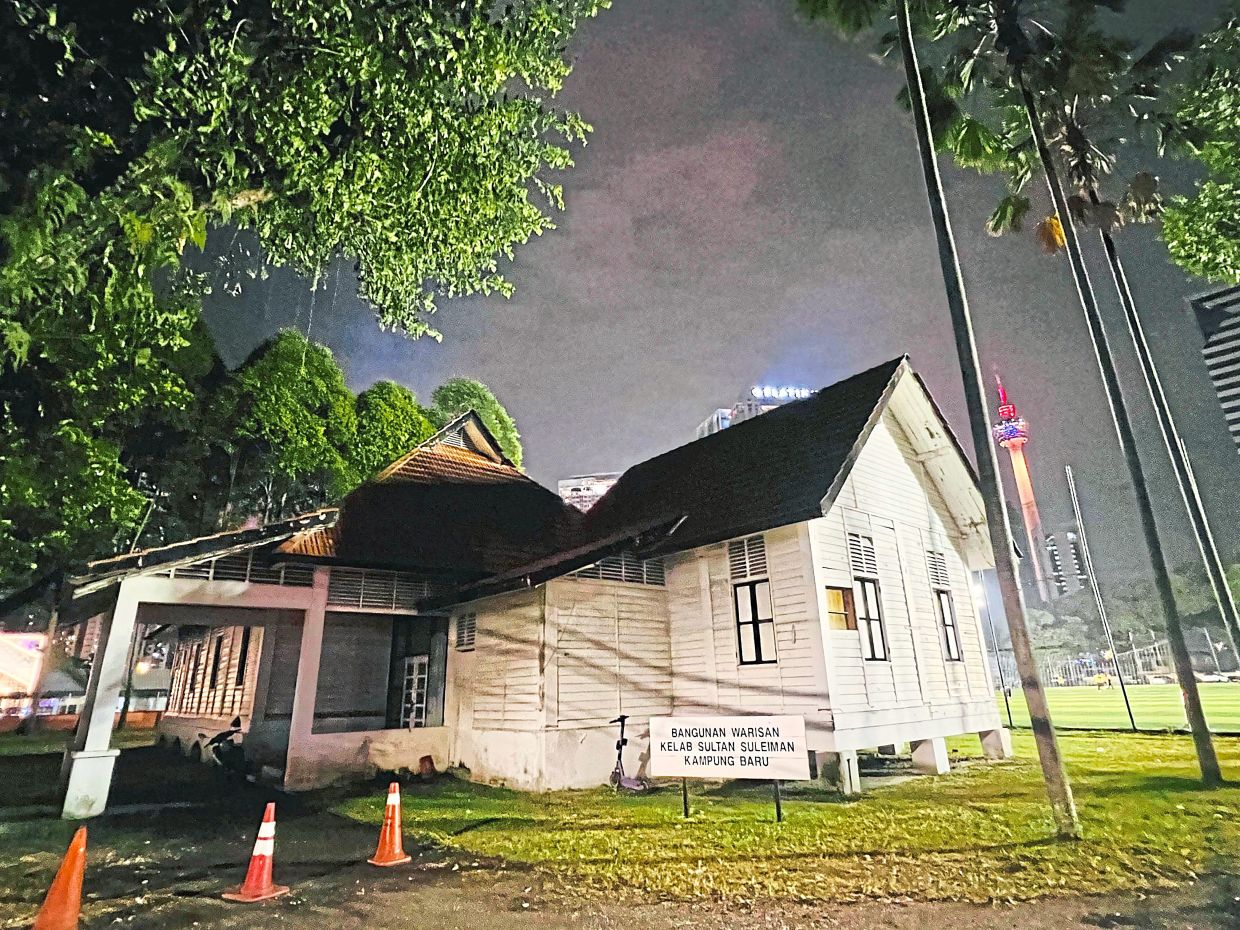
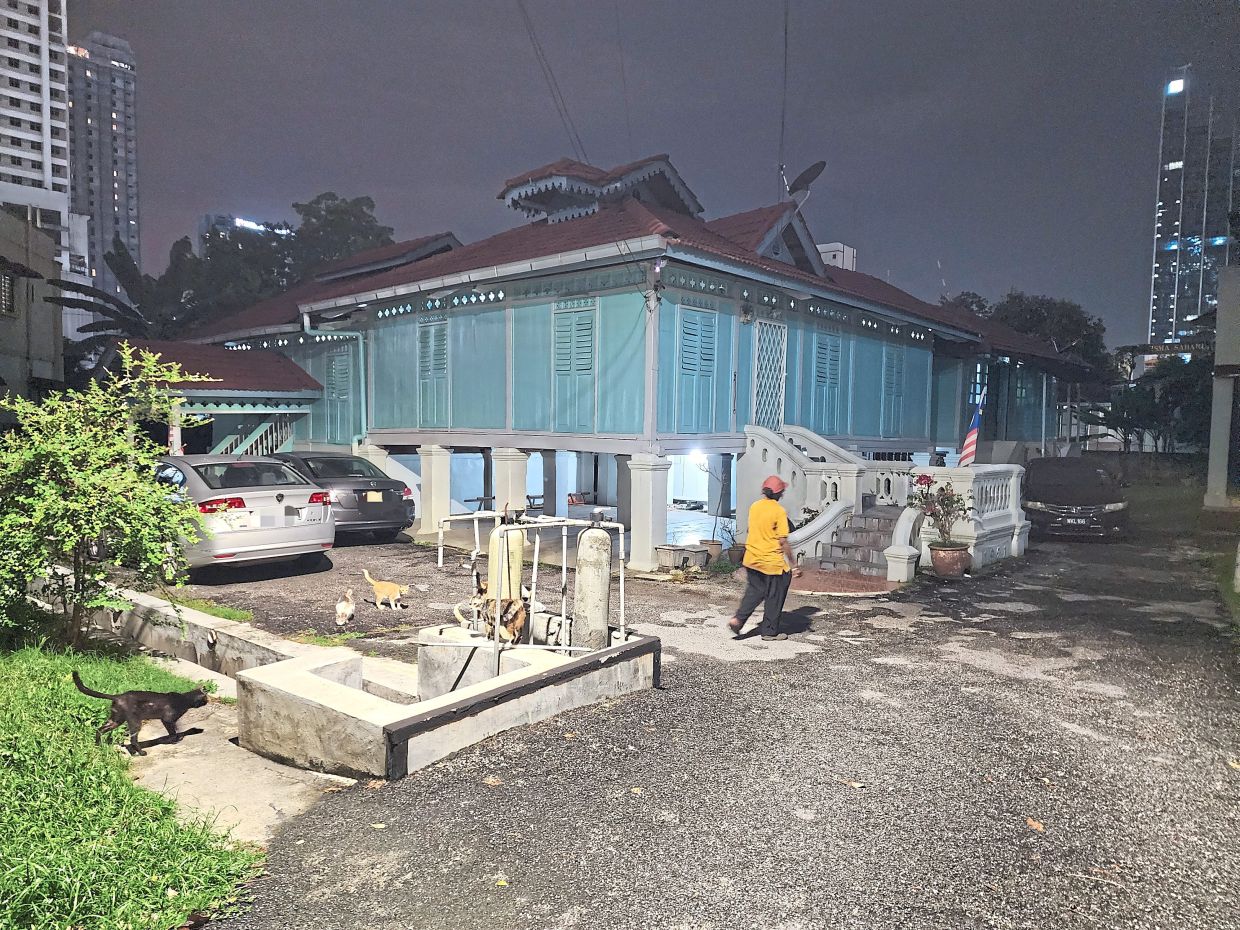
The journey resumed. Right before we left the compound, our guide – now back to Mei – pointed to an unassuming wooden building, almost hidden in the darkness.
We realised its historical significance upon reading the sign up front, which identified it as Bangunan Warisan Kelab Sultan Suleiman Kampung Baru.
As mentioned earlier, the original clubhouse no longer existed, as it was demolished in 1967. This, as it turned out, was a near-accurate replica of it – built in 2007.
Sense of community
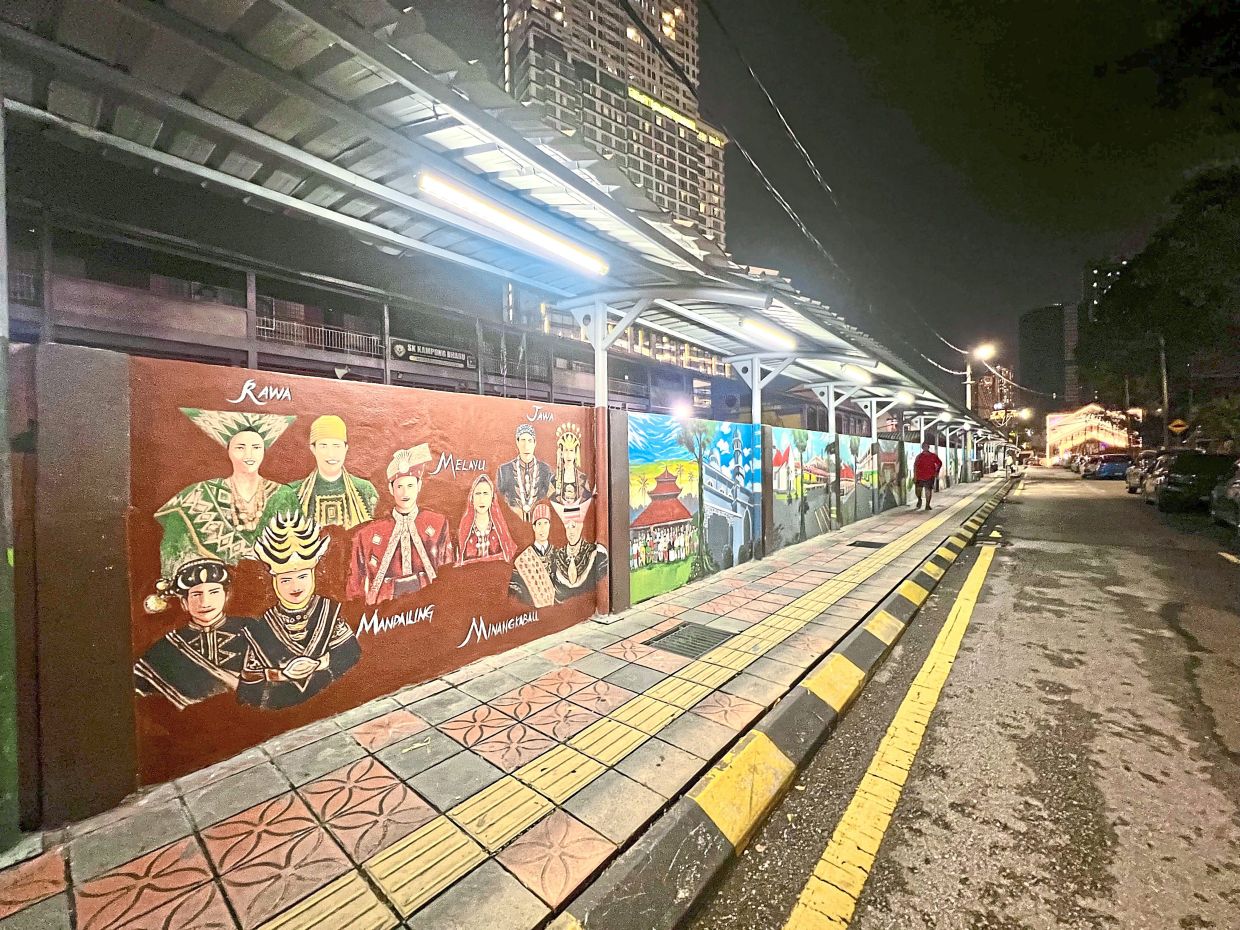
The walk continued with more surprises. When we were greeted by a stretch of colourful murals outside Sekolah Kebangsaan Kampung Bharu; even our guides stared at this in wonder.
“This was not here before, this must be recent,” Mei said. She was just as in awe as we were of the vibrant depiction of her neighbourhood’s rich history and culture.
On our way to the next check point, Kampung Periuk, our interest was piqued by an architecturally-intriguing house. Laughing at our curiosity, our guides allowed us to go nearer for a closer look.
“This is a traditional Melaka house,” Mei explained.
When the area’s development was in its nascent stage decades ago, settlers would design their houses based on the typical architectural styles found in their home states. Sadly, very few are left standing now, let alone well preserved like the one we saw.
This little detour was one of the things that we loved about the walk. As it did not follow a rigid structure, we were free to slightly alter the route where necessary.
But back to Kampung Periuk. Taking a shortcut through someone’s yard, we were told this little path is an interesting one to take during Ramadan. A resident would be frying some food here in the evenings and hand it – free of charge! – to passers-by.
The generosity displayed here is not an isolated case. The villagers often lend a helping hand to each other, especially during festivities.
“Most of the residents migrated from small villages, where a strong sense of community prevails,” Mei said. They replicate this togetherness in the big city by continuing to forge connections with their neighbours – an act not often seen in concrete jungles.
Remembering that we were walking past actual dwellings, we kept our voices low. If you’ve visited the Clan Jetties in Penang, or South Korea’s Bukchon Hanok Village, this is reminiscent of that. We were walking along occupied houses, not just replicas. So, we were mindful of our speaking volumes and manners.
Kampung Periuk earned its name – periuk means pot in English – from the fact that, when viewed from above, the area resembles a giant pot.
As a former tin mining site, the village is essentially set in a depression in the ground, leading to frequent flooding. Nafisah shared how one of her classmates had to miss her Sijil Pelajaran Malaysia exams due to a flood so severe she wasn’t able to leave her house.
We could only imagine the despair.
As though to lighten the mood, a “special guest” made an appearance at that moment.
Farah was the first to notice. Following her pointed finger, we spotted a musang or civet deftly navigating the wires criss-crossed above our heads.
We scrambled to take a photo, but once again the nocturnal animal eluded us.
We had seen – or rather, heard – it earlier, jumping from tree to tree as we were walking down the shortcut. It showed up only as a brief silhouette during that first encounter.
Reluctant to move in case it reappeared, we hung around for a while; a merry little group chatting and chuckling in the semi-darkness.
This relaxed atmosphere was also something we appreciated. It made the tour feel like just a casual chat with the locals, albeit one laden with eye-opening information.
After we were certain that the civet wouldn’t be appearing for a third time, we resumed walking.
“Most of the BJCK students live here,” Nafisah said as we passed more houses in the village. She and her fellow guides began exchanging news of their friends.
The closeness of the tight-knit community was as tangible as the twin towers that evening. Whenever our guides came across someone they knew, greetings would always be exchanged – even if the person being greeted was all the way across a busy road.
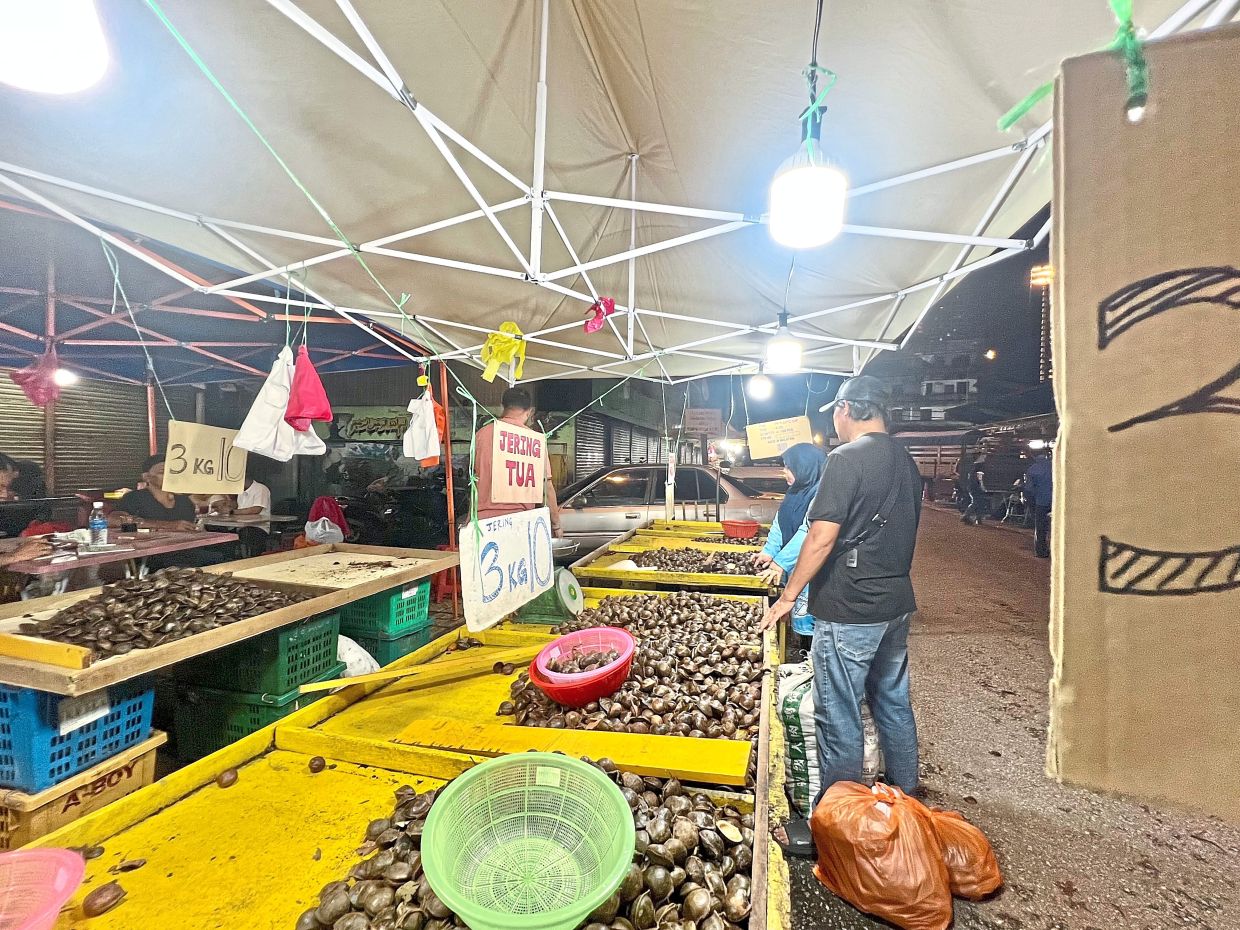
A short walk later, we arrived at the Chow Kit night market, where the smell of durian permeated the air. Funnily enough, amid the durian stalls, there was a small shop that adamantly prohibited the pungent fruit on its premises. A vain attempt, we thought, considering the location.
Also a crowd-favourite here is petai – yet another pungent plant. (Its “stink bean” moniker should give you enough of a clue as to its potent smell.)
We noticed there was another plant that customers here were gravitating toward. “Jering, also known as jengkol,” Mei introduced it to us.
Consumed the same way as petai, there are two varieties sold here: jering muda and jering tua. The latter is the more pungent of the two.
As we navigated the lively market, mindful of the cars whizzing past, we noticed the building serving as backdrop along one of the streets was a mosque. “That’s Masjid Jamek Pakistan,” Mei said.
We soon learned that there are a few different places of worship here, including Hoeh Beng Buddhist Temple and Gurdwara Sahib Tatt Khalsa, said to be the largest Sikh temple in South-East Asia, exemplifying the unity fostered within this diverse neighbourhood.
Fresh insight
Through dark alleys and past shuttered stalls, we made our way to Bazaar Sudirman.
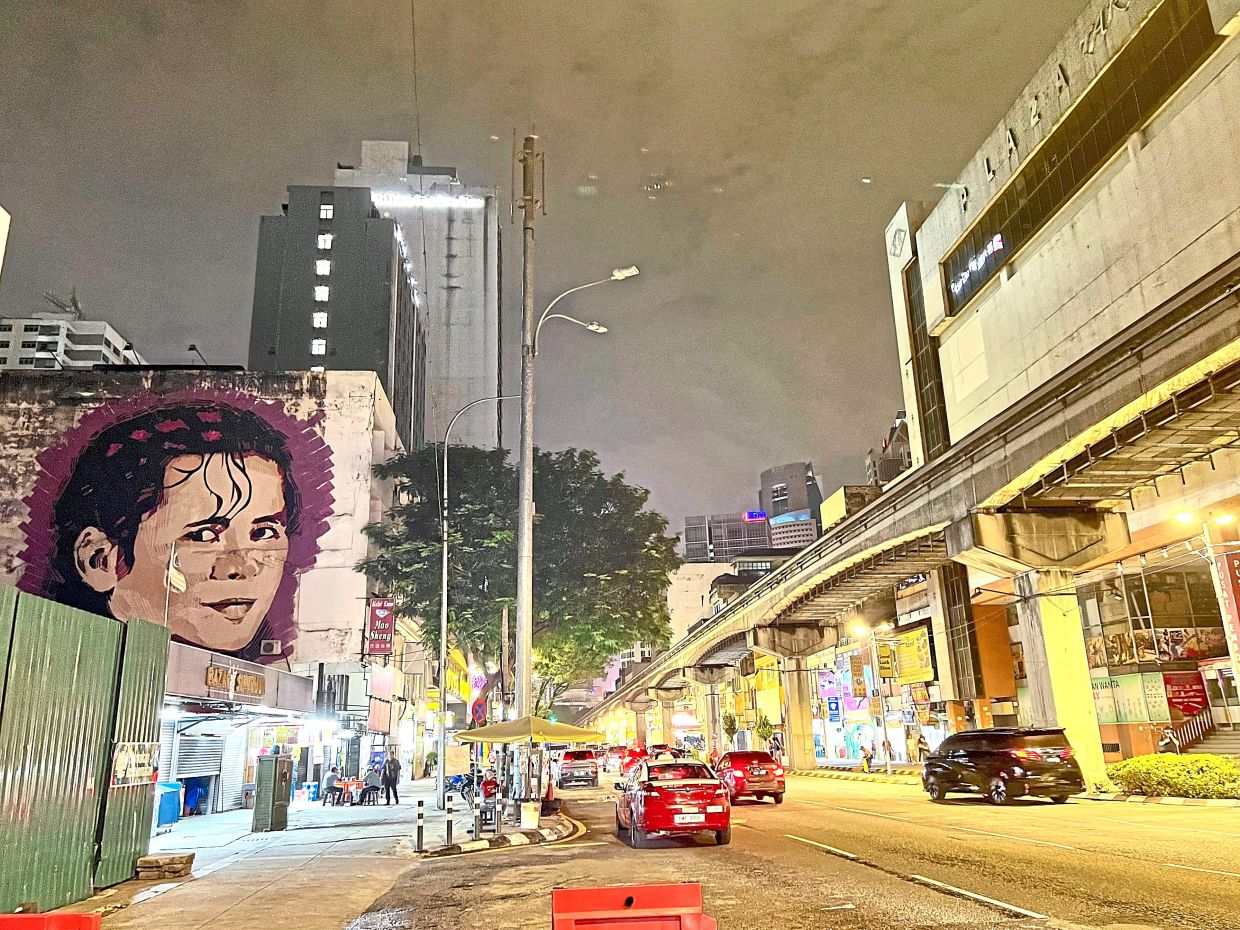
We had noticed this establishment earlier in the evening on our 10-minute walk from the Chow Kit monorail station to the BJCK centre. Hard not to as it proudly displays a large mural of Malaysian icon Datuk Sudirman Arshad.
The mural commemorates the late multi-hyphenate talent’s concert that was held for free at Jalan Chow Kit on April 14, 1986. Garnering an audience over 100,000, the historic concert remains memorable even after 40 years.
With the tour concluded, we returned to the BJCK centre. Here, participants would usually be invited to reflect and share their thoughts. We unfortunately were in a rush to catch the train, so our sharing session was admittedly short.
But the end of the evening did not mean the end of our experience.
We would continue to ruminate on it even days later. We were shown a different side of KL, a different perspective on “city life”.
Even as modernity encroaches, the villages standing in the shadows of towering buildings continue to uphold traditional values. But for how much longer?
During the tour, our guides had occasionally remarked that we were walking past spots that used to be of major significance to their community, but most have gradually “disappeared” through the years. A painted-over mural, an abandoned mall, a torn down market.
Chow Kit is a historic enclave, but it carries a stigmatised reputation that it continues to try and break free from. This, in part, contributed to the silent erasure of the heritage it faces.
The next time you’re thinking of wandering around KL, give this walking tour a try. Explore the area before it loses its authentic self. Discover its people and their resilience.
At the very least, you gain the experience of doing a heritage-rich night walking tour, if that’s something you’ve never done before.
Or opt for the morning walking tour, if you prefer to walk through a misty “kampung in the city”.
All names in this story are first names only at their request.
Email info@bukujalananchowkit.org for more information on the tour, or to make a booking.
A walk around Chow Kit
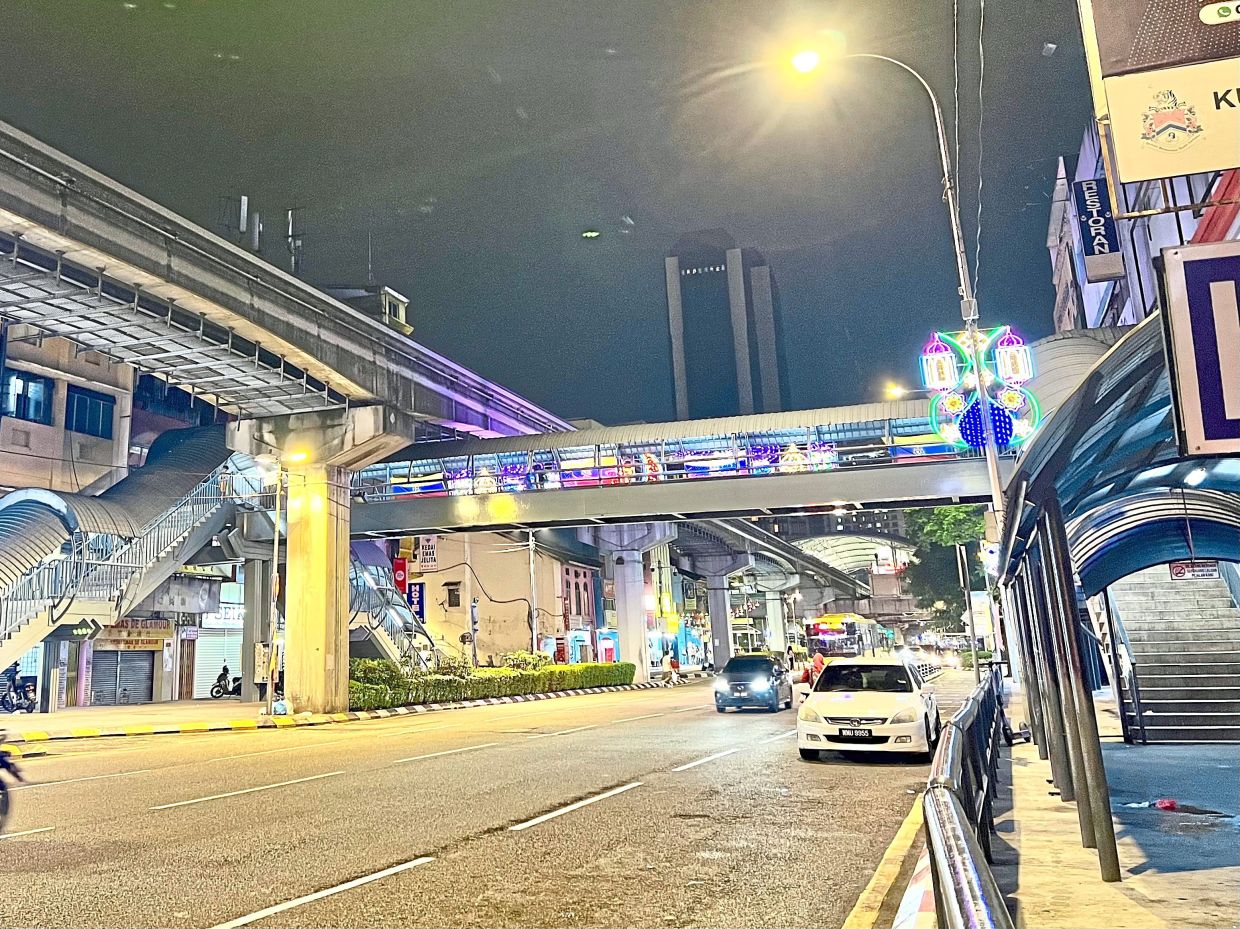
A night walk around Chow Kit is an interesting way to explore the historic enclave. — GISELE SOO/The Star
The PETRONAS Twin Towers is visible throughout most of Chow Kit. — FLOREY D. MIKIL/The Star
In 1986, Sudirman gave a free concert in this very area in Chow Kit, minus the LRT tracks and overhead bridge. — GISELE SOO/The Star
Jering, or jengkol, is similar to petai. — GISELE SOO/The Star
Kelab Sultan Sulaiman is now a sports centre for the community. — GISELE SOO/The Star
Bangunan Warisan Kelab Sultan Suleiman Kampung Baru is a replica of the original. — GISELE SOO/The Star
Kampung Periuk is a small village within the city of KL. — FLOREY D. MIKIL/The Star
Murals covering the walls of a school. — GISELE SOO/The Star