
Have you ever walked into a place that feels like it came straight out of a fairytale? That’s exactly what it felt like when I went to Segovia, Spain with my parents.
From the moment we left Madrid, I knew this wasn’t going to be just another tourist attraction.
At first, I thought the bus ride would be long and boring, but I was completely wrong. Snow-tipped mountains stretched as far as I could see, and I leaned against the window to take in everything.
My parents were chatting quietly, but I was just staring outside the window, completely absorbed. There’s something about seeing nature and history blend together that makes time slow down.
We went to Segovia for a day trip as we had already explored Madrid and wished to see more of Spain. Segovia was a natural choice because of its close location and its attractions – the Roman Aqueduct and castle, the Alcazar of Segovia.
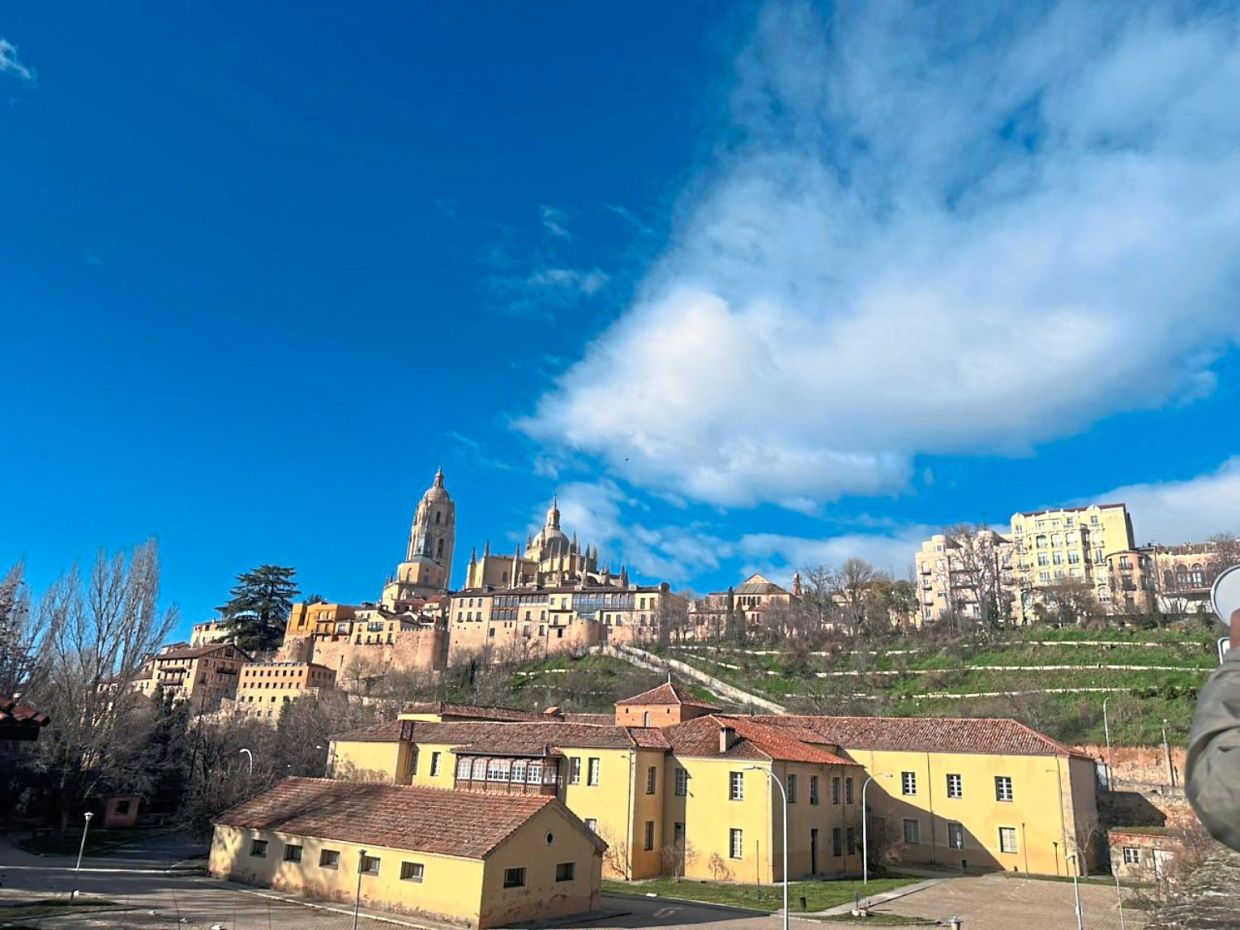
When we arrived, the first view of Segovia took my breath away. The Alcazar of Segovia sat proudly on a hill, almost daring me to come closer.
As we walked up the winding road towards it, I could feel a buzz in the air. There were a lot of tourists visiting Segovia while we were there, and everyone was excited to visit the castle. Although the tourists were mostly Caucasian, I was glad to see Asian faces too. In fact, on our bus were people from South Korea, China, and the Philippines.
Stepping through the gates and crossing the heavy drawbridge into the castle felt like walking into a Disney movie. It’s crazy to think that this castle inspired the same one in Snow White And The Seven Dwarfs. The stone walls, towers, even the way the sunlight hits the courtyard took my breath away.
I imagined the events that had taken place in the castle hundreds of years ago. I would think that perhaps the most memorable was the proclamation of Isabella I as the Queen of Castile in 1474. She is known for financing Christopher Columbus’s 1492 voyage to the Americas, as well as unifying Spain through her marriage to Ferdinand II of Aragon.
Inside, I took my time wandering through the halls because every corner felt like it had a story to tell. The rooms had thick stone walls, and while the main display room had wooden floors, the rest were stone. The windows were filled with painted glass and mosaic-like designs.
The views from the castle, meanwhile, were astonishing, giving visitors a chance to see the whole city.
There’s also a chapel within the castle. I remember being quiet for a few minutes, just feeling the cool air, and letting the stillness sink in. It felt like stepping into a completely different world.
The chapel was relatively small and cosy, but at the same time, it still carried a quiet sense of importance because it had been used by royalty.
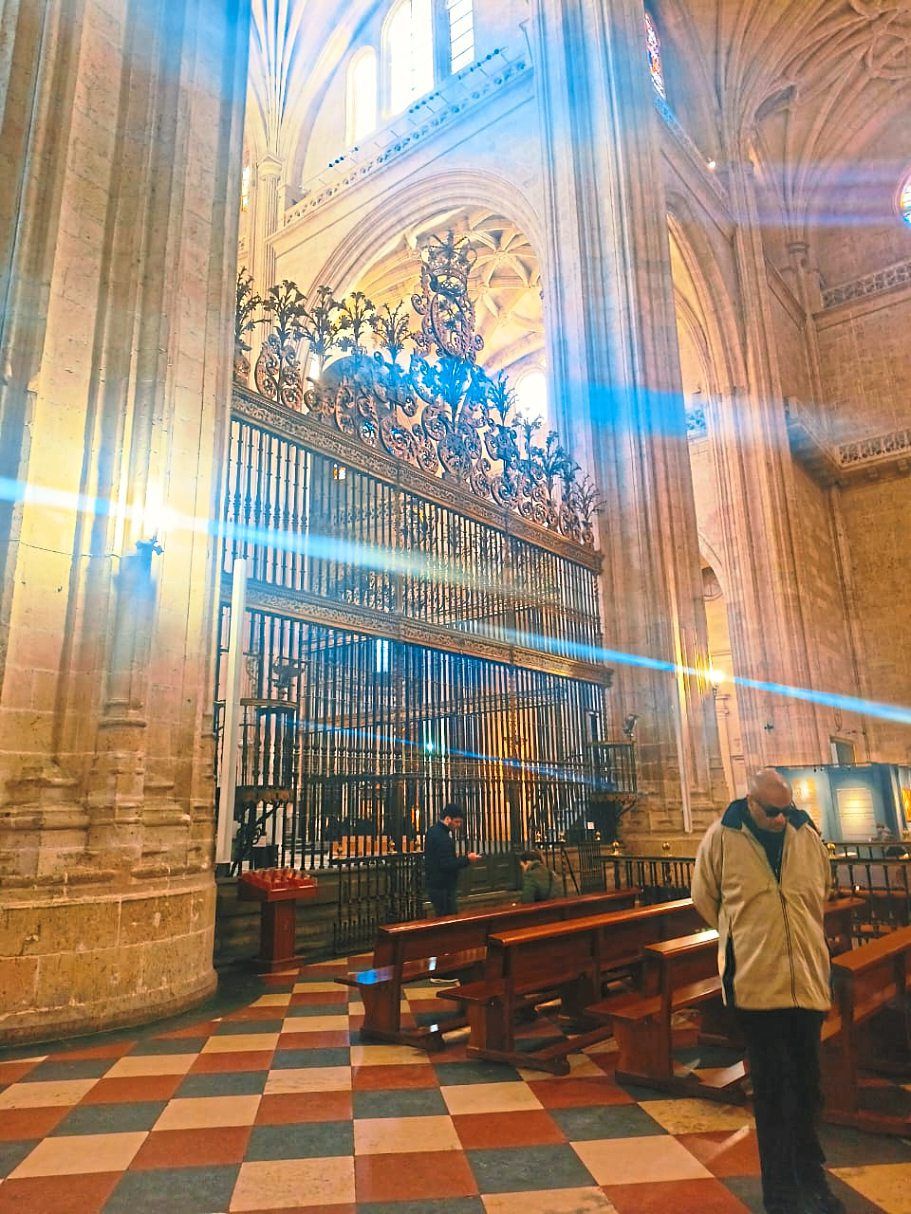
Next, we visited the Segovia Cathedral, which has to be seen in real life to be fully appreciated. Light poured through the stained-glass windows, and I couldn’t stop staring at the colours dancing across the floor. The building has high ceilings, and the warm lighting seemed to bathe the walls in a gold hue.
The interior has detailed, intricate embellishments that will have you staring in awe.
I was amazed to think that hundreds of years ago, people with archaic tools built this structure, piece by piece. It is one of the last Gothic cathedrals built in Spain (in the 16th century), which is unusual since most Gothic cathedrals are older.
The cathedral has around 20 chapels on either side of a long corridor. Every chapel has its own story. I discovered that it is an active cathedral, and religious services like masses are still held there.
The streets of Segovia were just as charming. Cobblestones under my feet, tiny shops lining the streets, and the smell of pastries in the air made me feel like I was really living in this city for a day.
My parents and I wandered around, stopping to take photos and taste some local treats – mainly churros. While the street snack can also be found in Malaysia, it somehow tasted better in its country of origin.
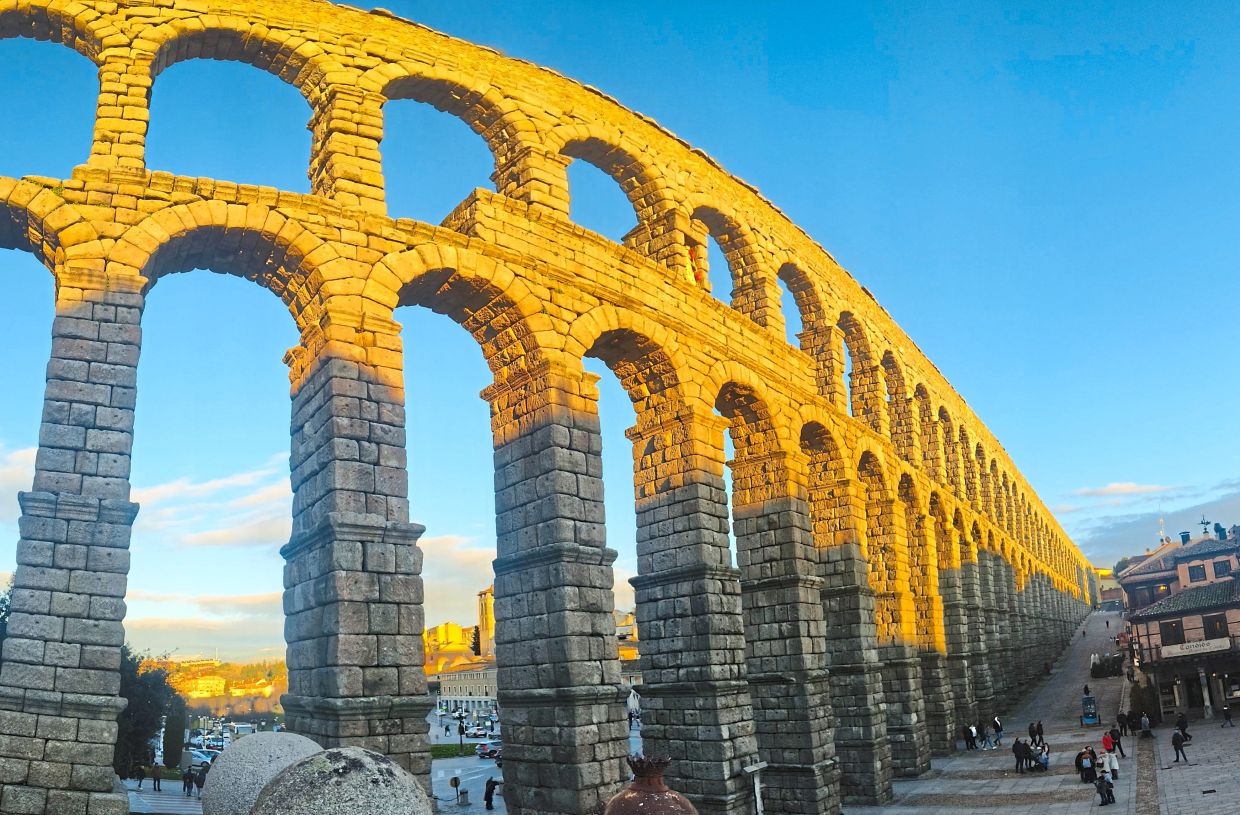
When we finally saw the Roman Aqueduct, my jaw dropped. Those granite blocks had stood for almost 2,000 years without any mortar. It was indeed a sight to behold.
It was built by the Romans around the 1st century to bring fresh water into Segovia. The water came from a mountain spring (about 15km away) and was carried into the city with the help of ... gravity. People only stopped using it in the 20th century.
Since the Aqueduct is a Unesco World Heritage Site, it is regularly cleaned, inspected and restored.
Going to Segovia was like stepping back in time and it helped me understand a simpler era. Although we can watch videos of these Spanish relics, being there in person brought them to life for us as we imagined how people in the past lived.
Before we knew it, it was time to leave. Sitting on the bus back to Madrid, I watched Segovia shrink in the distance. I felt a mix of sadness and happiness.
I was sad to leave such a magical place, but happy that I’d experienced it.
Segovia wasn’t just another stop on a trip; it was a place that made me notice history, beauty, and little moments with the people I love.
The views expressed here are entirely the writer’s own.