
From soft, pastel tones to fiery, vibrant ones – flowers of all colours come to life every spring. The season is well-loved not only for its beautiful blooms but also its crisp, chilly air.
Cool weather, but not so cold that it warrants thick getups, makes the season a pleasant one for strolling in parks and gardens.
Locals and tourists ambling around, occasionally stopping to admire unfurling petals, is a common sight at destinations renowned for their flora.
It’s true that for some destinations, the moment you hear their names mentioned in the context of spring visits, your mind would automatically associate them with certain flowers. One of the most popular examples of this is undoubtedly Japan and the sakura (cherry blossom) craze that the country sparks every springtime.
Malaysia may not have a spring season per se (which is a win in a way, as that means we get to see various types of plants flourishing throughout the year), but you must know by now that we also have a “sakura springtime” of sorts.
Around late February to early March, if you happen to be in areas where ecoma trees line the roads, you’ll see these transform into stunning avenues of pink and white blooms. There’s little wonder that tecoma has earned itself the “Malaysian sakura” moniker.
Of course, there is more to the season than just dainty, pink blossoms. Red, purple, yellow – let’s see which colourful flowers are representative of which places. They just might become part of your spring bucket list, if they’re not already.
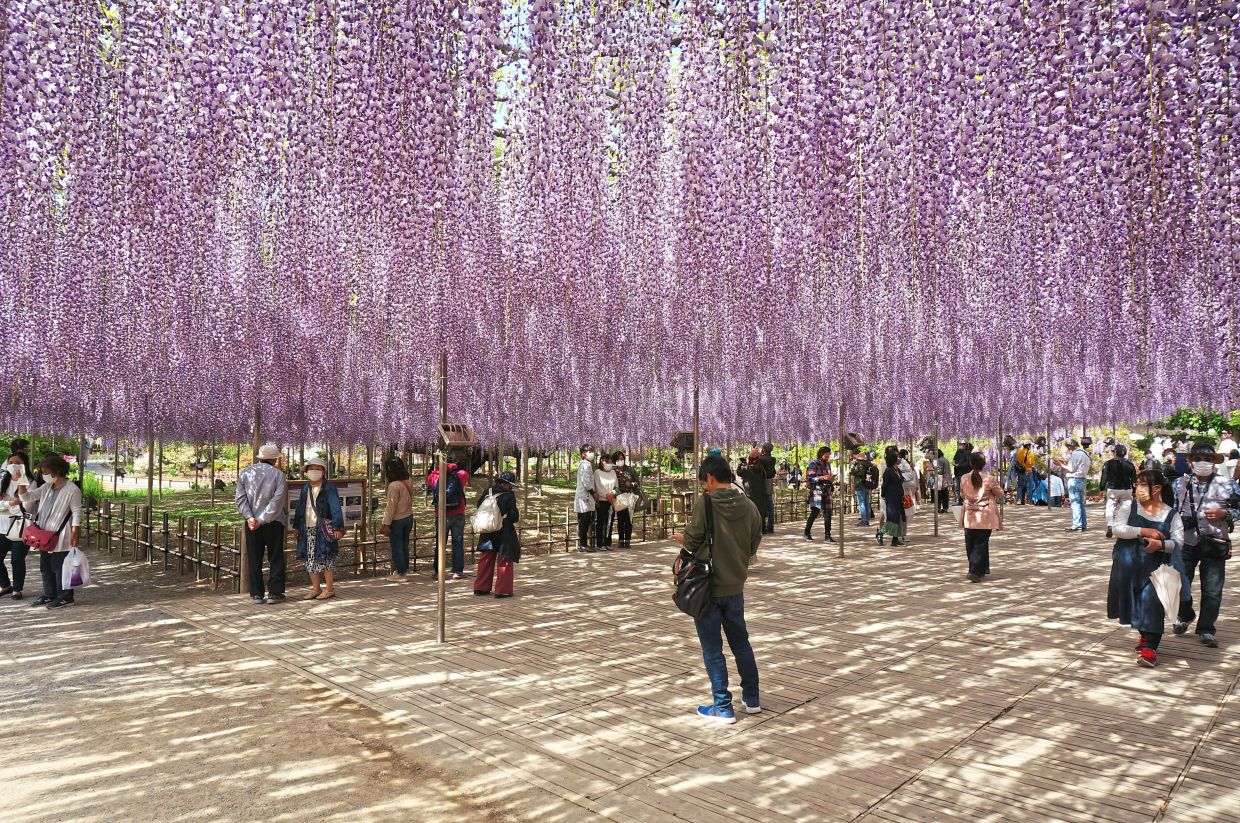
Wisteria (Japan)
Pink may dominate the early parts of spring in Japan, but from mid-April to May, purple is the colour of the season.
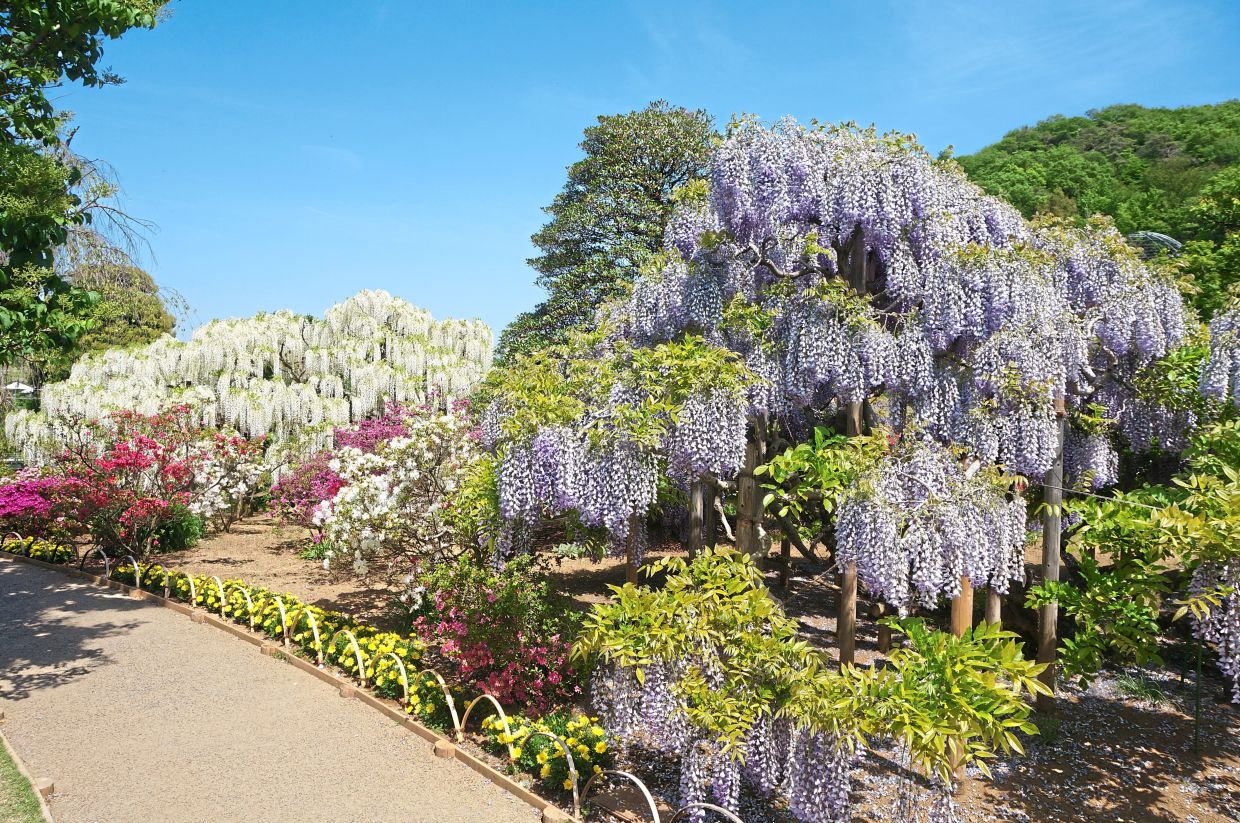
Wisteria, with its mesmerising cascade of (often) purple petals, is another native plant that draws visitors to Japan. But if you have to choose only one place to go and see it, then head to Ashikaga Flower Park in the Tochigi Prefecture.
With over 350 wisteria trees, the park is a great place for you to find them in other colours as well – from white and blue to the rarer pink and yellow varieties.
Visit during the annual “The Great Wisteria Festival” that runs from late April to mid-May to fully experience wisteria’s beauty. Throughout the festival, the park would be lit in the evenings, lending a different charm to the trees.
Getting to the park is easy enough. From Tokyo, it takes less than two hours by train to reach the JR Ashikaga Flower Park Station. Then from the station, it takes about five minutes to walk to the park.
Peach blossom (China)
You’re not alone if you find it hard to tell one delicate, pink “blossom” from another.
Cherry blossom, peach blossom, plum blossom ... they all look identical with their pastel petals. You’ll have to conduct a close inspection of their features to really see the differences.
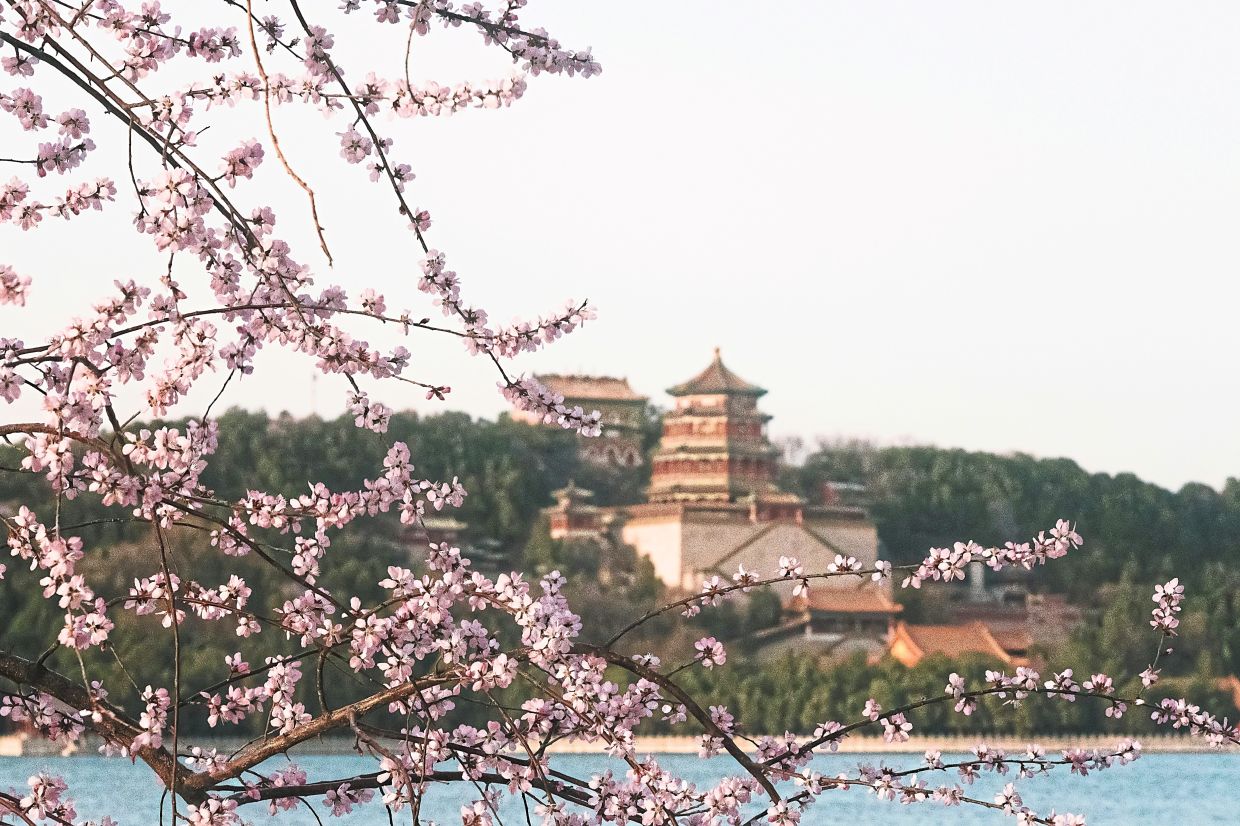
A hands-on experience is a great way to learn how to easily identify each one, hence a great excuse for you to visit the Summer Palace in Beijing, China.
The Unesco-listed Chinese classical garden is a popular spot for spring blossoms. Usually in March, all three types are in bloom, so you can see them in one place.
Being a traditionally revered flower with cultural significance, peach blossom or tao hua is the most popular among locals. So expect to see larger crowds in March and April, when it’s in bloom.
Both the Summer Palace and the Old Summer Palace (a historical site with European ruins) are great places for peach blossom viewing.
Other places around Beijing you can head to are the National Botanical Garden, popular for its Peach Blossom Creek; the Olympic Forest Park, which has the scenic Peach Blossom Valley; and Mutianyu Great Wall, where you can capture photos of the Great Wall surrounded by a sea of soft pink and white.
Hoa mai (Vietnam)
There is actually another type of pink blossom that you can find in Beijing, namely apricot blossom. But if you want a shorter travel distance to see a similar flower – or any pretty pink spring flowers – in person, go to Vietnam.
Spring in Vietnam is a little earlier, so you’ll have to go between January and February. That’s when Da Lat – Vietnam’s “City of Eternal Spring” – will be covered in the lovely pink cherry apricot blossoms (mai anh dao).
From January to March, Nhat Tan village in Hanoi is a good place to see the northern pink peach blossom (hoa dao).
To see them even earlier, the mountainous Mu Cang Chai in the Yen Bai Province is your best bet. Wild peach blossoms turn the landscape pink from as early as December.
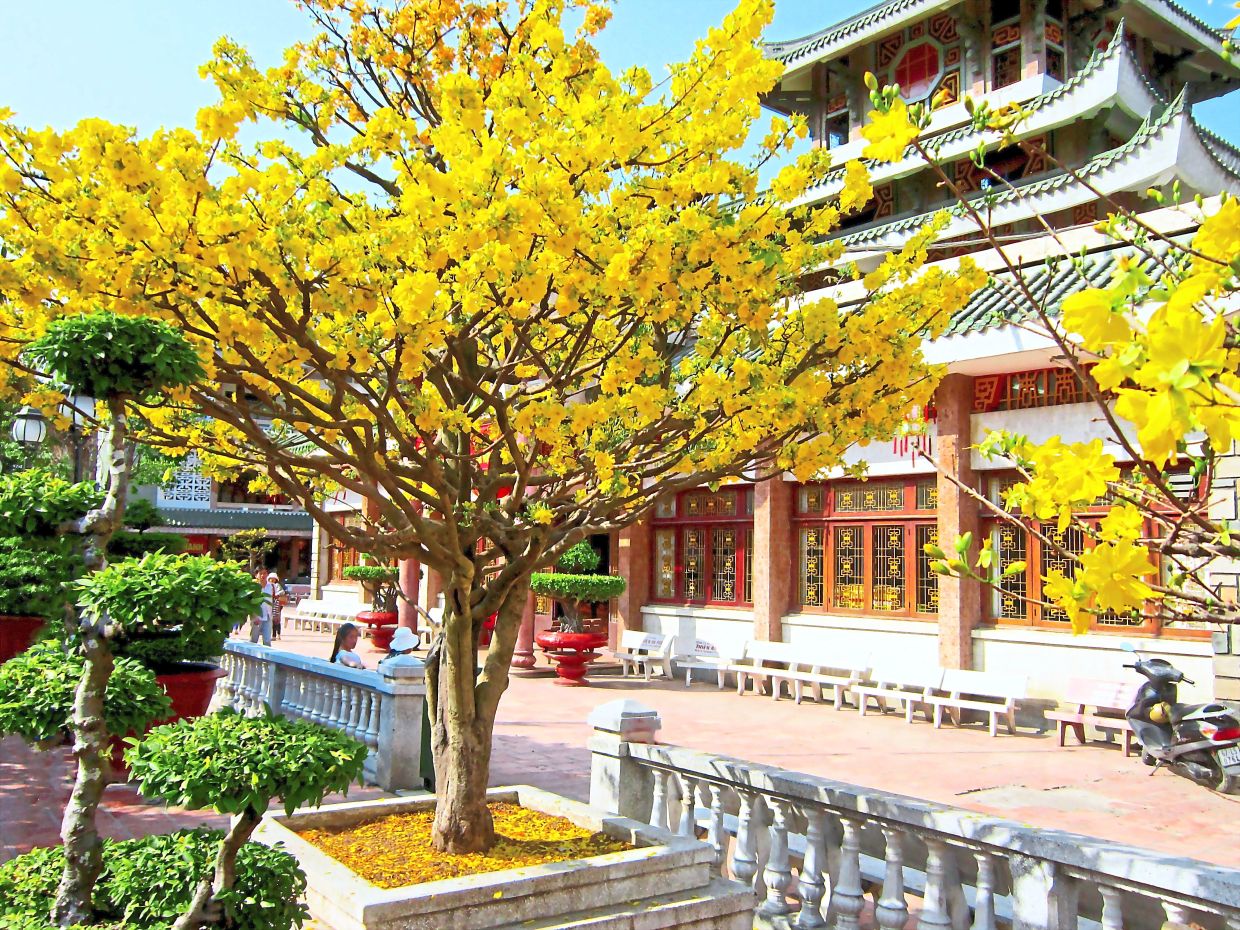
Due to its abundance in the northern parts of the country, pink peach blossom has long been the symbol of Tet (Vietnam’s Lunar New Year). But in the southern parts, their symbolic flower stands out – because it’s bright yellow instead of pink.
The yellow apricot blossom (hoa mai) has a colour that’s reflective not only of the warmer weather of southern provinces, but also of its regal beauty. It was known as the royal apricot blossom in the ancient capital of Hue.
Symbolising prosperity and luck, hoa mai is used to decorate homes during Tet. To see them in public spaces, visit Ho Chi Minh City, where you’ll find vendors selling them along the Saigon River. You can also visit temples, such as the city’s own Chua Ong Pagoda.
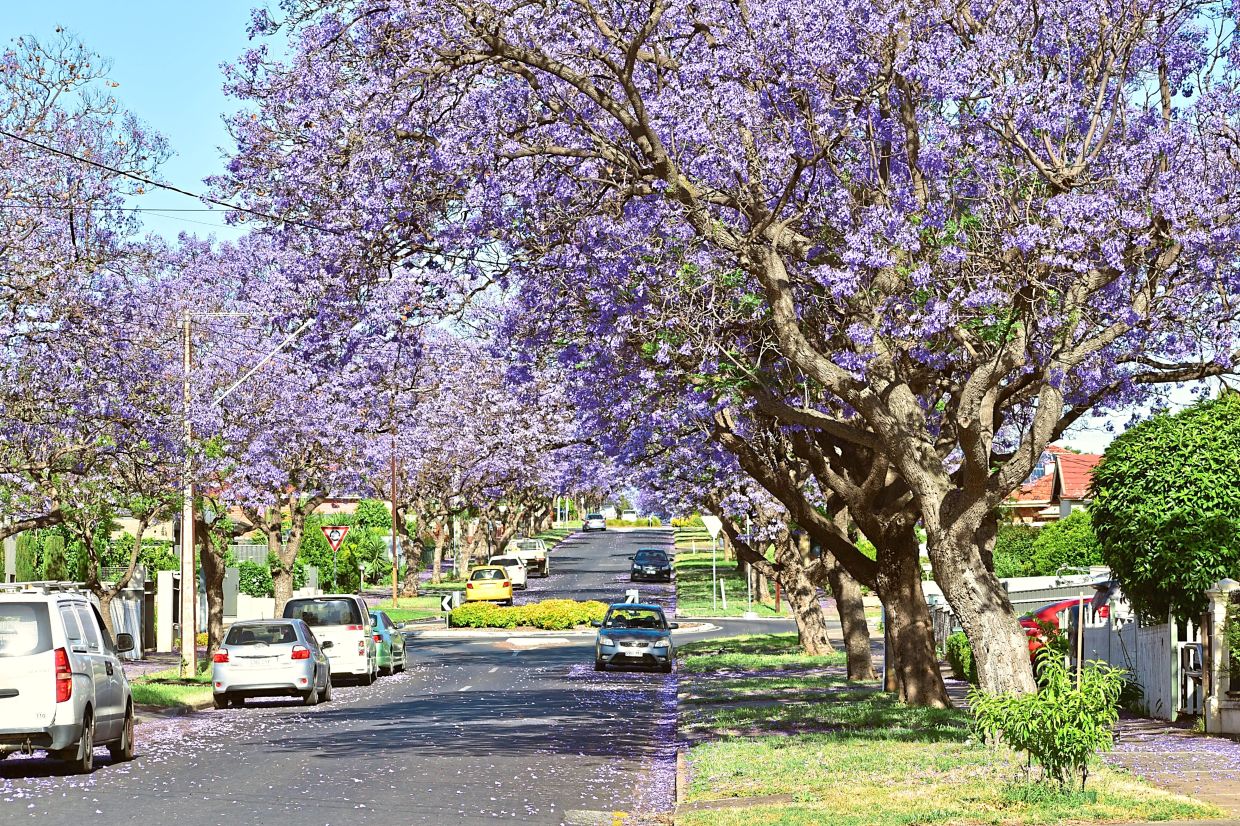
Jacaranda (Australia)
Located in the southern hemisphere, Australia experiences springtime from September to November. So if you want to plan a spring getaway in the later part of the year, Australia is one of the destinations you can consider.
Go during mid-October to November to see the country looking pretty in purple. Because that’s when the jacaranda trees are in bloom.
Despite being a non-native plant that’s actually considered an invasive species in certain parts of the country, jacaranda has become a symbol of Australian spring.
The historic city of Grafton in New South Wales is among the popular destinations for jacaranda viewing. The city even has its annual Grafton Jacaranda festival (happening this year from Oct 30 to Nov 8), said to be the longest running floral festival in Australia.
To see the trumpet-shaped purple-blue flowers a little earlier, go to Brisbane in Queensland. The jacaranda trees here begin to bloom as early as September.
The city has plenty of places featuring the purple petals. For example, New Farm Park is perfect if you want to picnic in a sea of jacaranda trees. Or if you prefer a riverside view featuring the beautiful blooms, go to Orleigh Park.
You can also see jacaranda in New Zealand; Tauranga is known as the country’s “Jacaranda Capital”.
And since jacaranda is native to South America, countries like Brazil and Argentina are also popular places to visit for it.
If you want to see it even earlier in the year, however, you don’t have to wait for the southern hemisphere spring. In India, where spring typically lasts from February to April, you can see jacaranda in bloom from late February.
The hill stations of Munnar (Kerala) and Coonoor (Tamil Nadu) are especially popular for this, with March to April being the peak season to see jacaranda covering the hillsides. In Coonoor, the bloom may even last until early May.
Rhododendron (Nepal)
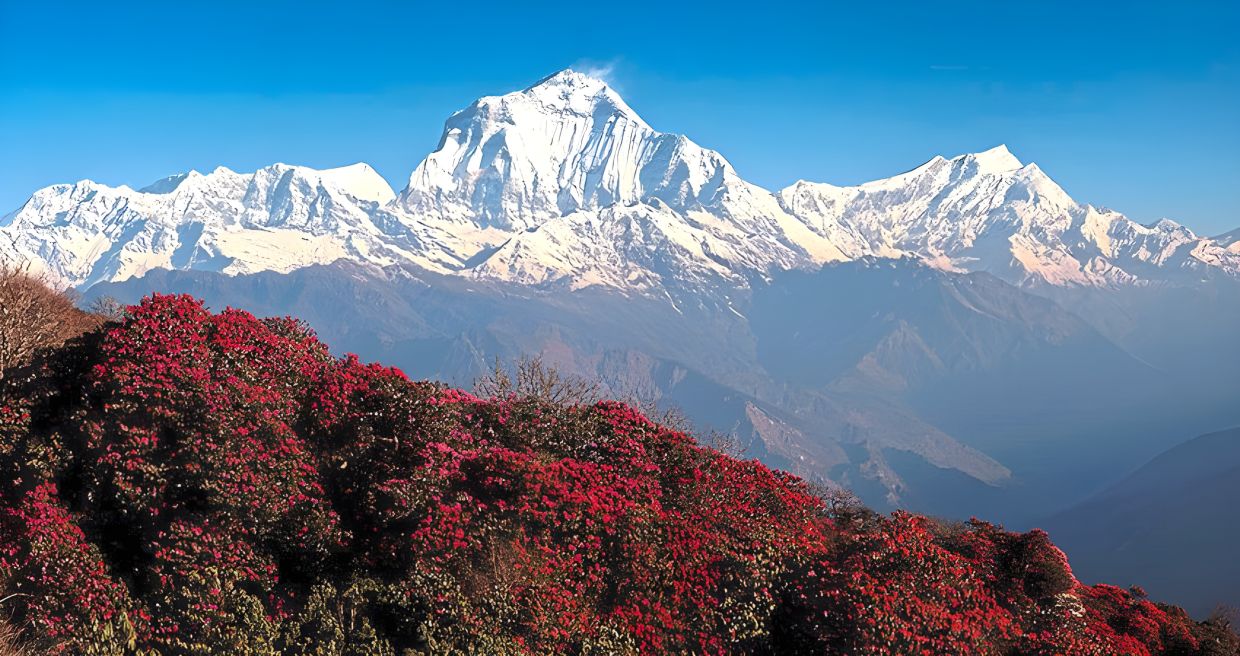
Trekking while admiring the vibrant red of Nepal’s national flower, rhododendron, is a popular spring activity in the landlocked country.
The flower does come in other colours too, such as pink, purple and white, but red remains the most revered for its cultural significance and abundance.
Rhododendron is in bloom in regions at lower altitudes from March to April. At higher altitudes, the bloom can last until May.
If you feel like getting some steps in as you admire the flower, hike the Tinjure-Milke-Jaljale Trail, which is widely referred to as “the rhododendron capital of Nepal”. It earns the title due to its diverse collection of rhododendron species, with 28 to 31 species found in the single area.
Another popular spot for rhododendron trekking is the Ghorepani Poon Hill. Here you can see the crimson flower forming a “red tunnel” in the forest.
For more solitude and seclusion while rhododendron trekking, consider Makalu Barun National Park. You will need to obtain a permit to hike in the park. Here you will see 25 species of rhododendrons in various colours.
Langtang National Park is also a favourite among trekkers for its spectacular views of bright rhododendrons set against snow-capped peaks.
The flower isn’t the only red natural beauty you’ll encounter here by the way. While walking through the park, you might come across adorable red pandas.
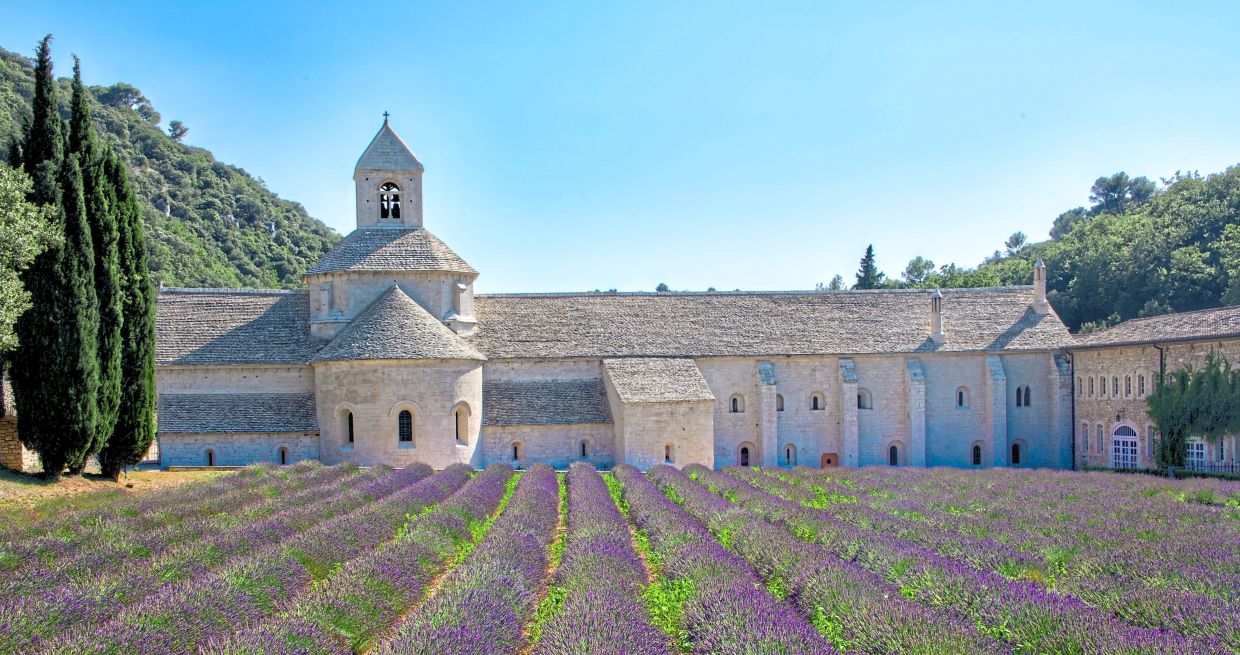
Lavender (France)
Arguably the most popular purple flower in the world, lavender can be found growing in places with moderately dry climates.
Malaysia can be too humid for the flowering plant, but it could still be grown in certain places here, such as the Lavender Garden in Cameron Highlands, Pahang.
But if you’re looking for the “real deal”, head to Provence in France, which is synonymous with the fragrant flower. Plateau de Valensole is a highly visited destination in the French region for its rolling fields of aromatic lavender.
Technically, lavender is a summer flower. But there are variants that bloom in late spring (end of May), and French lavender happens to be one of them. So you can go ahead and put this on your spring/summer travel bucket list.
Other spots in Provence where you can see purple-hued fields stretching across the horizon are the Chemin des Lavandes in the Sault plain and the Luberon Valley. At the latter, there is also the Lavender Museum Luberon, where you can learn more about the popular plant.
For a hands-on experience of harvesting and processing lavender, visit Un Mas en Provence. The farm is a tourist attraction that offers guided tours and workshops.
You can take part in harvesting the plant, then the distillation using a still. Afterwards, you can used the lavender to create items like a scented sachet or a personalised perfume as a unique souvenir to commemorate your trip.
Tulips (Netherlands)
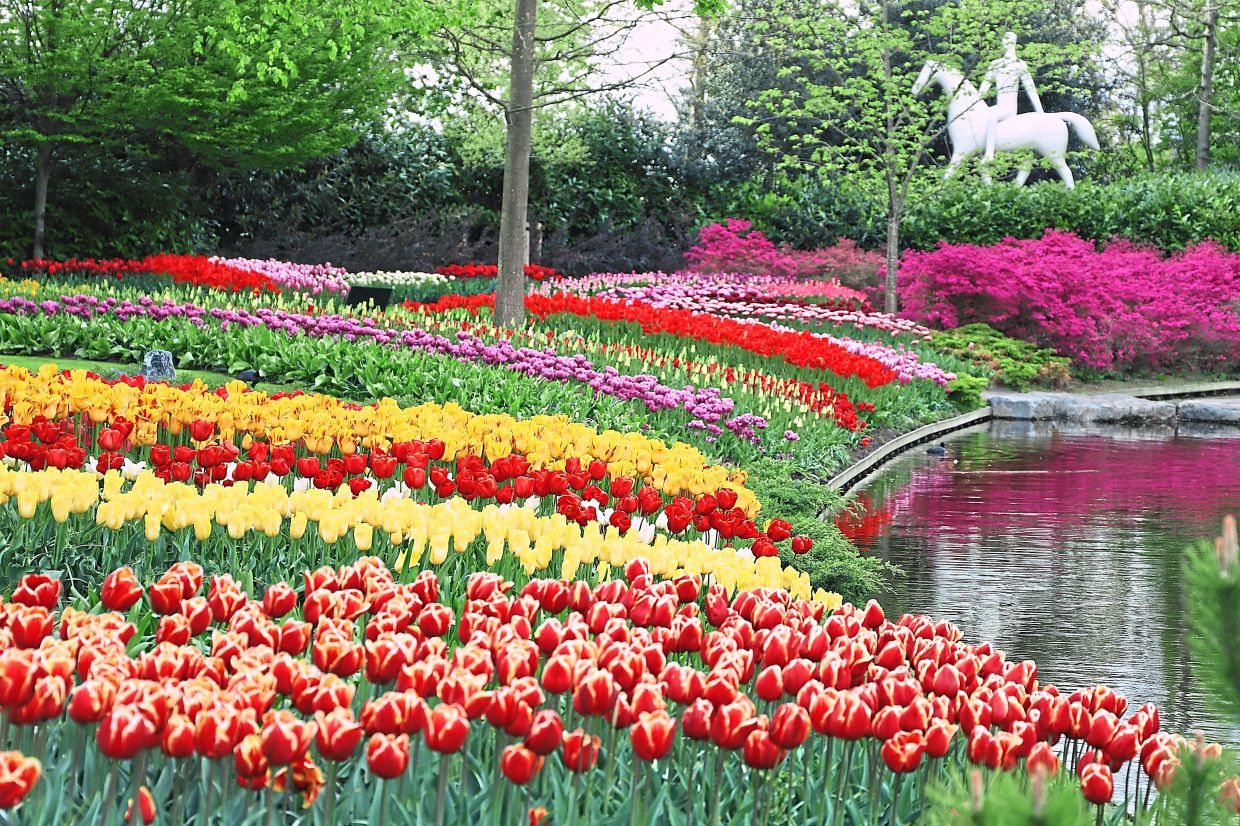
Should you wish to visit a place that is the epitome of spring beauty, look no further than Keukenhof.
Located in Lisse, Netherlands, the flower park – nicknamed the “Garden of Europe” – is open only during springtime (March to May). It currently welcomes visitors until May 10.
Millions of visitors flock to the park each year, eager to take in the lovely sights and smell of blooming flowers. While there are other types of flowers at the park, it is most well known for its tulips.
There are over 800 varieties of tulips available, painting the park in colours that range from vivid red and yellow to soft pink and purple. There are also striped, multicoloured tulips that lend the park an even more magical appearance.
That said, one of the most iconic landscape designs at the park doesn’t feature tulips as
the main star. Called “the blue river”, this 60m-long winding floral patch is made up of muscari or blue grape hyacinths. Of course, you’ll spot tulips flanking the “river” on both sides.
If you want to see a myriad flowers blooming at the same time, best to visit during March to April.
According to the “bloom calendar”, which you can find on the park’s official website (keukenhof.nl/en/), March to early April is best for early-blooming flowers like crocuses, daffodils, hyacinths and early small tulips.
The period from early April to early May is when you can see larger tulips, as well as other flowers like daffodils, muscari, fritillaria and late-flowering hyacinths.
From early until mid-May, the park might not be as colourful since most of the flowers are no longer in bloom. But you can still visit to see late-flowering tulips, irises and alliums.
On the same website, you can follow the “flower report”. It is updated every few days so you can keep track of what flowers are in bloom at the moment.
Beautiful blooms across the globe
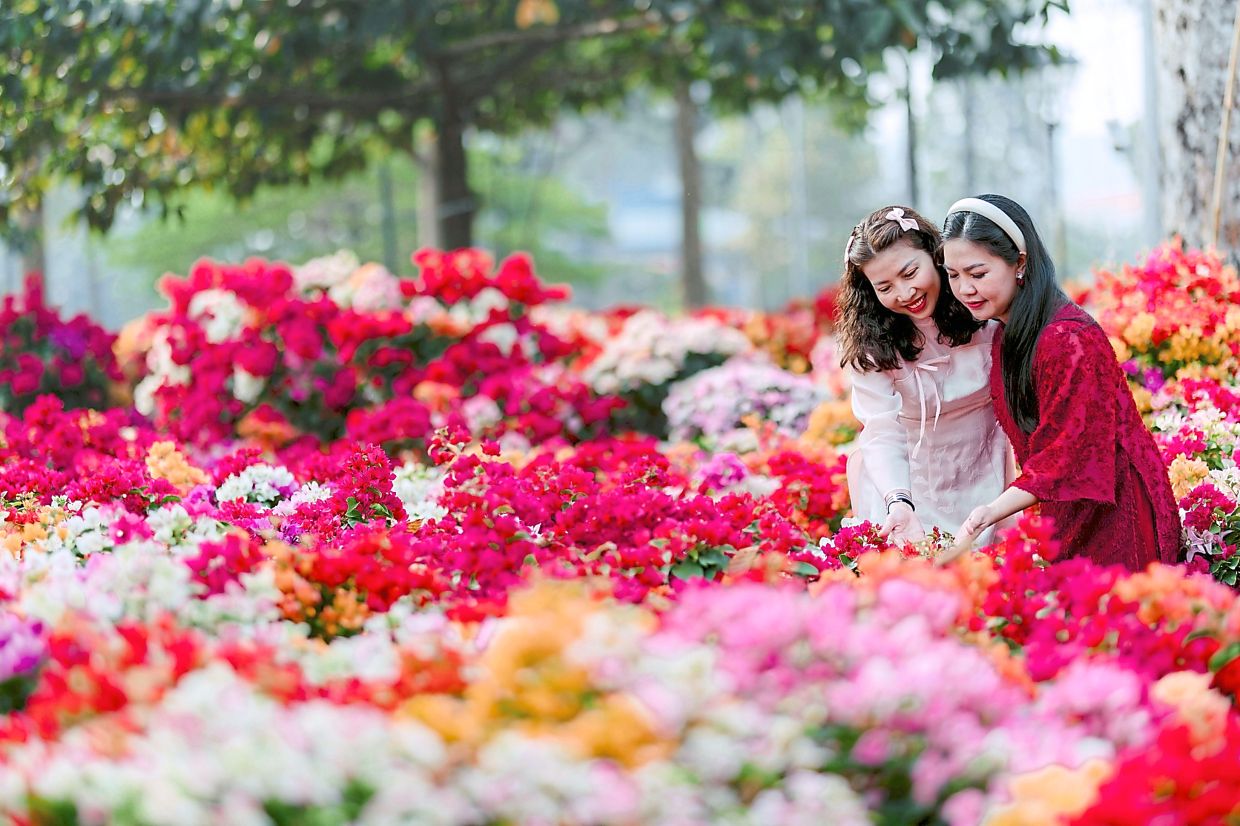
Flower tourism peaks during spring, when various flowers are in bloom. — Pexels
Keukenhof Gardens in The Netherlands is world-famous for its tulips. — Unsplash
In France, lavender fields can be found in the Provence region. — Unsplash
Ashikaga Flower Park in Japan is popular for wisteria. — Slimhannya/Wikimedia Commons
Rhododendron is the national flower of Nepal. — Himalaya Trekking Pvt Ltd/Wikimedia Commons
Jacaranda turns streets in Australia purple every spring. — Pexels
Vietnam is ‘painted yellow’ during Tet. — BUI THUY DAO NGUYEN/Wikimedia Commons
Ashikaga Flower Park in Japan is popular for wisteria. — Slimhannya/Wikimedia Commons
Spring blossoms are a big draw at China’s Summer Palace. — Unsplash