My husband is Cantonese, and I am Cantonese. It’s a no-brainer that one day, we will visit Guangdong Province in China, even if we have no relatives left there that we know of.
“Think of it as a culinary adventure,” my husband said. “Cantonese cuisine is supposed to be the most famous of all Chinese cuisines.”
“Even that of Hong Kong?” I asked dubiously. I had only been to Guangzhou once when I was a teenager, back when it was still called Canton.
“Where do you think people from Hong Kong got their cuisine from?”
Many articles have been written about Guangzhou, but we wanted to explore the little towns and villages outside it to taste the delicacies that historically came from them.
And sure, maybe do a little sightseeing too, but that is honestly secondary to the food.
Home of martial arts
About 40 minutes away from Guangzhou lies the city of Foshan. I don’t think it can be called a town; it’s an actual city in itself. “Fo shan” means Buddha Mountain because three Buddha statues were unearthed here back in the day.
Foshan is very, very old – 1033 BCE old to be exact, which means it was founded when the Egyptian pharaohs were still “walking like Egyptians”. It’s the home of Cantonese opera, ceramics, the lion dance, and martial arts.
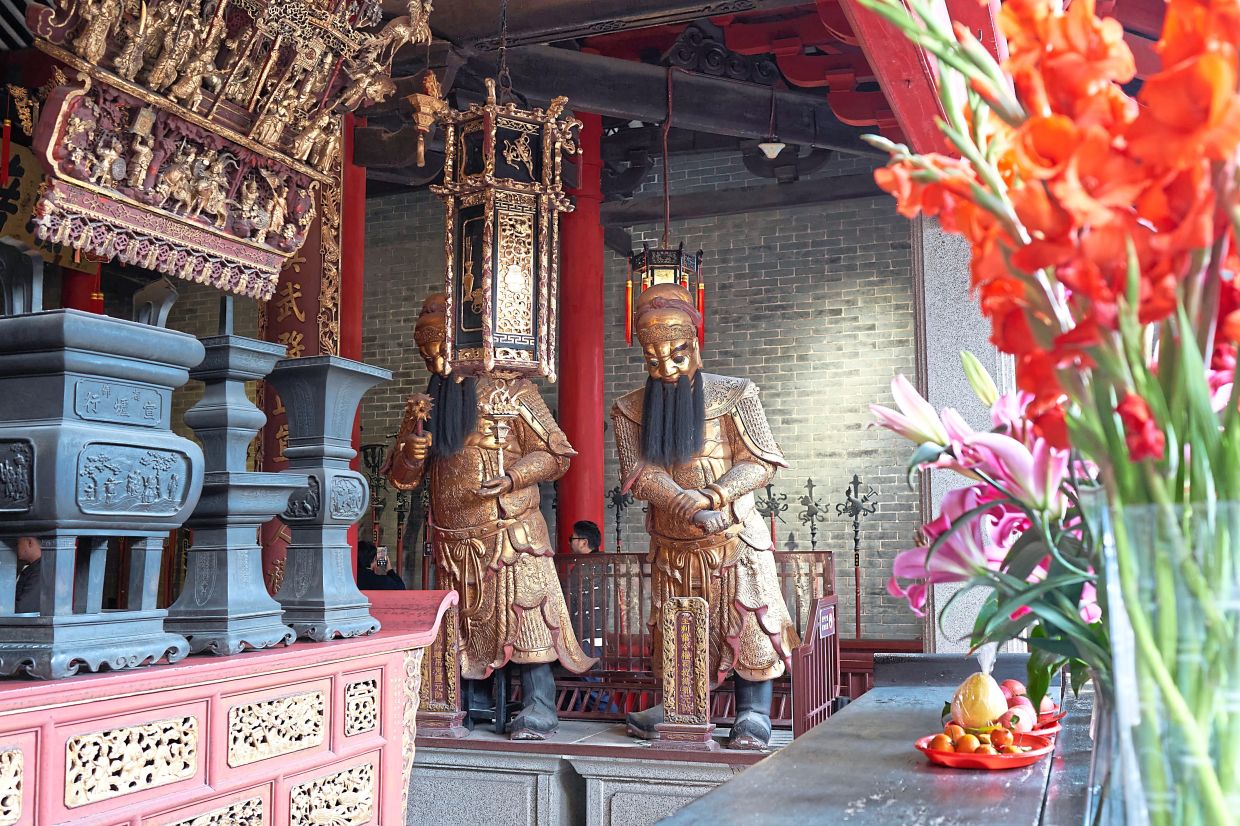
The Ancestral Temple Complex is a good start if you want to learn about the history of martial arts. It was built during the Song Dynasty, which is circa 11th century.
The complex contains the Ancestral Temple, the Confucius Temple, the Huang Fei Hong Memorial Hall and a newer ttraction, the Ip Man Museum.
I always knew Huang Fei Hong as “Wong Fei Hung” because I have been brought up by Hong Kong-style Jackie Chan and Jet Li iterations of the “character”. Here, you learn about the history of the actual man himself, who looks nothing like the actors who have played him.
You get to see Huang’s real martial arts moves, replicas of the wooden post he used for practice, and some movie memorabilia.
You see similar things for Ip Man, who was the grandmaster of Wing Chun, another form of Chinese martial art. Video clips of actor Donnie Yen as Ip Man, who has played the man several times in movies, play continuously on the walls of the Ip Man Museum.
We went to the Xin Tian Di streets (“New Heaven and Earth”) right next to the temple for lunch and some desserts. This is a mecca of Lingnan style architecture which has been carefully preserved and restored. Today, it hosts a plethora of restaurants, ice-cream parlours and shops selling everything from cosmetics to souvenirs.
You need at least two hours to try the different pastries and delicacies sold on this street. We opted for the famous roast goose and milk curd.
Because Foshan is the home of ceramics, we just had to visit the Nanfeng ancient kiln, located deep within an alley with cobblestone paths. The place is so touristy that all the paths are lined with shops. I bought a ceramic duck for a fraction of the price it would have cost in Malaysia.
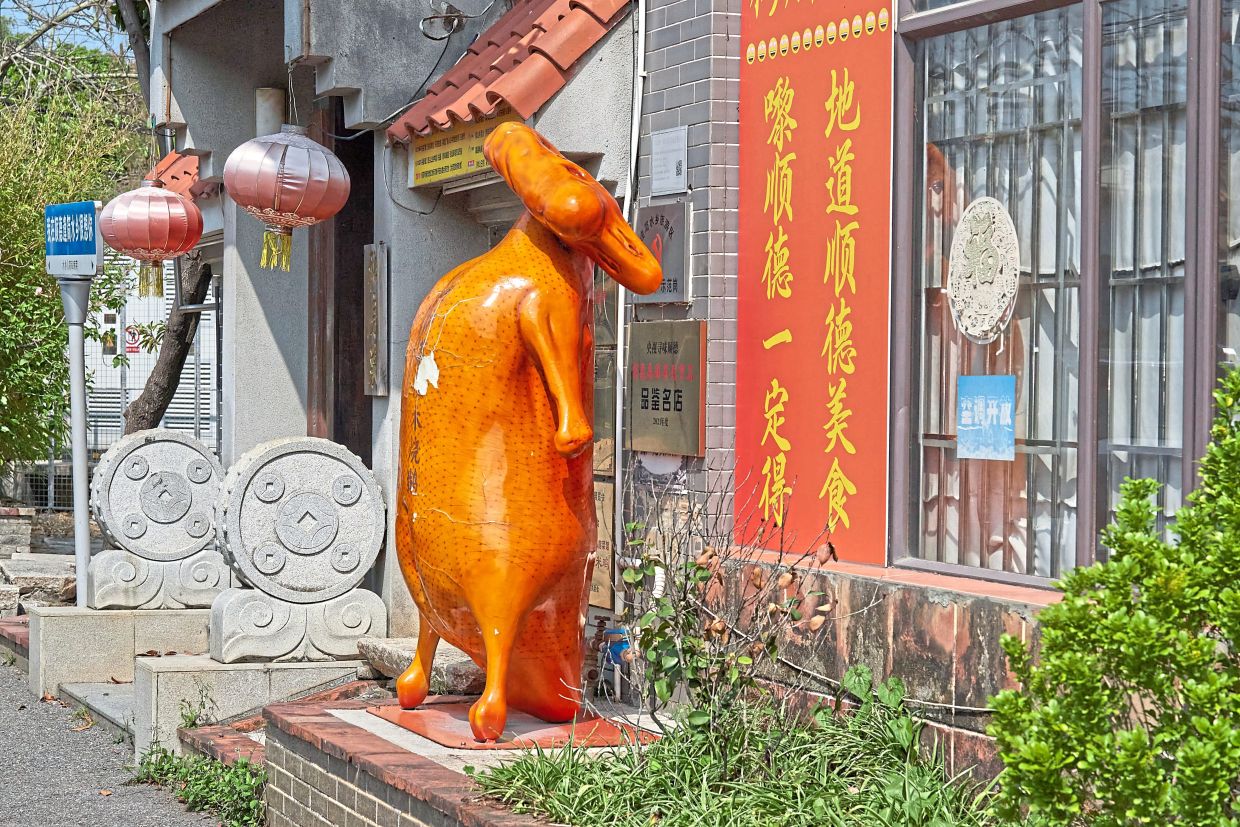
Choose roast goose
Meanwhile, Shun De is a district of Foshan on the Pearl River delta but deserves its own day visit because Shun De cuisine is considered the crown jewel of all Cantonese cuisine – so much so that it is known as the “home of all Cantonese chefs”.
Here, roast goose and fried pigeon are must-tries, as is the buffalo milk pudding. The food and shopping streets are next to the Qing Hui Yuan, a beautiful attraction that boasts a perfect Chinese-style garden replete with pavilions, bridges, moon gates and koi ponds.
The roast goose is unbeatable here. Just go to any shop with a queue, the locals tell you – it is bound to be good. I prefer that to fried pigeon, though my companions swear by the latter. Goose has more flesh than pigeon and I like my poultry with more meat.
I was not a fan of the buffalo fried milk pudding, however. My husband said it was the best he had ever tasted, but maybe I have been brought up by too much tau fu fa taste expectations, and milk pudding is not tau fu fa.
I did notice that the vegetables were fresh and unusually sweet, even on their own, unlike the ones in Malaysia, where you have to dress your vegetables up with lots of gravy and sauces to make meat lovers eat them.
I thought the lap mei fan was the best I’d ever tasted. This is Chinese sausage with rice, baked in a claypot. In Malaysia, you hardly get this dish unless it is around Chinese New Year. In Guangdong, you can get it all year round and in many varieties too.
Next, we went to Fengjian Water Town. If you think this is a romantic and ancient water village, you’re wrong. It is disappointingly touristy and many of the houses look “new”. My friend, Pan, was so disappointed that he spent the entire water village visit drinking cappuccino in a modern coffee shop.
“This is not old,” he complained.
“Well, they didn’t say it was old. They said it was a water village, and I guess it’s a village ... with water,” I said. “So, they didn’t lie.”
An ancient town
We got our “old town” fix at Shawan Ancient Town in Panyu district; it actually does look like it could be 800 years old.
Founded during the Song Dynasty, its cobbled streets weave through refurbished houses displaying Lingnan architecture. But the most remarkable thing about it are the oyster shell walls, which are literally walls decorated with oyster shells.
The “fanciest” display of this is outside the toilet of Liugeng Ancestral Hall.
The old alleys are so cute that in every few feet there is an Instagram-worthy spot.
Look out for the Wenfeng Pagoda, a temple where people who want to do well in their exams go to pray.
But back to the food. We went to the renowned Xiyuan restaurant for dim sum and other dishes, and it was the most excellent food we’ve tasted during our entire journey. Yes, even better than in Shun De.
Most meals, even in a fancy restaurant like Xiyuan, will cost you much less than a proper Chinese restaurant in Malaysia, so take your fill of it. (We paid around RM30 per person for full meals.)
Beautiful and cheap
About a 90-minute drive north of Guangzhou lies Xitou Ancient Village, considered one of the prettiest villages in the region. People go there as a starting point to hike up to the forests and the Qianlonggou waterfall. Indeed, there are plenty of trails if you intend to go hiking here.
We were not there to hike but to taste the cuisine. Xitou is known as the birthplace of tau fu fa. The tau fu fa here is the softest and most delicate you will ever taste. It was so good that my friends all decided to have another round of it after lunch.
The humble roadside stalls and ancient cobblestone roads are filled with culinary merchandise, but you have to be very aware of what you are buying. I noticed a lot of what honestly looked like dried rodents being sold along sausages. (There are cultures in certain parts of the world where rodents are considered a delicacy, but it’s just not for me.)
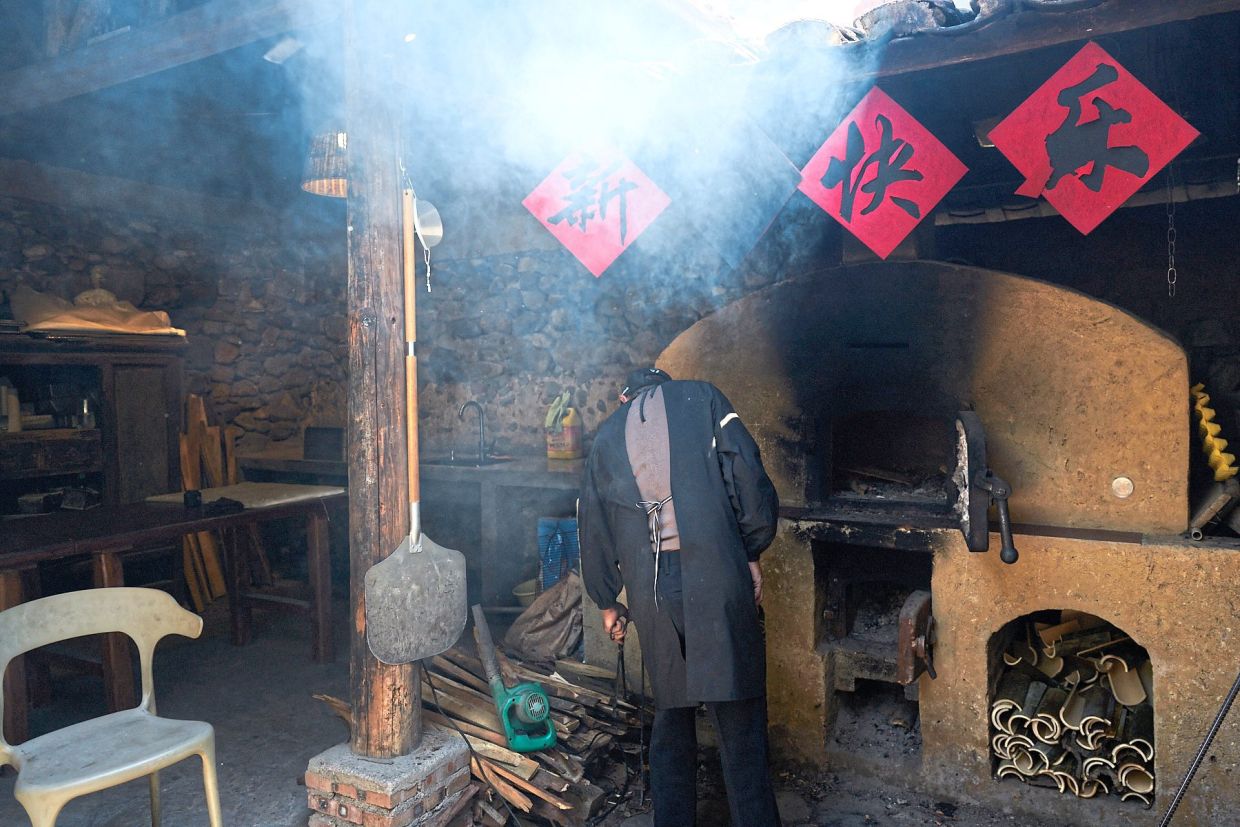
More palatable are the famous bamboo rice and roast chicken. These are made traditionally in old brick ovens. I thought the bamboo rice was more for novelty; I far preferred the Shun De lap mei fan.
But the food was still excellent compared to what you get in Malaysia, and again, very cheap. The stalls also sell a lot of juices made from the fruits grown in the area.
Vendors give out free samples, but beware that if you don’t buy after trying, you might get a scolding in Mandarin!
This was part of the reason why I got a huge packet of dried sour plums, which were very big and fleshy and not doused in salt.