Travelling to a foreign destination becomes much more enriching when you understand or can speak the local language.
Sure, translating languages is now as easy as tapping a button on your smartphone, given the multitude of apps available. But it feels far more rewarding when you are able to interact more familiarly with the locals.
Even knowing a few simple phrases – or the local slang – can help you communicate better, connect with the community and gain a deeper understanding of the culture and place.
Learning a new language takes time and commitment, and there are plenty of opportunities in Malaysia to get started.
From university degrees to language centres, we spoke to learners and educators to find out how picking up a foreign language can open doors to meaningful and enriching travel experiences.
Beyond the classroom
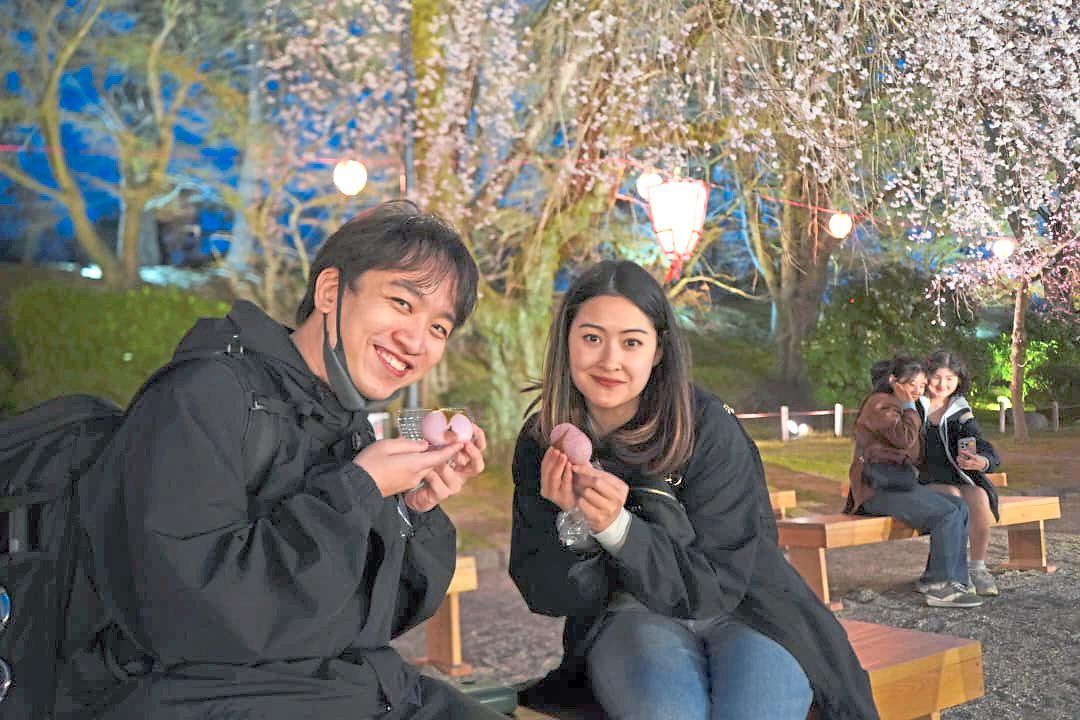
Three decades ago Zetty Erisa Buang, 36, was introduced to Japanese culture. Her parents had brought her to a Japanese restaurant, where she found herself awestruck by a staff elegantly dressed in a kimono.
“She spoke in Japanese, a language I was not familiar with, but it sounded so beautiful,” says Zetty, citing that as the moment that piqued her interest in the language.
Fast forward to present time, and Zetty has not only completed her Japanese language studies at the A to Z Language Centre in Malaysia, but she has also gone to Nagoya, Japan to further improve her skills.
Zetty spent about six weeks at the Japanese Language School there from February to April this year, where she opted for one of the flexible courses.
As someone who finds travelling more thrilling when done with friends, Zetty is grateful that she was able to embark on this journey with a fellow Malaysian classmate.
Foo Kuang Yao, 34, who was in the same programme, shares that they were introduced to the course by one of their classmates in Malaysia who had recently returned from studying in another Japanese city, Kyoto.
“It felt like a good opportunity because, after finishing our studies here, we could put what we had learned into practice in Japan,” says Foo.
Zetty agrees. “We wanted to polish our Japanese, test our skills there.”
The duo explored other parts of the country, namely Kyoto, Osaka, Tokyo and Hokkaido. They spent four days in each area, just enough time to discover the cities’ respective cultural and natural wonders.
Of course, their time was largely spent in Nagoya, where they participated in the different activities conducted by the language school.
Other than visiting cultural spots, the school also held activities like flower arrangement classes and tea ceremony sessions. “Sometimes, when Foo and I wanted to revisit a place, we would simply go again on the weekends,” Zetty says.
Their reasons for taking Japanese lessons are different. Zetty is encouraged by her husband so that she can be the “translator” the next time they visit Japan together. Foo, meanwhile, loves consuming Japanese media – from films to video games – and would love to have a deeper understanding of them.
Both are glad to have experienced Nagoya together.
“Being in a foreign country takes some getting used to, so having someone there to rely on made a big difference,” says Foo. “We helped each other more times than we could count.”
Zetty muses, “It felt more like we were on a student exchange programme than anything.
“We were both pretty clumsy when speaking to locals in Japanese sometimes. But if there were certain words I could not remember, Foo would help me out, and vice versa.”
Foo was most ecstatic to have visited the Final Fantasy XIV-themed cafe in Tokyo. “I played the game for nearly a decade, so it was a dream destination for me,” he says.
For Zetty, she enjoyed Hokkaido so much that she would love to revisit one day with her husband. “But he insists on going back to Kyoto ... we’ll see,” she says.
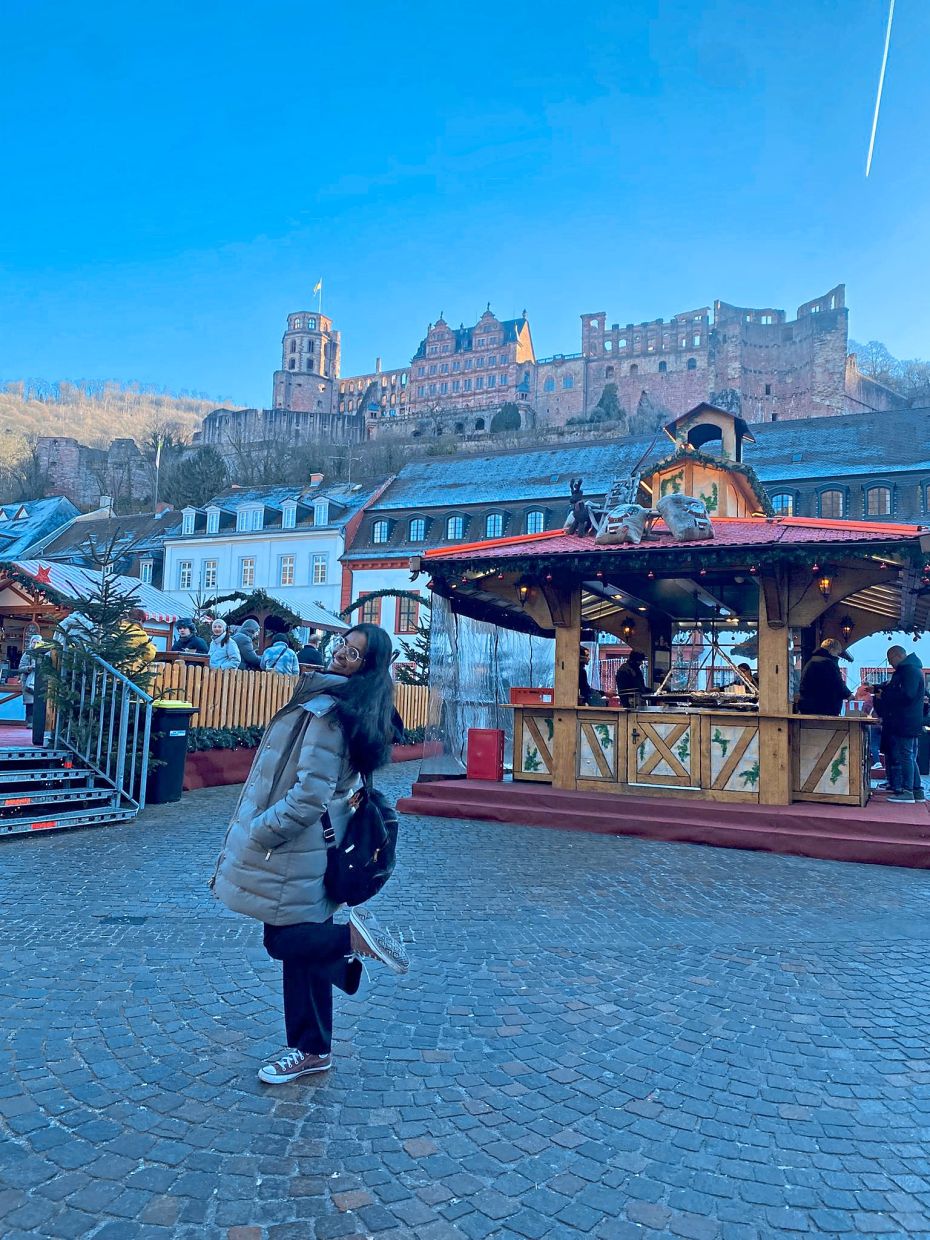
Meanwhile, Thrishika Kumarasan, 24, is so charmed by the German language that she chose to continue her studies in Germany.
The European country was her destination of choice after completing her German language classes at Goethe-Institute Malaysia. She has been in Germany for almost two years now, where she finds time to travel around the country.
Heidelberg, Berlin, Frankfurt, Cologne, Karlsruhe and Stuttgart are some of the places she has visited.
“Knowing the language makes travelling there much easier,” she says.
When she first arrived in the country, she recalls, she got lost after boarding the wrong train. But instead of panicking, she confidently asked for help from the locals in German, and eventually found her way to her hotel.
“I have had many meaningful conversations with strangers there, like when having coffee at a cafe,” she shares.
Through conversing with the locals, she learned about new places and activities to try. “Travelling to a village near Gerolstein and trying parkour arrow shooting with friends is one of the fondest memories I have in Germany,” she says.
Creating opportunities
According to Spanish language graduate Jesmin Liew, when it comes to learning a new language, self-discipline and curiosity matter just as much as classroom lessons.
“I believe the more you expose yourself to the language and actively use it, the faster you improve,” Liew, 24, says. She recently graduated with a Bachelor of Spanish Language and Linguistics from Universiti Malaya (UM) and now works at the Embassy of Peru in Malaysia.
Learning Spanish was never part of Liew’s original plan. Like many young people, she once imagined becoming either a teacher, lawyer or journalist.
But after being offered a place in UM’s Spanish programme – and encouraged by her sister, who believed knowing another language would be a valuable skill – she decided to give it a try.
Like any new language, learning Spanish came with its own challenges.
“Spanish grammar, especially its verb conjugations and formal and informal forms of address, initially felt overwhelming. Opportunities to practice were limited because Malaysia has a relatively small Spanish-speaking community,” she explains.
To compensate, she looked for ways to “surround” herself with the language. She revised class materials regularly, switched her phone’s default language to Spanish, made friends with native speakers online and watched Spanish dramas like La Casa De Papel (Money Heist) and Las Chicas Del Cable (Cable Girls) with Spanish and Chinese subtitles.
“I believe learning a language isn’t only about studying in class,” Liew says. “It’s about creating opportunities to use it every day and finding ways to make the process enjoyable.”
For instance, the role-play exercises she did in university, where students acted out everyday situations such as ordering food or asking for directions, helped build her confidence in speaking Spanish.
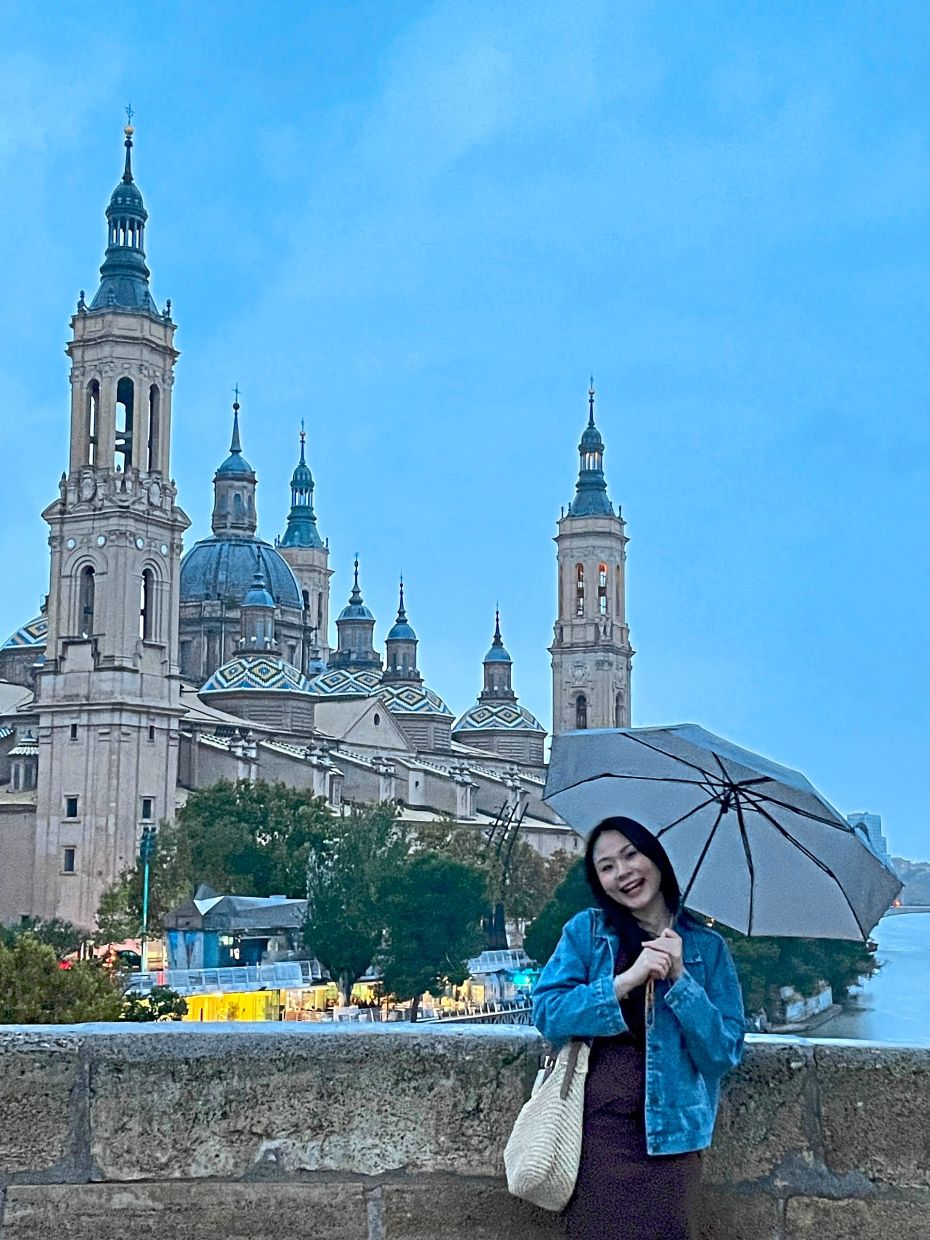
Liew’s biggest breakthrough came during a three-month student exchange programme at the University of La Rioja in Logrono, where she got to experience daily life in Spain first-hand.
While there, she travelled to other cities including Madrid, Barcelona, Bilbao and Zaragoza. Liew also visited several of Spain’s Unesco-listed destinations, discovering not only the language but also the country’s history, architecture and culture.
“Living there made me more independent, open-minded and confident,” she says. “It wasn’t just about speaking Spanish every day. It was about understanding a different way of life.”
Many universities and language schools that run Spanish programmes also allow their students to pair their courses with visits to Unesco-listed cities such as Salamanca, Alcala de Henares and Granada.

For Spanish lecturer Laura Pachon Gallegos, learning a language is about much more than just memorising vocabulary – it is a gateway to richer travel experiences, meaningful cultural exchanges and wider career opportunities.
“When you can speak the local language, even at a basic level, travelling becomes much more rewarding,” says Gallegos, 32, who has been teaching at UM since 2017.
“You can communicate more easily, understand the culture more deeply and interact with local communities in a respectful way. Spanish speakers especially appreciate it when visitors make the effort to speak our language, even if it’s with mistakes or a strong accent.”
She encourages students not to worry about sounding perfect.
“Communication comes first. Fluency comes with practice and patience.”
Gallegos has noticed that students’ motivations for learning Spanish have evolved over the years. While language study was once largely driven by academic requirements, many students today are inspired by travel, overseas exchange programmes, global careers and exposure to Spanish-language films, music and social media.
Many of UM’s Spanish language graduates have gone on to work as teachers, translators or with tourism companies serving Spanish-speaking visitors, Gallegos shares.
Where to learn
Malaysia has numerous schools, universities and centres that offer foreign language lessons. One such institution is the Goethe-Institut Malaysia, which has been operating in Kuala Lumpur since 1962.
Tarveer Kaur, 30, who started her German studies in her hometown of New Delhi in India, now heads the language department at the KL institute.
Having been based in Malaysia for over two years now, she is assiduous in her task of nurturing the next generation of German speakers in the country.
“There is no maximum age limit,” she says regarding the students’ age range at the learning institute. The youngest age requirement is 16 years old, but beyond that, anyone – from school students to working adults – are welcome to join the classes.

Tarveer says that adults generally select online or Saturday classes, which are more accommodating to their work or school schedules.
Beyond conducting lessons in classrooms, the institute also encourages students to explore German culture. For example, it holds an annual German film festival at the institute.
The festival is free and open to the public, encouraging an even wider audience to come and discover the charms of Germany.
While the language school doesn’t directly offer programmes that send students to Germany, it does collaborate with organisations like the German Academic Exchange Service in order to do so.
This collaboration provides a smoother application process for Goethe-Institut students who are interested in studying in Germany after completing their classes in Malaysia.
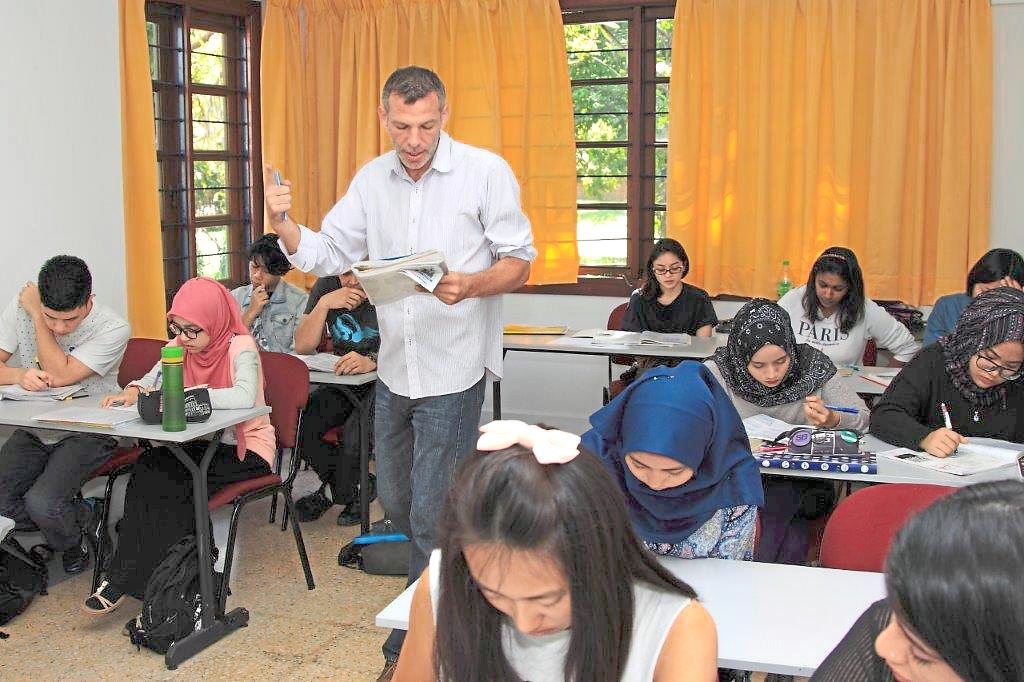
Meanwhile, another language learning institution, Alliance Francaise de Kuala Lumpur (AFKL), has been focused on teaching French to Malaysians since 1961.
AFKL is part of the Alliance Francaise network, which has more than 800 centres worldwide promoting the French language and culture.
“Our learners come from all walks of life,” says Cassandra Amrita, the development manager of AFKL. “Around 70% are working adults in their 20s to 40s, while the rest are children and teenagers. Most are Malaysians, although we also welcome other people.”
Students can choose from extensive, intensive and super-intensive courses, with classes available in the evenings, on weekends or weekday mornings.
AFKL also offers hybrid learning, allowing students to switch between attending lessons in person or online depending on their schedules.
Amrita says more learners today are studying French with specific academic and career goals in mind. Many take internationally recognised examinations such as the DELF, DALF, TCF and TEF, which can support university applications or employment opportunities.
French can be a valuable asset for those pursuing careers in hospitality, aviation, luxury retail, diplomacy and international business, particularly with French multinational companies operating in Malaysia.
Like Gallegos, Amrita believes learning a language enriches more than just a person’s career prospects, as it also changes the way they experience a destination. She knows this from personal experience.
After studying French in Malaysia for a decade, she spent a month travelling solo across France, staying with local families and putting her knowledge of the language into practice.
“It was an incredible experience to finally communicate with French people in their own language,” she says. “Many of the warm and unexpected encounters I had with locals happened because I could speak French.
“People naturally open up when you make the effort to speak their language. Even simple things, like ordering at a neighbourhood bakery or chatting with locals, become more meaningful.”
Her experience reinforces the importance of learning beyond the classroom, which is why AFKL now has an immersion programme in collaboration with Alliance Francaise de Normandie.
Participants attend French classes, stay with host families and explore destinations including Paris, Rouen, Mont-Saint-Michel and Giverny.
“It’s the closest thing to living the language,” she says. “When learners use French in everyday situations, they gain confidence far more quickly than they can in a classroom alone.”