At Merang Jetty in Terengganu, paradise does not announce itself with champagne.
It smells of diesel, salt and hot rope. Boatmen move luggage with the indifference of men who have transported a thousand excited holidaymakers before breakfast. Families arrive carrying sun hats, snacks and enough bags to suggest permanent migration.
The fare is roughly RM55 one way at current published rates. That is Redang’s first absurdity: for the price of an unremarkable dinner in Kuala Lumpur, a boat will carry you across the South China Sea and deposit you somewhere travel agents overseas would sell as a once-in-a-lifetime fantasy.
The engine catches. Terengganu shrinks behind us. Ahead lies blue – not the grey-blue of an urban shoreline, but blue in escalating degrees: Cobalt in deep water, turquoise above sand, then liquid glass as the island approaches.
From Marang, the crossing can take about 40 minutes in favourable weather.
Buy a ticket. Board a boat. Cross the sea. Paradise, apparently, has a ferry timetable.
Redang emerges as forested hills, granite shoulders and strips of sand almost offensively white. Soon you can see coral shadows beneath the boat and fish flashing silver below the hull.
This is when every Malaysian aboard should feel slightly cheated.
We have been trained to believe that true tropical beauty requires a passport, a long flight and a painful credit-card statement. We scroll through photographs of the Maldives, Bora Bora and the Caribbean as though heaven requires immigration clearance.
Meanwhile, Redang has been sitting roughly 45km off Kuala Terengganu, waiting for us to notice.
Better than the Maldives? That debate should be conducted barefoot, with cold drinks and nowhere urgent to be. But Redang has something difficult to manufacture: jungle tumbling toward the sea, reefs within swimming distance and the comforting knowledge that you are still home.
The cove
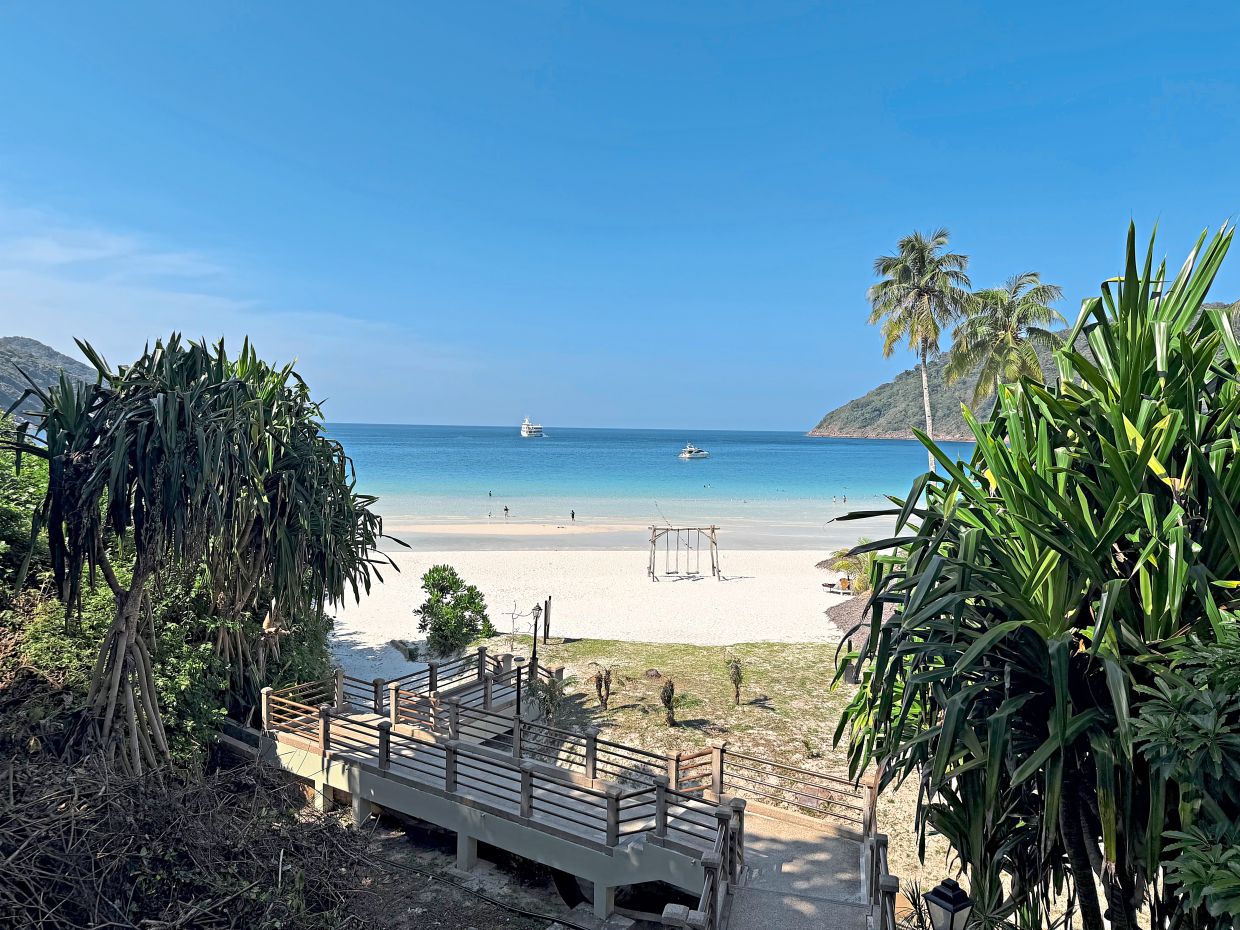
The Taaras Beach & Spa Resort occupies Teluk Dalam Kecil, the smaller of two natural bays on Redang’s eastern coast.
Calling it a hotel beach feels inadequate. It is a protected crescent held between green hills and rocky headlands. The sand has the almost indecent softness normally dismissed as brochure language – until you step onto it. The shallows are warm and astonishingly clear.
Small fish cruise past your ankles like residents tolerating temporary visitors.
The Taaras provides rooms, restaurants, spa treatments and the machinery of a luxury resort, but the real extravagance is outside.
The beach is the suite. The cove is the lobby. The South China Sea is the swimming pool.
Early in the morning, the bay can be almost still. Then something large moves beneath the surface.
At first it resembles a rock. Then the rock develops flippers.
A green turtle rises, takes one solemn breath and disappears.
There is nothing ornamental about a full-grown green turtle. An adult may carry a shell around a metre long and weigh well over 100kg. In the water it moves with the authority of an animal whose ancestors navigated oceans before humans invented resorts, ferry tickets or Instagram.
The turtles rest and feed around Redang’s waters, sometimes lingering in the cove with astonishing calm. Swim near one – without chasing or touching it – and your priorities rearrange themselves. Emails become ridiculous. Deadlines lose jurisdiction. The turtle gives one unhurried stroke of its flippers and leaves you kicking behind like an evolutionary rough draft.
Beneath the surface
Redang does not end at the waterline. That is merely the entrance.
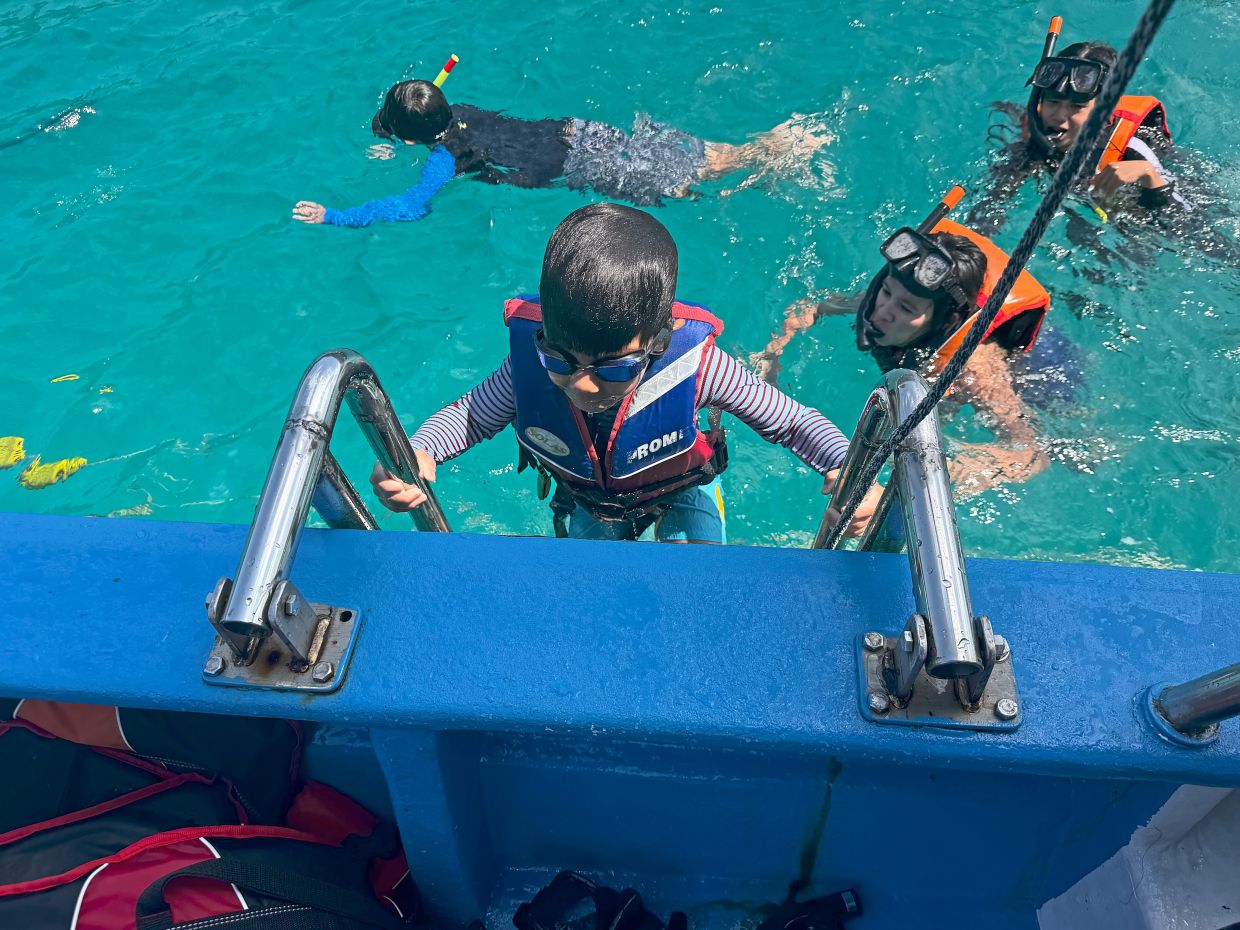
Put on a mask and the island opens another door. In good conditions, the visibility can be exceptional. Sunlight reaches into the blue, revealing coral gardens, granite formations and schools of fish.
Snorkellers watch parrotfish grazing the reef, angelfish slipping between coral heads and needlefish suspended beneath the surface.
The water is so clear that depth becomes deceptive. The bottom appears close enough to touch until you dive toward it and discover it is several metres below.
Scuba diving takes the revelation further. Redang’s surrounding islands offer reefs, slopes, channels and blue-water encounters. Pulau Lima is among the most memorable sites, its granite landscape continuing underwater in dramatic formations patrolled by fusiliers, trevallies and reef fish.
On our last dive near Pulau Lima, the dive plan survived only until the ocean proposed a better one.
A shape materialised in the blue – first a suggestion, then a silhouette, then something so large the mind resisted identifying it.
A whale shark.
It approached without urgency, its broad head moving through the water while pale spots shimmered across its back. Air consumption, depth gauges and camera settings suddenly seemed irrelevant.
The largest fish in the sea passed with slow movements of its tail as we hovered at a respectful distance, somewhere between disbelief and worship.
Nobody can shout underwater, though several of us tried. The result was a chorus of useless bubbles. Then it turned and disappeared into the blue.
Such encounters are never guaranteed. Pulau Lima does not keep a whale shark waiting for the next group of divers. Wildlife follows no resort schedule, and that uncertainty is precisely the point.
You enter the water hoping for healthy coral and abundant fish; occasionally, the sea decides to show you something enormous.
Back on the boat, everyone spoke at once. Pulau Lima sat nearby beneath the sun, looking entirely innocent.
This had happened in Malaysian waters – not after an expedition to the Galapagos or Western Australia, but after a boat ride in our own country.
Before the resorts
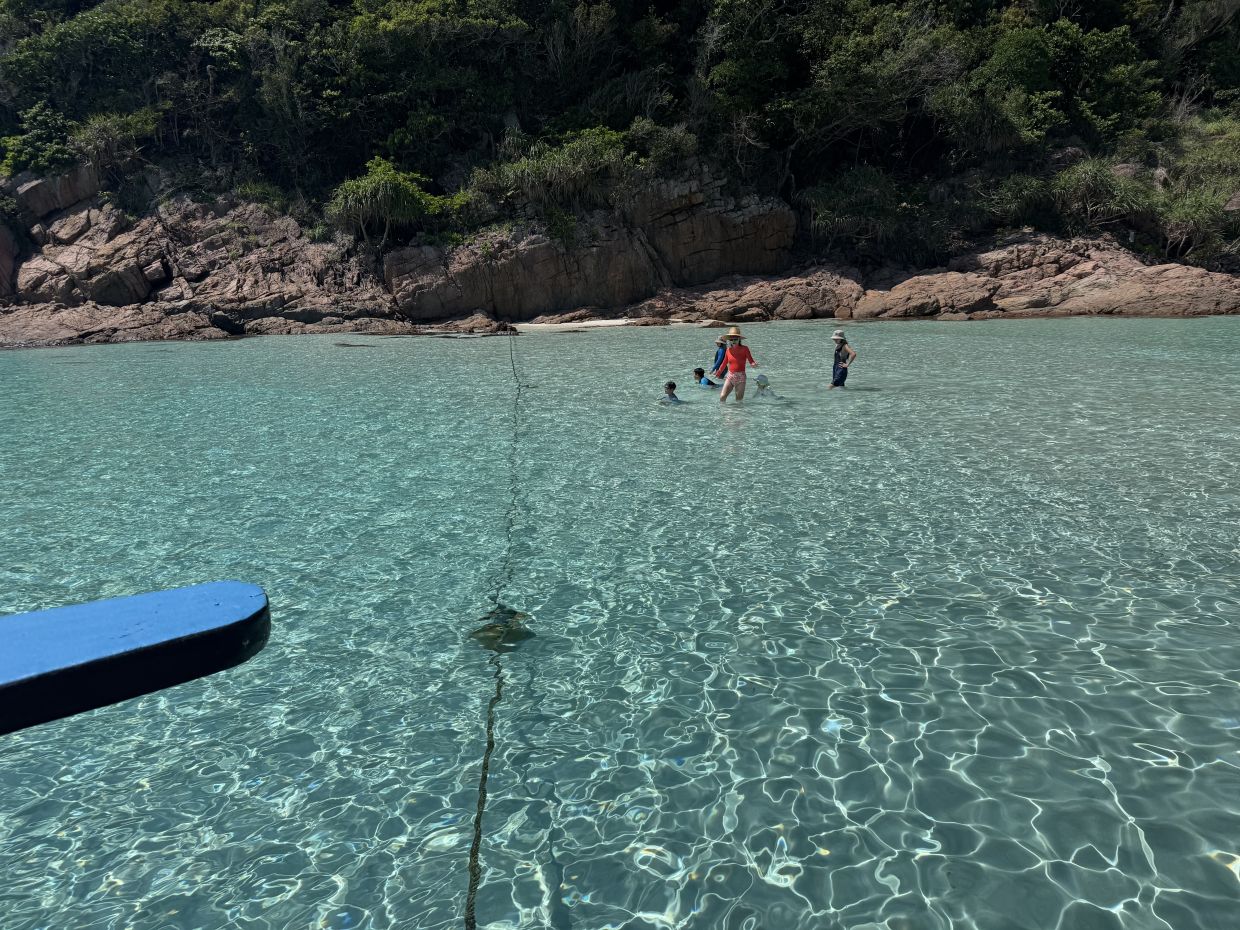
Redang was not created for holidays. Local histories trace its early community to Bugis settlers from Sulawesi. Generations lived with the sea not as scenery but as livelihood, reading reefs, currents and monsoon skies because survival required it.
The island’s old fishing economy eventually gave way partly to tourism. Its surrounding waters were protected under Malaysia’s marine park system, helping preserve the reefs that now draw snorkellers and divers.
At Chagar Hutang in northern Redang, Universiti Malaysia Terengganu’s Sea Turtle Research Unit began long-term conservation work in 1993. The beach became a protected turtle sanctuary in 2005. Researchers and volunteers monitor nesting animals and protect the eggs.
In the 1990s, Chagar Hutang recorded roughly 200 to 300 green turtle nests annually. Recent figures commonly reach 1,000 to 1,500, with a record 1,731 nests protected in 2020.
Redang remains beautiful because people work to keep it alive.
Malaysian blind spot
Ask Malaysians about dream beaches and watch how quickly the imagination leaves the country. We discuss Bali (Indonesia), Thailand, the Philippines and the Maldives. We compare flights, exchange currencies and surrender days to airports. Then someone casually admits, “I’ve never been to Redang.”
Not because it is unreachable. Often, simply because it is here.
Familiarity is a peculiar form of blindness. We assume what is close cannot be extraordinary – that beauty must be difficult before it counts. Redang humiliates that assumption.
Schedules vary, additional park and jetty charges may apply, and the northeast monsoon restricts travel. The sea retains the final vote. But during the open season, reaching the island is almost embarrassingly easy.
Go to Terengganu. Head to the jetty. Get on the boat.
Soon you can be standing in transparent water, watching a turtle patrol the cove. You can descend beside Pulau Lima and, with extraordinary luck, see a whale shark emerge from the blue.
People cross continents searching for this. We cross a channel.
Redang is not merely ours to enjoy. It is ours to respect and protect: a living reef, an ancient turtle rookery and one of the finest marine landscapes in South-East Asia.
It has been sitting at our fingertips all along, waiting for Malaysia to remember how lucky it is.
The words expressed here are entirely the writer’s own.
Abbi Kanthasamy blends his expertise as an entrepreneur with his passion for photography and travel.