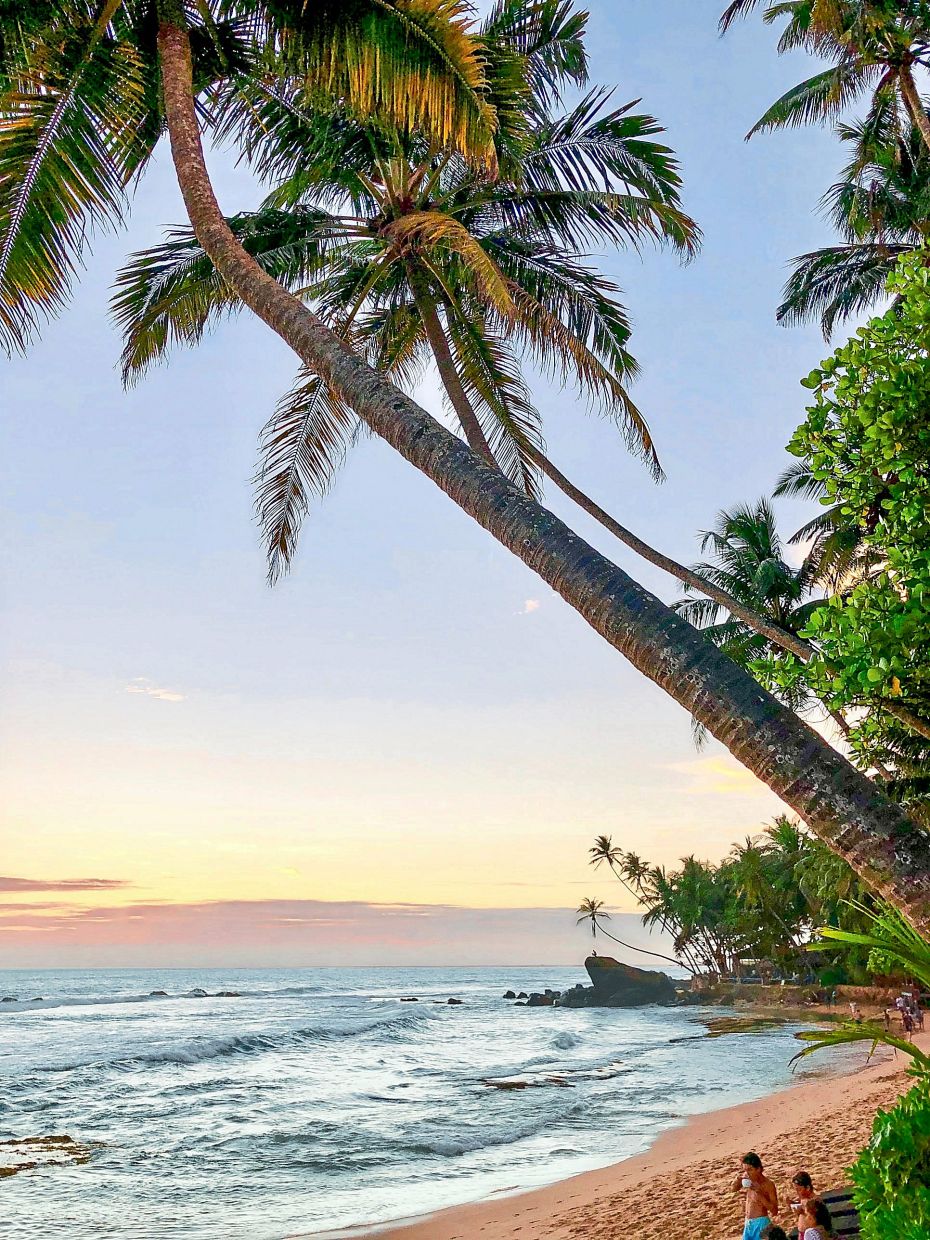
On Sri Lanka’s southern coast, the coconut palms lean towards the Indian Ocean as though they have been listening to its secrets for centuries.
The ocean arrives in long, languid breaths, laying itself against the sand before withdrawing, only to return again. Fishing boats lie scattered along the shore. The air tastes of salt. The sun presses down on the earth, and somewhere beyond the palms, in a kitchen where lunch has been underway since breakfast, onions surrender to hot oil.
Then come the curry leaves.
They hit the pan with a crackle, and suddenly the whole world smells better.
There are places where history is written in books. On this island, much of it is written in kitchens.
And few chapters are as delicious, or as extraordinary, as that of the Malays of Ceylon.
Near Hambantota, in the village of Kirinda, children grow up hearing a language that has travelled across centuries and an ocean. It is neither quite the Malay of Kuala Lumpur nor the Sinhala or Tamil spoken elsewhere on the island. It has its own rhythms, its own turns of phrase, its own way of making the world understood.
This is Sri Lankan Malay: a language born of movement, separation, adaptation and the stubborn human refusal to forget.
Listen closely and you may hear echoes of Java and the Malay world. Listen longer and you will hear Sri Lanka, too. Languages, like people, change when they find a new home.
Not everyone came to that home willingly.
From the 17th century, Dutch colonial authorities brought people from across the Indonesian archipelago to Ceylon. Among them were soldiers and servants, convicts and political exiles, nobles who had challenged colonial power and paid for it with distance.
Later, under the British, others came from South-East Asia and the Malay Peninsula, many to serve in the military.
Imagine those first journeys: The coast disappearing behind a ship, the long uncertainty of the ocean, the knowledge that the people and places left behind might never be seen again.
They carried what they could. Perhaps a remembered prayer. A word for mother. The taste of a dish prepared in a kitchen far away.
On an island already rich with its own languages and traditions, they built lives. They married, raised children, prayed, cooked and argued. Their descendants became Sri Lankan, while carrying an inheritance that stretched across the sea.
The Malays of Ceylon are a predominantly Muslim community, their faith woven through the rhythms of family and communal life – prayer and fasting, celebration and charity, the quiet grace of welcoming someone to a table.
And what a table it is.
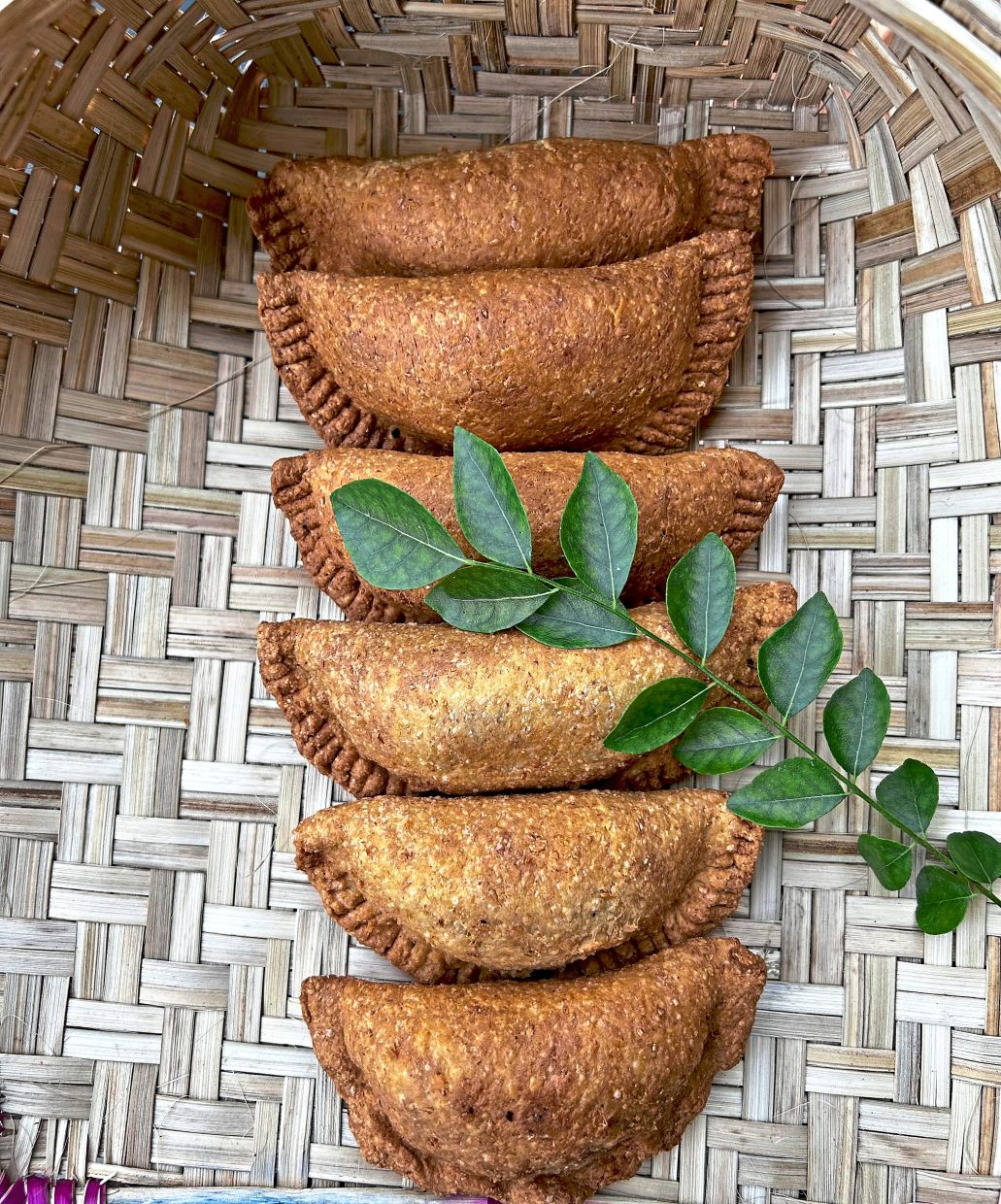
There is pasthol, coconut pastry wrapped around spiced minced meat – a small parcel with a generous heart. There is kaki soup rawon, a broth of slow-simmered trotters and warming spices, the sort of thing you lean over for a moment before taking the first spoonful, just to breathe it in.
Alongside it comes rice fragrant with spice, and nasi tumis with dried shrimp and curry leaves. A Malaysian might recognise the names. The first mouthful tells the rest of the story.
Then the dishes begin to arrive.
Sambal udang, prawns in a Sri Lankan Malay sambal with a heat that makes you reach for more rice, and then, inevitably, more prawns.
Ikan curry asam, fish in a tangy, warmly spiced gravy, its sharpness cutting through the richness around it.
Malay ayam goreng, chicken marinated in spice and fried until golden and crisp. There are few sounds at a dinner table more persuasive than that first bite.
And for those who believe a proper curry should demand a little time and attention, there is beef rib or mutton curry with root vegetables, made for a long meal and excellent company.
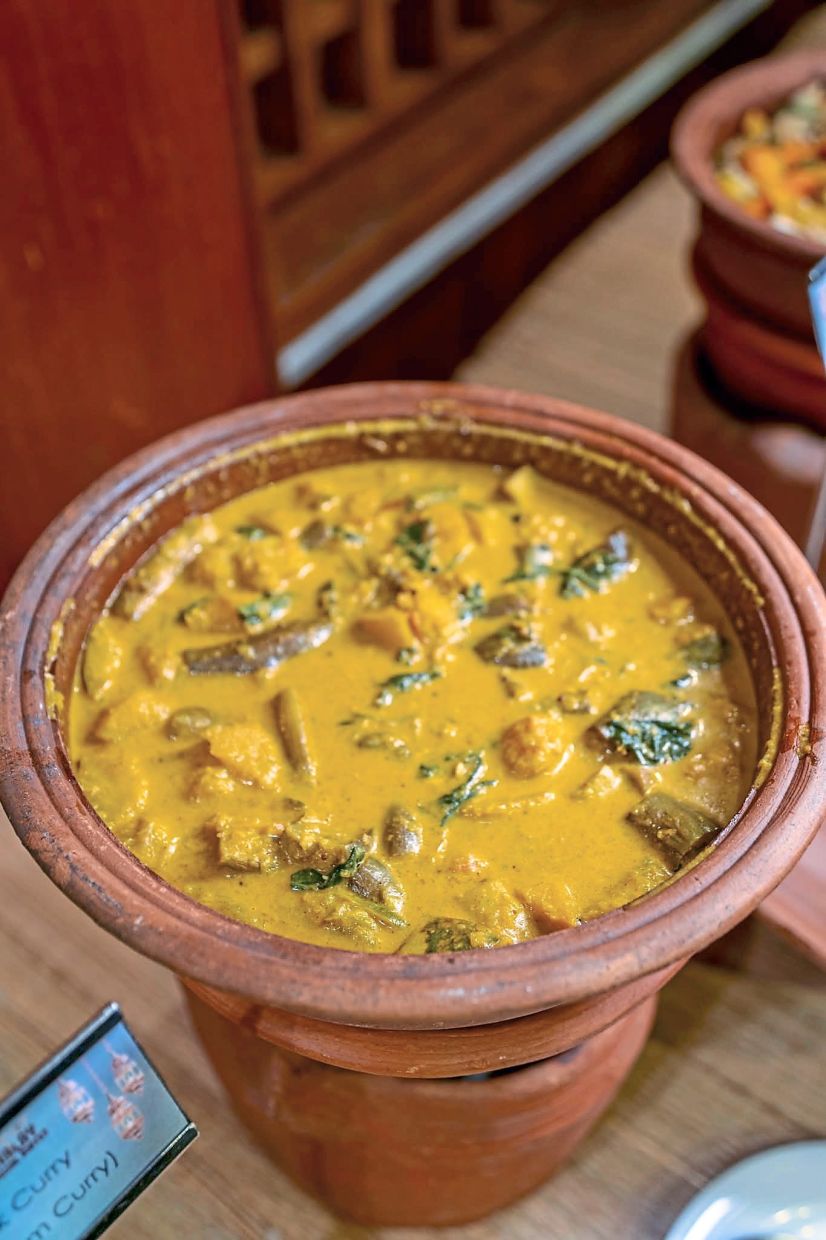
Between them sit dishes of kolak curry, vegetables in coconut milk with cashew nuts; pichal sambal, cool with cucumber and coconut milk; and Sri Lankan Malay achar, its sweet-and-sour vegetables lifted by date chutney.
Every plate has something to say. The sensible thing to do is listen.
And then, when you are certain you cannot possibly eat another thing, someone brings out the seri kayya.
Sri Lankans know it as watalappam: a steamed coconut custard made with kithul jaggery and nutmeg. It trembles on the spoon. There is the dark sweetness of palm sugar, the warmth of spice, the silk of coconut. It is luxurious, but the sort of luxury that belongs at a family table, where somebody’s grandmother is watching to see whether you would like more.
You would. Of course you would.
The women of this community have long been among the keepers of its stories. There is a striking beauty to Ceylon Malay women, a warmth and presence that can fill a room. And behind the recipes passed between mothers, daughters, grandmothers and aunts is knowledge built over lifetimes: how long to roast a spice, how to judge a curry by its aroma, how to make enough for whoever might turn up at the door.
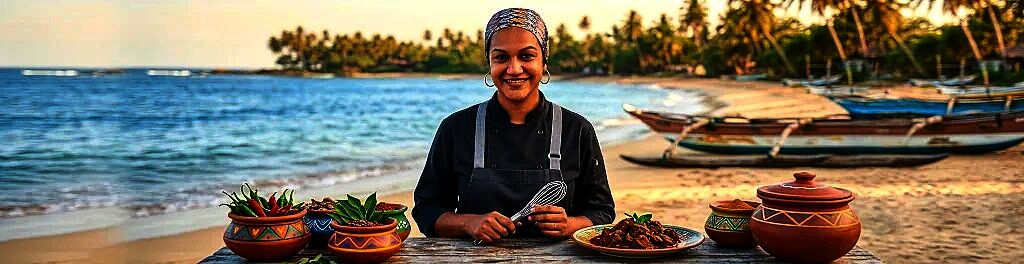
Today, one of the women carrying those stories to a wider world is Ruzaina Hadgie. A Sri Lankan Malay chef and food storyteller, Ruzaina grew up with the cooking of her grandmother and grand-aunt. She knew the dishes, the flavours and the people behind them. What she did not see enough of was their place in the wider story of Sri Lankan food.
So she created The Minority Taste and began telling that story herself.
Through her Instagram account (@theminoritytaste), Ruzaina invites her audience into the kitchens, homes and food traditions that have shaped Sri Lanka’s richly layered culinary identity.
Her work has taken her across Sri Lanka and brought her together with international social media food storytellers, including Mark Wiens and Trevor James. Along the way, she has introduced audiences to dishes that have fed generations but rarely received the attention they deserve.
Recently, she brought Malay Ceylon to the Galle Face Hotel in Colombo. At the end of November, she is due to tour Malaysia, carrying her community’s food back across the ocean.
There is something rather beautiful about that journey. Centuries after their ancestors arrived in Ceylon, their flavours will be served to people whose own histories are connected to the same waters.
Somewhere in Kirinda, meanwhile, the evening will settle over the village. A family will sit down to eat. Someone will speak in Sri Lankan Malay; someone else will laugh. A pot will be placed in the middle of the table, and hands will reach for more.
Outside, beyond the palms, the Indian Ocean will keep breathing.
And inside, the stories will continue.
The words expressed here are entirely the writer’s own.
Abbi Kanthasamy blends his expertise as an entrepreneur with his passion for photography and travel.