
“Our Sultan lives there sometimes,” said our guide, Abdul, pointing to what looked like a cruise ship.
“Why? He has a few palaces, right?” I asked, very curious since we just visited one of these palaces earlier in the day.
“I don’t know, but I think it’s fun,” Abdul replied.
And so begins the story of how I spent nearly two days reading up on the ruling royal family of Oman known as the “House of Al Bu Said”. Granted, I was holed up in a hotel with nothing much to do in Muscat after my flight to Berlin, Germany was forced to land in the city because of the Feb 28 airstrikes by the United States and Israel on Iran – reading was a good option.
Surrounding cities were also affected by these strikes, and major airports including in Doha (Qatar), Dubai and Abu Dhabi (both in the United Arab Emirates) were all forced to shut immediately.
Thankfully, Muscat – and Oman overall – was not just safe but also one of the best places to be “stranded” in during the whole ordeal. In fact, Oman remains a safe country to visit to this day, particularly for Malaysians. (Oman Air operates direct flights to Muscat from the Kuala Lumpur International Airport, if you’re interested.)
But back to the royal family and their ship. It is actually a US$500mil-or-so (more than RM2bil) superyacht named Fulk Al Salamah; its giant size often makes people mistake it for a cruise ship. As it turns out, Omani ruler Sultan Haitham Tariq Al Said, 72, and his family do not actually live on the yacht, but they do spend time on it.
At 164m long, it is the second-largest yacht in the world and was commissioned by the former ruler, Sultan Qaboos Said. It is docked at the Port Sultan Qaboos near the Muttrah Corniche along the beautiful coastline on the Gulf of Oman.
We thought we might just be able to catch a glimpse of either Sultan Haitham, who also serves as the country’s prime minister, or his beautiful wife, Ahad Abdullah, if we stuck around the waterfront promenade for a bit taking random pictures of our surroundings.
“If you’re lucky, maybe,” Abdul said, far from convincing.
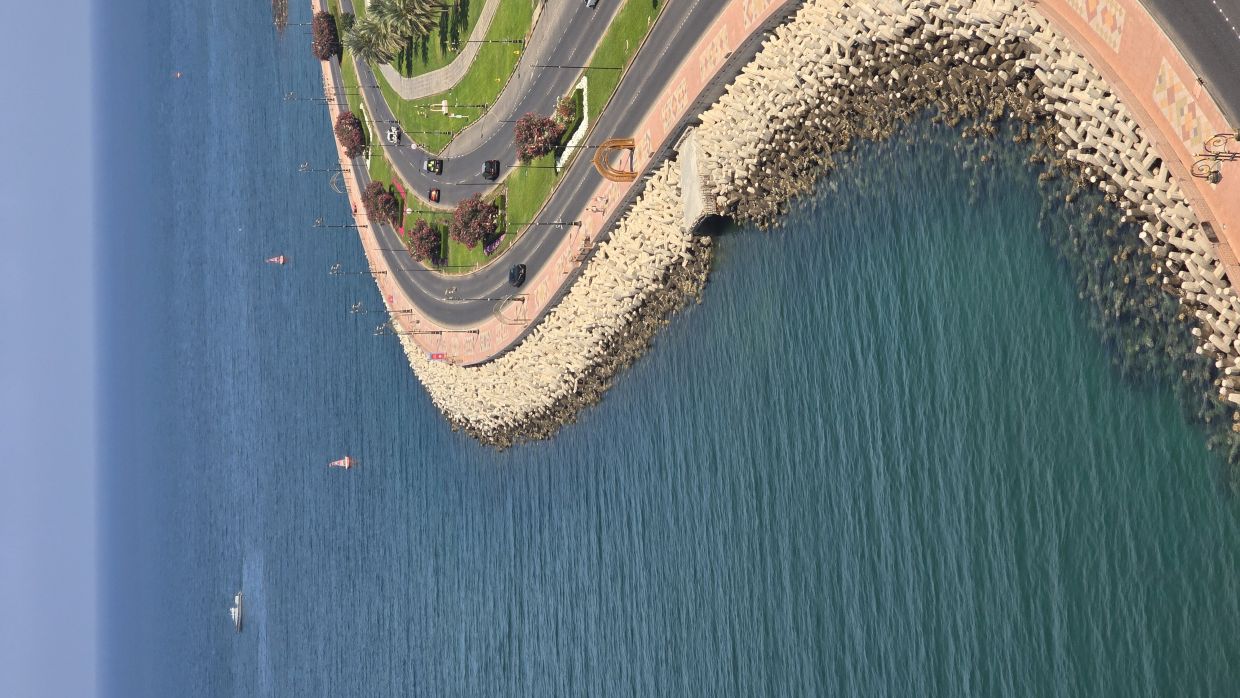
Since it was Ramadan, we figured it was highly unlikely that anyone from the royal family (the couple has four children) would hang out on the decks of the Fulk Al Salamah in the hot midday sun. There were bodyguards – or maybe boat staff – milling around, though.
Maritime history
The Muttrah (also spelt as Mutrah) area is the historical part of Muscat, which itself is an ancient city. This is where you’ll find the famous Muttrah Souq, Muttrah Fort, the promenade and a few other interesting landmarks.
We walked to the Muttrah Fort from the waterfront, leaving Abdul happily playing on his phone in the comforts of his car. With the air conditioner on, of course. While Abdul acted as our guide that day, he isn’t the kind of guide that travellers are used to – he didn’t really do much “guiding”, he just drove us from one attraction to another.
I can’t be sure if all tour guides are like this in Muscat, but that was what was offered to us at the hotel. Still, Abdul did his best in answering most of our questions, including, “How far is the Muttrah Fort from here?”
“Not far at all, maybe a five-minute walk.”
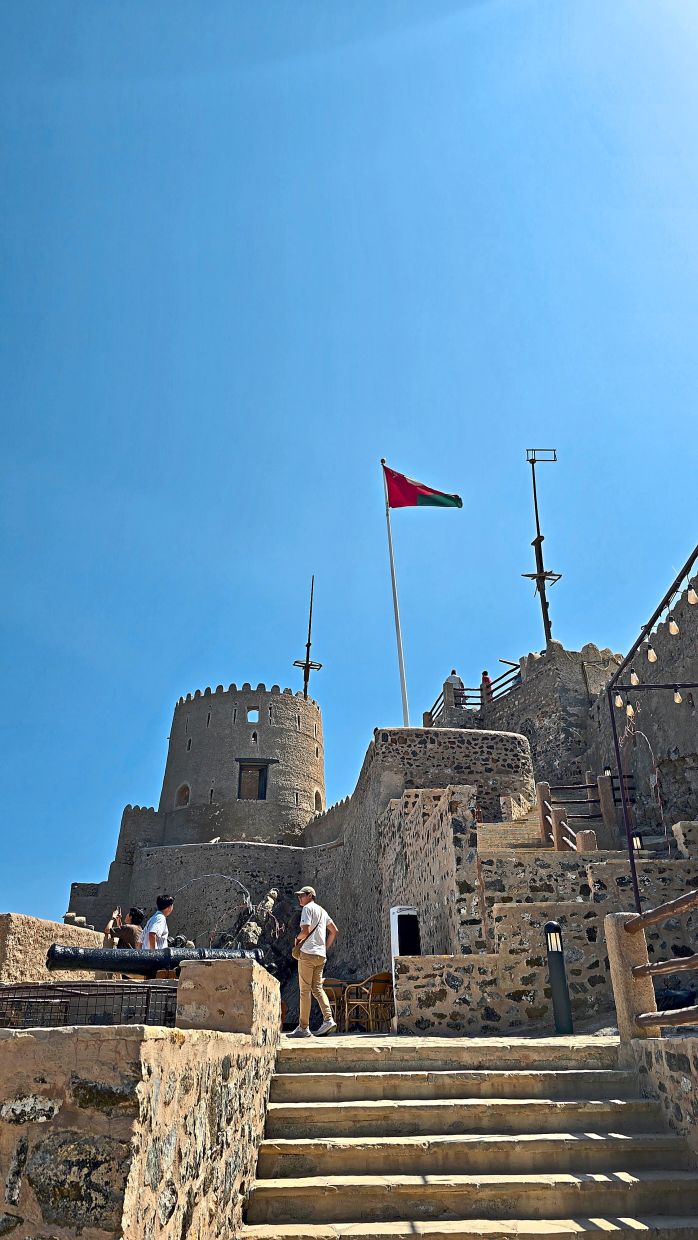
Yes, the fort was very near the waterfront, but Abdul somehow failed to mention the steep hills we’d have to climb – first to get to the entrance and then to the top, where all the artefacts and information boards were.
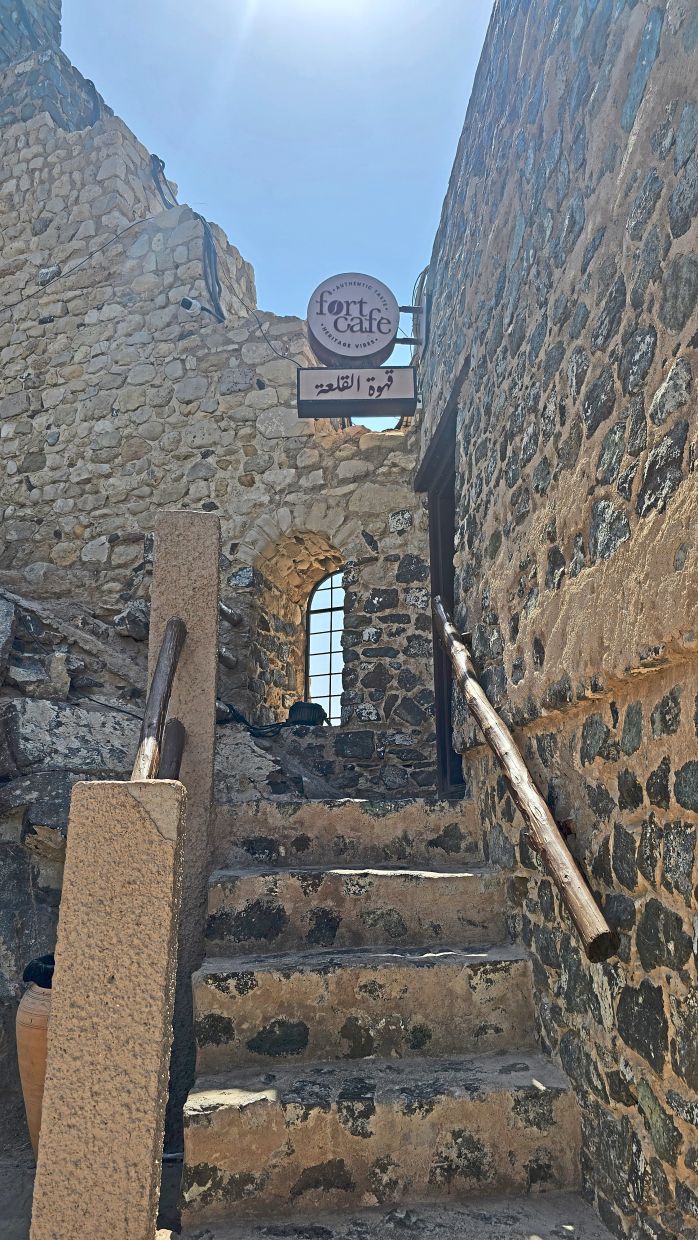
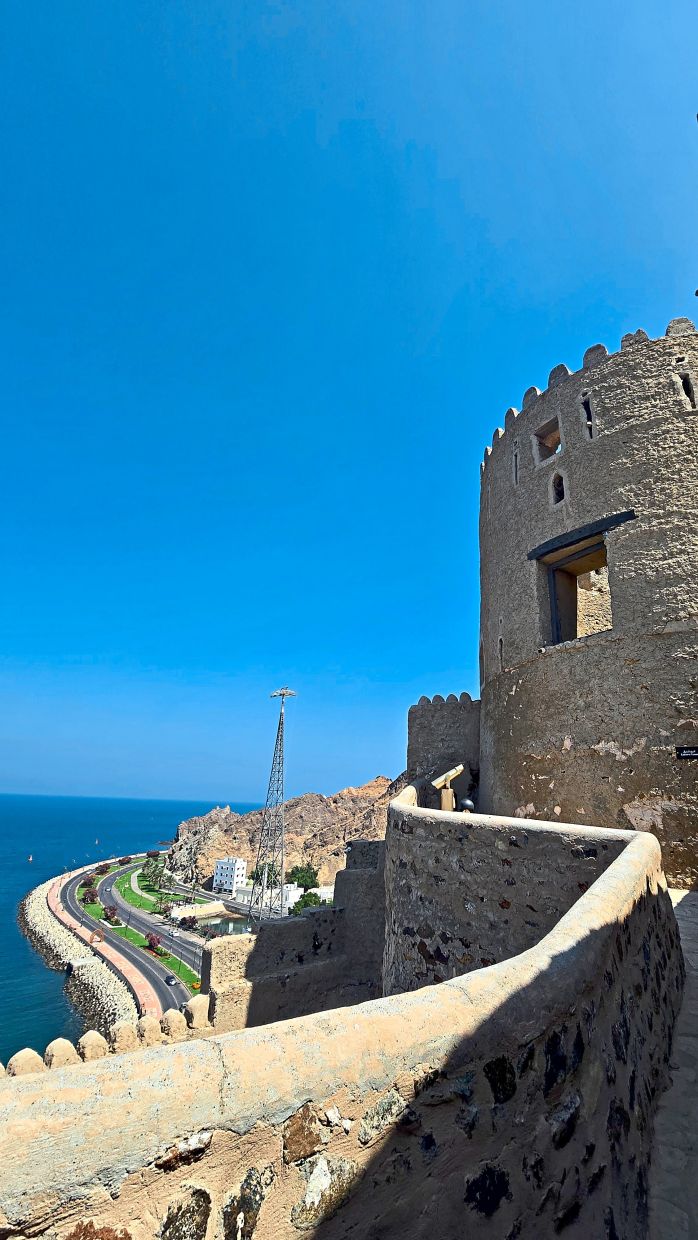
Once at the top, we could see the coastline on one side and parts of the old city on the other. There are no skyscrapers or modern-looking buildings in this area, which makes it all the more scenic. And authentic, to an extent. It was easy to imagine what life was like there in the past, with the traditional stone and mud brick houses still standing strong today.
Originally built by the Portuguese in the 1580s, Muttrah Fort was later rebuilt during the Al Ya’rubah (or Yarubid) dynasty between 1624 and 1742. It was during this period that the Portuguese was expelled – they had been in Muscat since 1507.
The expulsion began with the first ruler Nasir Murshid and then “completed” during Sultan Saif’s reign.
It was also during this dynasty that Oman’s power rose, becoming a major maritime country. Throughout the centuries, however, civil wars and internal disputes caused problems within the ruling dynasty. By 1742, Persian forces invaded the now weakened Oman, successfully occupying several coastal cities.
Ahmad Said, a governor in one of the country’s most important port cities, fought back and managed to kick the Persian invaders out of Oman between 1744 and 1747. He in turn established the Al Bu Said dynasty, which has since remained in power.
The Muttrah Fort serves as a reminder of Oman’s historical past, and the resilience of its people.
For today’s casual traveller, it’s also a great place to take pictures, especially with the Gulf of Oman in the background. But it does get quite windy up there, even when the sun is blazing.
Ticket prices range from OMR2 (RM21) to OMR3 (RM32). Yes, Oman has the third strongest currency in the world, and the easiest way for Malaysians to calculate the conversion is to just multiply it by 10 (today’s rate stands at RM10.60 per Omani rial).
My OMR7 taxi fare from the hotel to the airport seemed cheap until I realised the ride was shorter than 10 minutes.
The walk back down to the souq from the fort was easy enough. There were alleyways you could tuck into for a look around, and some old-fashioned sundry shops and warehouses.
Restaurants weren’t open as it was Ramadan, but we were told by other hotel guests that the promenade became very lively after sundown. We looked at the signboards and could tell that a variety of cuisines were available here, as well as cafes offering traditional snacks, coffee and tea.
Only a small part of the old Muttrah Souq was open at the time we visited; other folks showed us pictures of the place in the evening – a vast difference!
The souq is one of the oldest traditional markets in the Arab world, and it sells everything from fashion items and souvenirs to gold and kitchenware. Even if you’re not buying anything, the place is still worth a visit. And if you do see something you like, go ahead and test your haggling skills.
For those who prefer more modern shopping places, Muscat has numerous shopping malls that are mostly located in the city centre, including the Mall of Oman, Oman Avenues Mall and Mall of Muscat.
Grand buildings
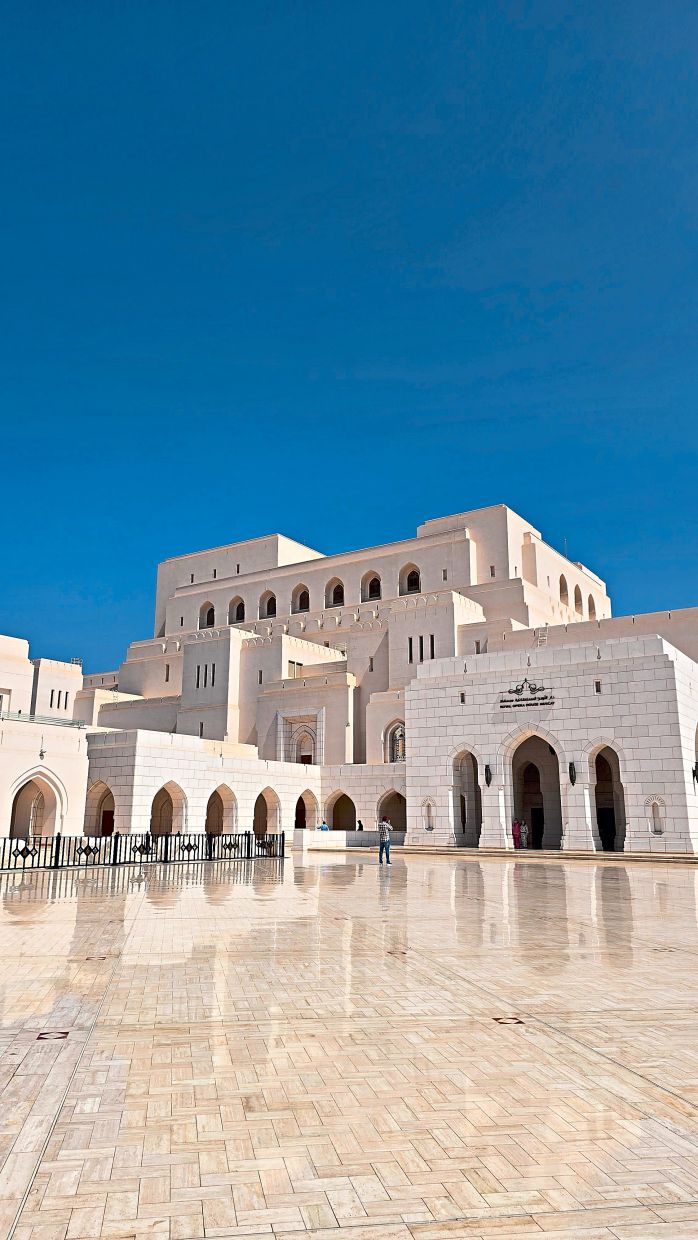
We found Abdul sleeping in his car. We woke him up to get to our next destination, the Royal Opera House Muscat, located inland in the Shati Al-Qurum district. We initially wondered why this was listed on many of the tourist brochures as a top attraction, until we got to the place and were blown away by the architectural grandeur.
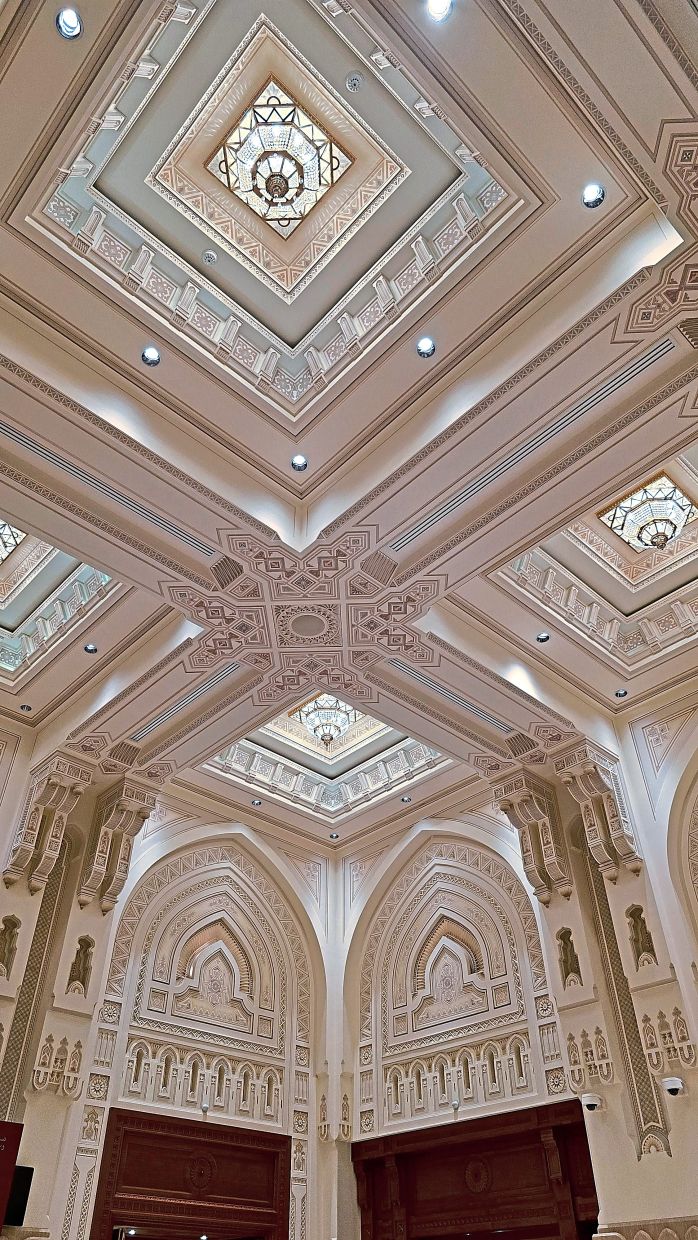
Built in 2011, the all-white (okay, off-white) opera house with Islamic and Italian inspiration still looks brand new, especially with its shiny marble floors outside the building. Inside, we craned our necks to observe the intricate designs on the ceilings and pillars.
You can opt to go on a guided tour of the main building for a fee – there are several types to choose from – or just enter right up to the front of house.
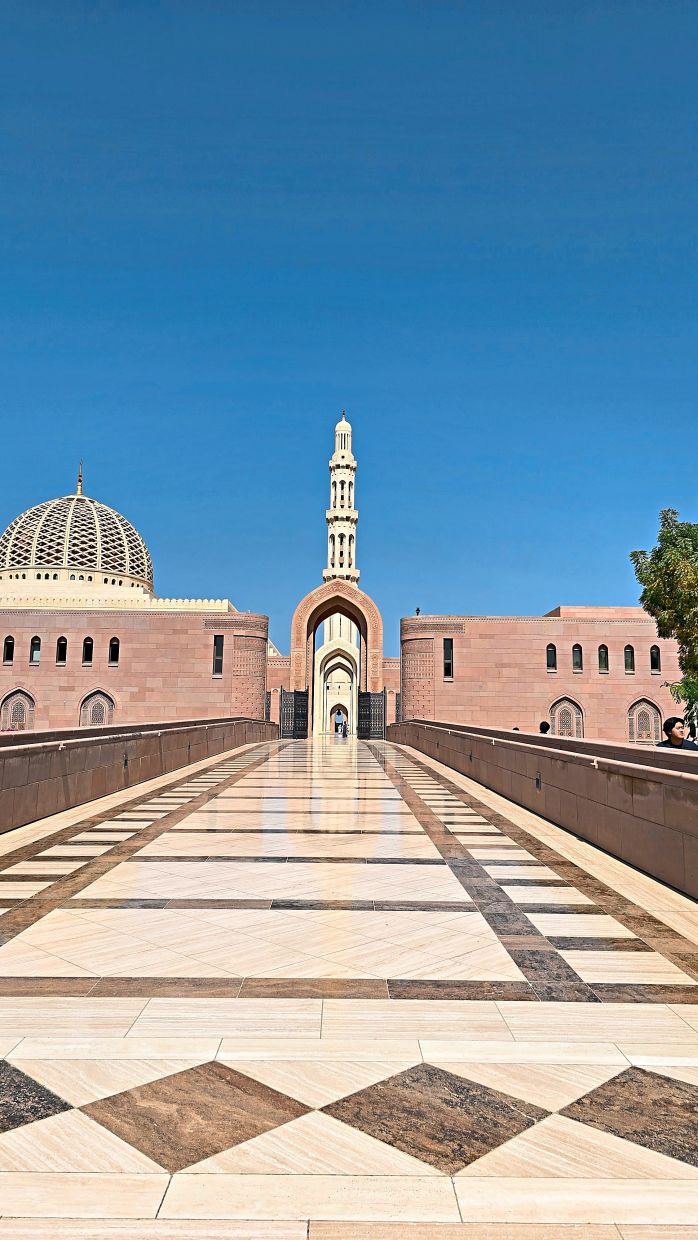
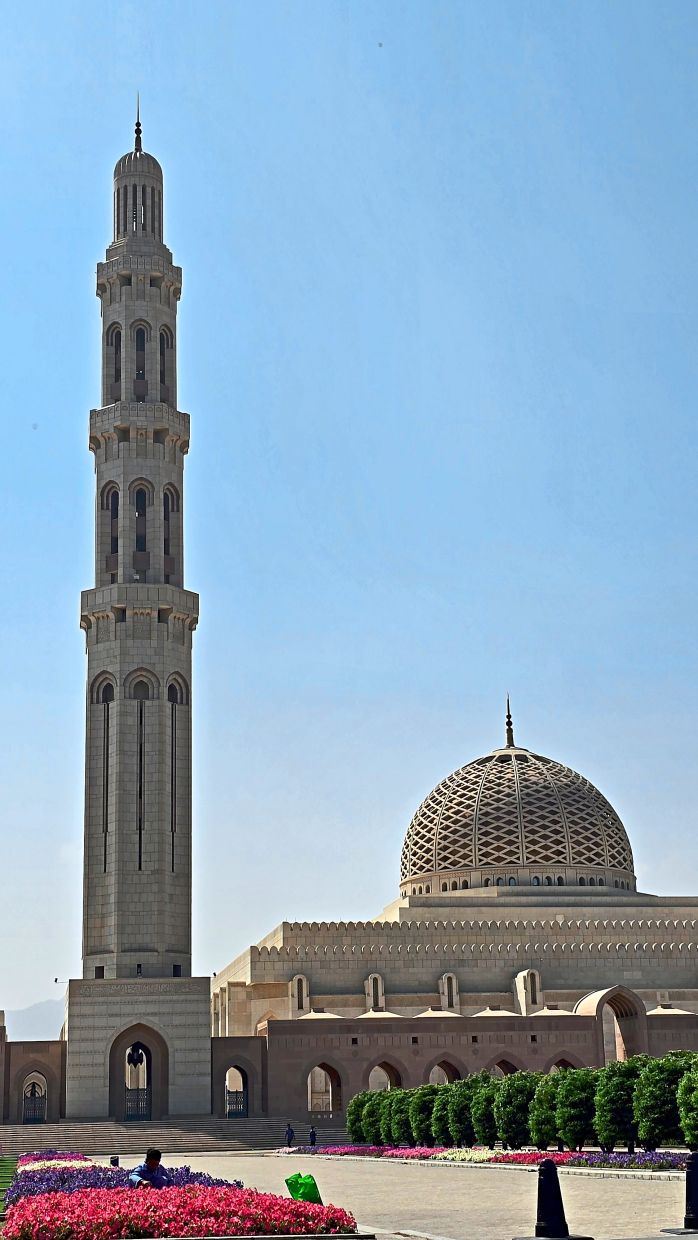
Near the opera house is another architectural wonder, the Sultan Qaboos Grand Mosque. Unfortunately, we were there late noon and tourists are not allowed in after 11am. Non-Muslims are also not permitted to enter on Friday as prayers and other ceremonies will be held on this day, so the mosque will be very crowded.
According to some websites, the mosque – which was built in 1994 and completed in 2001 – can hold a total capacity of 20,000 people. The main prayer room is for men, while the women pray in another. You can also pray in the courtyards within the complex.
Though we were sad that we couldn’t get a proper tour of the place, it was enough to just admire the gorgeous facade of the mosque, and the sprawling gardens that were blooming with colourful spring flowers.
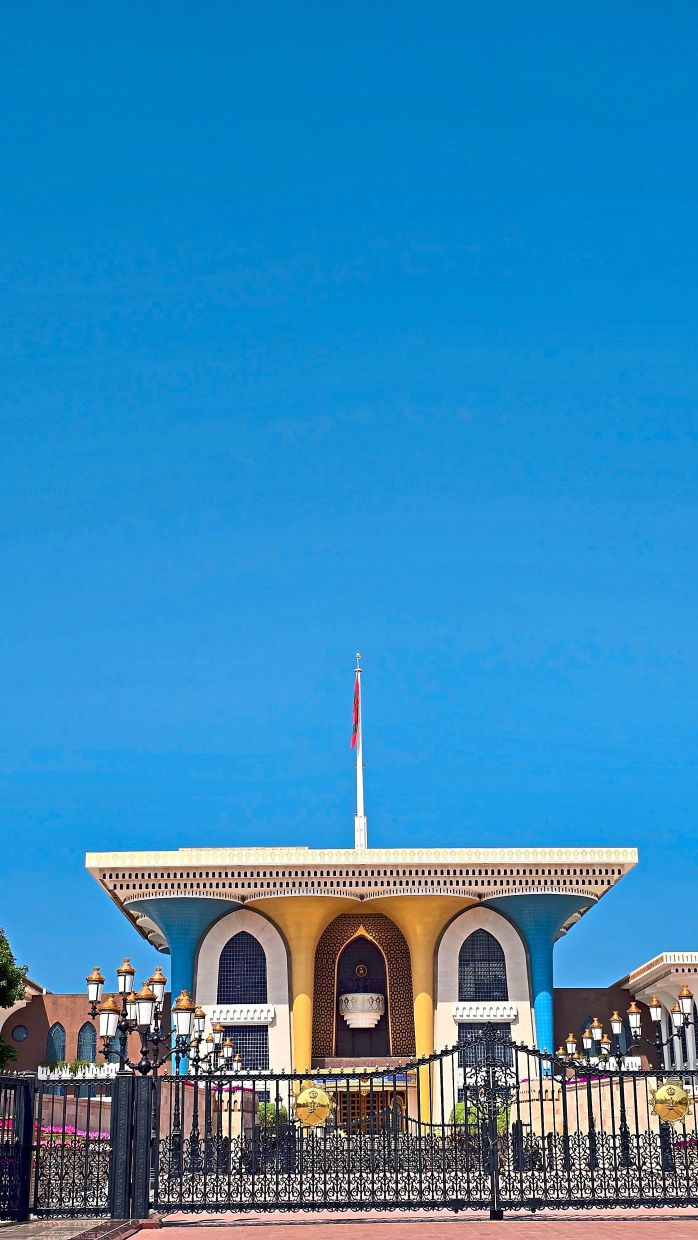
Earlier in the day, we visited the Al Alam Palace, the official residence of the Sultan of Oman ... though he and his family don’t actually stay there. Known as the “ceremonial palace”, this is where the Sultan receives state or royal dignitaries from visiting countries, and where official state functions are held.
Sultan Haitham and his family primarily reside at the Al Barakah Palace in Muscat, which is also where he receives other official visitors, and holds state meetings.
Built in 1972, Al Alam Palace is located within a marble-paved pedestrian-only boulevard, alongside the National Museum of Oman, the Al-Khor Mosque and a few government buildings. The palace’s main entrance has a striking a blue-and-gold facade, while its wings are white and brown.
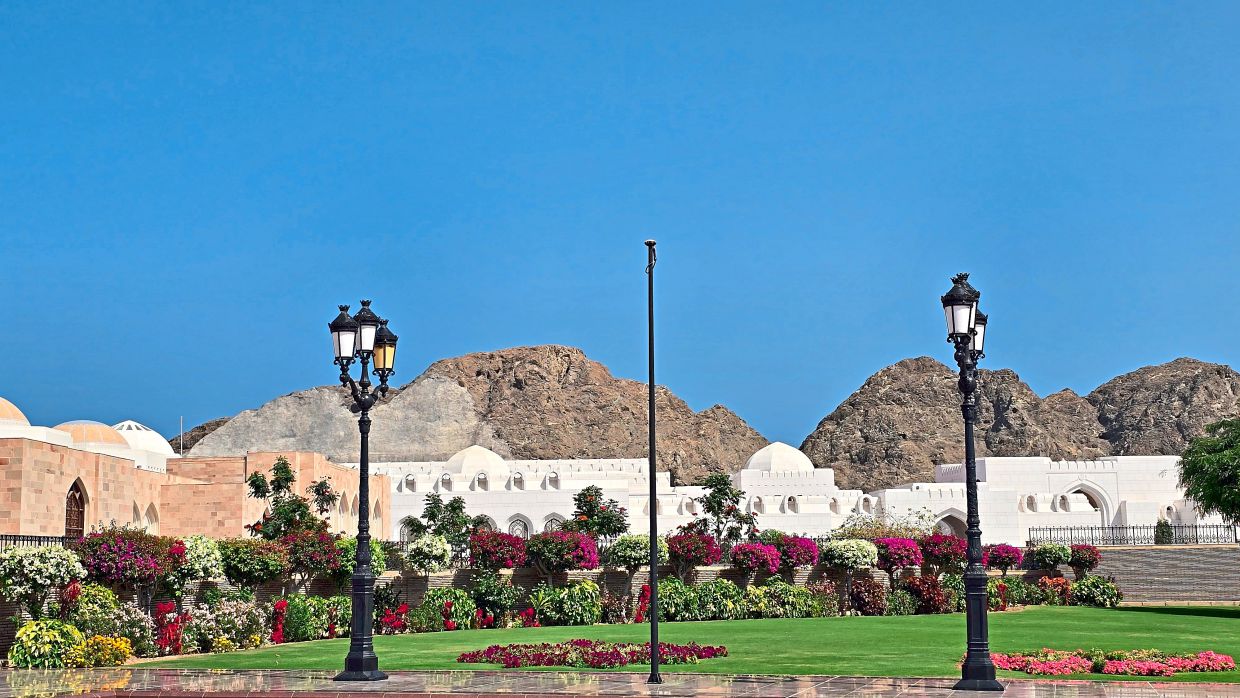
The palace is not open to the public, but you are welcome to walk all around it. You can also visit the mosque for free – as usual, do be mindful of dress codes as well as behaviour.
If you stand in the middle of the boulevard you can see the two other forts left by the Portuguese in the 16th century: The Al Jalali and Al Mirani forts. Al Jalali is now a private museum that is only open to official state guests. Since 2024, the Al Mirani fort welcomes visitors from 8am till midnight for OMR10 (RM106).
Other interesting places to explore in Muscat include the Qurum Natural Park, the Bait Al Zubair Museum and the Muttrah Teleferik, a cable car line that can take you from the port to the Al Raya Peak. This is Oman’s first cable car project, and one of Muscat’s latest attractions that recently opened.
Abdul seemed eager to tell us about it, even though it was still under construction back in March. “I am telling you now so you can come back after it opens. Then we can all have tea at the cafe at the top,” he said.
Now that’s a smooth operator.
Exploring the Omani capital of Muscat
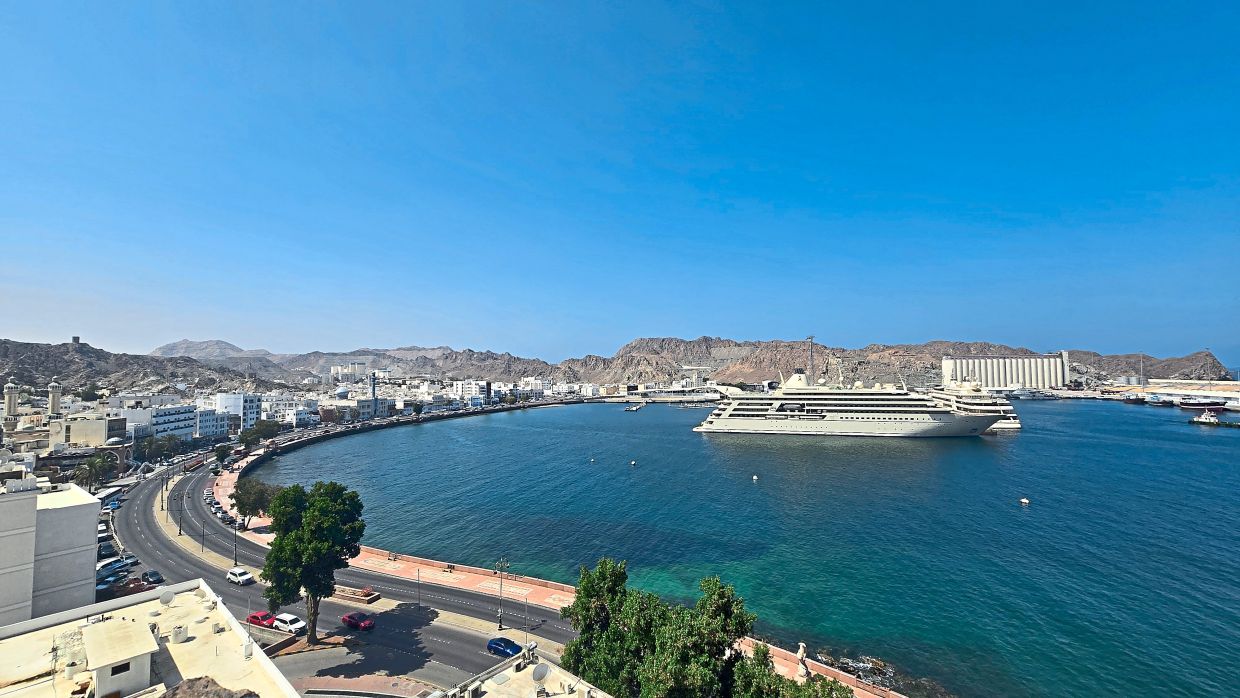
The Fulk Al Salamah is the world’s second largest yacht. — Photos: MELODY L. GOH/The Star
The Fulk Al Salamah megayacht is the world's second largest yacht. Photos: MELODY L. GOH/The Star
The Sultan Qaboos Grand Mosque is worth a visit, but you need to go early in the morning as it is closed to visitors by 11am.
The Sultan Qaboos Grand Mosque is worth a visit - just be wary of the visiting hours. Photos: MELODY L. GOH/The Star
Inside the Royal Opera House Muscat.
Inside the Royal Opera House Muscat. Photos: MELODY L. GOH/The Star
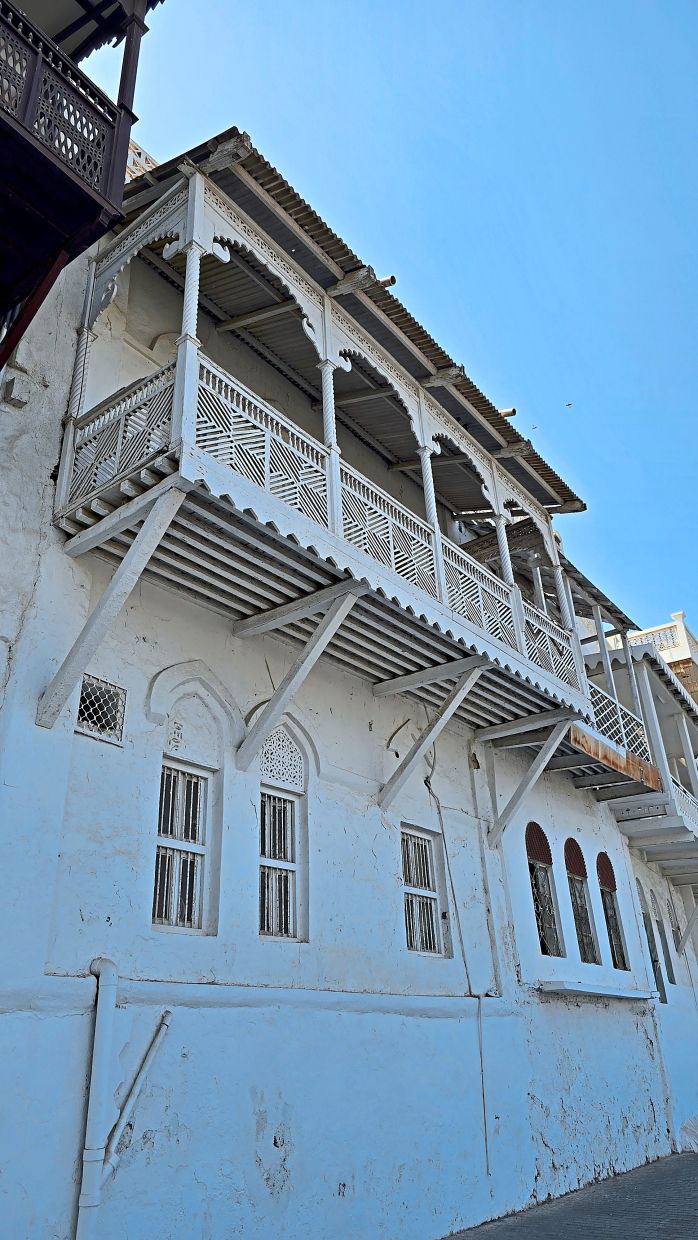
One of the old buildings near the promenade in Muttrah Corniche.
One of the old merchant houses near the promenade in Muttrah Corniche. Photos: MELODY L. GOH/The Star
In the spring, the garden outside the Sultan Qaboos Grand Mosque is blooming with colourful flowers.
In the spring, the garden outside the Sultan Qaboos Grand Mosque is blooming with colourful flowers. Photos: MELODY L. GOH/The Star
The cafe was closed because of Ramadan but it seemed like a nice place to hang out at the Muttrah Fort.
The cafe was closed because of Ramadan but it seemed like a nice place to hang out at the Muttrah Fort. Photos: MELODY L. GOH/The Star
There are a number of steps to tackle at the Muttrah Fort so those with mobility problems may want to skip this attraction.
There are a number of steps to tackle at the Muttrah Fort so those with mobility problems may want to skip this. Photos: MELODY L. GOH/The Star
One of the best spots to take pictures at the Muttrah Fort.
One of the best spots to take pictures at the Muttrah Fort. Photos: MELODY L. GOH/The Star
The Al Alam Palace is where the Sultan of Oman receives visiting dignitaries and royal guests.
The Al Alam Palace is where the Sultan of Oman receives visiting dignitaries and distinguished guests. Photos: MELODY L. GOH/The Star
You may not be able to enter the Al Alam Palace, but you are welcome to walk around it and enjoy its beautiful gardens.
You may not be able to enter the Al Alam Palace, but you are welcome to walk around it and enjoy its beautiful gardens. Photos: MELODY L. GOH/The Star
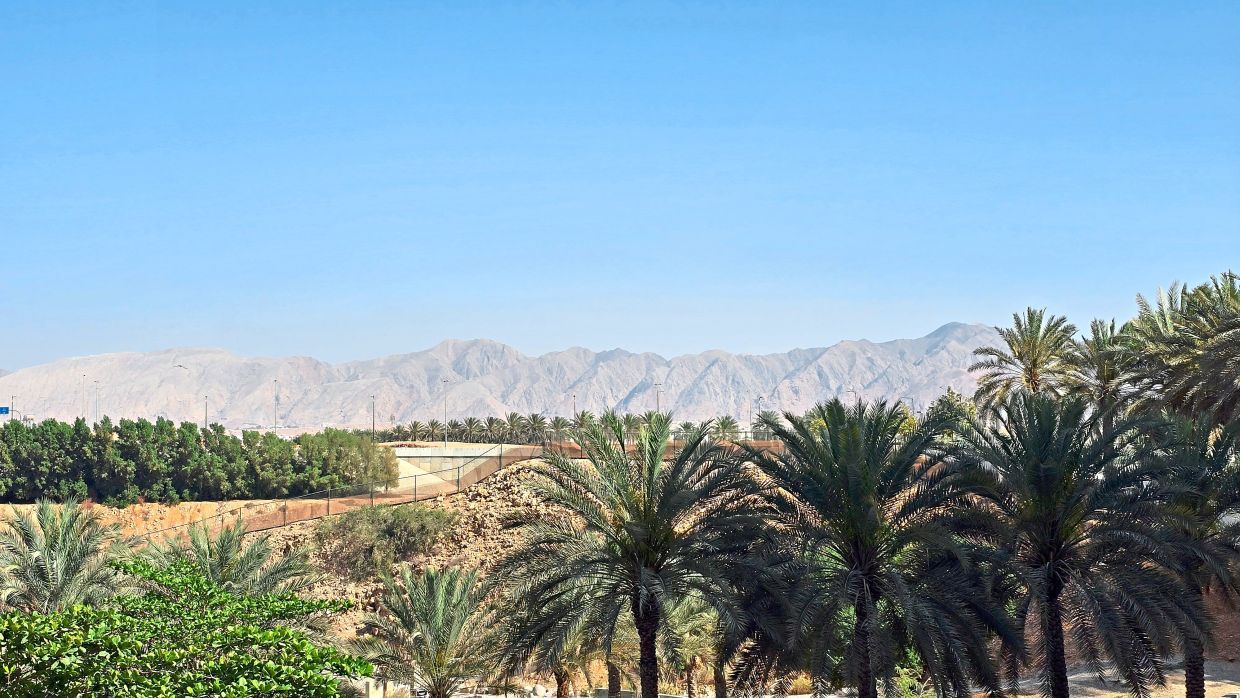
Muscat is surrounded by the Al Hajar Mountains.
Muscat is surrounded by the Al Hajar Mountains. Photos: MELODY L. GOH/The Star
The Royal Opera House Muscat is a gorgeous building.
The Royal Opera House Muscat is a gorgeous building. Photos: MELODY L. GOH/The Star
The coastline along Muttrah.
The coastline along Muttrah.