
Say what you want about Malaysians bickering over the littlest things – when the time comes to stand united and help each other, we do so without hesitation.
This was what happened when close to 200 Malaysians, including myself, were stranded in Muscat, Oman as a result of the Iran-United States/Israel conflict that began on Feb 28.
I have two new groups in my WhatsApp chat list. One is called “Malaysians stranded in Oman”, while the other has gone through several name changes, the latest being “No longer stranded in Oman”.
Last week, these two groups were my lifelines. The first had nearly 120 members, all of whom were on Qatar Airways flights bound for Doha, from several different airports. Most of us had connecting flights to parts of Europe from Doha; a handful lived and worked in the city.
A large group of Malaysians were on their way to ITB Berlin in Germany, a tourism industry trade show. I was also on a work trip to Berlin, for a study tour on sustainable tourism organised by the Goethe-Institut, as part of Germany Foreign Office’s Visitors Programme.
Others were scheduled to be at the Barcelona Mobile World Congress in Spain.
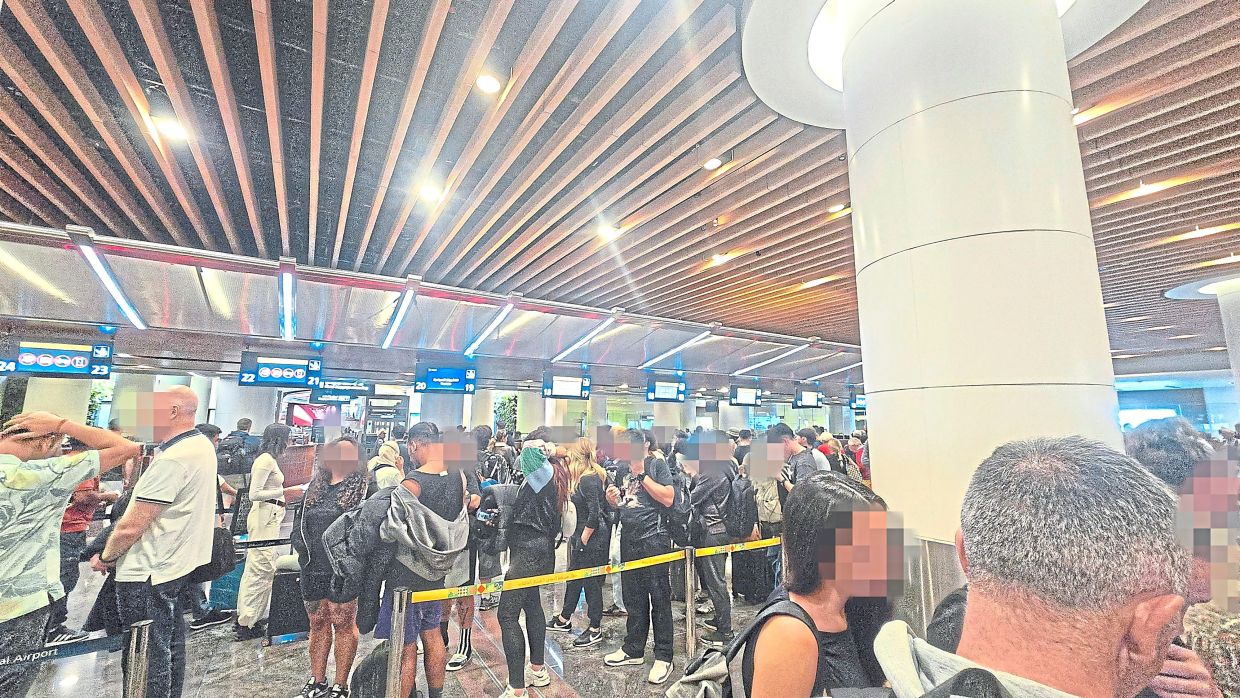
As the Qatari airspace closed for days on end after Feb 28, and the airline was uncontactable via many ways (phone calls, live chat on the app, emails, WhatsApp, and social media), the main chat group was the best way for us to stay informed and navigate the situation calmly.
Each day, members would post the latest news on the conflict, and updates from the Malaysian embassy – who visited us on March 1 – as well as information on available flights out of Muscat on paths that avoided the danger zones. The Omani airspace had remained open, but flights were very few ... and expensive.
The other WhatsApp group only had seven people – five Malaysians, one Dutch and one Pakistani. Here, we shared similar updates, as well as other important messages like, “What time are we going for dinner?” and, “Breakfast?”.
Sure, it seems trivial now, but when you find yourself in that kind of situation, these small gatherings and mundane daily routines can help keep your mental health in check. And you do need to be in a good state of mind, both mentally and emotionally, to be able to think rationally and figure out your next course of action.
Community mindset
Even though we were placed in six different hotels across the city, the “stranded” Malaysian community in Muscat was strong, supportive, kind and generous with information. We even included a few non-Malaysian solo travellers in our chat group, just so that they wouldn’t miss out on any updates.
(Apparently, the visit from Nur Misuari Harun, the Minister Counsellor of the Embassy of Malaysia, Muscat and his officers on the first day made quite an impression on the other stranded guests, who were not yet in touch with their own embassies at the time.)
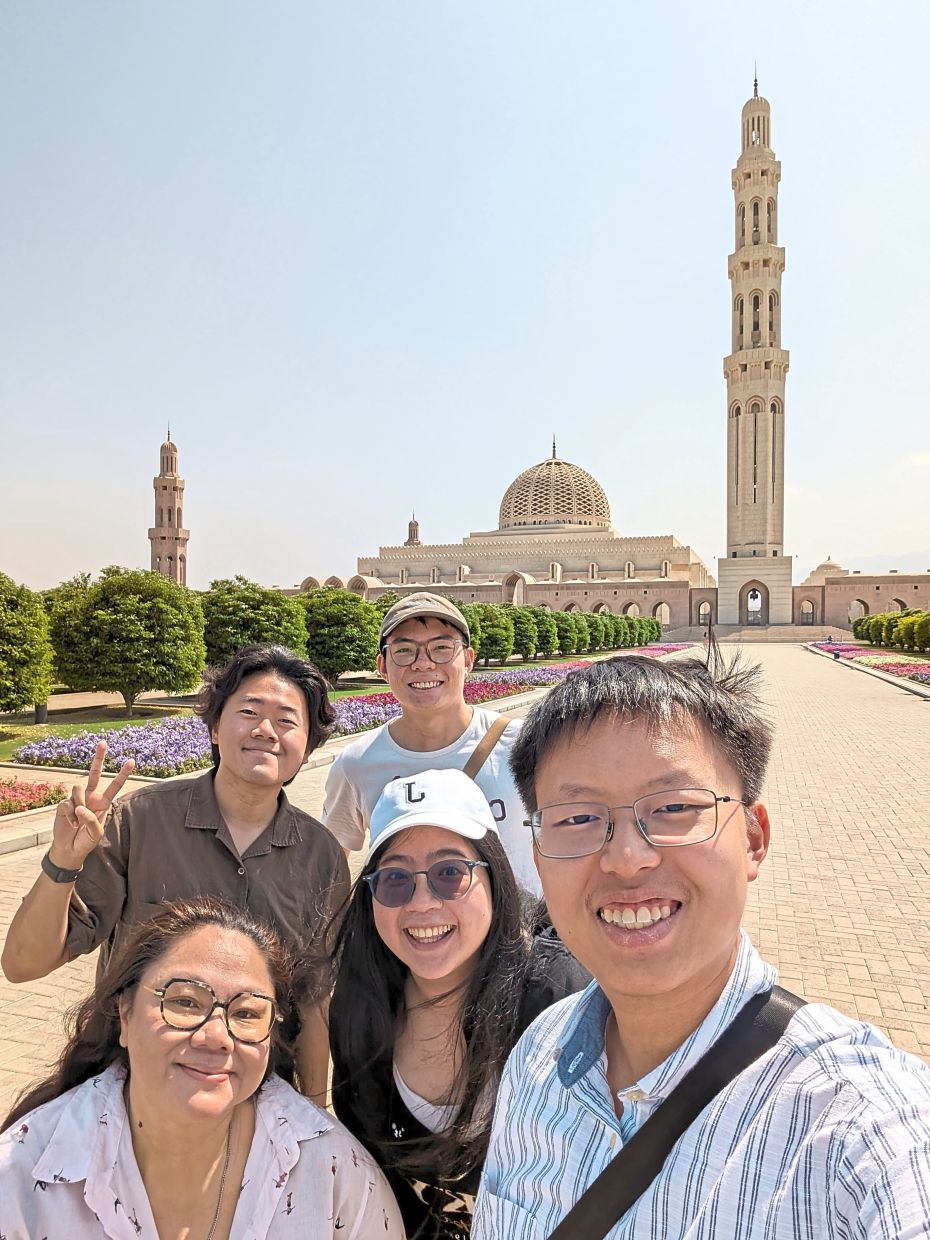
One can get lonely and feel completely helpless if you don’t find your community or, in modern corporate speak, your “tribe”, in these situations. I found mine as I was scarfing down my carbohydrate-heavy breakfast – it’s called stress eating, folks! – on March 1.
I am grateful for Malaysians Janice Lee, Poh Hoh Shan, Stephen Lee and Hong Lin Shee (as well as Sharon from the Netherlands and Sabiha from Pakistan), who accompanied me throughout the ordeal.
Or at least until one by one they all got on their flights out of Muscat. I was the last one to leave on March 7.
Janice, Hoh Shan, Stephen and Hong all live and work in England. They had been back in Malaysia for Chinese New Year; in fact, many of the Europe-bound passengers on our flight, QR 845, were also returning from their Chinese New Year break.
We sat together at almost every meal time, comparing notes on which flights to take and what numbers to call. We also exchanged stories about our personal and professional lives, cracked some jokes and made silly observations.

Hoh Shan from Petaling Jaya, Selangor, perhaps the most resourceful among us, worked in taxes; Stephen from Melaka is a first-year doctor (or was it his second year?); Hong from, if I remember correctly, Kuala Lipis, Pahang worked in insurance (“I don’t sell it,” he was quick to explain); and Janice from Penang is a pharmacist.
Janice, Hoh Shan, Stephen and I, together with two Malaysian women – Joyce Surendra and Elisha Bibiana – went on a city tour of Muscat on March 2. It was just a short tour, but it was nice to get out of the hotel.
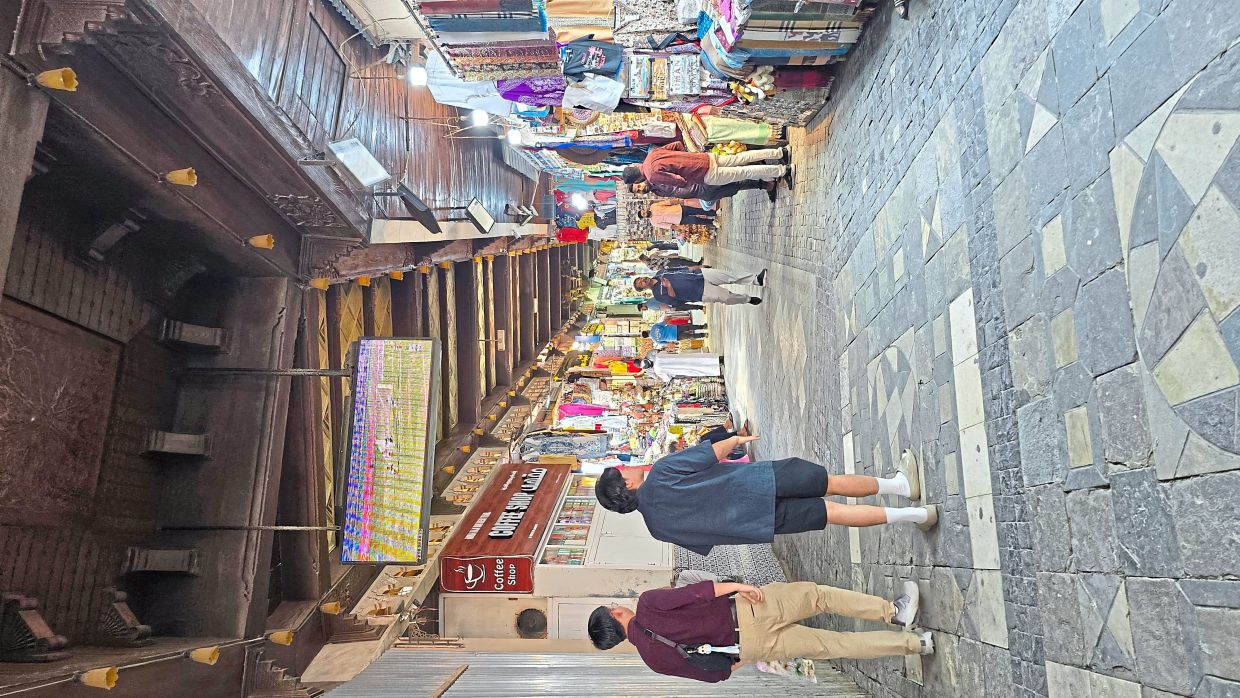
Nicer still were the OMR1 (RM10.20) souvenir T-shirts we found at a shop near the Mutrah Souq. Since the airline and airport did not immediately release our luggage from the aircraft, we had to keep wearing the same clothes we wore on the flight.
Needless to say, we were pretty ripe by the third day and those cheesy “I Love Oman” T-shirts were a saviour.
“When I get rich, I will open a museum and show off all these things – the T-shirts, our boarding passes, hotel keycards, hotel slippers, this business card (I had given mine out like a good journalist) ... you guys can all donate your stuff and come visit,” Stephen joked.
We got our luggage that same night, thankfully. Except Janice, whose bag was missing. After numerous calls to the airline and the airports, her father – who made the calls from Penang – finally managed to track down the bag. It was still at KLIA.
It seemed like every good news we received came with a new set of challenges, though ultimately it all fell into place. For Janice, it was her luggage.
For me, it was the last-minute cancellation of my re-booked flight on March 6. I was devastated and on the verge of breaking down (there were no signs of the conflict de-escalating, after all). After sending out a string of SOS emails, I managed to get myself on a direct flight from Muscat to KL on Oman Air.
Even though Muscat was – and still is – considered the safest place to be in during the conflict, being stranded there, uncertain of when we could fly out or how long the city would remain safe from attacks was certainly stressful. But weirdly, the experience wasn’t a bitter one, at least not for some of us.
“I have never been happier to be Malaysian in my life. The spirit of perpaduan was real in Muscat; I would have been so lost without the support from everyone who came together,” said Janice, who is now safe and sound in her cosy flat somewhere in England. She has yet to receive her luggage, though.
“Instead of the nightmare that it could have been, I’ve come out of this with treasured memories, and a bunch of new friends,” she added.
“When I landed in London it was almost like waking up from a dream ... and then walking back to reality.”
That’s probably what most of us “Stranded in Oman” members felt too.