
Taking a “golden gap year” is an emerging trend among retirees, with increasing numbers of older people planning to see the world when they retire.
Research by National Employment Savings Trust (Nest) pension schemes in Britain found 62% of 2,000 workers questioned there said they’d like to go travelling or on a long string of holidays when they retire.
Further research by Legal and General, also in Britain, found 65% of more than 2,000 British over-55s plan to travel – or already have travelled – with their partner, with 52% saying their travels would be for relaxation and a break in routine.
Meanwhile, 46% saying they wanted to have meaningful experiences and create memories.
Retirement travel is a trend being widely documented on social media by people like retired British teachers Jackie and Richard Pickles, whose YouTube channel (Early Retirement Wanderlust) shares their campervan travels through Britain and the rest of Europe.
Another experienced retirement traveller is Tina (who did not want to reveal her surname), who emigrated to Canada from England in her 30s. She started a YouTube channel (This Is Our Retirement) with her husband Norm – who died last year at the age of 70 – to share their exploration of the world.
“Retirement travel isn’t about seeing as many places as possible,” she says. “It’s about finally having the time to experience a place properly, noticing the people, the atmosphere and the small moments that make a place special. When you slow down, travel becomes far more meaningful.”
And there’s also Americans John and Bev Martin, who sold their home, gave away most of their belongings, packed their backpacks and set off to see the world after they retired six years ago. They started a website and are on social media (Retirement Travelers), and have been charting their journey through 114 countries and across all 50 states in the United States.
Bev, 63, says: “Along the way we’ve made plenty of mistakes, learned a few lessons the hard way, and discovered a handful of things that make retirement travel far easier and more enjoyable.”
Here are the retirement travellers’ tips for happy travel experiences.
1. Don’t postpone travel indefinitely
Many people assume they’ll travel “someday” in retirement, but health and energy can change unexpectedly, Tina points out: “If there’s somewhere you’ve always wanted to see, it can be worth making those plans sooner rather than later.”
And Bev stresses: “It doesn’t have to be a grand around-the-world trip – sometimes the first step is simply booking a flight you’ve been talking about for years.”
2. Plan your trips with tech
“Most seniors never think to use AI to plan trips, find unique hotels, or create specific itineraries that meet specific needs,” says Tina, who suggests you might, for example, ask an AI tool to “plan a 10-day trip to Greece for a senior that has difficulty walking for long periods of time”.
3. Pack far less
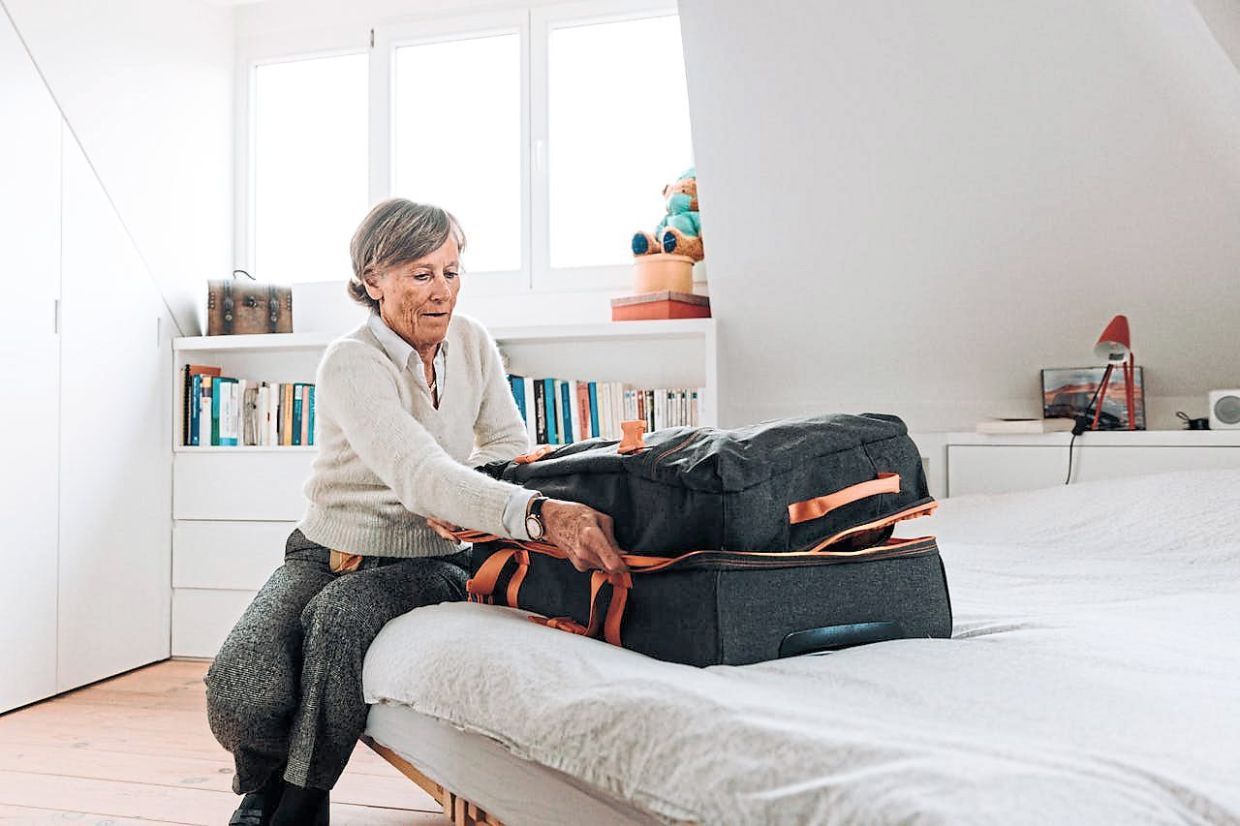
Bev says most new travellers pack for every possible scenario, but points out that the world is full of shops, pharmacies and laundries.
“If you forget something, you can almost always replace it,” she stresses.
“We travel full-time with backpacks, which forces us to keep things simple. Travelling light makes airports easier, train stations less stressful, and spontaneous detours far more enjoyable.”
She says travelling light also saves money, but adds: “The biggest shift for us was realising the experiences we were having around the world were far more valuable than the things we used to own.
“Once that clicked, our relationship with ‘stuff’ changed forever. Our packs became lighter, and our lives became fuller.”
4. Don’t travel at peak times
As former teachers, the Pickles, who are both in their mid-50s, say they’ve enjoyed travelling outside peak holiday times. “The campsites are quiet, the prices are much more reasonable, there are hardly any children around and the weather isn’t too hot as it is in the height of the season,” she says.
5. Go slow
One of the advantages of travelling later in life is the freedom to move at a different pace, Tina stresses.
“When we were younger, travelling often felt like completing a checklist. In retirement, staying longer in one place, walking through neighbourhoods, visiting local cafes and speaking with residents can create much richer experiences,” she says.
And Jackie adds: “We’ve learned to slow down our itinerary. At first we moved on every few days as there were so many places we wanted to experience, but now we stay in places for longer so we can immerse ourselves in the community and the culture.
“We enjoy our longer road trips so we don’t feel like we have to pack everything in.”
6. Comfort and flexibility
Having more flexible plans and prioritising your own comfort becomes more important as you get older, says Tina. She advises: “Leaving space in an itinerary, planning rest days and choosing accommodation that’s easy to navigate can make travel far more enjoyable.
“Retirement travel doesn’t need to be ambitious to be rewarding – sometimes the simplest experiences become the most memorable.”
7. Campervan or motorhome
Travelling in a campervan or motorhome helps keep costs down, say the Pickles. “Campsite fees are cheap, we travel with all the comforts of home, we can self-cater and don’t have to pre-book any accommodations so we can move with the weather. And if we find a place we like we stay for longer – or we can just move on if it’s not so great,” Jackie explains.
8. Stay longer
“Flex-pat” is a term coined by the Martins for retirees who want to enjoy living around the world without dealing with the paperwork of becoming formal immigrants.
“Instead of moving constantly, rent a small house or apartment for a couple of months and settle in,” Bev suggests. “Visit the local markets, find your favourite cafa, take walks through the neighbourhood, and let the rhythm of daily life unfold around you.
“Flex-pats travel on normal tourist visas, so stay long enough to get a real feel for a place, then move on when they’re ready for the next adventure.”
9. Don’t worry too much
The Pickles admit when they initially set out on their travels they were worried about losing connections with their family while they were away for extended periods. But Jackie stresses: “The world is a much smaller place and we video call them all regularly when we’re away.”
10. Listen to other travellers
Don’t worry about being the oldest travellers around – the Pickles say there are lots of older travellers throughout the world, and getting tips from them can be a great help.
Jackie says: “We backpacked for seven weeks in Thailand and realised we weren’t the oldest backpackers in town – there’s a whole community of older travellers out there circling the globe.
“We didn’t book (to visit attractions) anywhere in advance, and have found in all our travels that listening to fellow travellers is important, as they’re a great source of information of the best places to visit – often slightly off the beaten track.” – LISA SALMON/PA Media/dpa