“Evacuate! Evacuate!”
Our trainer’s voice rang sharply through the confined space of the plane replica.
It was only a drill, but we were expected to respond as if it were real. We repeated her commands at full volume while moving quickly toward the exit, where an inflatable slide awaited.
The slide drill was part of the media immersive experience at MAB Academy Campus – the training arm of Malaysia Aviation Group – in Sepang, Selangor. Our trainer for the day was Rachel E. Kouju, a former flight attendant with Malaysia Airlines, and now a CAAM-certified (Civil Aviation Authority of Malaysia) cabin safety instructor for the airline.
Our group was small yet it was such an engaging experience, and we got to learn a little about what it is like to be in the aviation industry from real pilots and other crew. It is also fitting that April 26 is World Pilots’ Day.
From emergency evacuations to water survival training and fire response, the experience gave us an insight into the skills and discipline needed to keep passengers safe at all times.
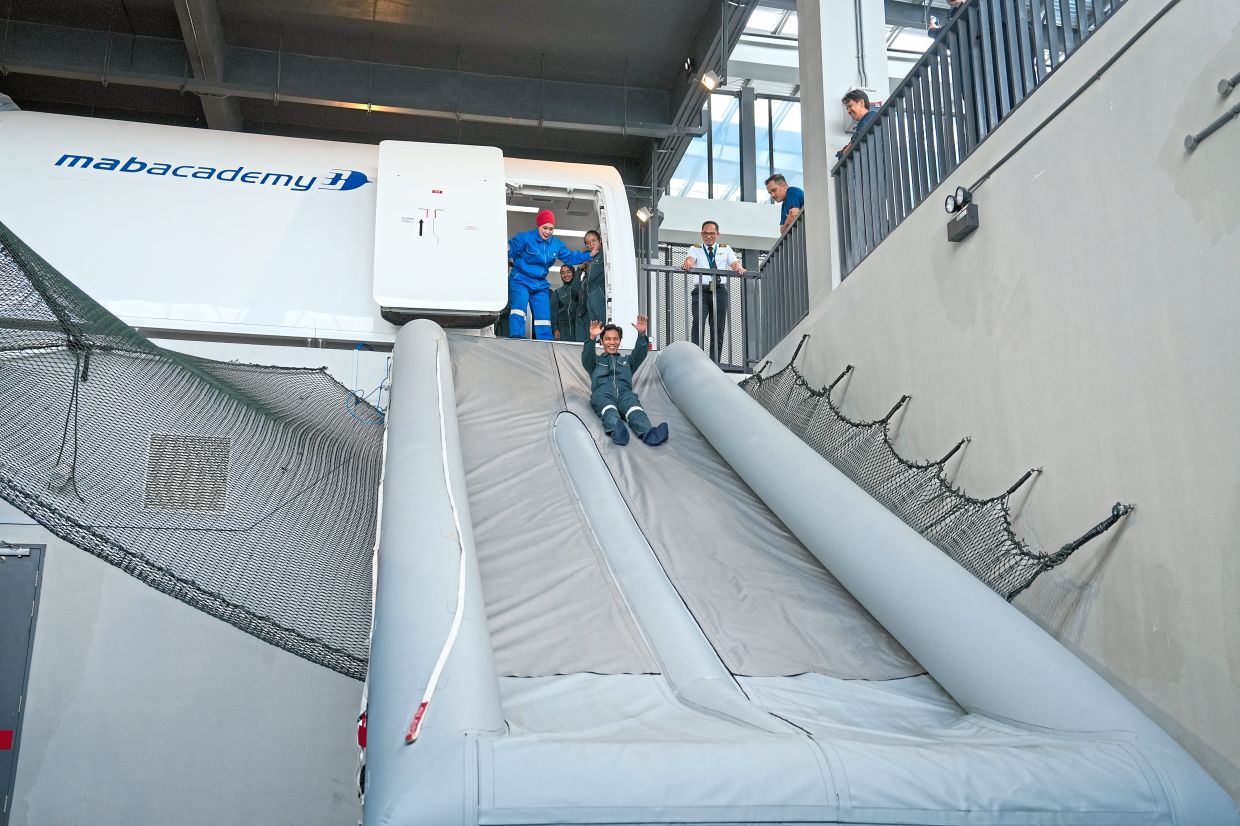
We head to the door of the aircraft, where Rachel explained why it is important to handle it properly. The trainer demonstrated how to open (and shut) it; unlike a regular door, this one requires both force and technique to do it. The right foot placement, it seems, is vital to getting this done correctly.
With a final push, the door swung open, revealing a massive inflatable slide. Participants were then carefully guided through proper sliding techniques, as incorrect posture could lead to injury.
This is one of the reasons why you must always listen to, and watch, the safety briefings by the cabin crew during each flight.
There were two methods: jumping into the slide or sitting on the edge and pushing off.
In real emergencies, these slides deploy instantly when aircraft doors are opened in “armed mode”, typically during evacuations (such as emergency landings).
Rachel also said evacuations need to be completed in just 90 seconds. In such situations, every second counts, with pilots conducting a final check, and being the last to leave the aircraft.
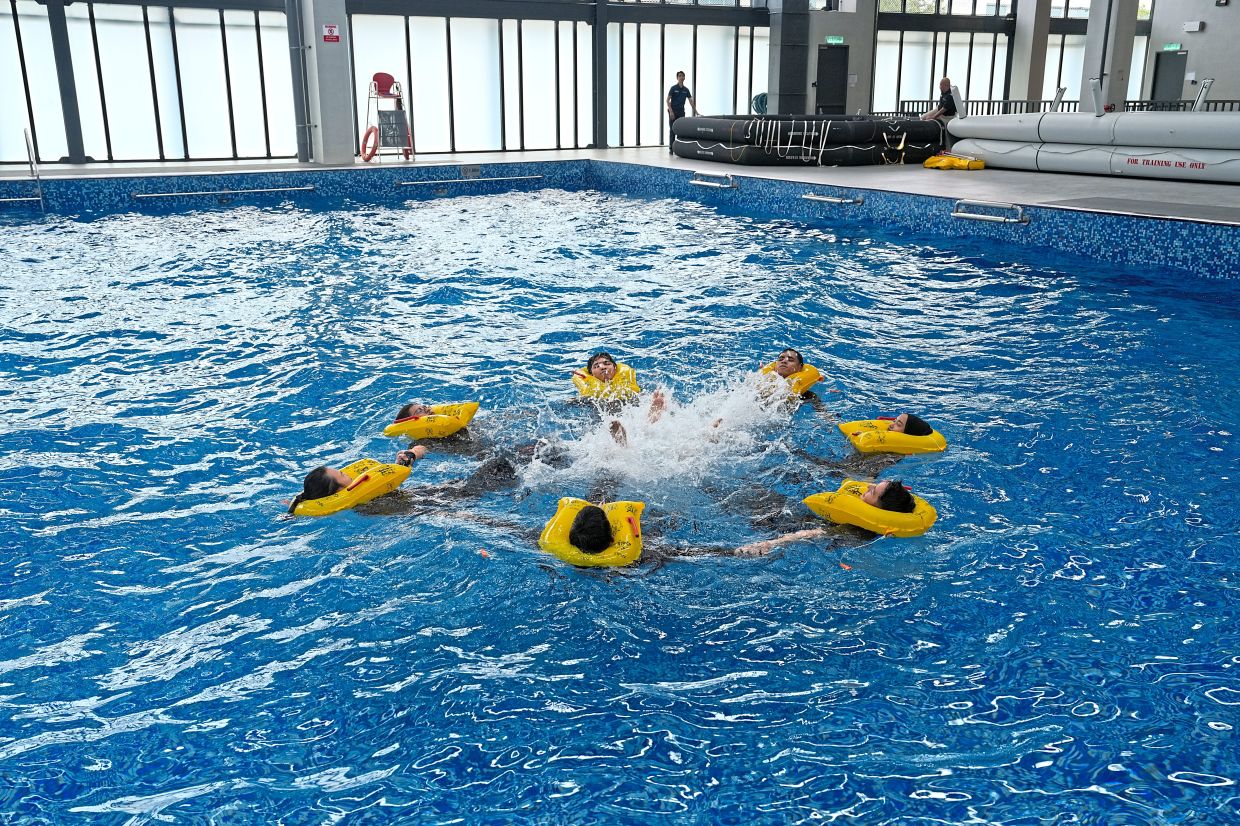
Part of the immersion session included water survival training, also known as the wet drill. The pool at the academy is equipped with a system designed to simulate real open-sea conditions. Of course, we were each fitted with life vests, the same ones you get on the plane.
After a quick warm up, we stepped to the edge of the 1.8m-deep pool, (mentally) preparing ourselves.
“One foot forward... jump,” Rachel said. “This will be the longest three seconds of your life.”
Without thinking too much about what she meant, we plunged into the water, briefly submerged before bobbing back up. I am not a strong swimmer, so I paddled my way toward the centre of the pool, where the other instructor was waiting.
The waves made it way more challenging than I had expected.
Once everyone had gathered, we formed a circle, holding onto each other’s arms and kicking the water to create splashes. Rachel said this increases visibility, making it easier for rescuers to locate people from above.
Next came the challenge of climbing onto a large life raft, designed to accommodate multiple people.
With guidance, participants learned how to board safely and then assemble a canopy on the raft, which can provide shelter from rain and harsh weather while waiting to be rescued.
We were taught that if the water near the horizon appears brownish, it may indicate proximity to land, meaning it is time to “paddle”. My eyes quickly scanned the raft, looking for paddles, but of course, there were none in sight.
Instead, “paddling” here refers to paddling with your hands while half your body hangs out of the raft. Other folks had to hold onto the legs of the paddlers to prevent them from falling overboard. It’s definitely a group effort.
Fire in the sky
Flight attendants are trained to do far more than serve meals and assist passengers, as they are the “first responders in the sky”.
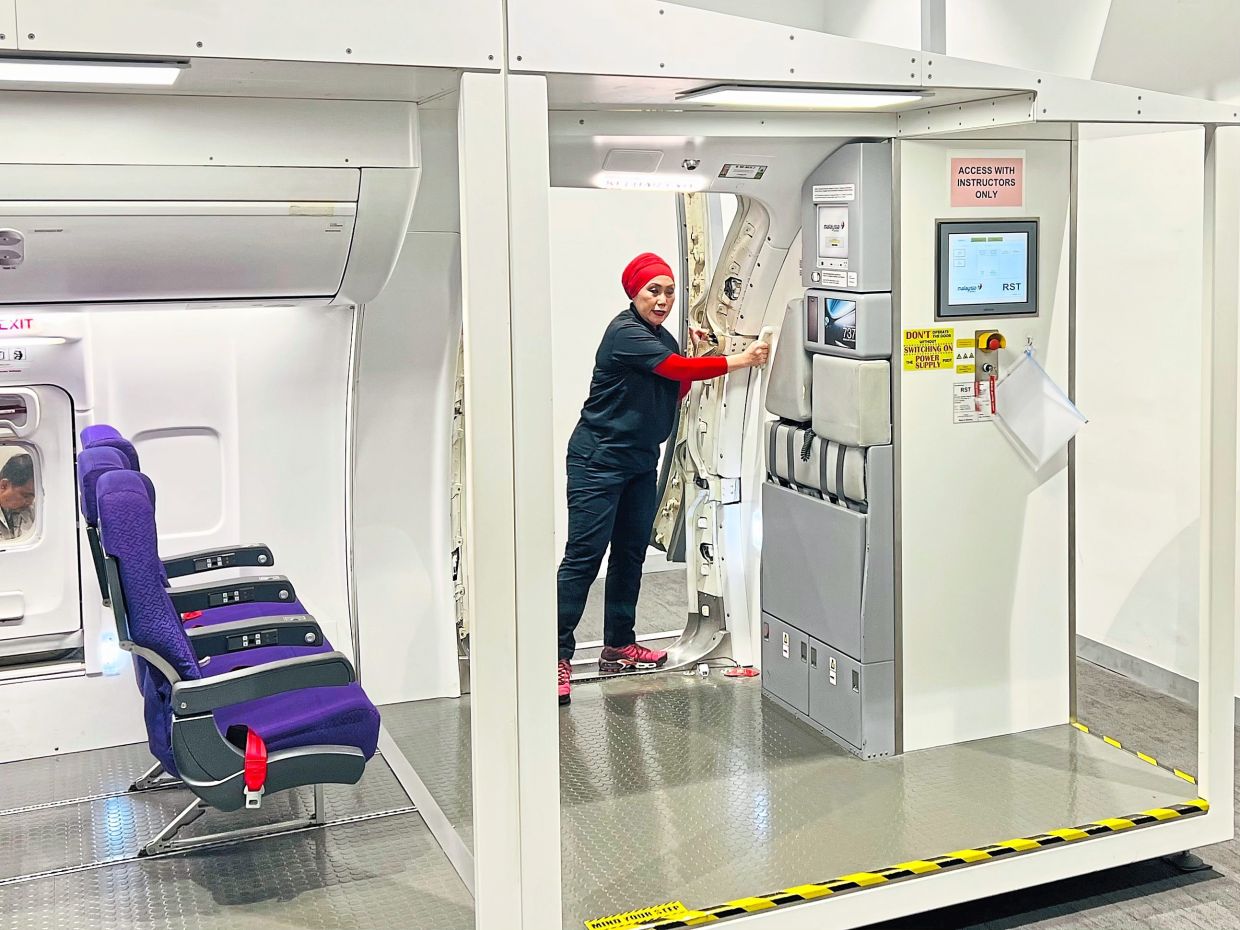
If you’ve ever been seated in an emergency exit row, you’ll be familiar with the pre-takeoff briefing on how to operate the exit door in case of emergencies.
My eyes were already on the bar behind a transparent protective cover on the door. The moment I slipped my hand underneath, the cover popped off. I then gently pulled the bar, triggering the door to swing open so quickly that I had to let go, as Rachel had warned it could cause injury if handled incorrectly.
This is why it is important to give your full attention during safety briefings – you never know when that information might save your life.
The fire drill was another eye-opening experience. As we made our way to the training area, the atmosphere changed. The air grew warmer and slightly smoky, with a faint scent of gas – we knew we were getting close.
Behind a glass panel was the “set” of an aircraft cabin, with passenger seats, a lavatory and a galley.
Rachel held a tablet in her hand. With a tap on the screen, the overhead compartment began to fill with smoke. Flames soon followed, but it was swiftly put out by a staff member. We then took turns to put the flames out ourselves with a fire extinguisher.
In good hands
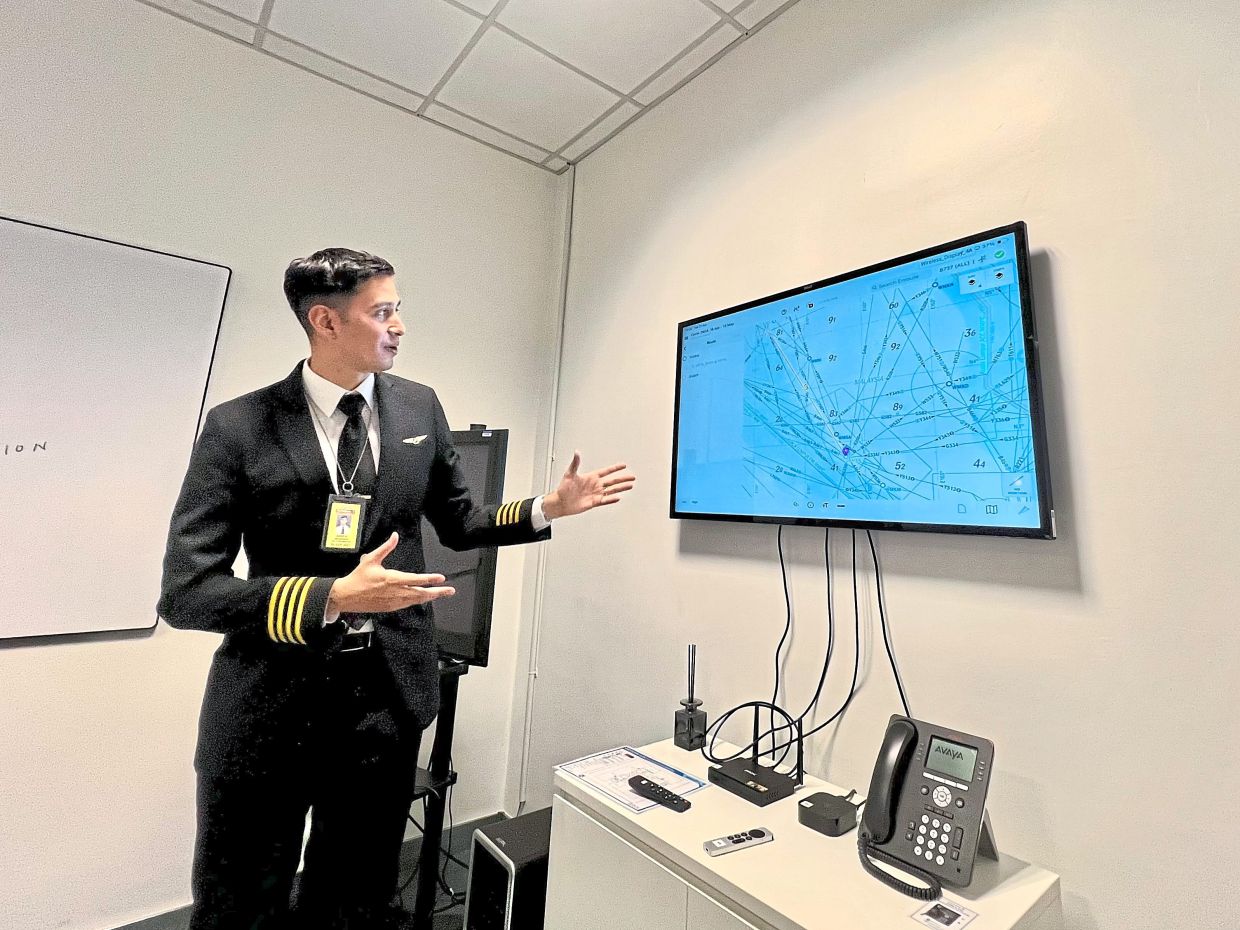
Ever notice how pilots walk briskly through airports? It’s not for show. Capt Joshua Bryan Bansh, 38, explained that a pilot’s responsibilities begin well before takeoff, from pre-flight briefings and aircraft inspections to coordinating with crew and reviewing flight routes.
There are structured routes in the sky known as airways, which guide aircraft along designated paths.
If you think a pilot’s job is simply to take off and switch on the autopilot, think again. With constantly changing weather conditions and air traffic variables, pilots must always stay alert and ready to make critical decisions at any moment during a flight.
Capt Bansh said one of the biggest misconceptions people have is that the autopilot operates the entire flight without active pilot involvement.
"While modern aircraft are highly automated, pilots remain fully engaged throughout the journey. Our responsibilities include continuous monitoring, communication with air traffic control, managing flight path and fuel efficiency, responding to environmental and operational changes and overseeing overall flight safety and crew coordination.
"Autopilot is a tool that supports the operation, but it does not replace the active role of the flight crew," he explained.
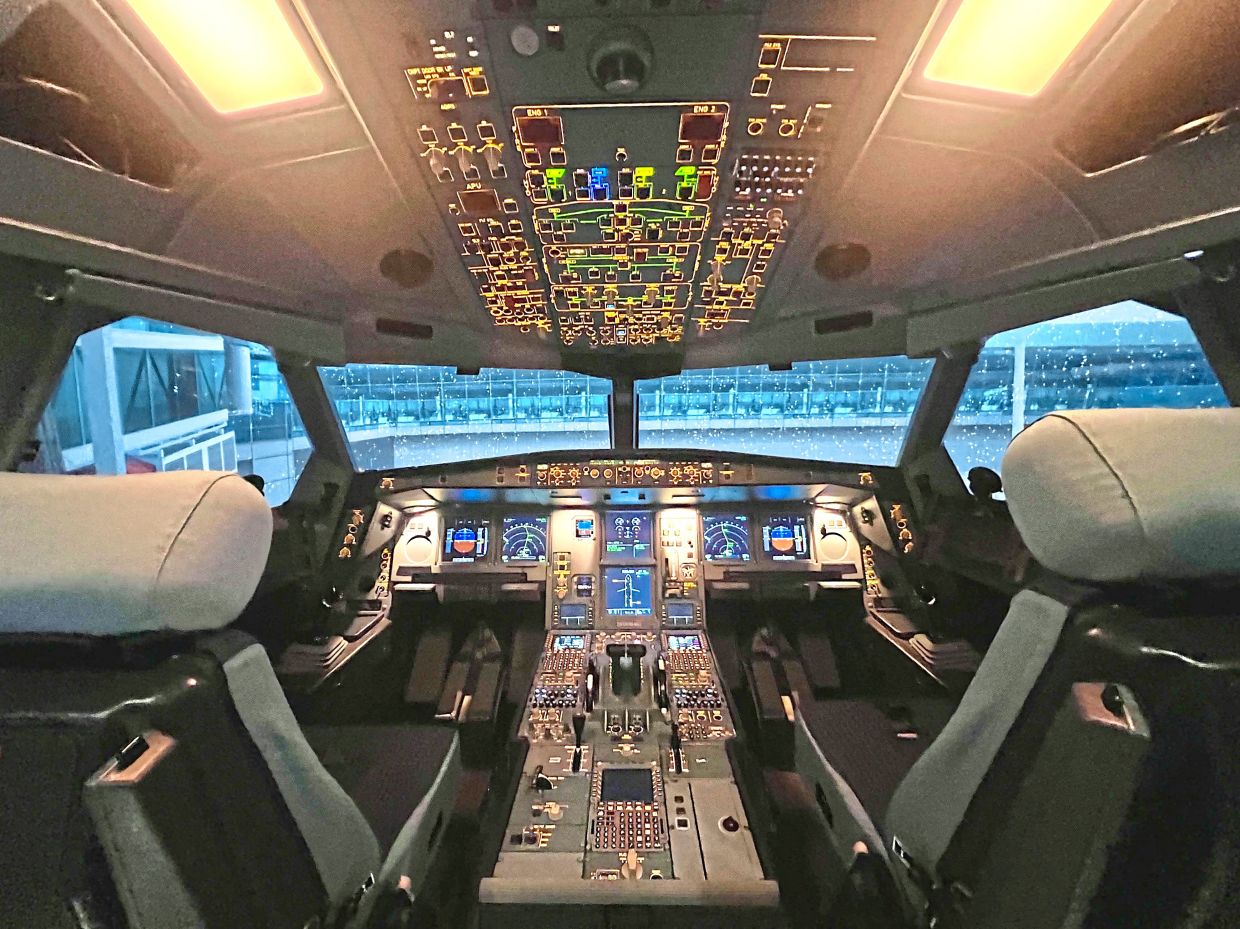
We had the opportunity to “pilot” two high-tech simulators: the Boeing 737-800 and the Airbus A330neo.
The former was guided by Capt Bansh, while the latter was guided by Capt Kamarul Arifin Othman, MAB Academy’s director of training.
The B737-800 is a smaller aircraft typically used for short- to medium-haul flights, while the A330neo is larger, used for long-haul journeys.
Inside the cockpit, panels of illuminated buttons stretched across the console. The Boeing uses a control column, or “yoke”, while the Airbus relies on a sidestick.
A graphic simulation of Kuala Lumpur International Airport’s runways was displayed on the screen in front of the captain’s seat. You can even “see” the control tower in the distance.
Planes move in a straight line before lifting off, so naturally, some might assume to do this is easy. After trying it myself in the simulator, I can tell you that it is not. Keeping the “plane” aligned was surprisingly difficult, constantly veering left and right, refusing to stay on course.
But that did not hinder our flying experience. Instead, we could feel every movement, from the plane accelerating forward to the tilt as it lifted off, and the not-so-slight bump as the wheels touched down during landing.
The role of aviation crew is not as simple as it seems. One of the main takeaways from this experience is that passengers are always in the hands of capable folks with many, many hours of training – and re-training.
This was just a glimpse into the world of aviation for me, one that you can also experience for yourself. The academy offers guided tours for a closer look into its training facilities (more information on its website). It is an experience that is both educational and unique.