Yunnan is one of the most beautiful regions in China, celebrated for its dramatic landscapes and diverse ethnic cultures.
More than 10 years after my first visit to the country, where I only caught a glimpse of Beijing’s urban life, I returned to China last year, this time to explore Yunnan Province.
From Kuala Lumpur, we flew into Chengdu and took a two-hour domestic flight to Lijiang, one of the major cities in the province.
Other popular tourist destinations in Yunnan are Kunming, Dali and Shangri-La.
A harmonious blend
We stayed at the Club Med Lijiang, a fairly new property located at the base of the majestic Jade Dragon Snow Mountain, so you can imagine the kind of views we got during the day.
But more than just a scenic backdrop, the mountain is “home” to a popular outdoor show called Impression Lijiang, created by acclaimed filmmaker Zhang Yimou.
I thought the chance to see one of China’s most breathtaking mountains would be the highlight of my trip – until I watched the performance.
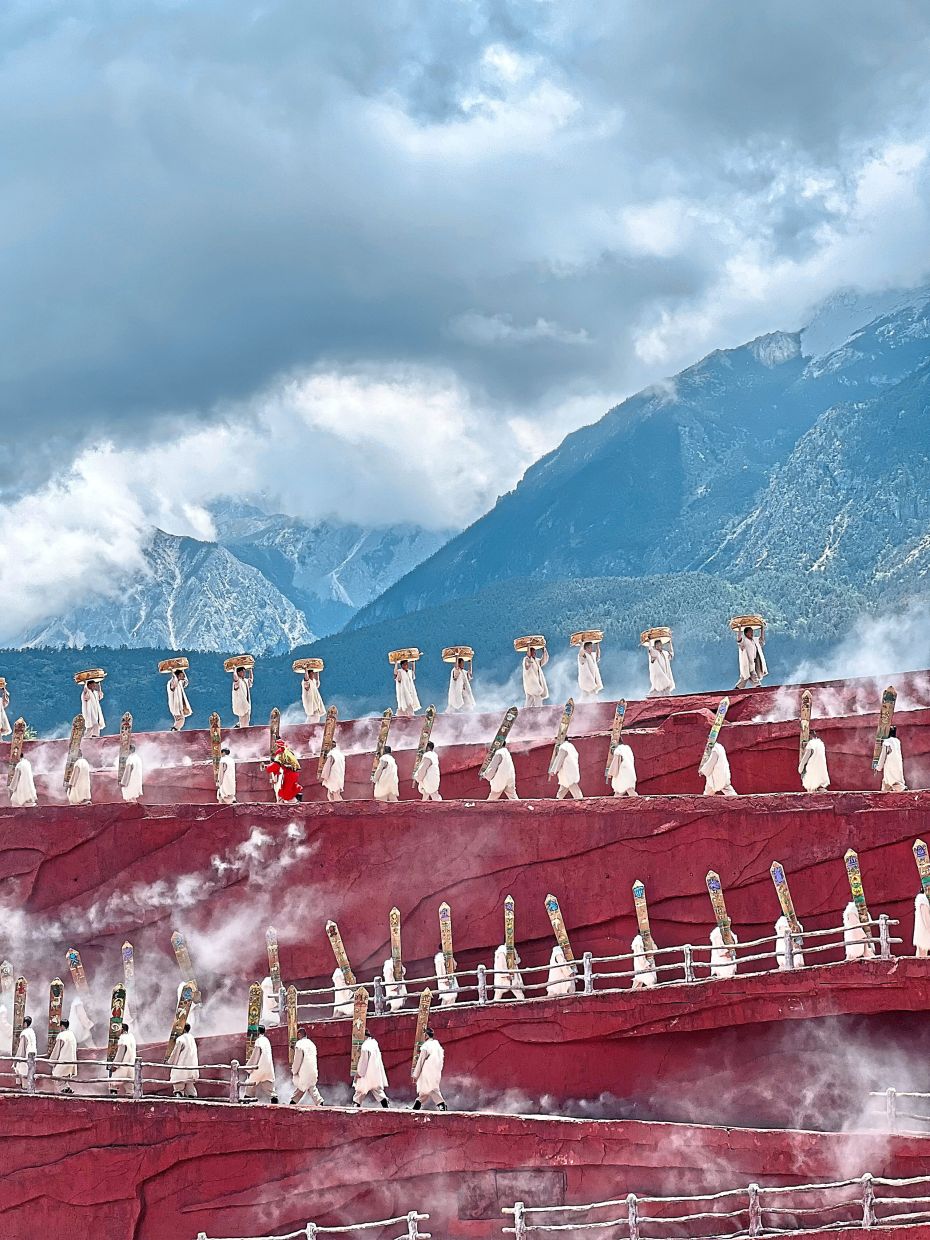
Set against the mountain itself, the show presents ancient traditions that have endured for centuries. For more than 20 years, local performers have depicted the customs and daily life of Lijiang’s ethnic communities through music and dance, traditional attire and theatrical performances.
There are several ethnic groups in Lijiang, including the Naxi, Bai and Yi peoples. Visitors may notice differences in their speech, clothing, embroidery patterns and cultural practices. However, we were told that most locals now speak Mandarin, while fewer people continue to use their ethnic languages in daily conversations.
Within the Jade Dragon Snow Mountain Scenic Area, Blue Moon Valley is another highlight, known for its alpine landscape.
Turquoise lakes and cascading limestone terraces, framed by tall pine trees, made the valley look like a picture-perfect postcard.
The valley comprises four lakes, all fed by melting glaciers, and Li, our guide, said it’s a popular spot for couples to take their wedding pictures.
We joined the throng of tourists at the observation deck to photograph the white terraces, where streams run through the limestone formations.
There was even a white yak, a domesticated relative of the wild ox, patiently “waiting” for visitors to pose with it for pictures.
When you’re hungry, try yak meat, a delicacy in Lijiang that’s full of flavour, not unlike beef. Besides yak meat, the city is also known for yak milk, Naxi blood rice sausage and “steam pot” chicken, among others.
Lijiang’s cuisine is shaped by its ethnic heritage and mountainous surroundings, and some of these traditional dishes can be found in Baisha Ancient Town, one of the stops on our itinerary.
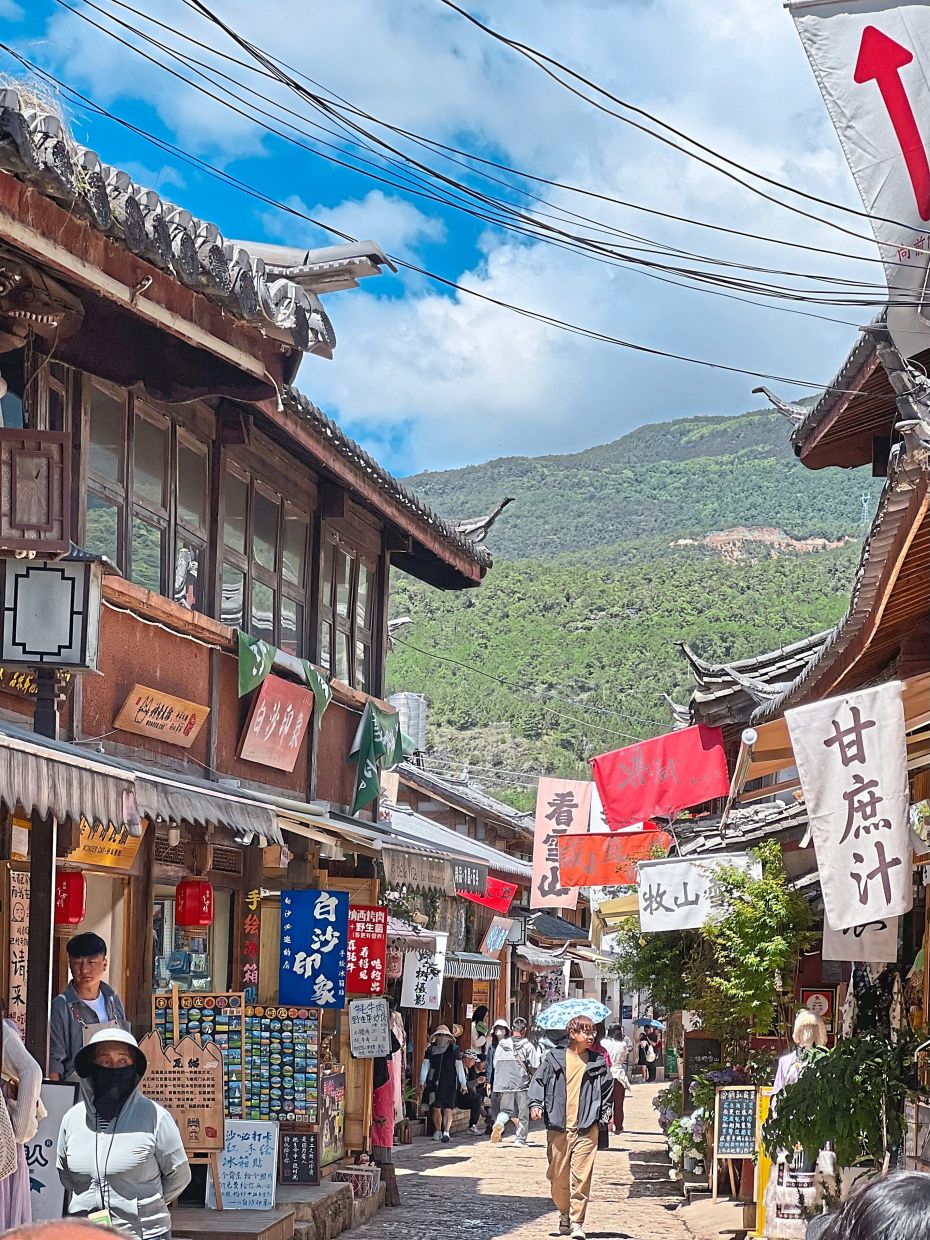
Baisha, meaning “white sand”, is considered the earliest Naxi settlement in Yunnan. Timber houses line the streets, some decorated with what appear to be hieroglyphs painted on their walls.
Our group later stopped by the Baisha Naxi Embroidery Institute, where we learned that the pictorial writing system is called Dongba script, used by the Naxi people who have lived in this region for more than 2,000 years.
While there, we also watched an artist paint pictographs on handmade paper.
Seated at a wooden table at the shopfront, the artist – dressed in traditional attire – carefully painted pictographs with a brush. The shop’s walls were adorned with framed scripts for sale. Some visitors even requested to have their names written in Dongba for a small fee as a unique souvenir.
We were also told that these scripts were once carved into stone or wood, and painting them on paper is one way of preserving the legacy.
Walking through Baisha’s cobblestone streets, we came across trays of dried insects, including scorpions and sago worms, displayed at a local market. No one in our group was brave enough to try them.
Later, we discovered a charming cafe housed in a century-old building. Its interior was decorated with flowers in rattan baskets, and a small balcony overlooked the town’s tiled rooftops, a favourite photo spot with tourists.
Lunch at a local eatery was a delicious spread of traditional Yunnan dishes.
The second town we visited was Lijiang Old Town. While it looked similar to Baisha, it felt completely different – the crowds were larger and the atmosphere livelier.
Li guided us to the wooden Kongming Wheels, ancient devices believed to date back more than 1,700 years that were historically used to generate mechanical power.
Street vendors sold grilled sausages, pan-fried buns and crispy yak cheese.
I also experienced my second tea ceremony at one of the traditional tea houses. My first was in Gangwon, South Korea, which introduced me to the quiet ritual and appreciation of tea drinking.
Tea is an integral part of Chinese culture and history, and we sampled several varieties that day. One of it, reportedly, was once reserved exclusively for emperors.
The historic quarter is also a great place to hunt for souvenirs. From local snacks to handicrafts, the small shops offer plenty of items unique to Lijiang.
Lijiang is also a gateway to Tiger Leaping Gorge, one of the deepest and most dramatic river canyons in the world that’s popular with both local and international tourists.
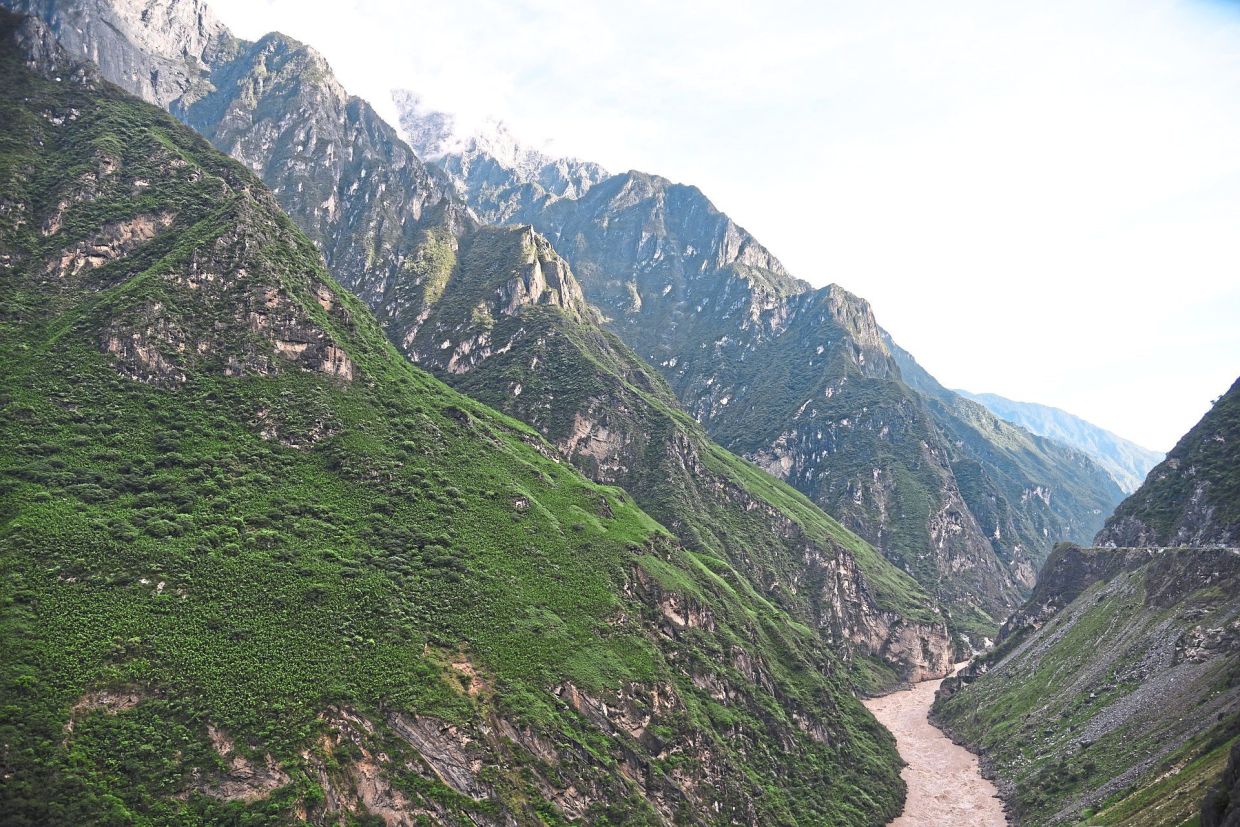
The Jinsha River flows through Tiger Leaping Gorge, between the Haba Snow Mountain and Jade Dragon Snow Mountain.
Legend has it that the gorge got its name when a tiger leapt across the narrowest point while escaping a hunter.
We did not visit the gorge during this trip, but travellers can opt to go on a two-day hike to get there. The trail is known for its breathtaking scenery: towering cliffs, a roaring river, and vast mountain views.
If you don’t feel like hiking, the gorge is accessible by car, too.