
As the sun sets over the Nile river, 63-year-old Abdel-Hamid Bakri pulls the ropes of his wooden felucca, steering his sailboat past the shadows of the ancient temples of Upper Egypt’s Luxor.
“I inherited this felucca from my father and grandfather,” said Abdel-Hamid. “I was only eight years old when I began learning to read the wind and water. Today, this river is both an open-air museum for the world, and a daily highway for our people.”
Vessels like Abdel-Hamid’s belong to a lineage stretching back thousands of years to the pharaonic civilisation, when wooden boats were the primary arteries of Egyptian trade and transportation. Yet today, Luxor’s river fleet lives a distinct dual life: It serves as a gateway for international tourists chasing ancient history, and as a practical means of transport for local commuters.
To survive in the 21st century, the ancient trade has had to modernise.
“Today, a big number of boats are equipped with modern inboard motors to guarantee speed and reliability for tight tourist schedules,” Abdel-Hamid said, noting that while hundreds of pure, sail-only boats still operate, they require physical labour and depend on the weather.
“Despite the challenges, this business has secured a sustainable income for thousands of families who have no other source of livelihood,” he said.
This tourist-facing modernisation is also driven by a new generation of digital-savvy sailors like Badawi Badri, 24, who chose the river over corporate jobs in Cairo, the Egyptian capital.
“I chose the Nile because it gives you an absolute sense of freedom,” Badawi said at the main dock in front of Luxor Temple. Having mastered English and Spanish, Badawi and his contemporaries utilise Instagram and TikTok to market directly to international travellers.
The tech-driven tourist experience captures global travellers like Lao Mao, a history teacher from the Chinese capital of Beijing in his late twenties, who sat at the bow of a felucca with his wife.
“As a history teacher, I have read extensively about pharaonic river transport,” Lao said during his fourth visit to Egypt.
“But being out here at this hour makes you feel like you are stepping directly into a living painting from thousands of years ago. The river breathes history. You can feel the heartbeat of ancient Egypt right beneath your feet,” he added.
The traditional river network remains in use for local transport across the city, divided by the Nile. Heavier wooden cargo boats still ferry grain, agricultural harvests, and bulk goods between the east and west banks, extending to Qena and Aswan.
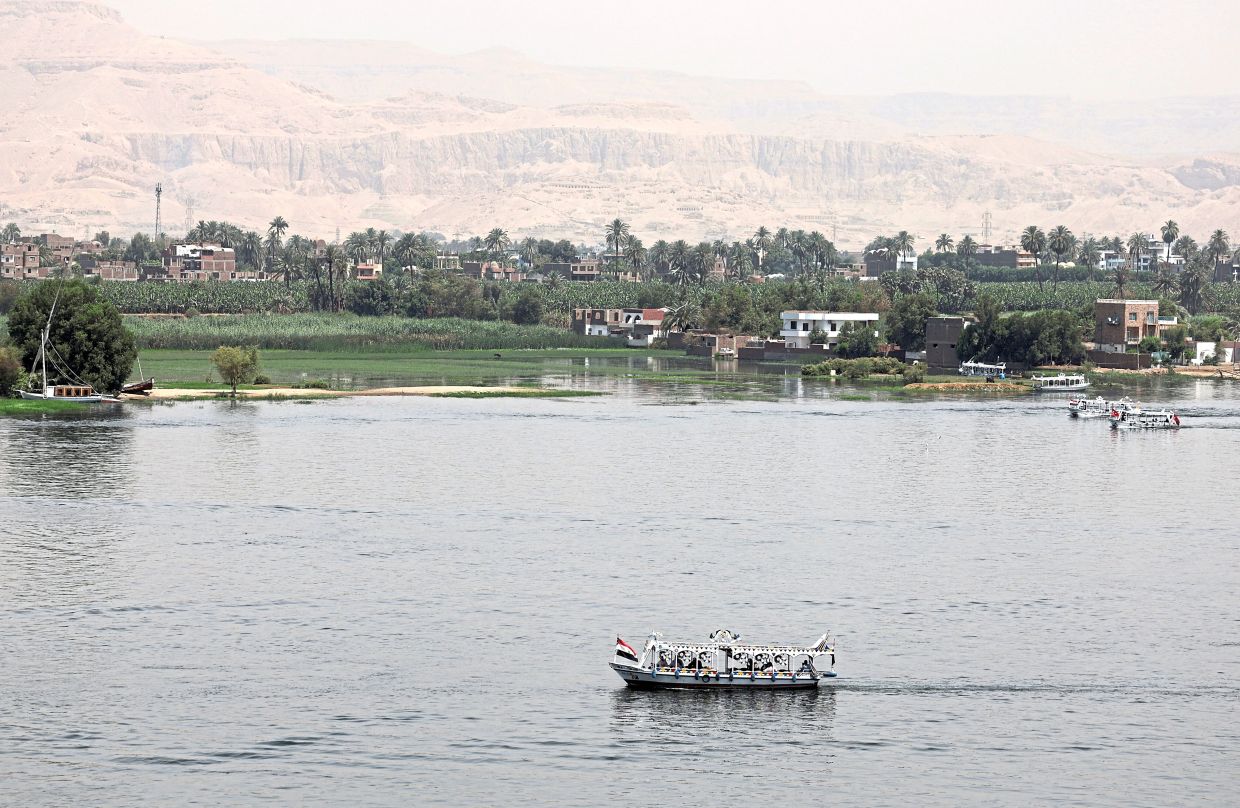
For daily commuters like Mostafa Abdel-Rahman, who relies on the boats to cross from the quiet west bank to his office near the old market on the east bank, the river transit system is equally indispensable.
“Many of these boats work as public ferries,” Mostafa said. “If I had to take the bridge, I would have to hire a taxi, which costs me much more than sharing a boat ride with other commuters.
“Right now, moving between the two banks costs me around 50 Egyptian pounds (RM3.80) a day using these ferries,” he added.
Sustaining this dual economy is the responsibility of the Syndicate for Sail and Motor Boat Workers in Luxor. According to syndicate head Hajjaj Mahmoud, the economy supports thousands, including local carpentry workshops and sailcloth weavers.
“The number of feluccas operating in Luxor reaches 320, along with about 400 motorised tourist boats used for tourism, mass transit, and cargo transport, employing approximately 3,000 sailors,” he said. “Luxor only has two bridges, which makes using these boats and feluccas as ferries absolutely necessary and essential for the daily transportation of thousands of residents.”
The syndicate works closely with authorities to enforce passenger safety standards and implement fair pricing regulations to prevent the exploitation of tourists, he said.
“These boats are an integral part of Luxor’s tourist image, just like the city’s ancient antiquities,” Hajjaj emphasised.
“When people think of Luxor, they think of the temples and they think of the feluccas gliding across the water.”
He added that prices for regular felucca rides range from 150 to 300 Egyptian pounds (RM11 to RM22) per boat per hour. Meanwhile, pre-booked guided tours, which include hotel transfers, guides, and a visit to the Nile islands, cost between 1,000 and 1,650 Egyptian pounds (RM75 and RM125) per person.
“Luxor’s sailing community remains determined to keep its heritage afloat,” he said, adding, “... as long as the Nile flows, these iconic boats will continue to carry the stories, dreams, and survival of the city’s people across the water.” – AHMAD SHAFIQ/Xinhua