THE glee on the faces of Sekolah Kebangsaan (SK) Mukut’s young sailors is hard to miss as they make their way down the newly-refurbished slipway.
For the first time since sailing was introduced at the school in 2022, getting their dinghies onto the waters off Kampung Mukut is a much simpler affair.
Here, at the southern end of Tioman Island, the sea has always been woven into village life.
But Mukut’s shoreline is not fringed by the stretches of sand found elsewhere on the island. Instead, it is strewn with wave-battered boulders and jagged, slippery rocks, making the short journey from land to sea a complicated one.
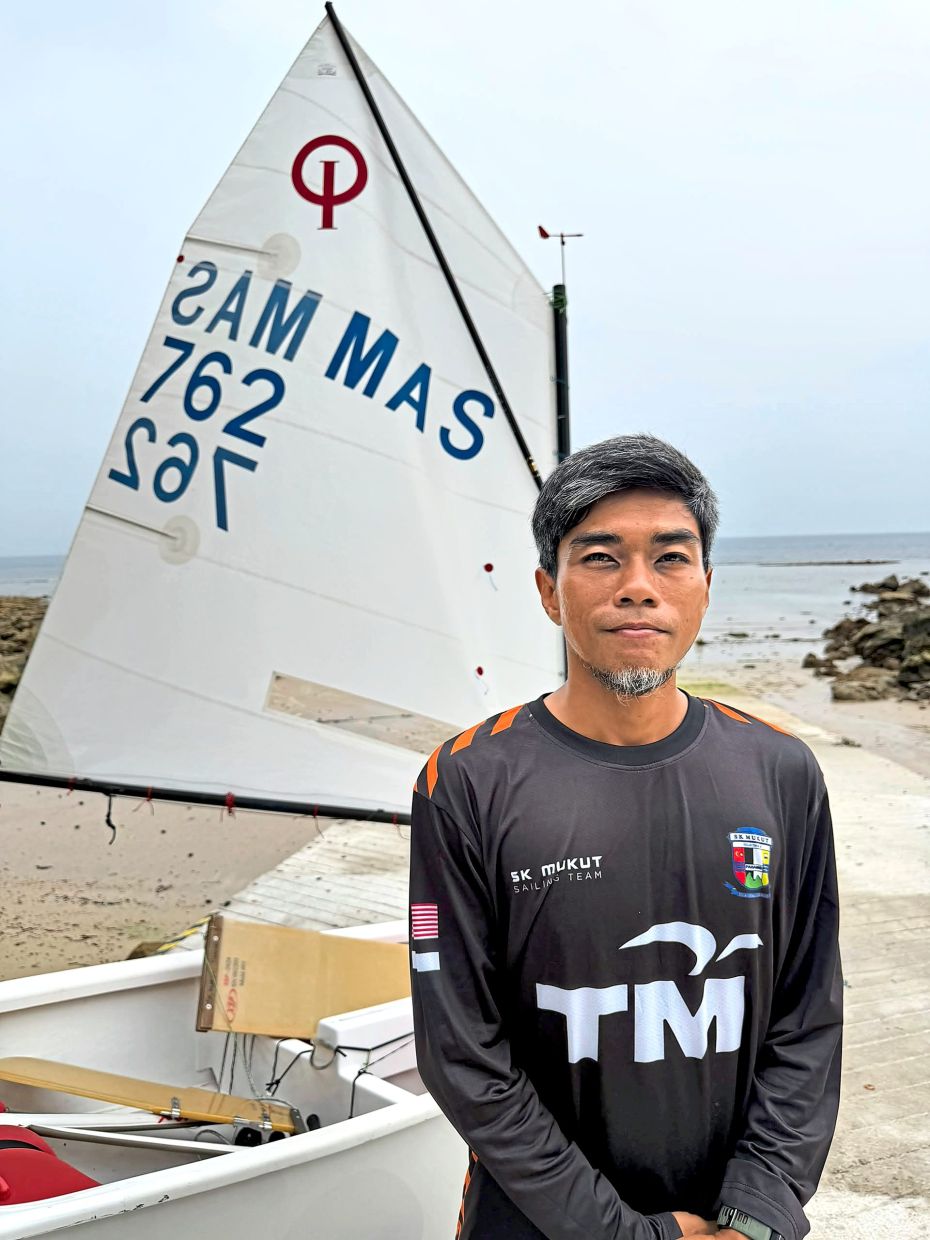
“There was an old slipway that was built during land reclamation works years ago but it was too steep and too short, so we did not use it for training,” recalls SK Mukut sailing teacher Muhammad Afiq Sulaiman.
“There were concerns over the safety of my students, as well as the risk of damaging the boats and sailing equipment.”
Muhammad Afiq remembers having to seek out gentler slopes some distance away, or wait for the tide to come in before his pupils could launch their boats.
As a result, the young sailors generally trained only when a competition was approaching, travelling to the venue several days early just to get enough practice on the water.
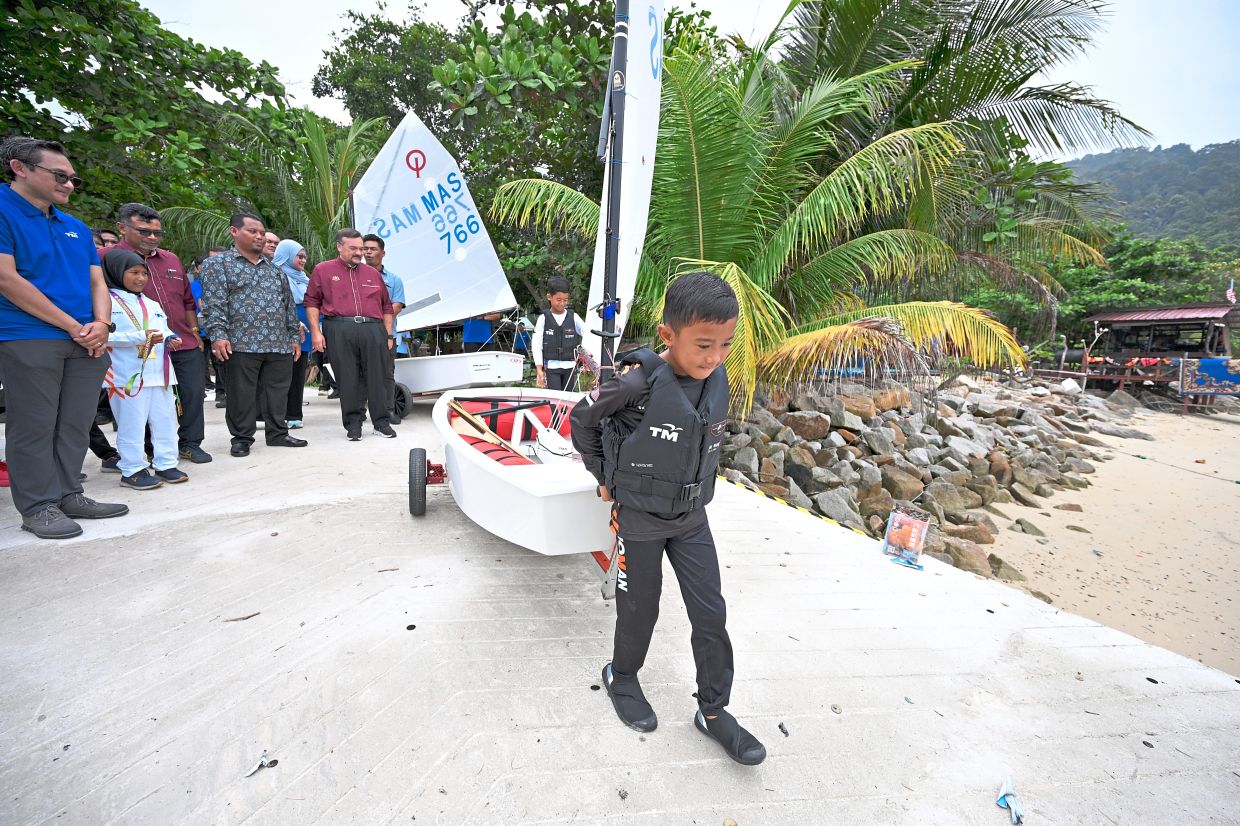
The reconstructed slipway offers a more practical route to the sea. Built by TM under its Jangkau Digital initiative, its gentler incline and textured grooves remove a constraint that once shaped when, where and how often these young athletes could train.
It is one sign of a broader shift taking place in Mukut. Jangkau Digital TM began here in 2025 with connectivity as its starting point.
A year on, it has widened its impact on education and talent development, community digital services and MSME empowerment, livelihoods and efforts to preserve local heritage and biodiversity.
Those developments were among the progress reviewed during Finance Minister II Datuk Seri Amir Hamzah Azizan’s visit to Tioman Island under the Kampung Angkat Madani initiative recently.
But on the ground, the changes are perhaps easiest to understand through what people can now do.
Beyond books
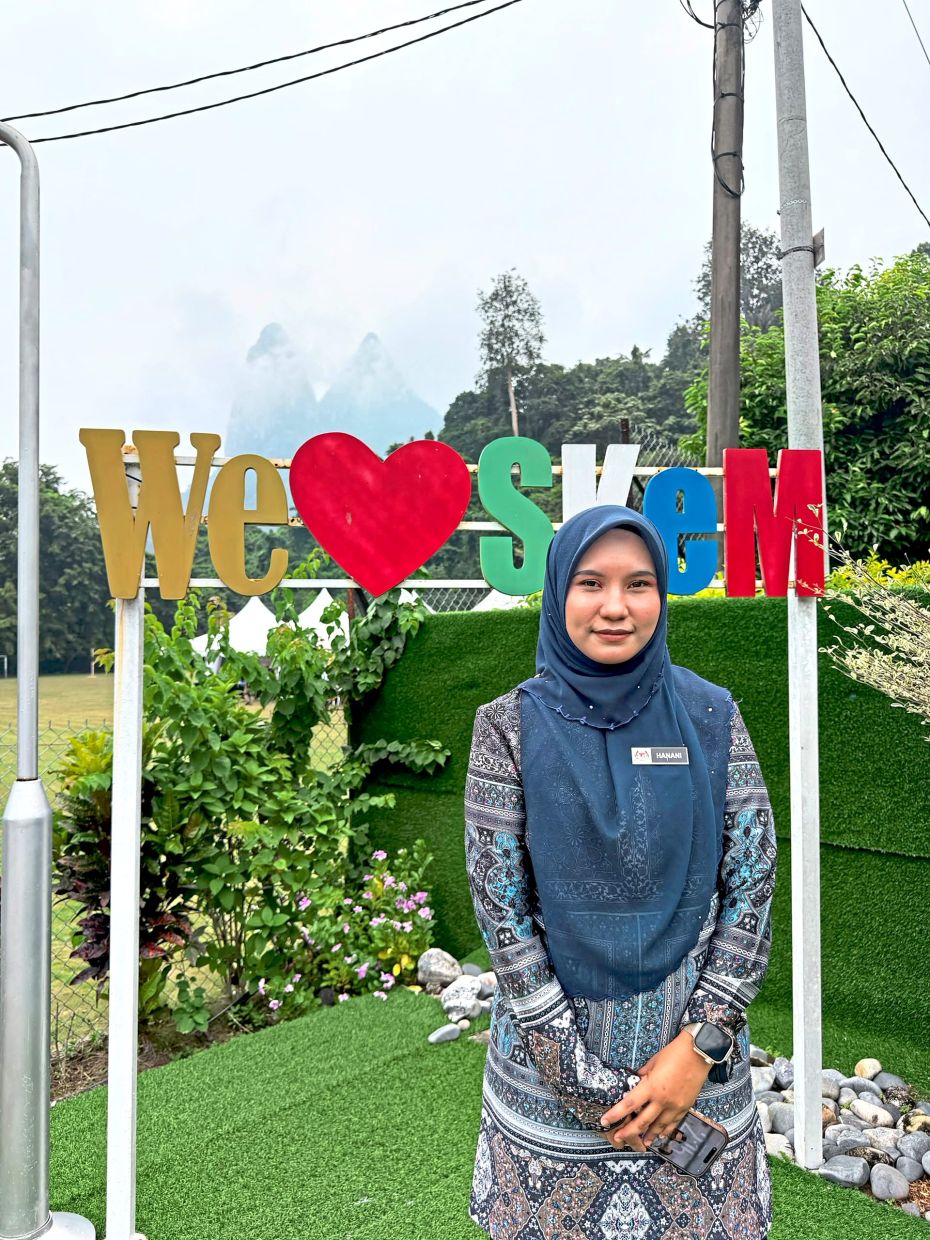
Fellow SK Mukut teacher Nor Hanani Abdul Halim has been making discoveries of her own.
Hana, as she is known, has taught at SK Mukut for about 12 years – long enough to remember when, for many school-going children there, science, technology, engineering and mathematics (STEM) was largely something only encountered in books.
“Initially, the students were quite unfamiliar and uncomfortable with STEM because we lacked the equipment and they had very little early exposure to these subjects,” Hana explains.
By 2025, students were getting more hands-on exposure through robotics kits, 3D printers and teacher training under TM Future Skills, which now covers all four schools on Tioman Island.
“The children are so excited about it. Whenever we organise a session, you can immediately see it in their expressions.”
More significantly, she says, the hands-on learning has revealed abilities in children who might otherwise have remained in the background, including introverted children with an aptitude for technical work, problem-solving and making things.
“If we didn’t have access to these tools and opportunities and if everything were limited to textbooks, I might never have discovered that talent,” Hana confides.
She notices a change in their confidence too.
“I can see it in the way they communicate with the tourists they see around the kampung, raving to them about how their school has this and that.
“You can see that what they learn doesn’t remain within the confines of the classroom or the school.”
For children whose ideas of the future were once shaped largely by the livelihoods around them – fishermen, tour guides or porters – Hana believes that exposure can also widen their sense of what is possible.
“When we show them how these skills can lead to a wider range of career opportunities, they begin to see that there is a vision and a future ahead of them.”
Heart of the village
Beyond the school gates, another familiar institution is taking on a wider role. Masjid An-Nur in Mukut has long been more than a place of worship.
Kampung Mukut village head Afli Abdul Karim says it is where villagers meet, prepare communal meals, exchange news and ideas, and spend time together.
MasjidNet builds on that familiar role, giving villagers access to online services and information alongside religious content and mosque updates.
Much of its usefulness is practical. Villagers can perform infaq (charitable causes), make zakat payments and apply for welfare assistance online, while visitors can contribute to the mosque through QR code payments. Tourists returning from a day at sea can also stop to rest, connect and pray.
The initiative is being rolled out across five villages on Tioman, allowing communities separated by distance to share activities, religious talks and updates.
For Afli, the hope is that this wider role will also bring younger villagers through the doors more often, helping the mosque remain not only a place of worship, but a space for learning, connection and community life and activities beyond religious programmes.
“Now more people can come together and share their views and ideas. Indirectly, this can also create opportunities related to business and income, on top of strengthening our relationships with one another,” he adds.
Unexpected opportunities
Some changes in Mukut have taken on a life of their own. TM group chief executive officer Datuk Amar Huzaimi Md Deris saw it first-hand on the volleyball court. On weekends, villagers had begun transforming the court into a night market, setting up stalls selling food and drinks.
With greater tourist activity following the introduction of digital platforms such as visitmukut.com and Unifi Go Bookit, new opportunities are emerging for the residents.
For Amar, seeing more residents benefit from the increase in tourist activity through something as simple as a night market came as a pleasant surprise.
Bringing infrastructure and technology to remote communities is a challenge in itself. Turning access into meaningful adoption and economic opportunity is another matter altogether. How communities put these tools to use can open up opportunities in unexpected ways.
“We can bring in 4G or 5G technology, but if people are not taught how to use it or how to turn it into economic opportunities and improve their families’ standard of living, then I think that would be a missed opportunity,” he shares.
At the same time, Mukut’s progress is also taking shape through green innovation, exploring how development can create new opportunities while protecting the natural heritage and local identity that make the village unique. One such effort centres on the village’s mangga dodol, a local mango variety closely associated with Mukut.
TM is collaborating with the Malaysian Agricultural Research and Development Institute (Mardi) on pest management, tree rehabilitation and replanting, while exploring the fruit’s potential as a value-added local product. Preliminary biodiversity baseline observations have also begun to better understand Mukut’s ecosystem and endemic species.
Together, these efforts point to a broader idea: development is not simply about what can be brought into a community, but what a community can build from it once the right tools, knowledge and opportunities are within reach. That idea also surfaced during Amir’s visit. For the finance minister II, corporate involvement can have greater impact when companies contribute their expertise and remain involved in planning and implementation, rather than limiting their role to financial assistance.
“To give money is very easy, every company can give money, but to give effort to plan, to develop hand in hand, takes a lot of attention,” he stresses.
Back to the water
Muhammad Afiq has already seen how something as simple as a slipway has made a huge impact on the lives of the children. The school’s first sailors had no experience when they began.
Today, those students proudly don medals from wins at school, district and state-level competitions. Even now, he sounds slightly amazed by where it has led. “We never expected it. We never imagined that someone from Mukut could do this.”
The sea has always been part of their lives, and the talent, too, may have been there all along. What is different now is that there are more chances to discover it. And on the refurbished slipway at the edge of their village, that journey begins with the simple act of getting a boat into the sea.