




PETALING JAYA: Seizure figures reflect only what authorities have detected, not the full scale of gibbon trafficking, with conservationists calling for stronger efforts to prevent the primates from being taken from the wild.
Gibbon Conservation Society founder Mariani Ramli said the cases linked to KL International Airport between January 2024 and August 2026 were an indication of trafficking activity, rather than a measure of conservation success.
She said the trade inflicted devastating damage on gibbon families, as poachers often killed adult animals to capture their infants.
“Because infants cling to their mothers, poachers often shoot the mother to get to the baby, the father and the rest of the protective family members,” she said.
ALSO READ : Working to curb wildlife smuggling
She said enforcement efforts must focus on preventing gibbons from being taken from the wild, rather than merely counting animals seized after they had been captured.
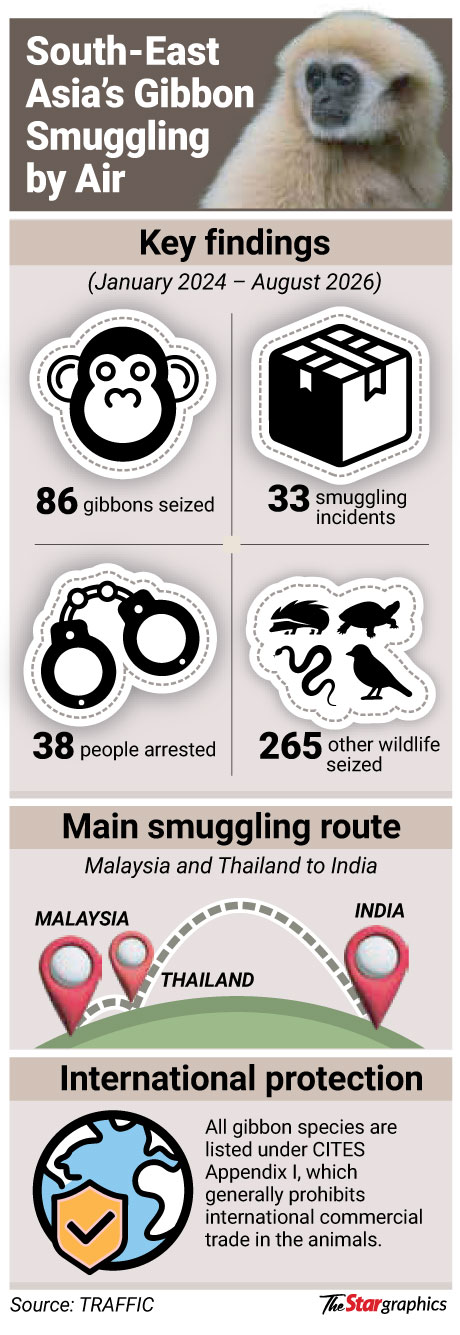
Malaysian Ecological Association president Prof Dr Ahmad Ismail said the repeated incidents highlighted the need to target those organising and financing the trade, rather than relying on interceptions alone.
“Seizures demonstrate vigilance, but they also reveal that traffickers can move animals through multiple checkpoints before detection,” he said.
Ahmad called for financial investigations, intelligence-sharing between agencies and audits of registered animal facilities to help uncover trafficking networks and identify those behind them.
ALSO READ: Smugglers turn focus to gibbons
Ecotourism and Conservation Society Malaysia president Andrew Sebastian said authorities should scrutinise all entry and exit points and investigate how live animals could pass through airport screening procedures.
“What else is escaping the normal screening procedure at the airports and the points of exit?” he asked.
Andrew said enforcement efforts must go beyond couriers and lower-level operators to identify those directing the trade.
“We seem to be catching only the couriers, the low-level people in this network,” he said, adding that he hoped covert operations would help authorities identify the masterminds.
He called for substantially tougher penalties to deter traffickers, more resources for enforcement agencies, public awareness campaigns and rewards for whistleblowers.



