The Silk Road has always been a living artery of culture, food, and human generosity.
Stretching over 4,200km, it weaves across deserts, mountains, valleys and oases. To trace its caravan paths by modern train is to step into a timeless story, where every stop whispers of ancient past.
Our journey last year began with a flight from Shanghai into Kashgar – or Kashi, as locals call it – the western gateway of China’s Silk Road. From Kashi, we made a side trip to Tashkurgan before heading eastward through Kuche, Tulufan, Wulumuqi, Jiayuguan, Dunhuang, Zhangye, Lanzhou, and finally Xi’an.
We chose to travel independently after China’s October Golden Week, avoiding crowds and enjoying affordable hotels, easier train bookings, and the freedom to savour food and autumn colours.
Travelling west to east suited the approaching winter, with Xinjiang’s highlands already dipping below zero in temperature.
The journey unfolded like a living atlas. Kashi was once regarded as the meeting point of Central Asia and China. Its labyrinthine alleys, Gaotai residences, Id Kah Mosque and Abakh Khoja Mausoleum reveal centuries of heritage.
The must-visit Sunday Livestock Bazaar and night markets overflowed with livestock, spices, produce and street food offerings.
Our visit to Tashkurgan gave us views of snow-capped mountains, glacial rivers and lakes, and sweeping grasslands.
Travelling Highway G314, we visited Baisha Lake, Kala Kule Lake and the dramatic Panlong Highway with its dizzying curves across the Pamir Plateau, which is actually part of Tajikistan.
We joined a local tour as the journey demanded skilled driving at high altitude, and rewarded us with unforgettable scenery and warm hospitality.
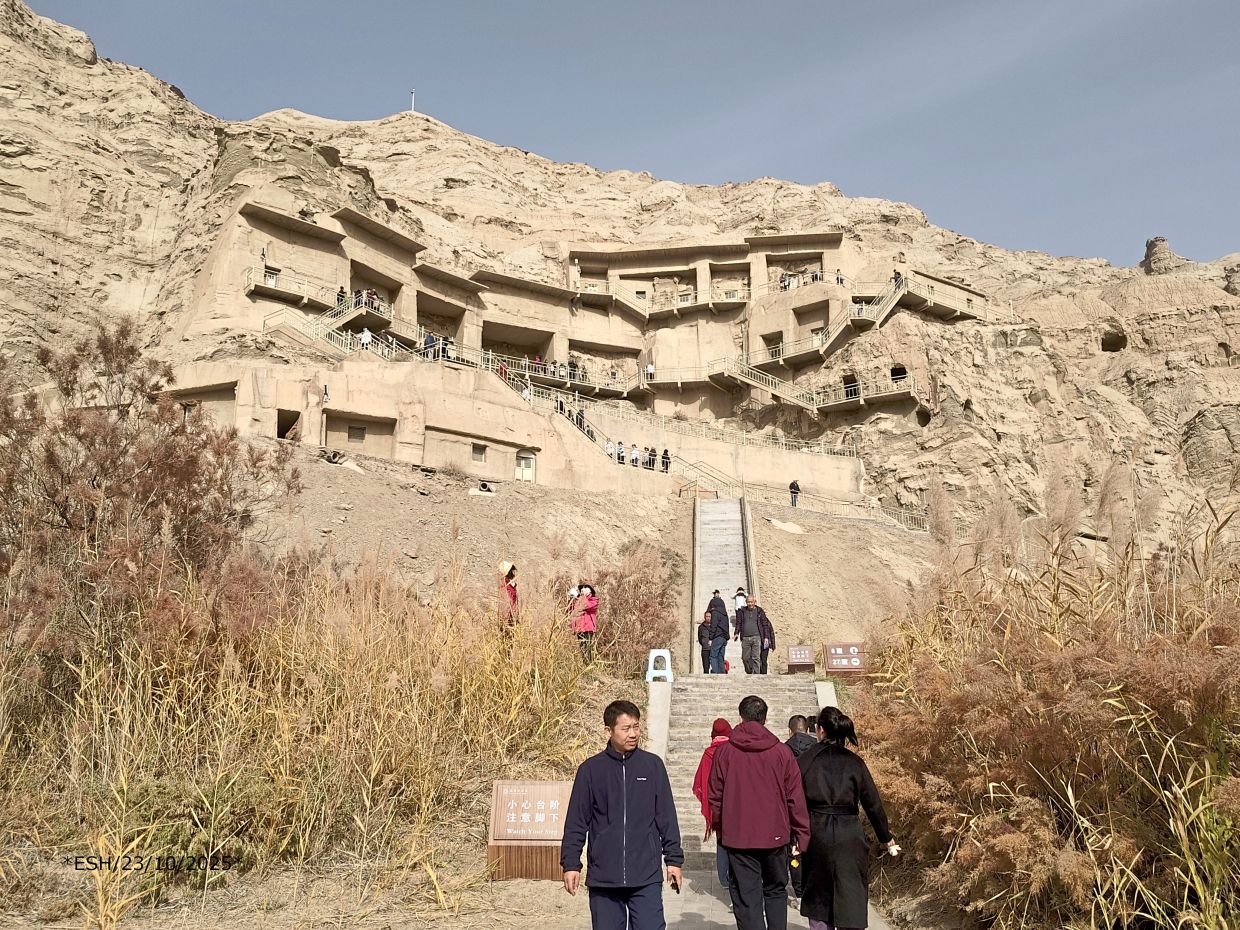
From there, a seven-hour train ride brought us to Kuche, where the Grand Mosque stood standing. Symbolising Islamic heritage, Kuche’s highlights include the Kizil Cave Temple Complex with faded murals, the Mystic Grand Canyon of the Tianshan, and the ruins of Subashi Ancient City.
Tulufan offered a homestay in Grape Valley, where locals generously share their last harvest before winter. We explored the Sugong Tower, Flaming Mountain, Bezeklik Thousand Buddha Caves, Tuyugou village, and the ruined fortress of Jiaohe.
Wulumuqi, Xinjiang’s capital, felt modern yet offered cultural gems like the Xinjiang Regional Museum and Tianchi Lake. From there, we travelled to Jiayuguan, the fortress town of the Great Wall.
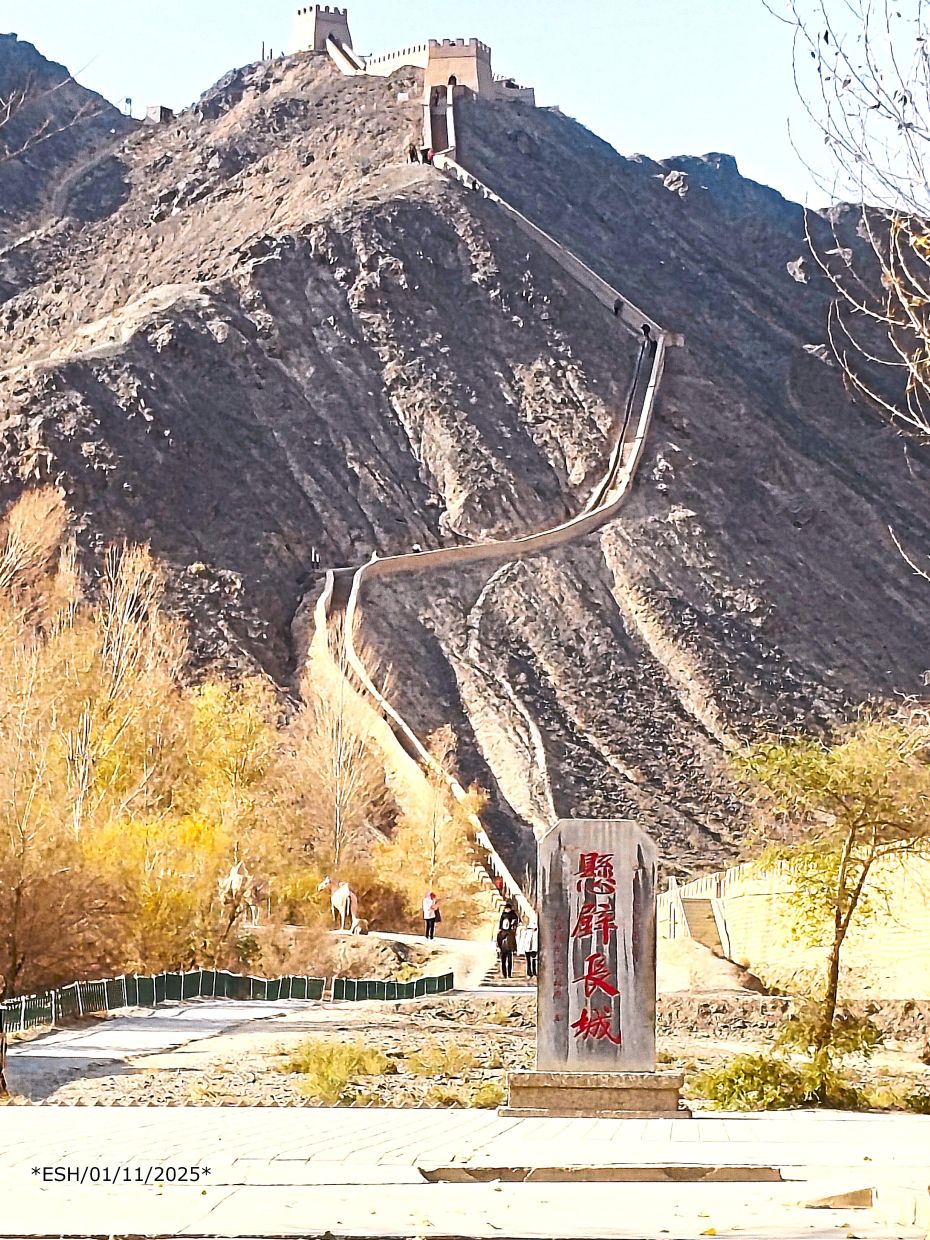
The Jiayuguan Fort, Hanging Great Wall, and First Beacon Tower revealed the frontier’s strategic importance.
Dunhuang captivated us with the Mogao Grottoes, Yangguan and Yumen Pass, and the surreal Yardang Geopark. At Crescent Moon Lake, nestled among dunes, we climbed cool golden Gobi sands at sunset.
Zhangye, in the Hexi Corridor, housed the Giant Buddha Temple and nearby Mati Temple grotto complex. A light hail and snow flurries added magic to our visit.
In Lanzhou, we strolled along the Yellow River, crossed Zhongshan Bridge, and visited Bingling Temple grottoes accessible only by boat. The merging of Tao and Yellow Rivers was a striking sight.
Xi’an, our final destination, embodied more than 3,000 years of history. Its Bell and Drum Towers, Moslem Quarters, Great Mosque, and Gao Residence reflected cultural depth.
Lastly, no visit would be complete without checking out the Terracotta Warriors guarding Qin Shihuang’s tomb, the mausoleum and Huaqing Palace.
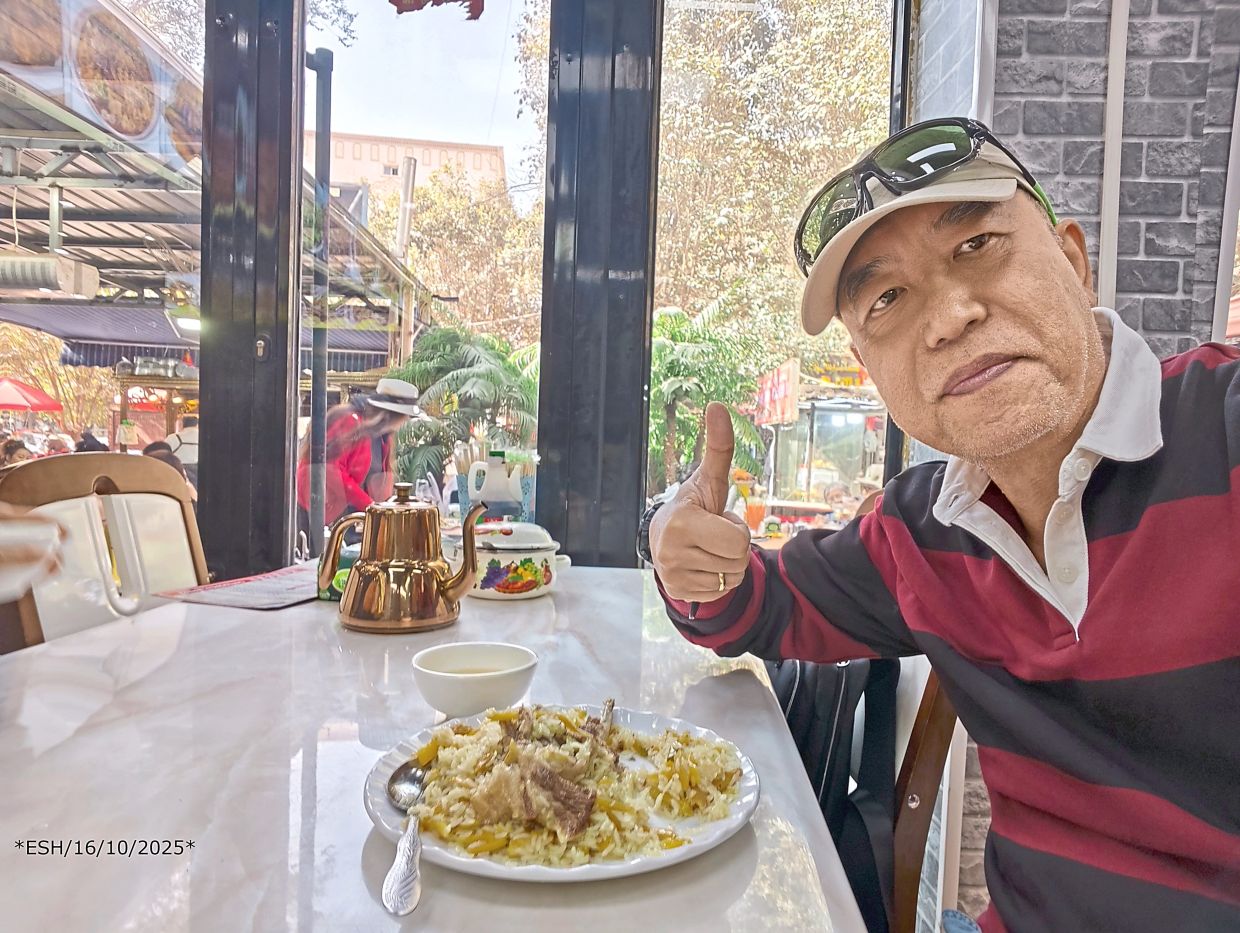
Food was central to our journey. In Kashi, we savoured laghman noodles, pilaf, dapanji, lamb kebabs, samsa pastries, apricot juice, and Hami melons. In Tashkurgan, we had a memorable yak hotpot.
In Tulufan, meanwhile, its grapes and raisins were fresh and sweet. Lanzhou’s famous beef noodles, especially at Mayoubu, were unforgettable. Xi’an dazzled with rojiamo, yangrou paomo, biangbiang noodles, liangpi cold noodles and selections of dumplings.
The Silk Road journey was a tapestry of landscapes, cultures, and generosity. From snow-capped peaks, desert dunes and valleys, to ancient grottoes and bustling markets, we traced footsteps of history while savouring the warmth of its people and the richness of its food. It was truly an epic journey.
The views expressed are entirely the writer’s own.