
Venturing beyond the usual tourist spots was part of my original plan for a short break with my niece and her family – who were visiting from the United States – in Ipoh, Perak some months back.
But since my knee was still not fully recovered from an injury, I had to scale down the itinerary and choose activities that weren’t too physically demanding.
We started with a visit to Gunung Lang Community Park. This small park may not have basic public amenities like a washroom, but that’s fine because its main appeal is the limestone karst landscape.
Somehow, though, the two ponds where vibrant water lilies once thrived were now overgrown with weeds.
There was a cave-like shelter located near the ponds. Bathed in the golden glow of the early morning sun, the shelter awakened in a quiet splendour. Long shadows stretched across the floor and overgrown roots descend from the limestone overhang, creating a sort of curtain that frames the shelter.
The Kledang Saiong Forest Reserve nearby was our second stop. Open daily from 8am to 6pm, there’s a minimal entry fee for visitors but senior citizens, children below six years old and the disabled, can get in for free.
It’s good to know that the place is accessible to folks with mobility issues including those who use wheelchairs as there are tarred and paved walkways winding through the gentle slopes.
Tucked away amid the lush greenery of this reserve is the Sah River. Beneath the lowland forest and bamboo groves, clear water flows gently through boulders of varied sizes, thus creating wading pools.
On weekdays, there are few visitors around so you can fully enjoy the soothing sounds of nature: rustling leaves, little creatures, flowing river and birdsongs. It’s the perfect place to spread a picnic and then soak in the cool water, or simply sit back and let nature work its magic.
Weekends, however, are a different story. This place can get pretty crowded and sometimes, it is also difficult to find a parking spot.
The reserve has several other delightful attractions, including a fish “spa”, a Nepenthes (pitcher plant) garden, an observation tower, birdwatching opportunities and camping sites. There are also a few washrooms here.
After spending some time at this beautiful reserve, we started feeling hungry so off we went to Restaurant Yuan Mun.
Some of my relatives have said that this establishment serves the best Hakka noodles and coffee, and I tend to agree.
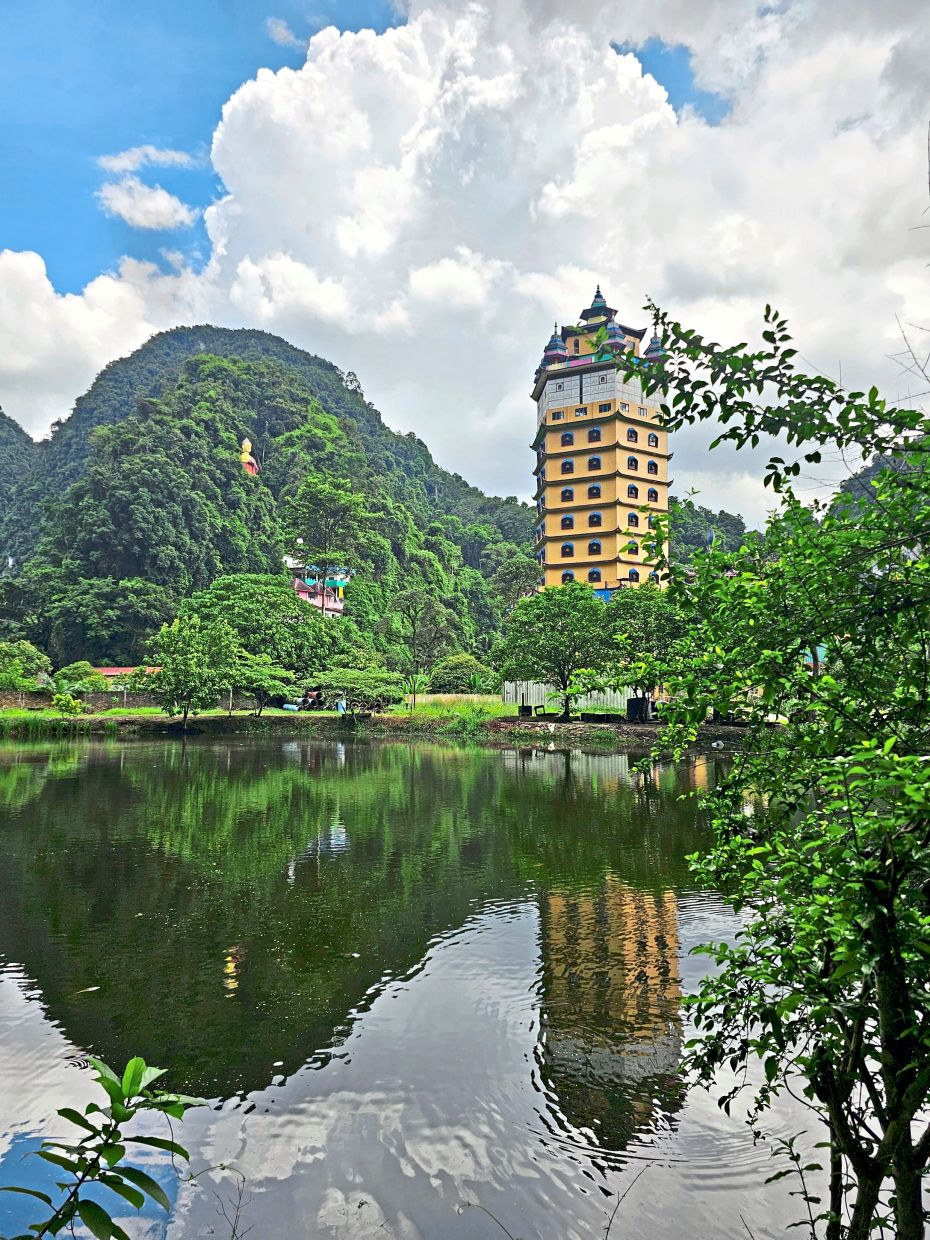
Next on our schedule was the Enlightened Heart Buddhist Temple, better known as the “Tibetan Temple”, in Tambun.
Set against a backdrop of majestic limestone hills, the temple is just 1km off the main road.
Drive down a narrow dusty tarred road flanked by lush pomelo orchards and you will find this tranquil sanctuary that feels like a utopian dreamscape.
Acclaimed for its 13-storey multi-coloured pagoda, rows of Tibetan prayer wheels and the spectacular unfurling of its giant thangka during Wesak celebrations, the temple is a feast for both the eyes and soul.
Each level of the pagoda is adorned with intricate murals, statues and deities reflecting Tibetan Buddhist traditions, while an enormous Shakyamuni Buddha presides within.
A mirror-like reflection of the elegant pagoda is visible on the surface of a pond within the compound.
During our visit, we had the entire place to ourselves. This was a stark contrast to the scenes during Wesak Day and the annual Medicine Buddha Puja in November, where thousands of devotees gather here.
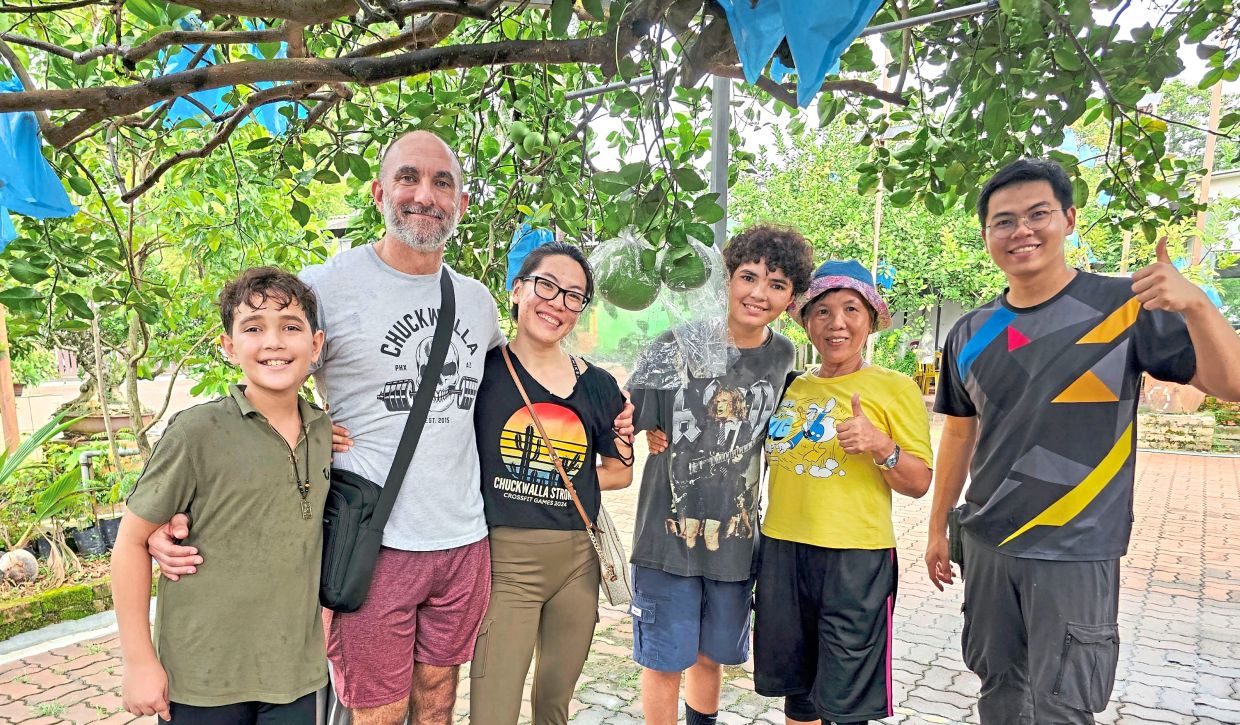
GoChin Tambun Pomelo Agro Farm was next. Yan Kuan, the enthusiastic third-generation steward of the family run orchard, welcomed us.
As he guided us through the orchard, we learned that the juiciest pomelos are often the heaviest, that the coloured strings tied to each fruit reveal their harvesting schedule and lastly, the blue protective bags covering the fruit keep hungry insects at bay.
We took a leisurely stroll along the orchard walkways where branches laden with pomelos form the canopy, followed by a generous fruit tasting session.
We left with contented bellies, some new knowledge and a deeper appreciation of Tambun’s natural bounty.
Our final stop was meant to be Gua Tambun, a National Heritage Site famed for its prehistoric rock art. Unfortunately, threatening dark skies persuaded us to save it for another visit.
Nevertheless, it was the perfect ending to a day spent discovering Ipoh’s treasures beyond the tourist trail.
The views expressed are entirely the writer’s own.