
The Bahrain Grand Prix came to Malaysia with barely two months to spare. The buses were a mess. The rain was biblical. Formula One’s own cars nearly refused to start.
Then Sepang did what Sepang has always done best: it gave the chaos somewhere spectacular to go.
On July 26, Formula One announced that Sepang in Selangor would host the Bahrain Grand Prix on Oct 2-4. Bahrain’s race had been cancelled amid the war in West Asia; the Malaysian round was arranged in its place. It was not a return of the Malaysian Grand Prix, whose last running was in 2017.
The official title was the Formula One Gulf Air Bahrain Grand Prix in Malaysia 2026. But for a few days, the world’s fastest circus was coming back to Sepang.
The calendar gave Malaysia about 10 weeks to prepare. The circuit’s chief executive said work normally planned across a year had to be compressed into roughly two months. Other race events already booked at Sepang had to be rescheduled or accommodated.
By September, the government was urging ministries and agencies to hurry through outstanding approvals, while the sports minister said preparations were 80% complete. The scramble was visible before a car turned a wheel.
Then came the fans – and the first serious organisational failure. Shuttle queues stretched, traffic clogged the roads, signage and crowd control came under fire, and some spectators described journeys of three to six hours.
One fan told CNA he waited up to 90 minutes for a bus, then spent more than an hour in traffic.
People walked long distances; on the way in, local motorcyclists gave stranded visitors lifts through the traffic jam.
The circuit and transport partners said they were working to improve arrangements after the first day’s problems. It was a bruising welcome for a crowd that had come to celebrate Formula One’s return.
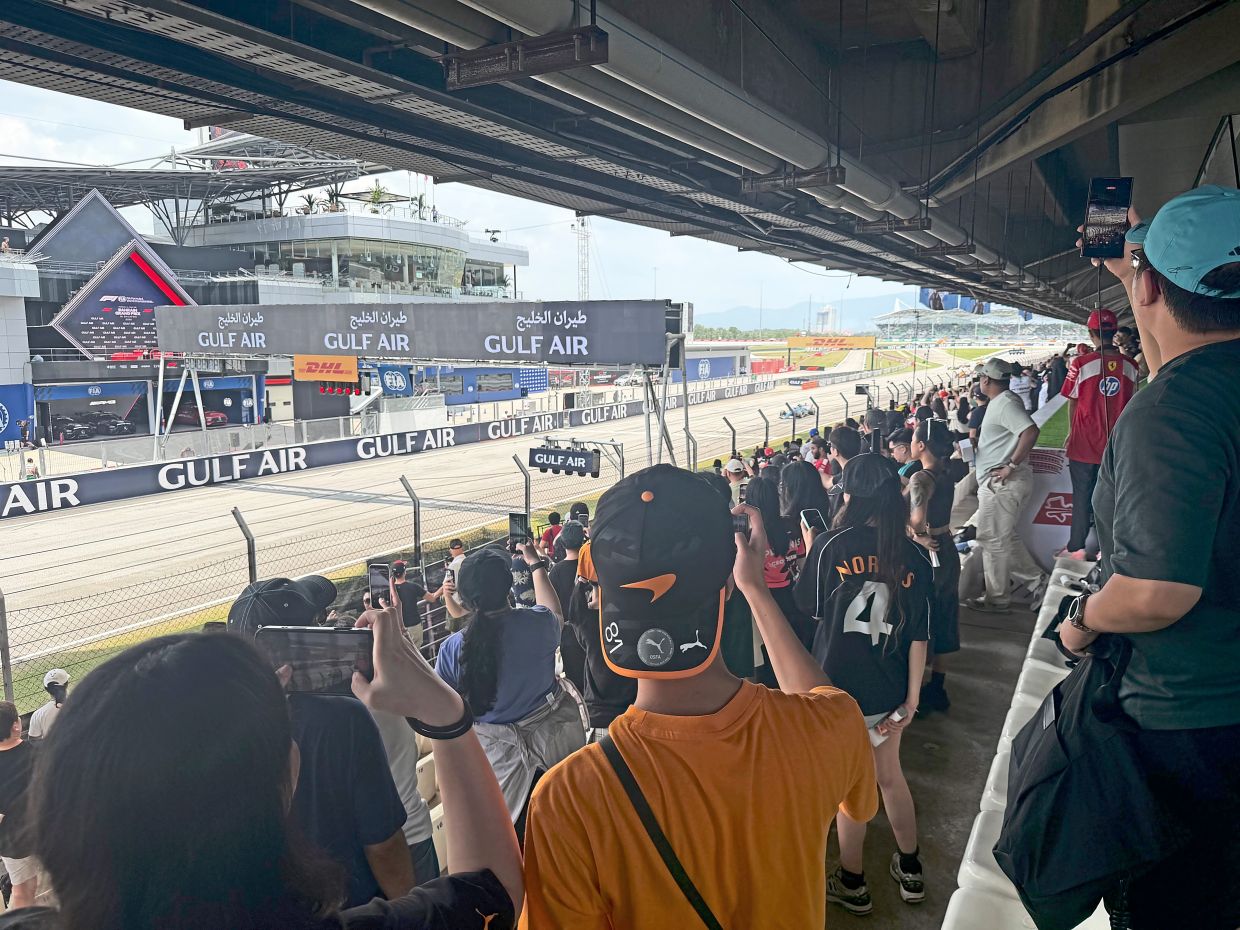
And the numbers made the planning failure harder to excuse – and the scale of the moment impossible to ignore.
Sepang recorded 261,000 spectators over the weekend, including 103,000 on race day: the biggest crowd in the local circuit’s history, more than double its previous F1 weekend record. A crowd that size is a triumph for the sport and a stress test for everything around it.
Sepang needed both a better transport plan and a bigger set of buses.
Sunday supplied its own disorder. A thunderstorm drenched the circuit shortly before the scheduled 3pm start.
Standing water forced a delay of about 40 minutes. Marshals worked to clear the track; the medical car went out to assess conditions. Then the cars finally headed around for the formation laps – and Formula One discovered it had another problem.
Several cars suffered software trouble in the wet, low-speed conditions. Lewis Hamilton’s Ferrari stopped; Max Verstappen reported trouble accelerating; and other cars were also affected.
Race control suspended the start.
The FIA spent another 53 minutes addressing the problem before the field could try again. The full 93-minute interruption was a spectacle of its own: rain hammering the circuit, engines silent, crews hunched over laptops, and the fastest drivers on Earth waiting for software to be persuaded to cooperate.
That particular fiasco belonged to Formula One and its technical systems, not to Sepang’s local organisers.
When the race finally began, the track took over.
Verstappen started from pole but was passed by the two Mercedes into Turn 1. The wet track was drying fast, creating a gamble: intermediates or slicks? Hamilton’s early tyre choice sent him tumbling down the order.
The field split its strategies, and Sepang’s long straights and broad corners gave the drivers room to attack. There were overtakes throughout the race, pit-stop swings, safety cars and the familiar sense that the afternoon could turn on a single decision.
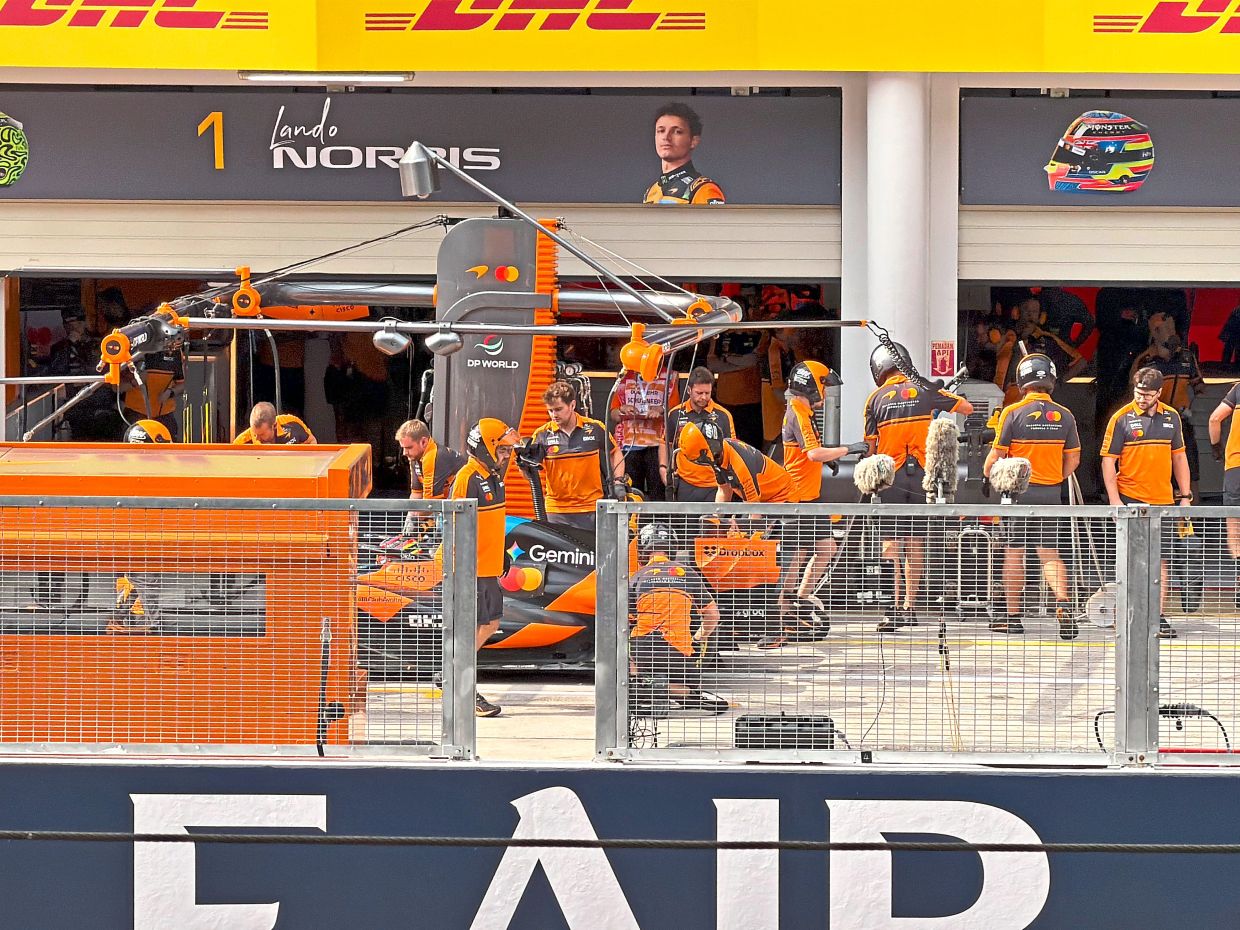
Verstappen worked his way back to the front and kept his nerve through the changing conditions. Kimi Antonelli finished second, 2.307 seconds behind.
Hamilton, after falling deep into the pack, fought back to third, just 4.919 seconds off the winner.
George Russell’s Mercedes stopped late in the race, turning a difficult day into a devastating one. Verstappen took Red Bull’s first win of the season-and the first victory for its new Red Bull Ford Powertrains project.
Afterwards, Hamilton called it the best race he had experienced at Sepang, singling out the crowd. Antonelli said the fans had been incredible and hoped F1 would return to Malaysia. Those are not small endorsements. They came after a rain-soaked afternoon that had tried the drivers’ patience, their machinery and their courage.
This is the complicated truth of Sepang’s weekend. The fan journey was not good enough. Long queues and poor crowd management can sour even a great race, and a packed circuit cannot be treated as a surprise when more than 200,000 spectators were expected.
Former circuit chief Razlan Razali said the track could still deliver the racing F1 purists love, while warning that the spectator experience needed better planning. Both things can be true: Sepang put on a thrilling Grand Prix, and the event logistics let people down.
But then there is the track itself.
Sepang does not need to manufacture drama with a gimmick. It has width, fast direction changes, heavy braking zones and the tropics hovering above it like an unpredictable race director. The rain arrived just in time to scramble the strategies. The drying surface rewarded judgment and punished hesitation. The field kept changing shape.
Hamilton climbed back into the podium places. Russell’s hopes ended at the side of the track. Verstappen found a way through.
For all the delays, the software failures and the queues, the cars eventually went racing-and Sepang made them race.
The Grand Prix was arranged in a hurry, delivered under pressure, and attended by a record crowd. The fan experience exposed real failures. The race itself was a glorious argument for bringing F1 back.
Sepang did not prove that every part of the weekend was ready. It proved something more valuable: that when the show finally reached the circuit, the circuit was ready to give it a stage.
And what a stage it was.
The words expressed here are entirely the writer’s own.
Abbi Kanthasamy blends his expertise as an entrepreneur with his passion for photography and travel.