There are easier ways to get into trouble than taking a flight from the Sultan Abdul Aziz Shah Airport in Subang, Selangor to Seletar Airport in Singapore, but few are as pleasant.
Subang is close by, civilised and mercifully free of the usual airport marathon. Seletar receives you without the theatre of a major international terminal.
My wife and I were in Singapore for a few days, with several business meetings providing the respectable explanation. The truth, as it so often is, was on the plate.
Singapore has always understood appetite. It can argue about noodles before breakfast, queue for rice at lunch and still turn up properly dressed for dinner. Yet the fine-dining scene is doing something especially exciting now.
The rooms are confident, the cooking serious, and the chefs less interested in copying Paris or Tokyo than in speaking fluent Singapore.
We began at Colony in The Ritz-Carlton, Millennia Singapore, where restraint is a lovely theory that does not survive seven live kitchens.
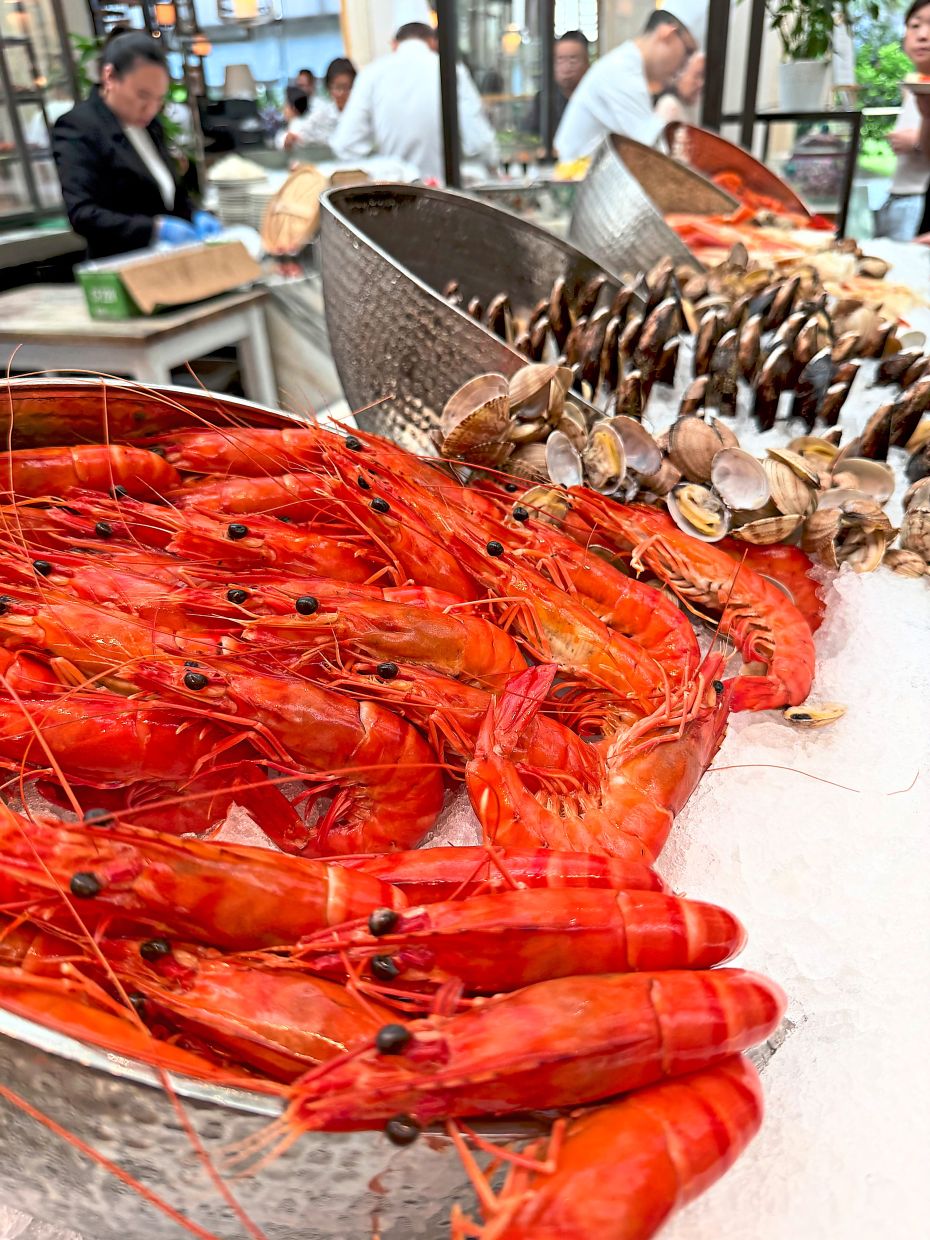
Seafood glittered on ice, satay smoked over flame, noodles were assembled to order and desserts waited like a bad decision with excellent manners. The abundance has direction.
This is Singapore’s edible autobiography, noisy with influences and comfortable with all of them.
Then came Summer Pavilion, also at The Ritz-Carlton, and the volume dropped. Chef Cheung Siu Kong has spent years proving that Cantonese cooking need not shout. The luxury is in the stock, the timing and the confidence to leave a beautiful ingredient alone.
Seafood arrives with its sweetness intact; sauces support rather than smother. It is Michelin-starred cooking by someone who knows exactly where the flavour lives.
Nikuya Tanaka was a different animal, literally: beef kappo, intimate and faintly dangerous if you believe self-control is part of your character. Chef Satoru Tanaka is a third-generation meat specialist, and his Singapore outpost treats Japanese beef with a seriousness reserved for rare art.
At the counter, chefs Yosuke Sekiguchi and Masaya Yano move from raw to seared, from delicate slices to charcoal-darkened richness.
Fat melts, smoke rises, wine disappears. You begin discussing marbling like a scholar and end up grinning like a thief.
The genius is contrast. Beef becomes exhausting when every course tries to knock you unconscious with richness. Here, temperature, texture and acidity reset the appetite. A crisp edge gives way to a soft centre; a clean broth follows the fire.
It is theatre, but the theatre serves the meat.
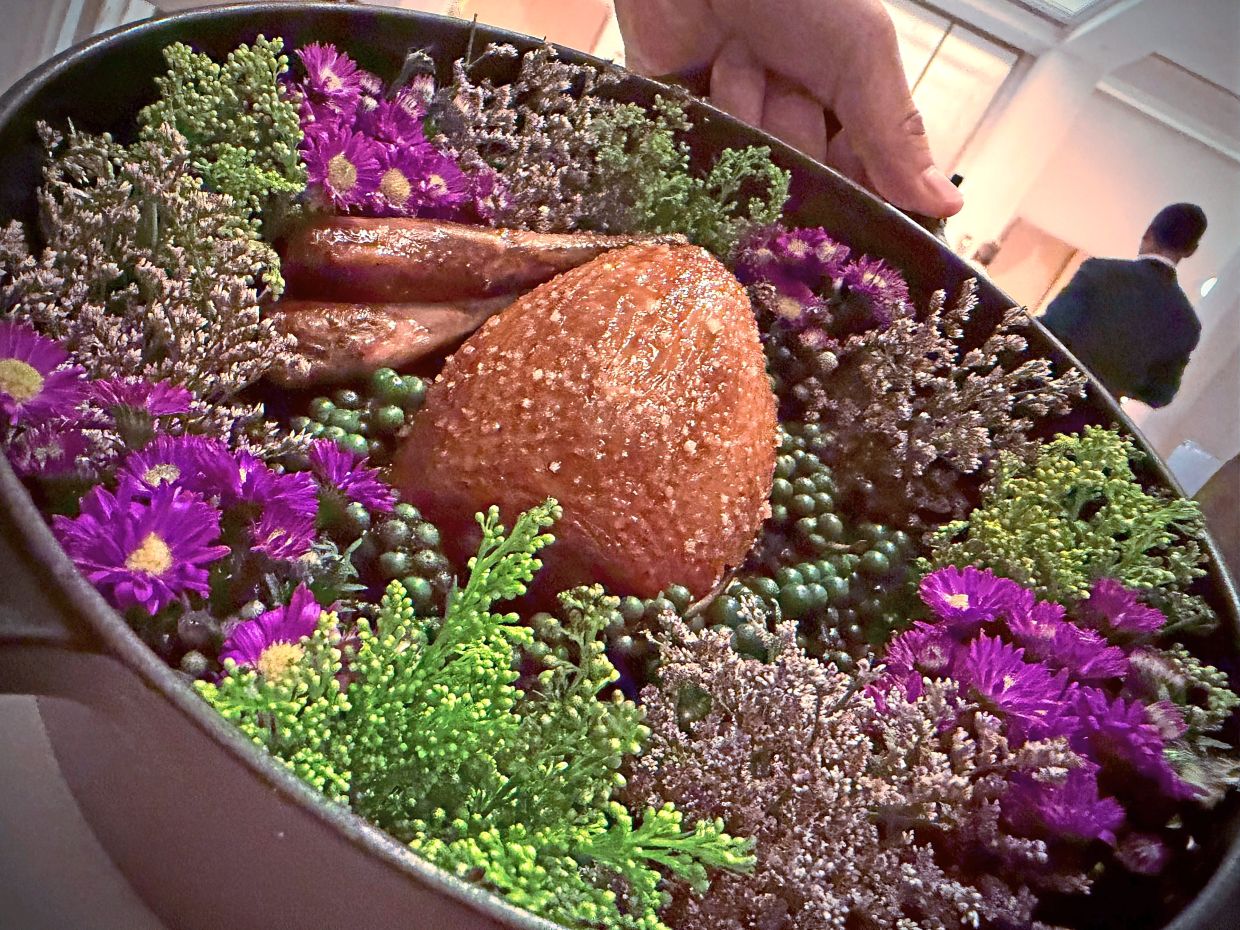
Odette, located in the National Gallery Singapore, occupies the other end of the emotional spectrum. The old Supreme Court building has gravitas, but Julien Royer’s three Michelin-starred restaurant feels luminous rather than severe.
Named for his grandmother, Odette takes French technique and lets it travel. Asian ingredients and memories slip into the cooking without needing a passport stamp.
The famous pigeon with Kampot pepper is a lesson in controlled intensity; seafood courses can carry whispers of chilli, miso or tropical brightness.
Nothing is there for decoration alone.
Service can ruin such a room by being too visible. At Odette, it never does. The choreography is polished, the pacing humane and the warmth real.
Sitting there with my wife, I was reminded that the best luxury is not excess. It is the sensation that somebody has thought through every detail so you can stop thinking for a while.
At Tentsuru, chef Daiki Kawaguchi performs another form of precision: tempura that seems to have negotiated a private exemption from gravity.
The batter is impossibly light, a brittle shell that shatters and vanishes before the ingredient beneath it loses its identity.
Prawn tastes more like prawn. Whiting stays sweet and tender. Uni tucked with perilla delivers sea, herb and heat in one quick burst.
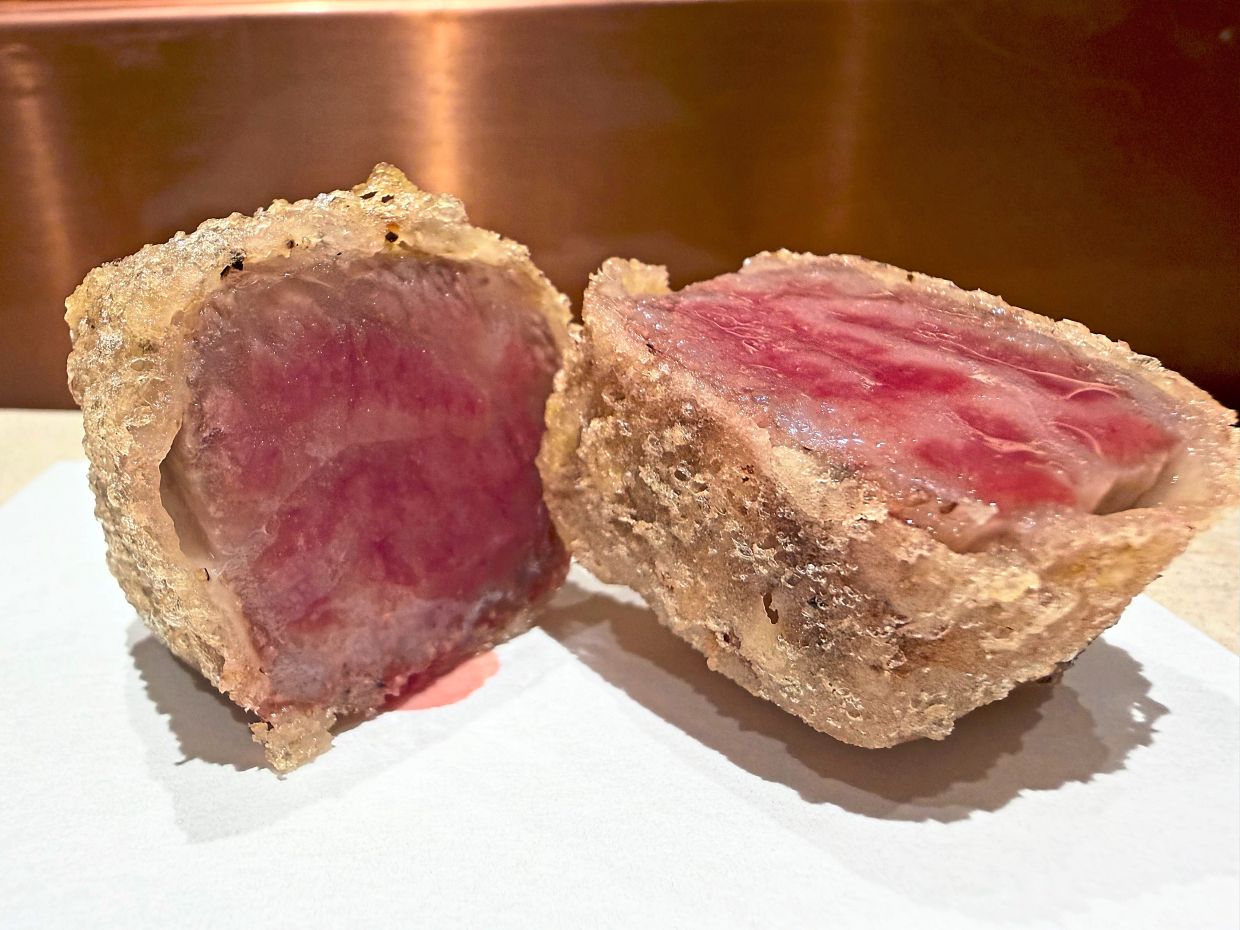
Even wagyu, given the tempura treatment, emerges rich without becoming heavy. This is frying as an act of discipline.
By the time we reached So Good Seafood Restaurant at Ngee Ann City, we needed a different rhythm. No hushed temple, no requirement to contemplate a prawn for three minutes.
This was the shared Chinese table: seafood, roast meats, fish, vegetables and the reassuring clatter of people eating properly. Plates moved, conversation loosened and dinner became communal again.
After several nights of exquisite control, it felt good to let the meal breathe.
The persistent complaint is that Singapore is expensive. Kuala Lumpur can be, too, when ambition, imported ingredients and talent meet in one room.
At this level, I found the prices broadly comparable with Malaysia, while the value was remarkable. You are paying for obsessively chosen produce, decades of technique and service that makes difficulty look effortless.
That is value of another kind.
These restaurants are not for everyone, nor do they pretend to be. Travellers on a strict budget have a thousand glorious alternatives in Singapore, from hawker centres to coffee shops.
But if fine dining is the purpose of the journey, Singapore is absolutely flying. It has the discipline of the great international capitals, the appetite of a port city and the confidence to make both its own.
On the short flight back, the meetings had already begun to blur. The meals had not.
I could still taste the clarity of Summer Pavilion, the smoke at Nikuya Tanaka, the grace of Odette, the crackle at Tentsuru and the generous noise of So Good.
Singapore remains a beacon for serious eating in our region. Go with someone you love, arrive hungry and leave your diet at immigration.
The city is cooking at altitude, and it would be foolish not to taste it.
The words expressed here are entirely the writer’s own.
Abbi Kanthasamy blends his expertise as an entrepreneur with his passion for photography and travel.