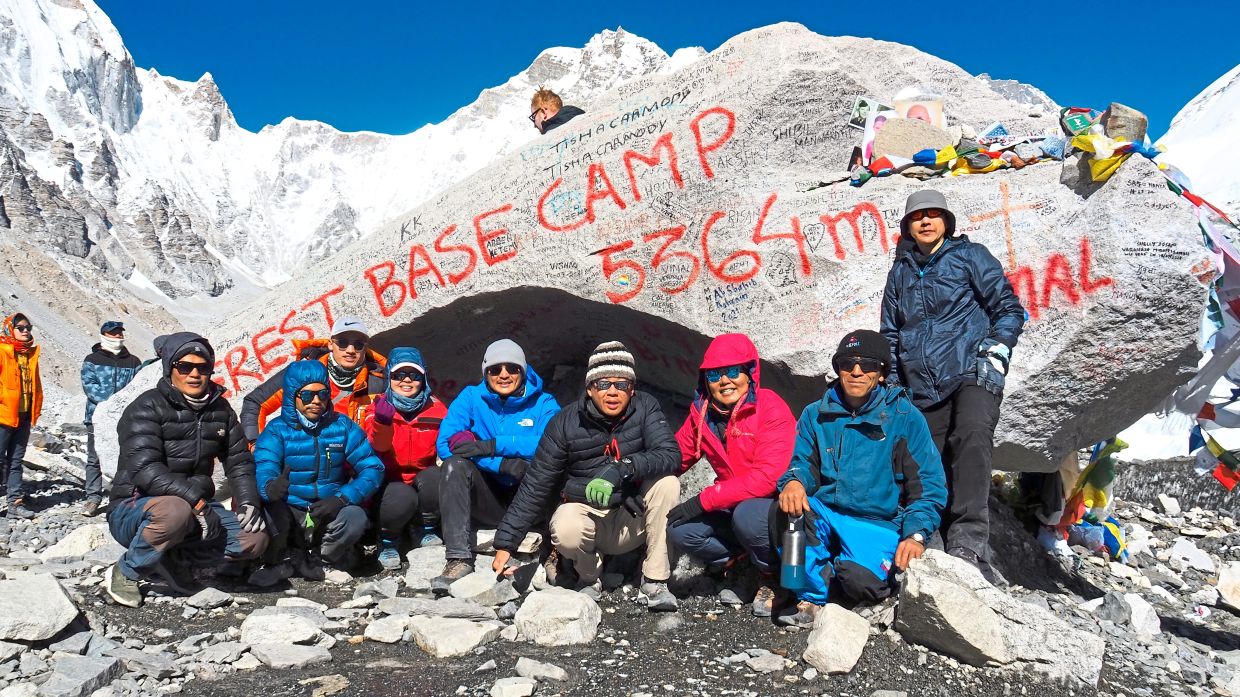
Our trek to the Everest Base Camp (EBC) was a fantastic experience.
We went on one of the harder routes and over 17 days, we accomplished our goal despite having never done any previous treks in the Himalayas.
Each day, we got up and battled the elements. The cold was one of the biggest challenges, and the higher we went, the more intense it became.
The EBC had been on the top of my bucket list for many years; similarly, it was on my wife’s list too. When Covid-19 hit, it became more apparent to us that we should just challenge ourselves to do it instead of waiting for “another time”.
During the pandemic, my wife and I, together with a few other friends, promised ourselves that as soon as we could travel internationally again, we would head to Nepal and do the trek.
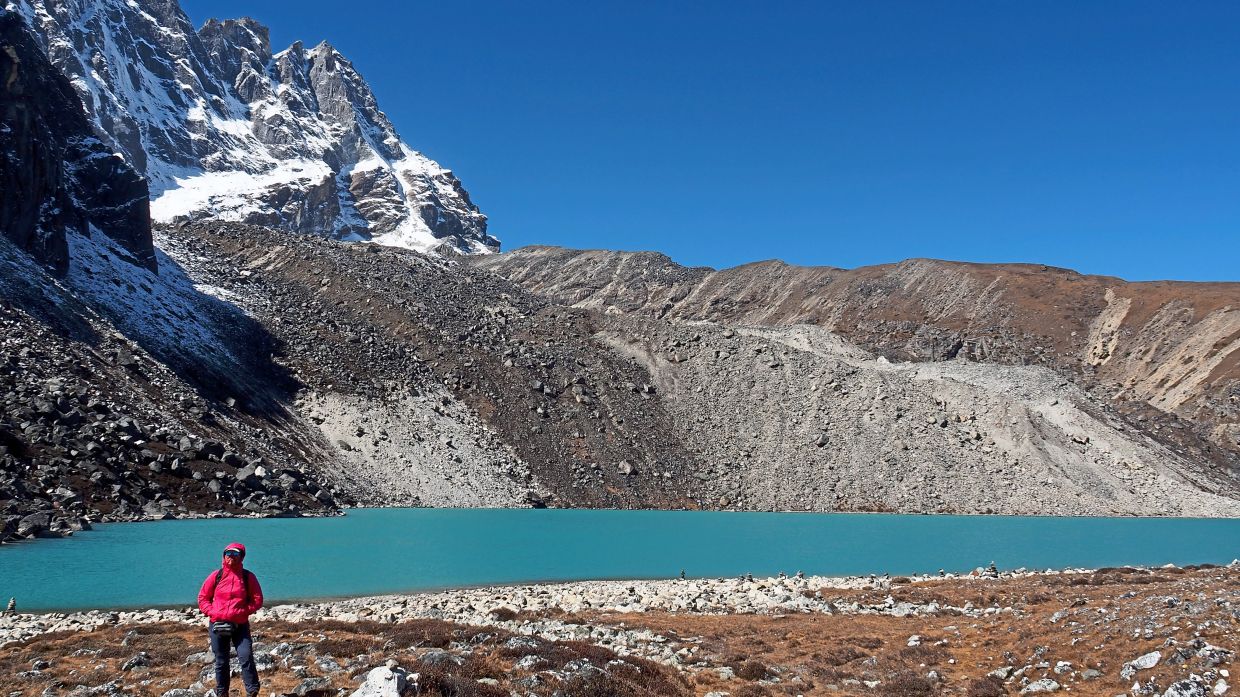
But what made us take on the longer route – Gokyo Lakes Route – we would never know. The thrill of the moment, perhaps?
This route was more scenic, but it would also add 30km to the standard route of 120km, and extend the trek from 12 to 17 days. Also, we would reach the 5,000m mark earlier, which meant spending a longer period in higher altitudes.
We knew it would be more difficult, but we still took on the feat.
Once we got to Kathmandu, we got in a van and drove for seven hours to another village for our flight to Lukla. However, we had to wait for three days before we could fly as the weather was very bad.
Lukla is the starting point for all Everest region treks. It is known as “the most dangerous airport on Earth” because of its short and inclined runway. Not many planes can fly in and out of this airstrip.
There were hundreds of trekkers stranded in this small village with very few amenities for tourists. I shall not even attempt to describe our humble accommodations there.
On the third day, we decided to charter a helicopter to take us to a village just below Lukla – visibility was still bad so the helicopter could not land in the airstrip.
We had to hike for two hours up to Lukla in the dark. To make matters worse, it was drizzling the whole time. Luckily, we got to Lukla safe and sound.
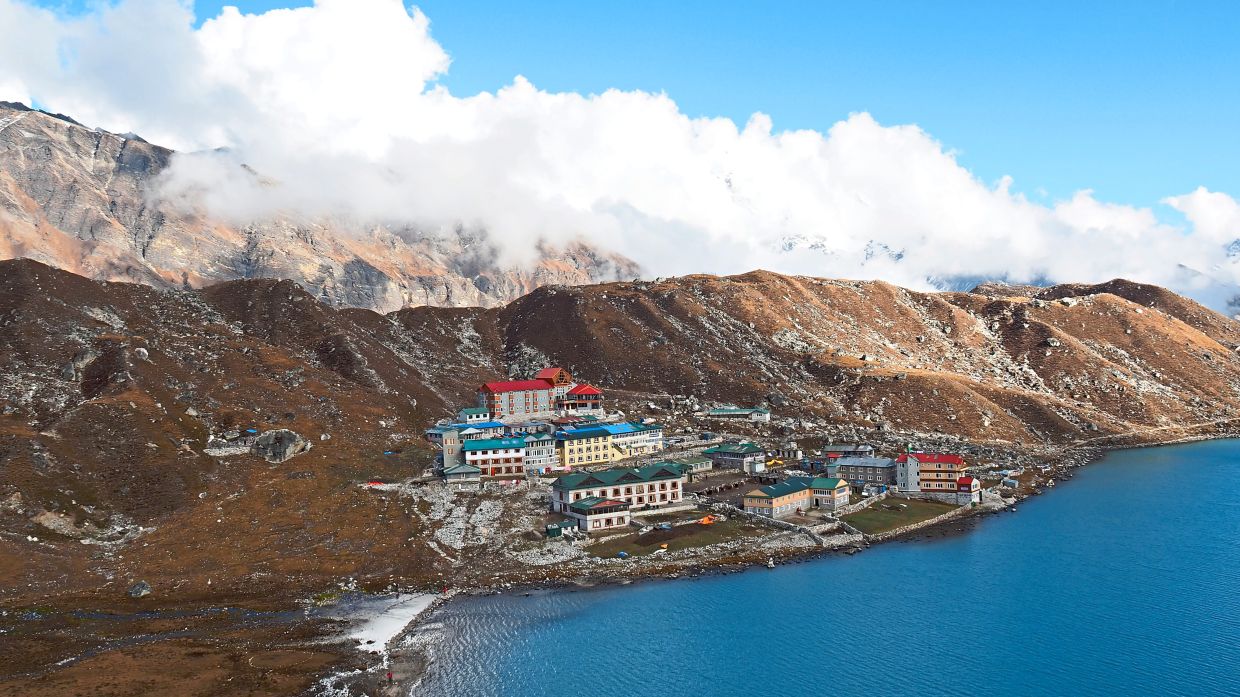
The next few days were spent trekking through the trail. Each day we would trek for 7km on average, gradually ascending on barren and arid trails until we got to the next teahouse, which also served as the accommodation.
However, there was no heating in the rooms so it was almost as cold inside as it was outside (between 0°C and -5°C). The shared toilets were not located near the rooms, and water was extremely scarce as the pipes would sometimes freeze at night.
Here’s a tip for future EBC trekkers: Sleep with two large woollen blankets instead of a sleeping bag.
Meals were provided three times a day in these lodges – no one would get hungry here. There were pizzas, pastas, fried rice and noodles, but most trekkers would go for the local dal bhat, a vegetable thali with rice and lentil curry which is a staple in Nepal.
When we got to the higher altitudes, I mostly ate instant noodles with eggs because I just did not have the appetite to eat. This is said to be quite common among trekkers.
The views on the mountain were so spectacular that I almost couldn’t feel any physical pain ... until we hit that one steep section. Each day, we would come across one path on the trail that is so steep it really was agonising to pass through.
But still, we kept on walking.
When we got to the 6,000m- 7,000m mark, the snowy peaks were so beautiful it took our breath away. Thankfully, not literally.
Since we shared the trail with yaks and mules carrying supplies from the valley to the teahouses, we constantly had to dodge animal droppings, which proved to be quite a challenge.
In spite of all that, the trek turned out to be nearly “problem free” for my wife and me.
Most importantly, we succeeded in our quest to trek to the EBC at 5,364m, overlooking the majestic Mount Everest.
We proudly ticked this off our bucket lists, even as our bodies were screaming in pain.
The views expressed are entirely the writer’s own.