
When you hear the word “dumplings” in Malaysia, most likely your initial thought would be of the quintessential Chinese dumpling, jiaozi.
Crescent-shaped, steamed or fried, often filled with minced meat.
Even if you thought of the Japanese or Korean variant, a gyoza or a mandu would still bear similar shape and taste to a jiaozi. Afghanistan’s mantu, Turkiye’s manti, and Russia’s pelmeni may differ slightly in looks and texture, but they are essentially the same too.
Now go to a different continent, and suddenly you’ll find yourself questioning your whole understanding of this delicious dim sum staple.
Take Africa for example – the dumplings (such as South Africa’s dombolo and West Africa’s banku) here lean more toward bread-like – and most have no fillings.
In some parts of Europe, dumplings are basically bread. Think semmelknodel (German bread dumplings) or knedliky (Czech bread dumplings).
Some European countries do have the more familiar pockets of dough stuffed with fillings. For example, pierogi (Poland) and varenyky (Ukraine). But broadly categorising them all as dumplings might land you in hot water – “stuffed pasta” may be the preferred classification.
Case in point, the debate of “is ravioli just Italian dumpling?” rages on to this day.
Funnily enough, you can find restaurants in Italy that refer to jiaozi or wonton – another type of Chinese dumpling with a fragile composition – as “Chinese ravioli”.
In North America, the popular chicken and dumplings (or dumplin’, as some would insist) found in the United States’ midwest and southern parts is a dish that has its roots in European cooking.
Drop dumplings, also called “fluffy” dumplings due to their light and airy texture, are preferred in the midwest, while the denser and chewier flat dumplings are more popular in the south.
Safe to say, defining a dumpling really isn’t as easy as you think. Whether pleated or folded or rolled, it’s evident that “dumpling” is a term that applies beyond the generic description of dough wrapped around a filling.
For the sake of simplicity, let’s focus only on a few types that are familiar within Malaysia, and take a look at what their counterparts would be in other countries. Perhaps you could go on a dumpling-hunting trip the next time you travel ...
A common ground
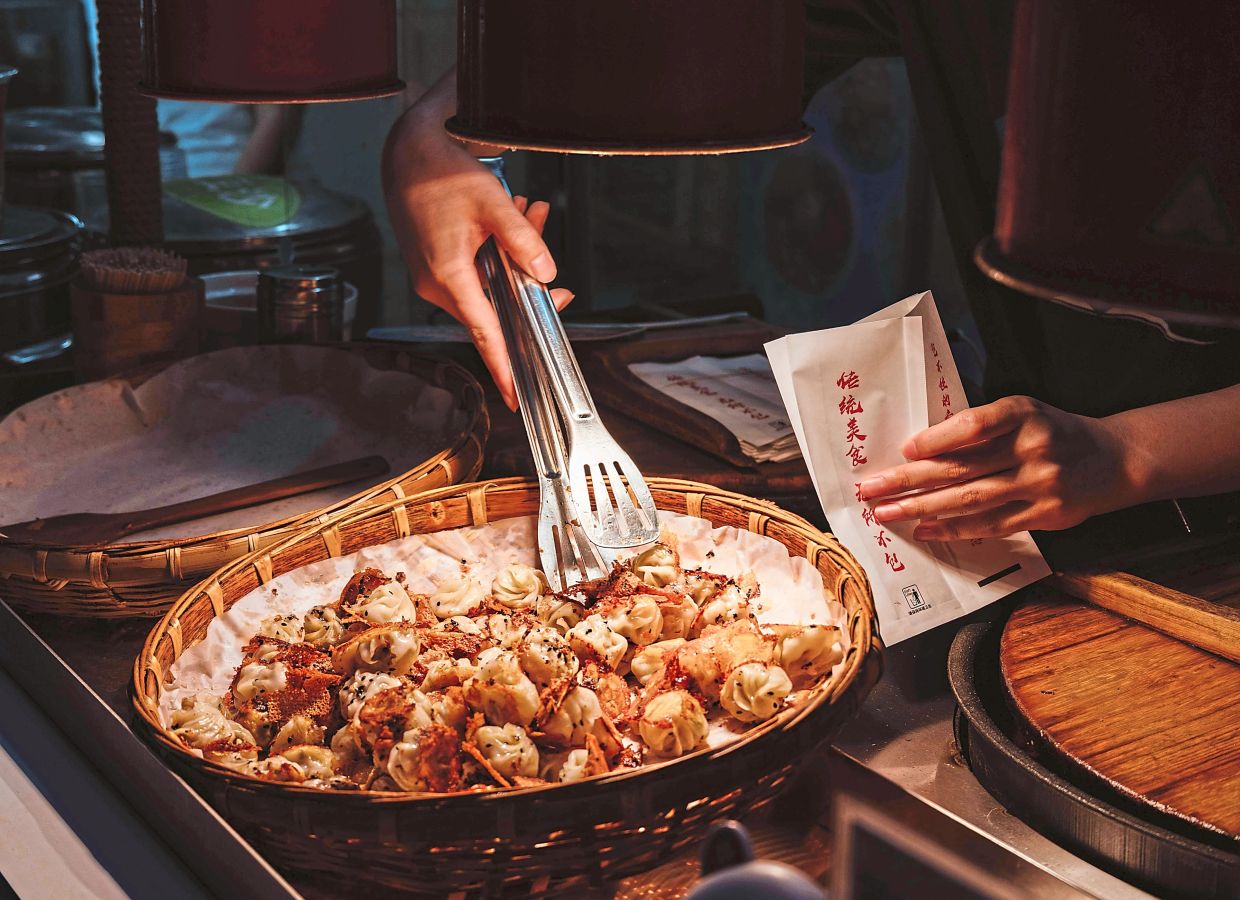
Let’s start with the ones most commonly seen in restaurants or sold as street foods: jiaozi, gyoza and mandu.
Jiaozi can easily be found throughout China and in any country with a prominent Chinese diaspora. During Chinese New Year – in northern China especially – jiaozi is one of the main dishes served at the reunion dinner. It symbolises wealth and the transition from old to new.
Jiaozi can be boiled (shui jiao), steamed (zheng jiao), deep fried (zhajiao) or pan fried (guotie or jian jiao).
Of course, in Malaysia you can get both non-halal and halal versions, but the latter might be more difficult to come across when abroad. Be sure to check the ingredients first.
In Japan, gyoza is usually made with pork. Same goes with the classic mandu in South Korea. However, the rise of Muslim-friendly travel within the past decade has encouraged the growth of more halal offerings. It is relatively easier now to find chicken or prawn/seafood fillings. There are vegetarian dumplings, too.
When in Japan, ask for sui-gyoza if you want the boiled version, mushi-gyoza for steamed, age-gyoza for deep fried and yaki-gyoza for pan fried.
In South Korea, in the same order, it would be mul-mandu, jjin-mandu, twigim-mandu and gun-mandu.
These can be found in most Korean restaurants, some dedicated to just mandu. You can also grab jjin-mandu and twigim-mandu from street food stalls as you wander around the country’s capital and most visited city, Seoul.
When visiting during the summer, try looking for pyeonsu. You can identify it by its square shape. A popular summer dumpling, it originated during the 20th century in the Gaeseong region, which is now part of North Korea. So, your best bet to getting one is in restaurants that serve North Korean cuisine.
Harder to come by are seongnyu-mandu (pomegranate-shaped dumplings) and gyuasang (cucumber dumplings). Once served only in the Korean royal court, they are now found mostly in traditional or high-end restaurants.
From east to south
The history of momo cannot be definitively traced to Tibet, but the autonomous region in China is often credited as its place of origin. It then spread to neighbouring countries like Nepal, India and Bhutan.
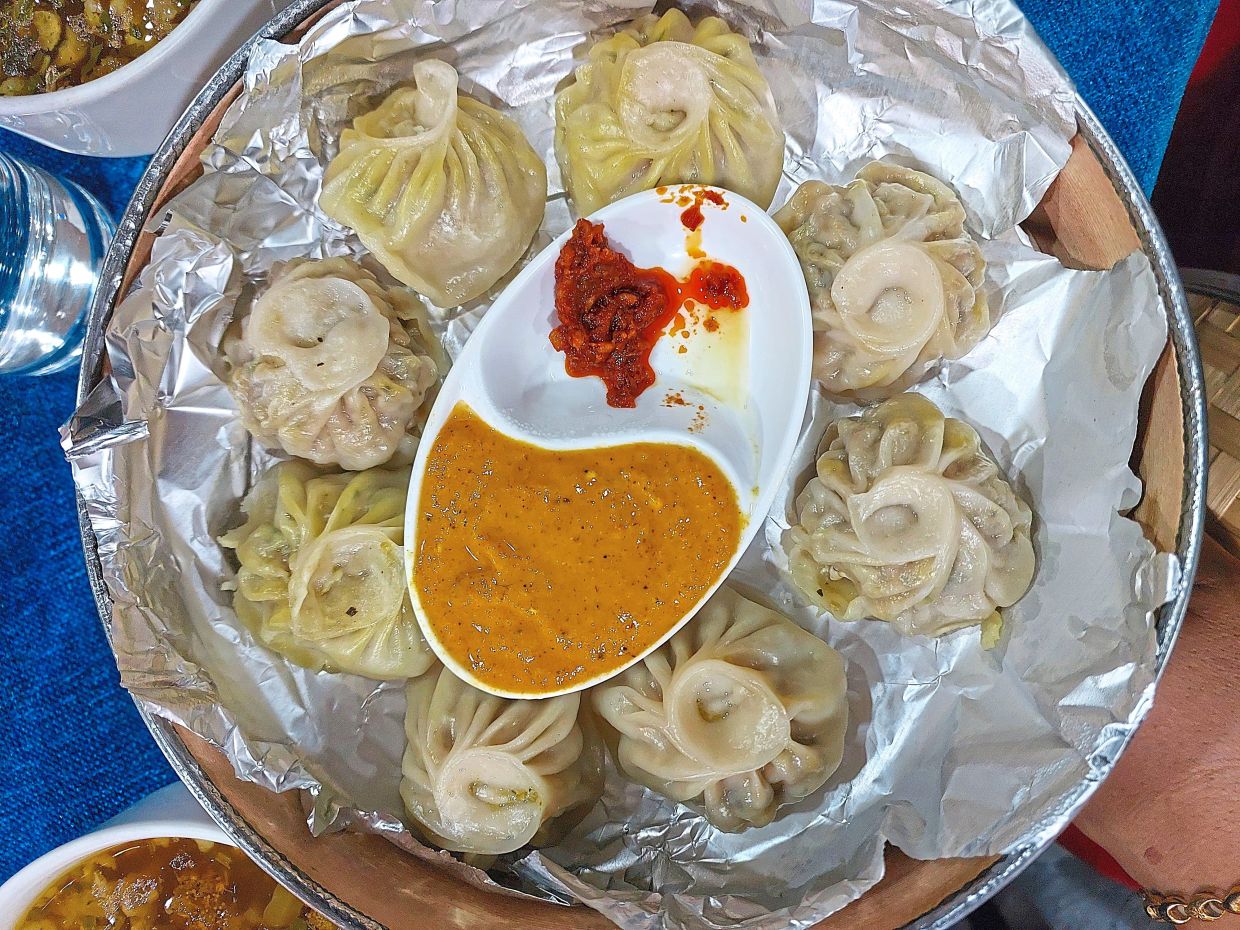
Now, momo is ubiquitous in Nepal. The dumpling is traditionally filled with minced meat from buffalo or yak. But modern variations feature everything from chicken and mutton to cheese and vegetables.
It is usually served with achar, a tangy and spicy dipping sauce.
Momo is easy to come by in Nepal, especially around Kathmandu, where there are plenty of restaurants selling it. Try the johl version, which is momo served in spicy vegetable broth.
In Tibet, a similar soupy dish is called mokthuk. You can find momo anywhere in Lhasa, but if you happen to be in the Mount Everest Base Camp area (either on the Tibet side or Nepal side), try the momo that’s steamed over a fire.
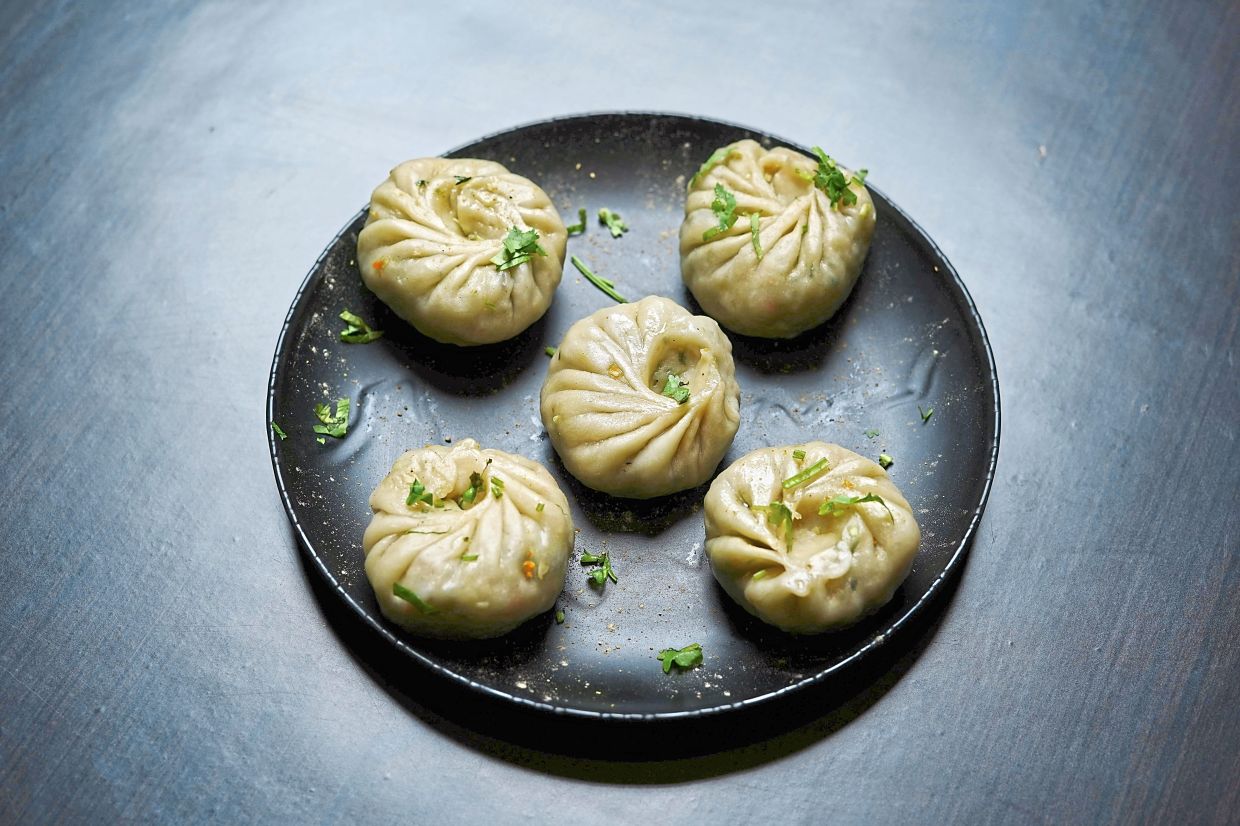
Momo can be round-shaped with a swirly top or crescent-shaped. A variation less commonly known is open momo – its four-petal form earns it the moniker “flower momo”. This open top style is a modern spin, usually found in restaurants rather than the streets.
Sometimes, the round momo can appear to have a little indentation, or a “well”, at the top. At a glance, it looks almost like Mongolia’s buuz.
Soupy sensations
You might be familiar with xiao long bao – delicate little dumplings with (hot) soup concealed within. Buuz, similarly, contains savoury broth inside.
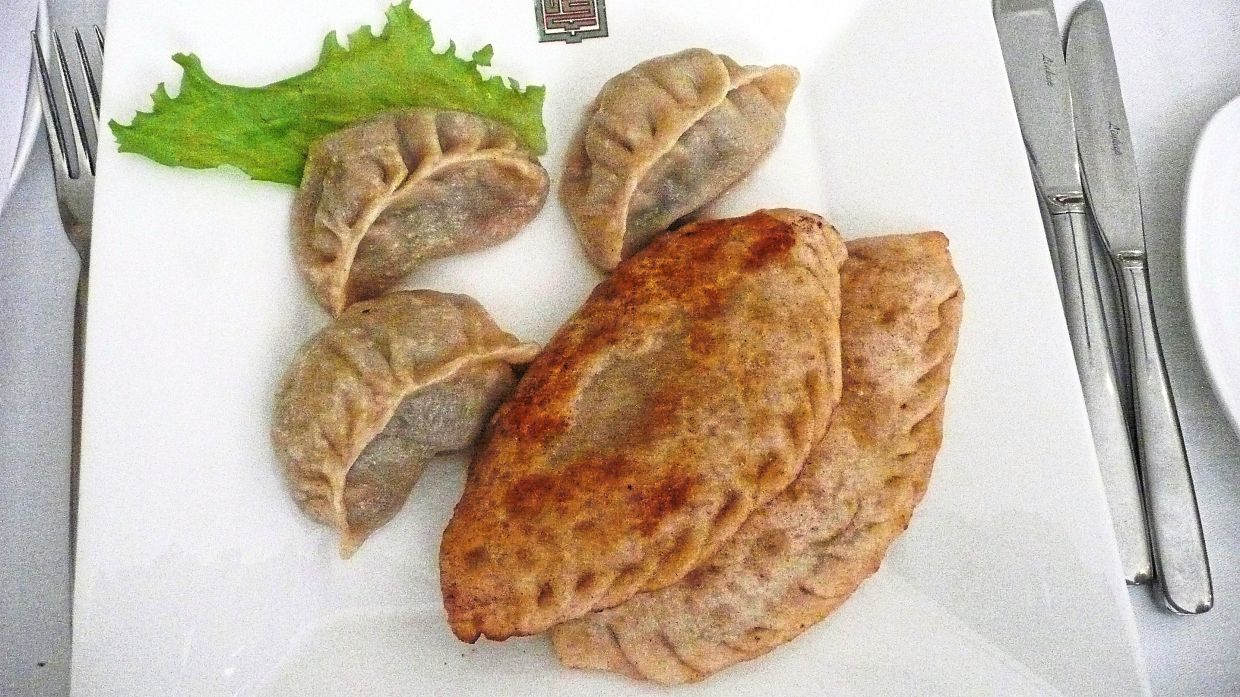
Buuz, the national dish of Mongolia, is usually filled with mutton or beef. Traditionally eaten during celebrations, like Tsagaan Sar (Lunar New Year), the steamed dumpling can also be found year-round at cafes and restaurants across the Mongolian capital, Ulaanbaatar.
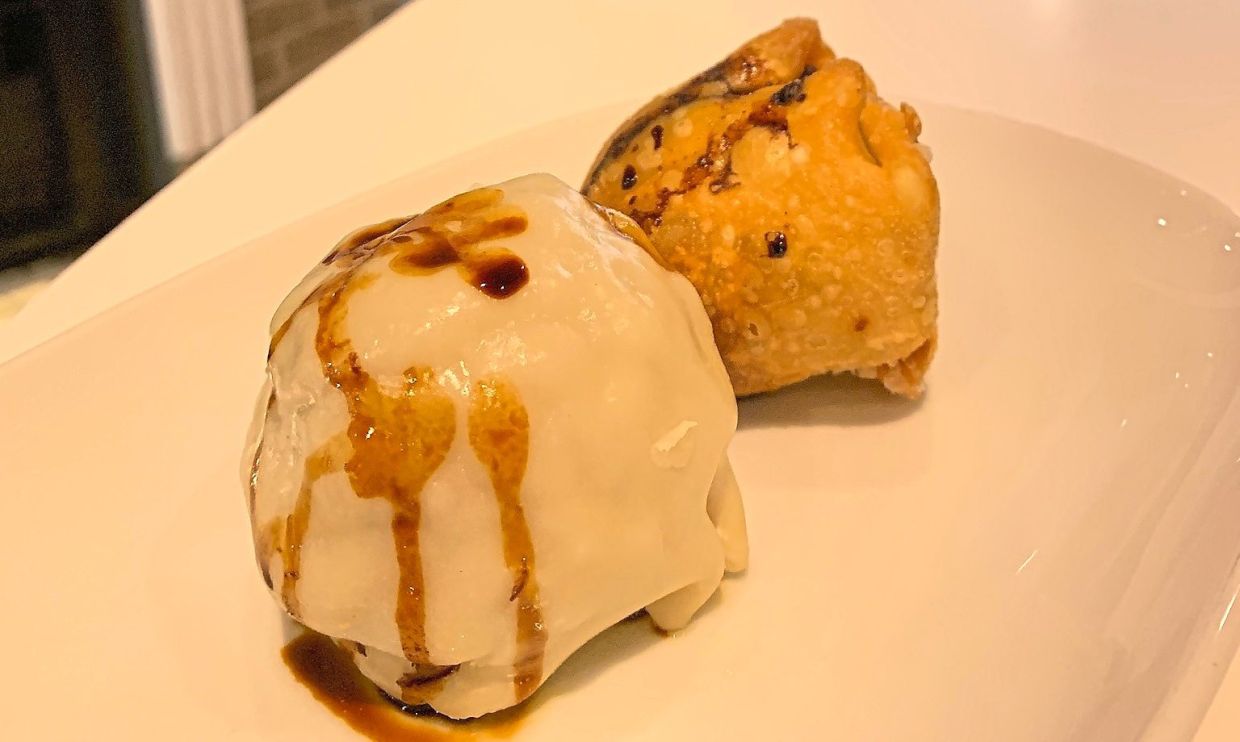
There is a fried version of this called khuushuur, which looks a lot like our own karipap but is described as having a “juicy inside”. That’s due to the small amount of broth inside it. The savoury kind is called banshtai shol (soup) and the sweeter version is called banshtai tsai (milk tea with dumplings).
The latter is certainly different, since you won’t find any Malaysian dumplings floating in a bowl of milk tea anytime soon.
In Malaysia, you can find xiao long bao served in traditional bamboo steamers, typically at upscale Chinese restaurants.
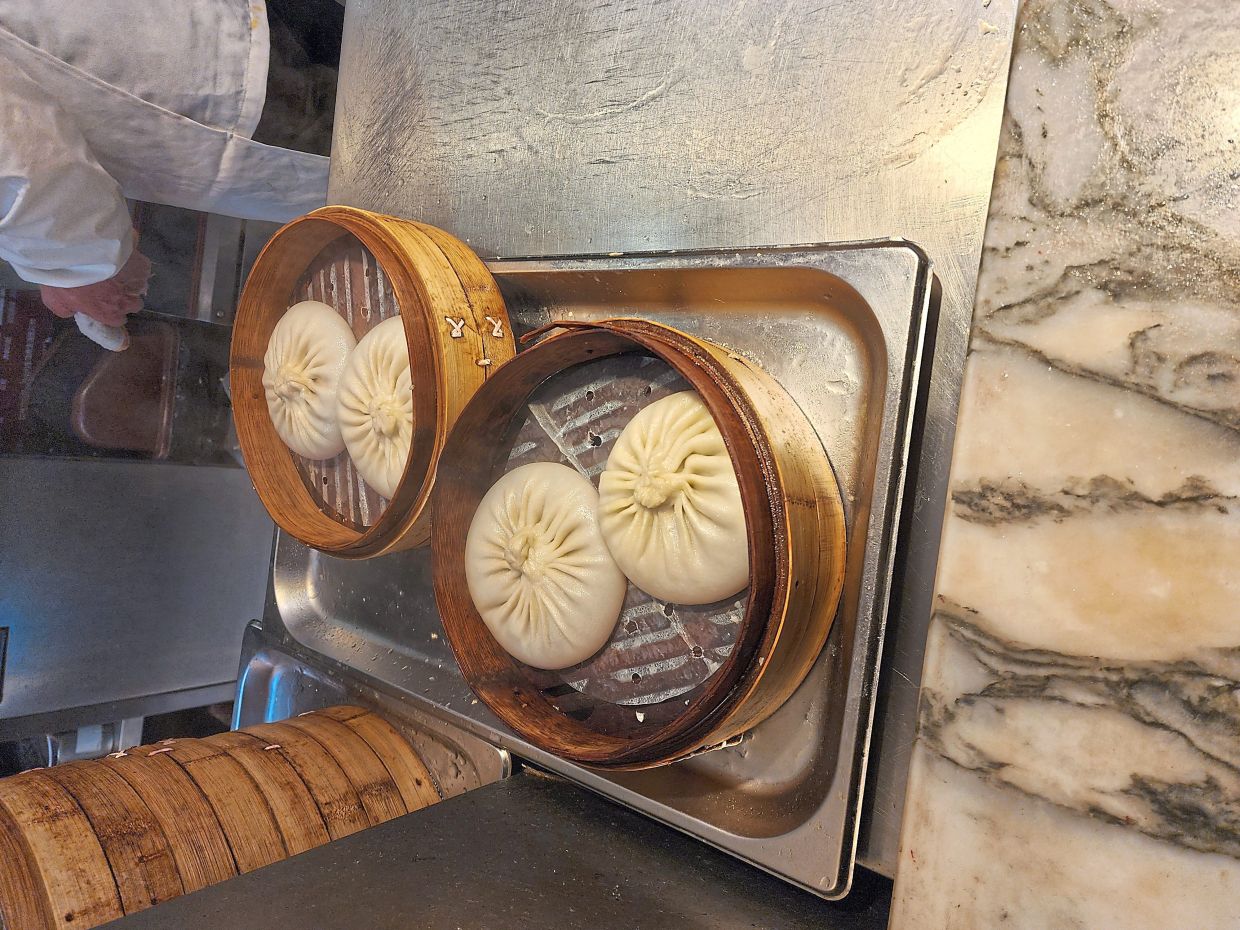
Over in Shanghai, China, no restaurant reservation is needed (unless you’re feeling fancy). It is more of a street food. It is also much larger; you’ll require a straw to sip its soupy inside before eating it bit by bit. This version is known as tangbao (which translates to “soup dumpling”), and technically xiao long bao is a variation of tangbao.
The gelatinised broth or aspic inside, which melts when steamed, is what gives them their soup fillings.
Lesser known than the two is sheng jian bao, usually found in fast-food restaurants. It’s both pan-fried (for a crispy bottom) and steamed for a fluffier top. The Shanghai style is juicier compared to the Cantonese style – also available in Shanghai – which is larger and made of thicker dough.
In Georgia (the transcontinental country), a dumpling that also carries a soupy concept is khinkali. This one is easily identifiable by its kudi or tail – a protruding stem at the top for you to hold when consuming it.
The Georgian capital of Tbilisi has no shortage of restaurants serving khinkali, which is traditionally made with minced beef and pork. For the most authentic version, head outside the city to Pasanauri Village, said to be the birthplace of khinkali.
With a local twist
A significant Chinese diaspora can influence a foreign country’s culinary landscape. The meeting of Chinese cooking with local flavours often results in fusion foods that are familiar yet uniquely different.
For example, the “dim sim” of Australia. That is not a misspelling of dim sum, but it is where the inspiration comes from. Nowadays, you can find dim sim in restaurants across Melbourne.
And like most of the dumplings mentioned in this article, especially the ones available in urban areas, they can also be found in the frozen food section of large supermarkets.
According to Australian chef Elizabeth Chong, her father William Wing Young invented this larger variation of siu mai (open top dumpling) to sell at football matches in the 1940s. He named it “dim sim” to make it easier for the locals to pronounce.
Originally available only as a steamed dish, the fried version came later when a fish-and-chips shop started frying it for convenience.
In Indonesia, there is an iteration of siu mai that is highly localised. Called siomay, it looks like the typical pork-filled siu mai. The difference is siomay uses steamed mackerel as filling and most notably, it is served with a generous serving of peanut sauce on top (much like how you’d eat satay in Malaysia).
The US takes things up a notch – some of the “Chinese” cuisine found in the country don’t even have any original counterparts in China. Think fortune cookies, chop suey and orange chicken.
To be fair, this all came down to enterprising immigrant chefs back in the day who needed to ensure their menu could attract the local population ... or their businesses would tank.
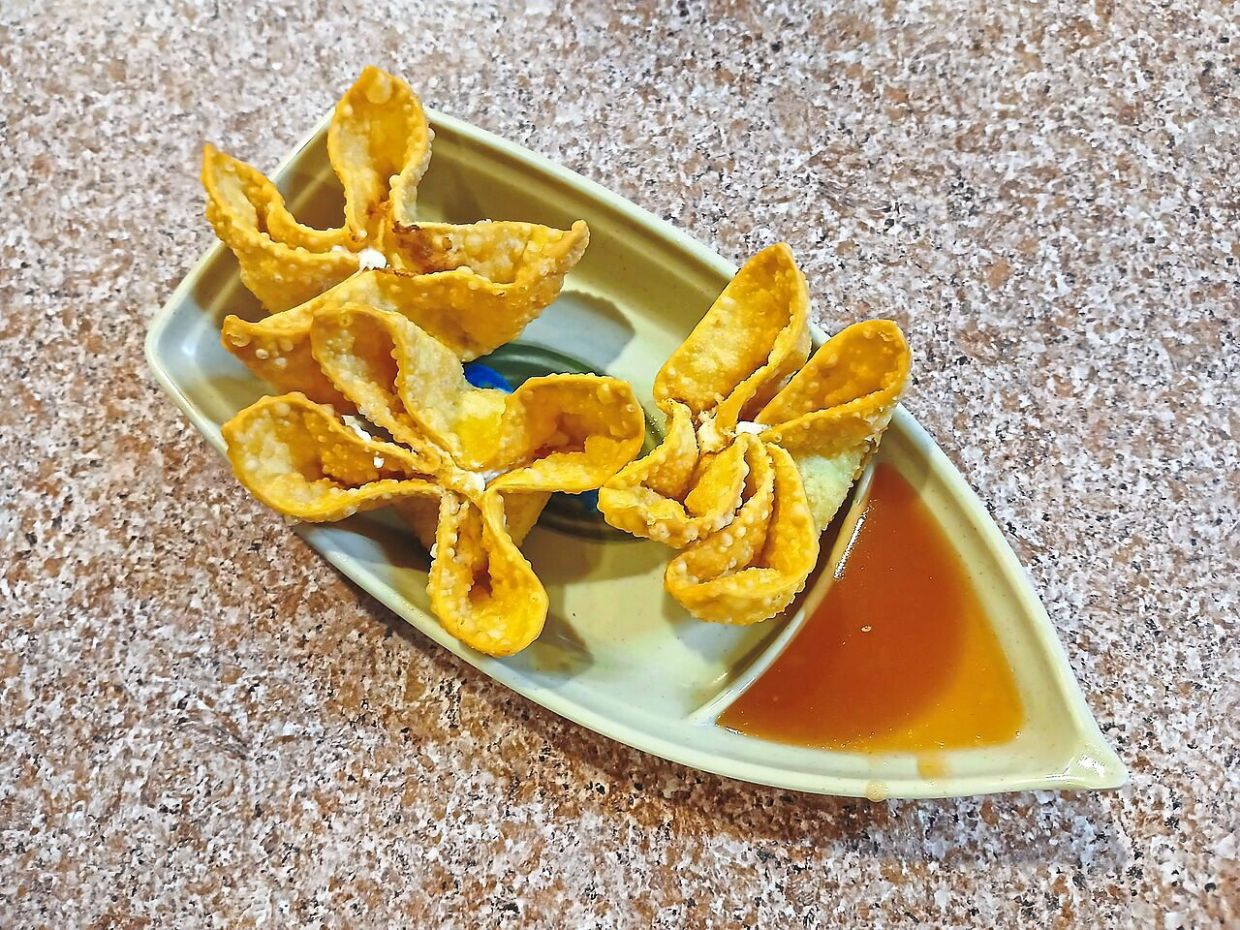
Crab Rangoon is a US dumpling that you wouldn’t have considered a Chinese food. Sure, everything is cocooned in a wonton wrapper – but imitation crab meat and cream cheese are just not staples in a Chinese diet. Also, Rangoon (now Yangon) is a city in Myanmar ...
But the culinary fusion is what makes this a very unique Chinese-American dish – created by an American-Polynesian restaurant in the 1950s. What a lore.
You can order this in most Chinese-American restaurants across the US. Failing that, you can search for the frozen version to cook at home.
All about aesthetic
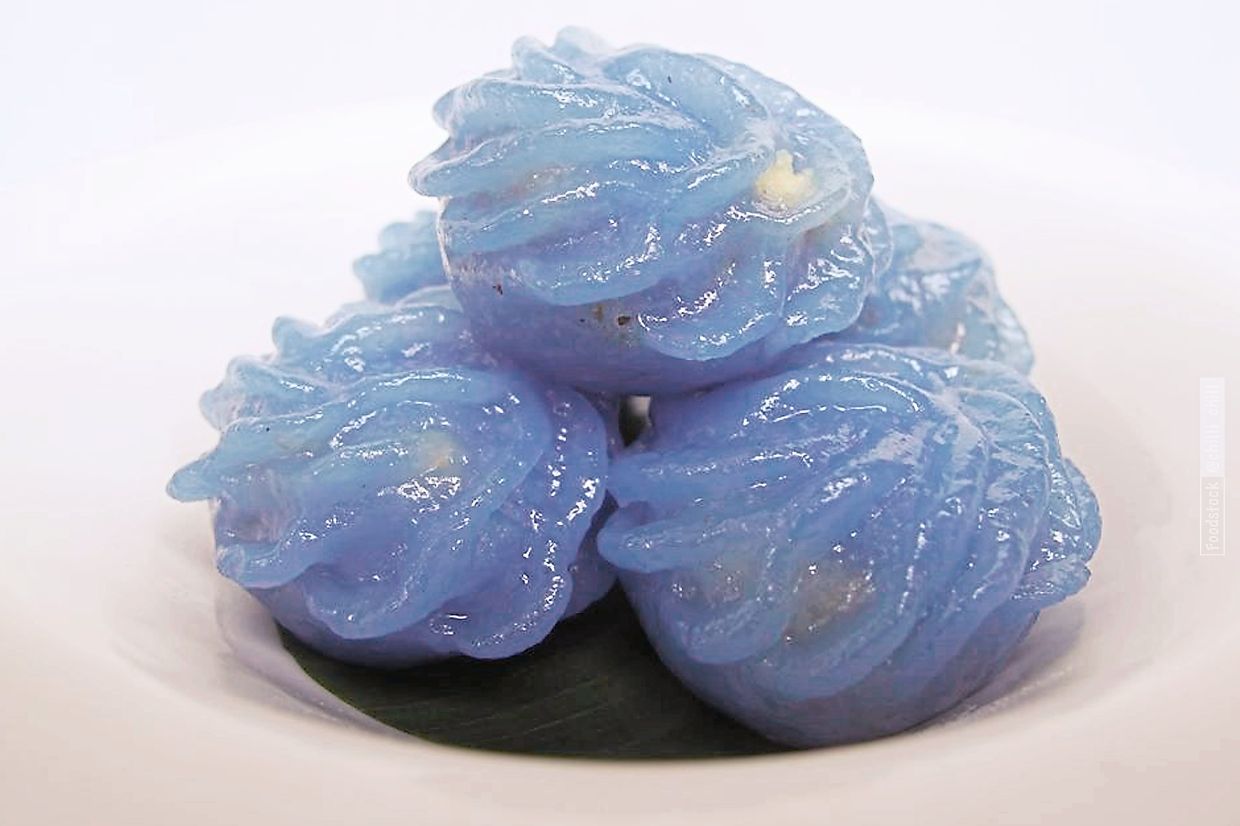
Thailand’s chor muang might be one of the prettiest dumplings out there. An appetiser traditionally enjoyed by Thai royalty, it can now be found in high-end and traditional restaurants.
Its monikers include royal flower dumpling and purple flower dumpling, derived from the fact that it is hand-moulded into an intricate flower shape, with butterfly pea lending it a characteristic purple hue.
Go for savoury – sweet salty pork and peanut filling – if you want the more traditional taste. Modern fillings usually consist of sweet coconut or black sesame.
Fans of Chinese food would argue that har gow is the fairest of them all. The “crystal shrimp dumpling” does come in a translucent skin that radiates elegance on a plate. The fact that it is mostly found in refined establishment further solidifies this impression.
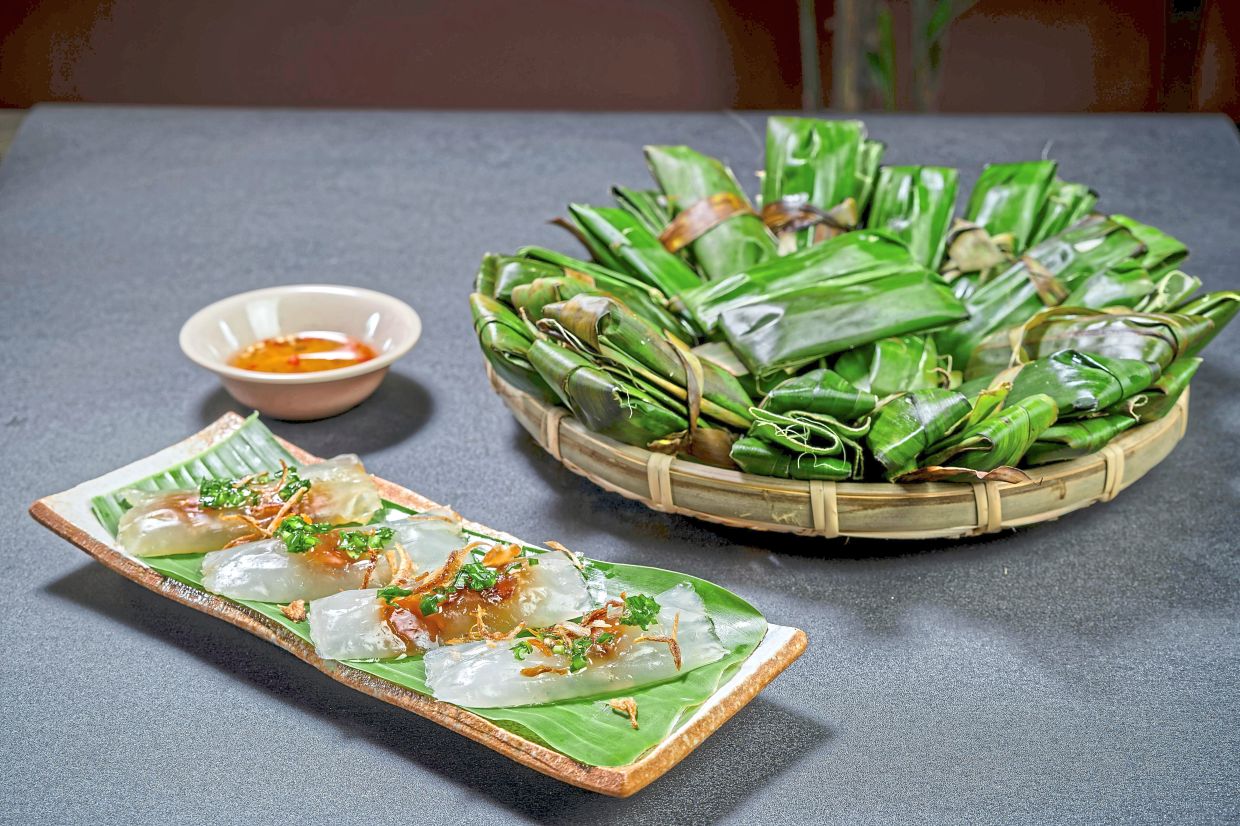
Joining the battle of the aesthetically pleasing dumplings is Vietnam’s banh bot loc (clear tapioca dumpling). Depending on how it’s served – the shape varies by chef or vendor – it can look so mesmerising that you’ll feel reluctant to “destroy” it.
The chewy wrapping, made of tapioca starch, turns translucent when cooked. You’ll then see a hint of red and orange peeking through the clear skin, previewing the shrimp and pork filling.
As it originated in Hue, the city, along with nearby Hoi An and Da Nang, is among the best places for authentic banh bot loc.
Speaking of chewy dumplings, give the street food cilok a try when in Indonesia. Also made of tapioca starch but shaped into balls, it is served with savoury peanut sauce and sweet soy sauce. When skewered, its appearance is reminiscent of Japanese dango.
Dango is a sweet rice dumpling that you can find throughout Japan. These balls-on-a-stick snack is popular at festivals and can be found sold at convenience stores.
Perhaps the rice dumpling you’re most familiar with is tang yuan. In places like Malaysia and Singapore, there are dedicated shops for these glutinous rice balls (usually stuffed with black sesame or red bean). You can also find them at night markets.
No matter which part of the world you’re visiting, chances are there’s a local dumpling that you can try.
So, why not expand your culinary repertoire? Designate 2026 as the year you embark on a gastronomic journey to find the world’s most delectable dumpling – or stuffed pasta.
Dumplings of the world
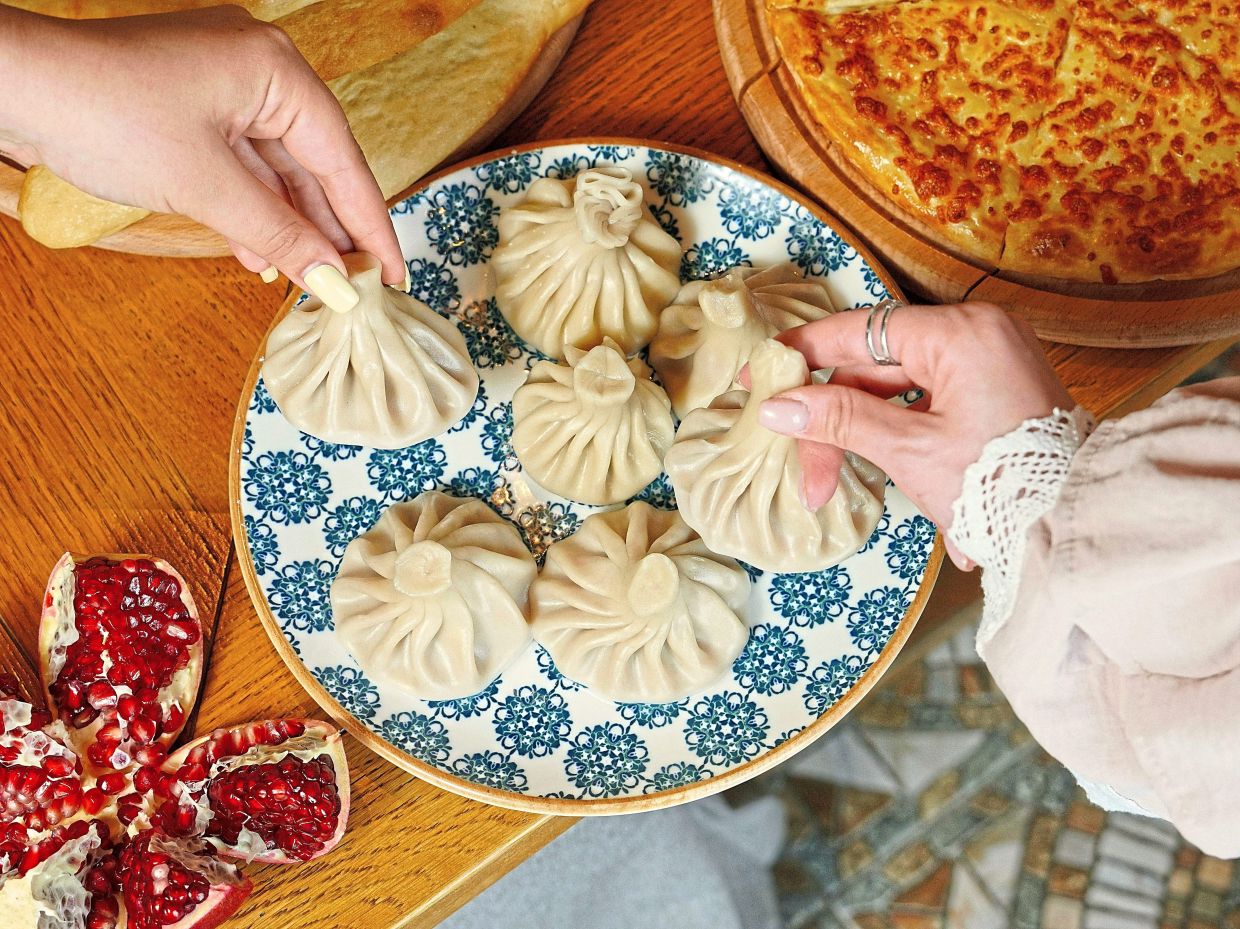
Georgia’s khinkali is a dumpling with a ‘tail’ that you can hold while eating. — Pexels
Vietnam’s Banh bot loc has a chewy, translucent skin. — Pexels
Buuz (left) and khuushuur from Mongolia are soup dumplings similar to xiao long bao. — Brucke-Osteuropa/Wikimedia Commons
Thailand’s chor muang is also called purple flower dumpling. — Chill Chill House/Wikimedia Commons
Crab Rangoon is a ‘Chinese dumpling’ only found in the US. — SER AMANTIO DI NICOLAO/Wikimedia Commons
Australia has its own version of Chinese dumpling called dim sim. — Finbar/Wikimedia Commons
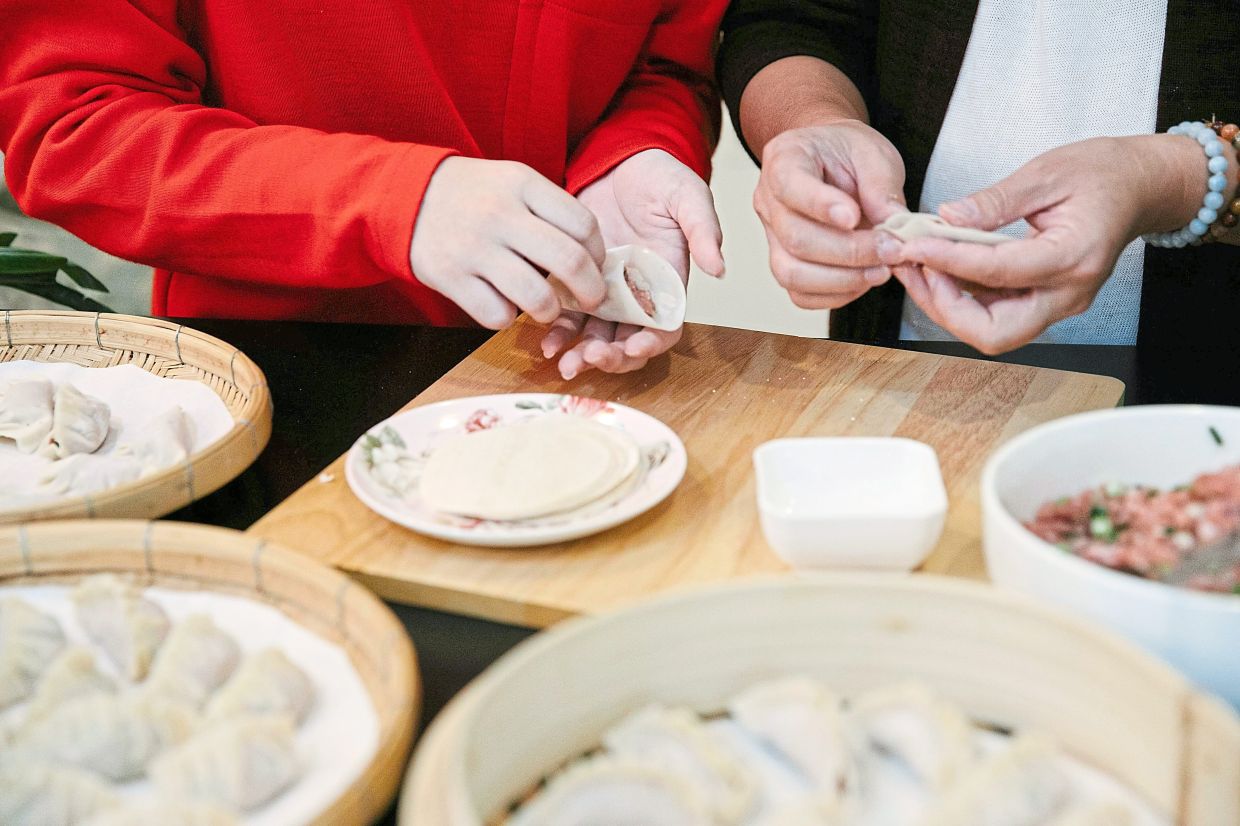
Dumpling making requires skilled hands. — Pexels
Dumplings can be found anywhere, from night markets to high-end restaurants. — Pexels
Tangbao is a popular soup dumpling in Shanghai, China. — FLOREY D. MIKIL/The Star
Momo is eaten a lot in Nepal and Tibet. — Pexels
Momo in Nepal is usually served with achar, a tangy and spicy dipping sauce. — MELODY L. GOH/The Star