Lars Marstone is leaning on the pier in Lysekil’s harbour in Sweden’s Vastra Gotaland County, arms crossed, as though personally greeting the wind and waves.
Moored nearby is Signe, his lovingly restored wooden boat. Her name derives from the Old Norse word “signy”, meaning “victorious” or “blessed”.
For more than 50 years, Signe has been braving the waves. Today she’ll be taking us on an oyster and mussel tour, the first leg of our expedition to some of Sweden’s “blue food” hot spots.
Sustainable blue foods – which are from oceans, lakes and rivers – “have an essential role to play in achieving food security, ending malnutrition and building healthy, nature-positive and resilient food systems”, according to the United Nations.
They include fish, shellfish and seaweed, caught wild or farmed in aquacultures with a small ecological footprint.
Along Sweden’s wild west coast, the blue food movement is especially vibrant. We’re in the province of Bohuslan, about 120km northwest of Gothenburg, and Marstone is a blue food pioneer. For more than 15 years, from March to November he and his wife, Maivor, have operated their shellfish tour.
But before he lets us board his boat, he gives us seaworthy coveralls to put on – thick, waterproof and rather stiff. Getting into them is almost an adventure in itself.
“You might need them,” he says with a smile.
Then Signe chugs out of the harbour. Ahead of us stretches the Gullmarn fjord, roughly 25km long and up to 120m deep. This is Sweden’s largest and deepest fjord, and it’s teeming with marine biodiversity.
As Signe slowly picks up speed, Marstone explains how he farms oysters and mussels. In the middle of the fjord, where the water is clear, oxygen-rich and full of nutrients, the oysters lie in stackable trays or mesh bags, and the mussels hang on ropes in permeable baskets.
The conditions are ideal for them to grow undisturbed.
After about 20 minutes, a small island appears on the horizon that belonged to Marstone’s grandfather before him: Karingeholmen.
We dock and step carefully onto the wooden footbridge.
Thick ropes to which oyster trays are attached hang from the planks. Marstone bends down, grabs an oyster with a practised hand, and opens it with a quick, precise cut – fresh, salty, ready to eat.
“That’s the European flat oyster, Ostrea edulis,” he says while we sample it. It tastes nutty and a bit minerally, its texture is creamy. Then he reaches into another tray and pulls out a larger oyster.
“This one here is its Japanese cousin, Crassostrea gigas. Can you taste the difference?”
Crassostrea gigas, known as the Pacific oyster, is fleshier, has a stronger flavour and distinct iodine aroma. It’s cultivated worldwide in tanks and intertidal zones, but in Sweden, this is done by small businesses, without supplemental feed or chemicals.
While the two types of oysters have very different characters, they’re both best enjoyed au naturel, with a squeeze of lemon or splash of shallot vinaigrette.
Shuck shack
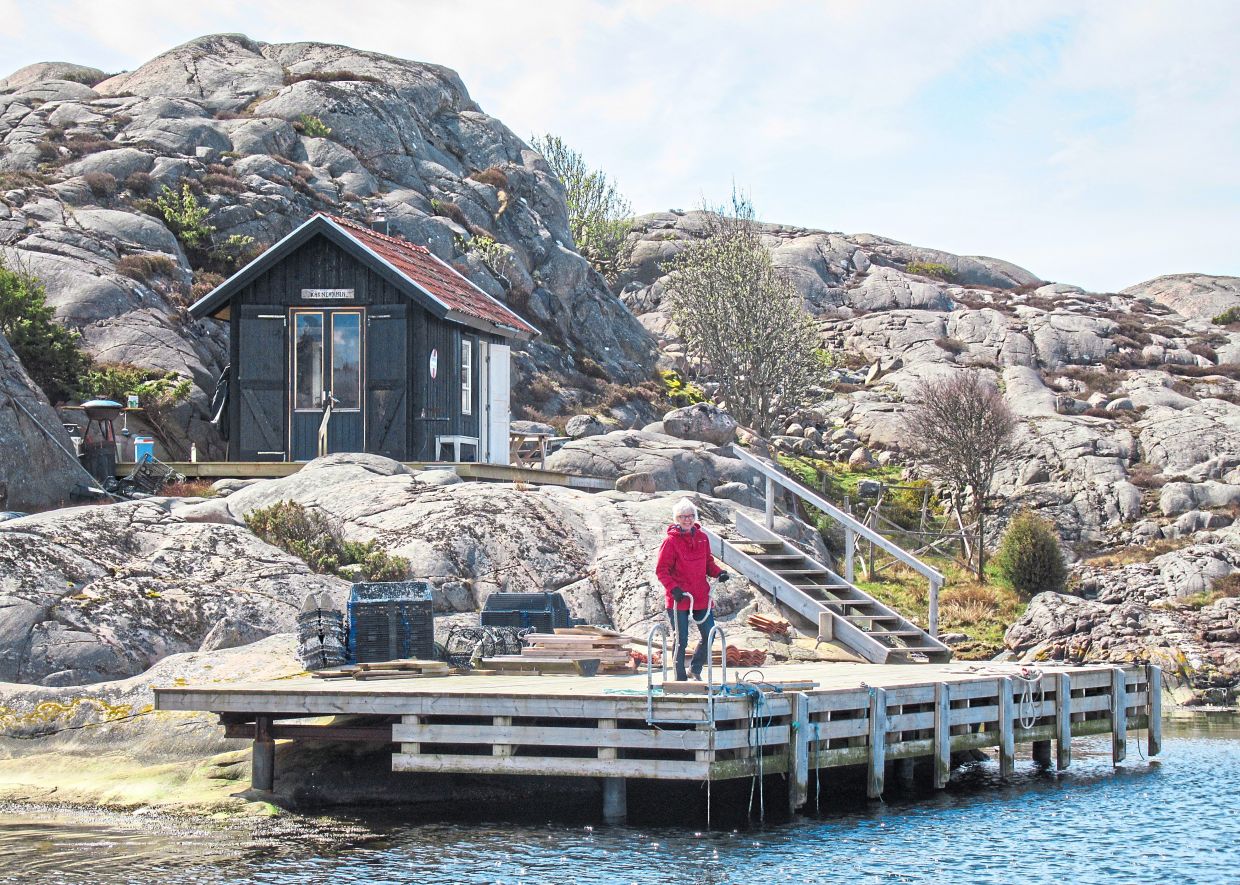
Our next destination is Everts Sjobod, a restored 19th-century boathouse in Grebbestad, about 65km north of Lysekil.
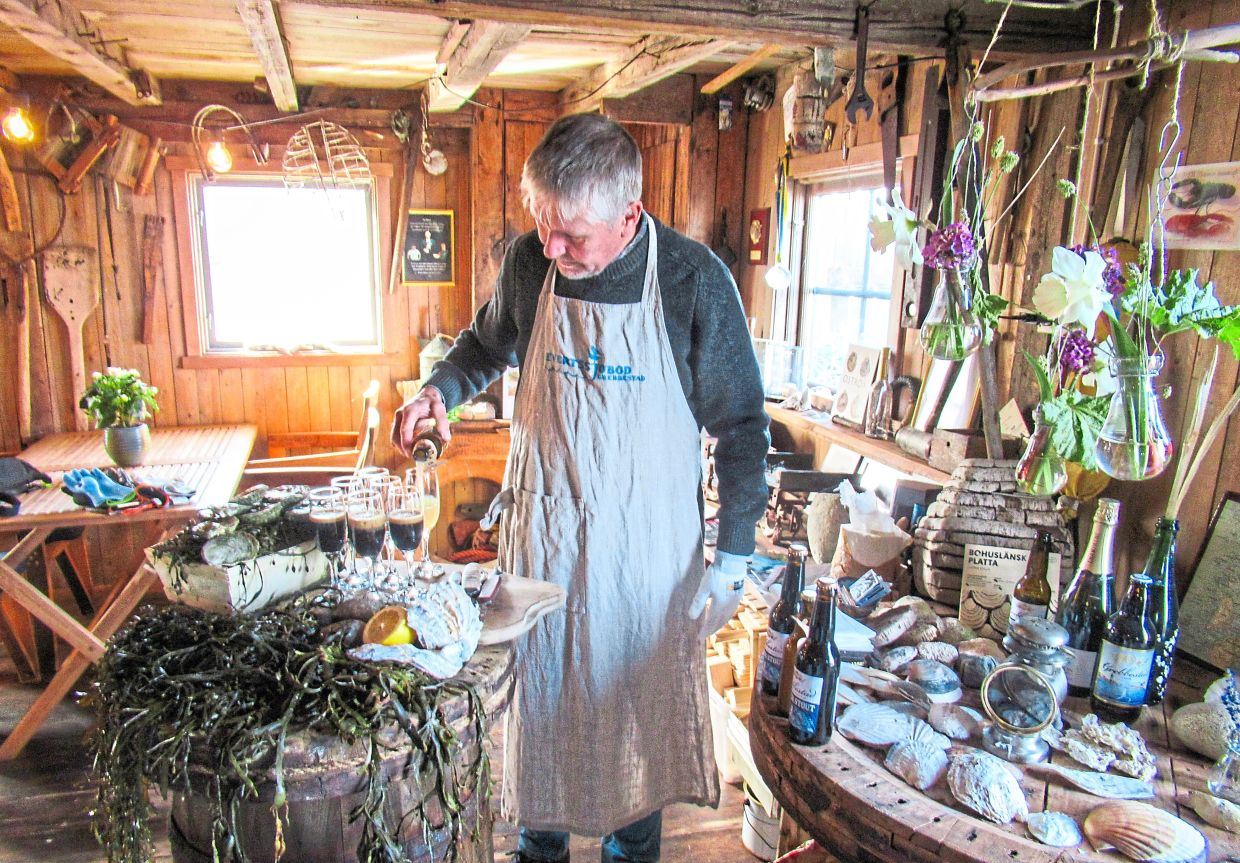
It’s extremely cosy and rustic, with creaking floorboards and sailor’s knots on the walls, and happens to sit on a natural oyster bed – the perfect place to learn the art of shucking oysters.
Per Karlsson, a fisherman and culinary ambassador of sorts for the Swedish province of Bohuslan, shows us how. His gloved left hand firmly grips the rough shell, while his right wields a special knife.
“The left hand holds, and here’s where you place the knife and twist.”
A veteran shucker, he opens the oyster with ease. Karlsson operates the boathouse with his brother, Lars, both of whom grew up in Grebbestad and have a close bond with the sea.
Now it’s our turn. Tentatively, fully focused, and finally ... crack, the oyster has been pried open. With the fjord in view, and the fresh oyster on the tongue, it tastes of the sea – and of a small success too.
Our final stop is Smogen, known for its brightly coloured houses. In an idyllic bay we’re welcomed by Linnea Sjogren, founder of Catxalot, one of the first enterprises in Sweden wholly dedicated to the potential of seaweed.
What awaits visitors here is a seaweed safari and foraging adventure with mask, snorkel and wetsuit. We prefer that only Sjogren enter the frigid water though, while we watch with fascination from shore.
“The water’s cold but full of life,” she says with a smile, before disappearing underwater.
When she resurfaces a short time later, she’s holding a glistening bunch of brown, red and green seaweeds.
Sjogren spreads them out on a rock, carefully sorting them next to each other – like a tea ceremony. The camping stove hisses, the water is steaming.
“This kind here gets as crispy as crisps when it dries, the other makes a delicate, floral-like tea,” she explains, and passes around a glass of it.
“Seaweeds are truly versatile,” she says, rattling off some of their many uses – as a superfood, in cosmetics, and as a climate- change mitigator by absorbing carbon. And if you live by the sea, it lies right at your doorstep.
The seaweed Sjogren harvests not only winds up in her cooking workshops, but on plates in some of Stockholm’s and Gothenburg’s top restaurants: oysters with seaweed butter, mussels on seaweed salad, and seaweed caviar, which is processed kelp that mimics the appearance, texture and taste of fish roe.
What do all these scrumptious dishes have in common? They’re sustainable blue foods from Sweden’s wild west coast. – SABINE GLAUBITZ/dpa