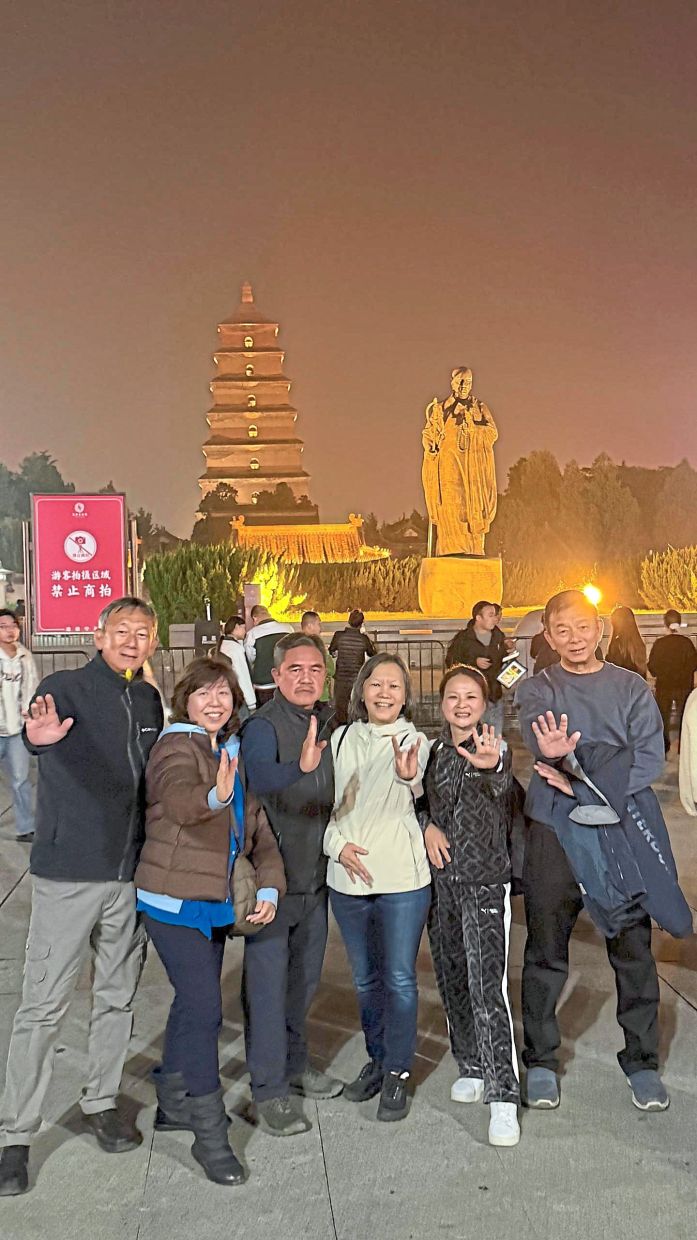
In Xi’an (formerly Chang’an), China, there is a grand avenue known as the Great Tang Ever-Bright City, stretching 2,100m north-south and 500m east-west.
If you visit the place, you will feel as if you’ve gone back 1,300 years into the flourishing Tang era.
Magnificent Tang-style buildings line the streets while elegantly dressed women in ornate costumes and makeup drift gracefully through the crowds.
It gives the impression of a society that was relatively open-minded, where women enjoyed a comparatively high social status.
You’ll also find waves of Western tourists dressed in Tang costumes for photoshoots, an echo of the dynasty’s famously inclusive and cosmopolitan spirit. Back then, Chang’an was already a global metropolis.
Because of the Tang Dynasty’s immense power and influence, people overseas often referred to ethnic Chinese as “Tang people”, their attire as “Tang suits”, and the prevailing aesthetic as “Tang style”.
During the same period, emissaries from Japan, known as Kentoshi, were repeatedly sent to China to study religion, philosophy, governance, and culture. These exchanges shaped what would later become the foundations of Japanese society.
So, what exactly was the Tang Dynasty?
The Tang Dynasty (618-907 CE) was a unified empire in Chinese history, spanning 21 emperors and lasting 289 years. It was founded by Emperor Gaozu of Tang, with its capital at Chang’an, which at the time was one of the largest cities in the world and home to over a million people.
This was also the age of Wu Zetian, the only female emperor in Chinese history, and the golden era of poetry – think of poets like Li Bai and Du Fu. In fact, at the Ever-Bright City today, you might even “run into” Li Bai engaging visitors in playful poetry duels.
The Tang Dynasty represents one of the most open, influential, and culturally brilliant periods in Chinese history, and its legacy still echoes across the world.
The term “Tang people in Chinatown” refers to Chinese migrants historically associated with the Tang era. Wherever they gathered and settled became known as Chinatown.
It’s a simple explanation – and honestly, it holds up.
Before the pandemic, I met a Chinese man named Xiao Ma in Chisinau, the capital of the tiny country of Moldova. I teased him, saying, “You’re incredible. Opening a ‘Beijing restaurant’ in a place with barely any Chinese people.”
He shrugged it off. “I came first. Others will follow. Give it a year – this street will become a Chinatown,” he said.
He cooked us a wonderful, authentically Chinese meal. I noticed that his wife was local, so he was likely to settle there for good.
Sadly, his restaurant didn’t survive the pandemic. Still, I believe that ideas like his, no matter how small, will keep expanding Chinese culture, even in a country of just two million people.
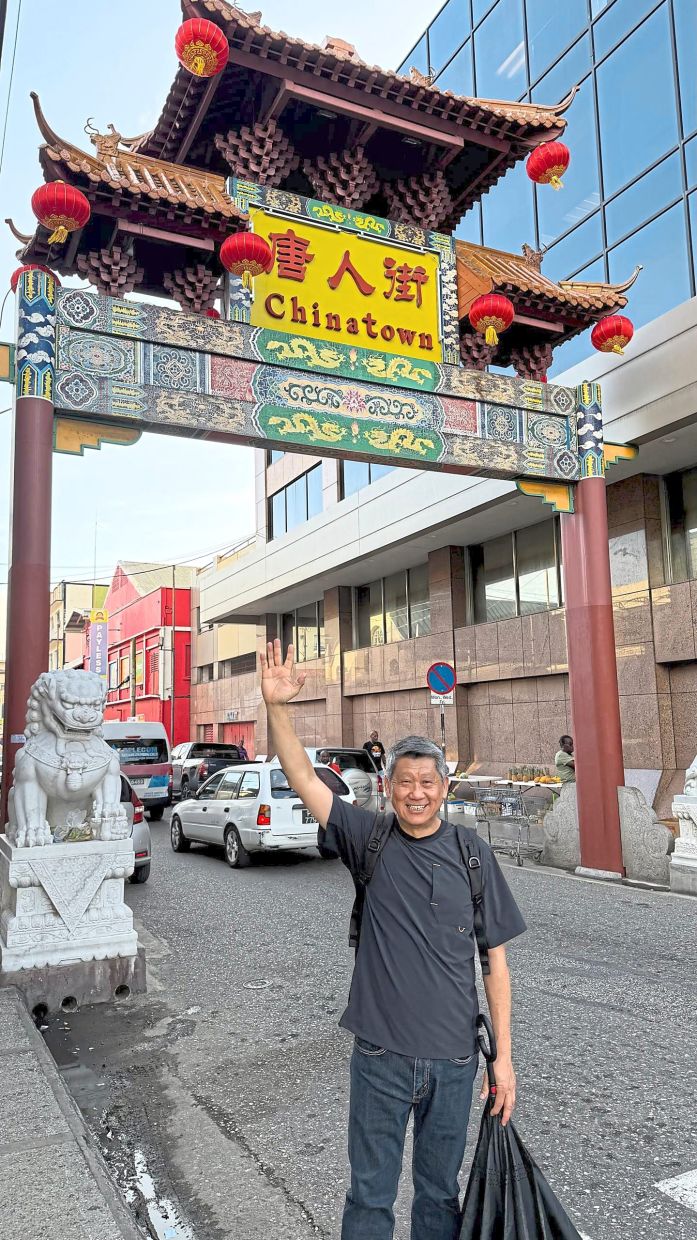
Meanwhile, in the capital of the Dominican Republic, I was genuinely surprised to find a Chinatown with over a century of history.
A hundred years ago, migrants from Zhongshan in Guangdong crossed the seas and settled here. Over time, Taiwanese immigrants joined them.
Today, around 30,000 Chinese descendants – many third generation or beyond – are active across industries, fully integrated into local society. The Chinatown here emerged organically throughout history.
The pandemic hit hard, though, as dozens of Chinese businesses closed. But after that, a new wave of immigrants revived the district.
I met a man in his 50s, Xiao Wang, who had arrived from Fuqing just six months earlier. He spoke neither Spanish nor English, yet invested his life savings to open a general store here.
Rent alone was US$4,500 (RM17,786) a month, plus tens of thousands in renovation costs. His strategy? Thin margins, high volume.
Business was decent. He brought his son over and planned to settle long-term. Next door, a young couple from the same hometown ran a Chinese restaurant. Supporting each other, they formed a small community. That’s how most Chinatowns grow – bit by bit.
But as visitors, we often only see the surface: the lanterns, the signs, the food. The real story lies in the struggles behind each migrant, how they adapt to the local culture, the laws and systems.
Ironically, one of their biggest challenges isn’t language, but strict labour protections that raise operating costs.
I also met a traditional Chinese medicine (TCM) practitioner from Kuala Lumpur who migrated here years ago. His life took a completely new direction, and he too became part of this evolving Chinatown.
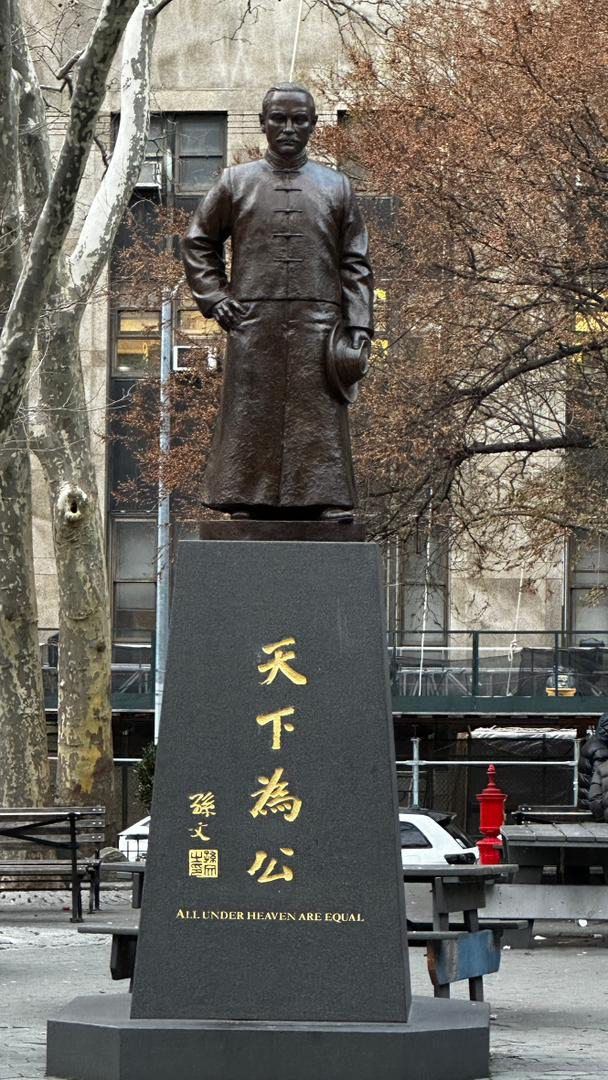
The Chinatown in Manhattan, New York in the United States is older and much larger, though it feels somewhat dated. Once dominated by the Cantonese folks, you hear a lot more Mandarin here now.
In contrast, the Chinatown in London, England is vibrant and modern, reflecting a global mix of Chinese communities and cuisines.
As for the most beautiful and well-kept Chinatown? My vote goes to the Yokohama Chinatown as it feels carefully polished, almost curated, even. A travel book once described it as “a street marinated by time”.
But beneath its polished surface lies a history of migration, trade, and cultural roots in Japan.
Opened as a port in 1859, Yokohama attracted Chinese migrants from Guangdong, Fujian, and Shanghai. They arrived with abacuses, cleavers, incense, and language – starting as translators, labourers and traders.
Interestingly, most visitors here are not Chinese but Japanese, with many experiencing “Chinese cuisine” for the first time, albeit in a localised, sweeter and richer form.
Yokohama’s Kanteibyo Temple is particularly vibrant. For the local Chinese community, it is more than a place of worship, it’s a spiritual anchor in a foreign land.
Chinatown plays a vital cultural role in tourism worldwide. In KL, our Chinatown – Petaling Street – is one of the most iconic places in the country.
Sure, many vendors here are foreign and much of the merchandise imported, but the Chinese cultural atmosphere remains unmistakably strong.
The views expressed here are entirely the writer’s own.
Leesan, the globe-trotting traveller who has visited seven continents, including 164 countries and territories, enjoys sharing his travel stories and insights. He has also authored seven books.