
From the moment I stepped into the airport in Marrakesh, Morocco I knew this trip would not be just another sightseeing tour. It was destined to be a journey deeply intertwined with culture and, surprisingly, colour.
The airport architecture is modern, and the system is efficient. No arrival cards are required and the procedures flow smoothly; the staff are warm and welcoming, too. This is a country that receives about 20 million international visitors a year, and it clearly knows how to greet the world.
After Egypt, Morocco is steadily rising as North Africa’s newest tourism star, with many attractions to explore. Travellers are also assured of their safety in this country.
Winter in North Africa may be fair when it comes to temperature, but the ultraviolet rays have quite a fiery personality. Half an hour outdoors without sunscreen will turn you red and sore; I certainly learnt this lesson myself when I ended up suffering from a minor sunburn one day.
Red hot Marrakesh
This was my fourth visit to Marrakesh, yet the excitement still felt like the first time – curious and delightfully “colour- drunk”. What fascinated me most was the orange-red glow beneath the flames of sunset, which gave off a warm and romantic feel.
February in Marrakesh is pleasantly mild. The air is neither cold nor hot, and the sunlight isn’t blinding. Along the streets, trees were laden with oranges. Bright fruits peeked through the green leaves, creating a palette so soft it felt like a carefully balanced painting.
It was Ramadan, and the rhythm of the city was noticeably slower. In the morning we visited an ancient water reservoir that was 5m deep – its clear water reflecting century-old olive trees. Across the city, five reservoirs once channelled water from the Atlas Mountains to irrigate and cool the town.
We stepped into the old Medina and our sense of direction immediately disappeared. There were no straight roads, so one had to depend on instinct to make the right turns. On top of that we had to avoid the cars, horse carriages and crowds that weaved through the alleys.
At the souks where vendors sold their wares, the air smelt of cumin, leather and orange blossoms. The aroma was intense yet irresistible – the true “soul” of a city, I would say.
At the famous square, Jemaa el‑Fnaa, a juice vendor smiled at us and waved us over. A glass of freshly squeezed orange juice was placed in my hand. I took a sip and it was perfectly sweet. Tourists buy happily; vendors sell happily.
As I sipped the juice, street performers, fortune tellers, and merchants bustle around. Here, history and reality meet face-to-face.
We waited for evening, specifically for sunset as we wanted to see when the golden light reflected on the clay walls of the city.
Once you see this, you will know exactly why Marrakesh is called the “Red City”.
Just outside the old town we could see the 12th-century minaret of Koutoubia Mosque. You can actually view the tower from almost anywhere in the city. Once the tallest mosque tower in the world, it became the architectural model for many Moroccan minarets later.
Another kind of elegance lie quietly within Majorelle Garden. This blue garden was once restored by designer Yves Saint Laurent, transforming it into an artistic oasis in the desert. The fountains here still run on water channelled centuries ago from the mountains, through ancient irrigation canals. The engineering wisdom of our ancestors often stretches far beyond what we imagine.
This city, nearly a thousand years old, once served as both a royal capital and a trading hub along ancient routes. Marrakesh is not just a city, it is a stage filled with dramatic tension.
You could also say that Marrakesh is a contradiction: half desert and ancient walls, half French fashion and boutique hotels.
Leaving the red city behind, we drove about 220km north along the highway. The desert slowly gave way to greenery. Wheat fields and yellow blossoms stretched along the horizon, and I could not help but admire Morocco’s achievements in agricultural greening.
Ten years ago these hills were dusty and barren. Today they resemble a new oasis – almost like parts of New Zealand.
Night fell as we arrived in Casablanca. Many first-time visitors ask the same question: why does the whole city look bleached? The answer is surprisingly simple: “Casablanca” literally means white house.
Located on the Atlantic coast, the city enjoys strong sunlight year-round. White exterior walls reflect heat and help keep interiors cool. Across North Africa, light-coloured walls are common, but Casablanca took the idea to the extreme and became almost entirely white.
The city’s colour is the result of its climate, reinforced by history, unified by colonial planning, and ultimately, confirmed by its own name. Sometimes cities are not designed – they are forced into shape by sunlight.
For many foreigners, however, the colour matters less than the name itself. Casablanca immediately evokes the classic film Casablanca. Ironically, the movie was never actually filmed in Morocco, yet its romantic filter has been permanently attached to the city.
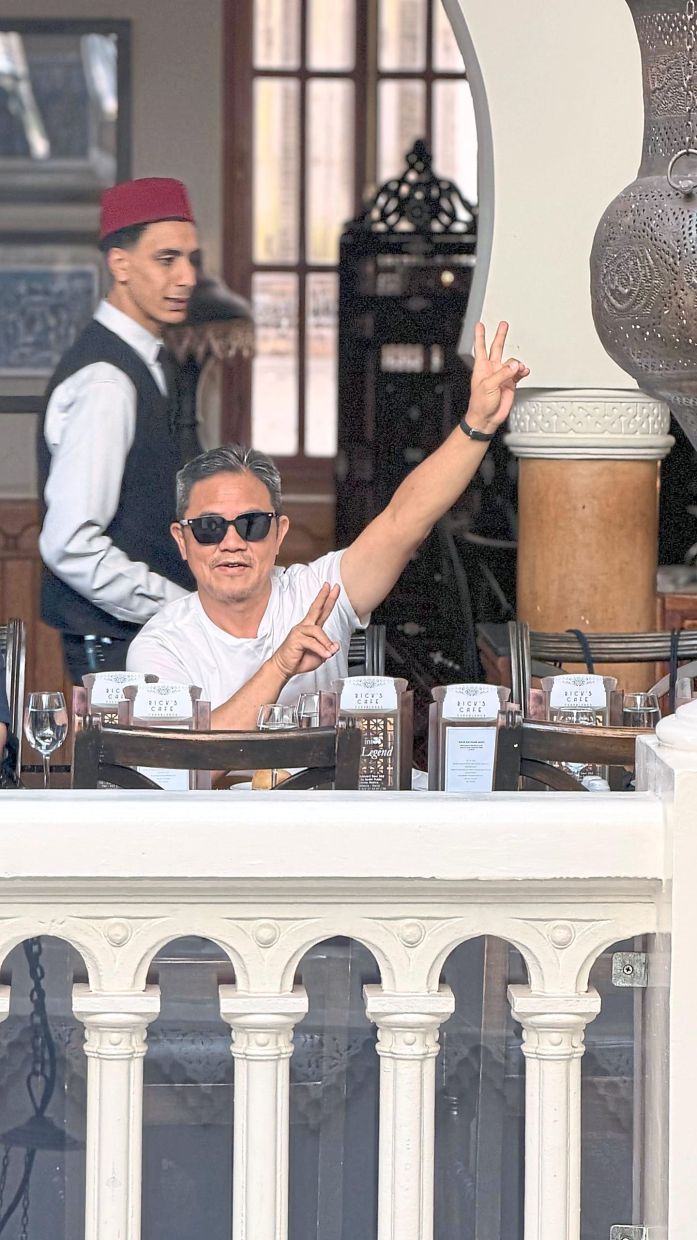
We had lunch at the recreated Rick’s Café as a tribute to that era of European-African encounters. The signature dish is pan-seared cod – tasty indeed – but the decor was the real attraction. Occasionally, the soundtrack from Casablanca plays, stirring nostalgic memories of another time.
Reality, however, is quieter than the movie. Walking through the old quarter, the French colonial buildings are no longer purely white and are now showing signs of ageing, yet they remain elegant and still slightly cinematic. When the tram glided through the streets, it reminded me that is was a museum but a living city.
One Sunday evening, the Atlantic waterfront fell silent except for the sound of waves. The city felt as if someone had pressed pause, and suddenly its breathing became clear.
During World War II, Casablanca served as a transit point for Europeans fleeing toward the Americas. Far from the battlefields, the city remained lively and glamorous.
Fes, city of knowledge
If Marrakesh is a flamboyant red rose, and Casablanca a cool white lover, then Fes feels like an old book – yellowed with age yet still full of wisdom.
The ancient quarter Fes el‑Bali has more than 9,000 alleys, making it the largest car-free “old” city in the world. Donkeys matter more than cars here, and GPS tools are mostly useless. Yet precisely because of this, the old way of life has been preserved almost intact.
The University of al‑Qarawiyyin here was established by a woman, Fatima al‑Fihri, in 859. It is widely considered the oldest continuously operating university in the world. This institution from a thousand years ago still commands respect today.
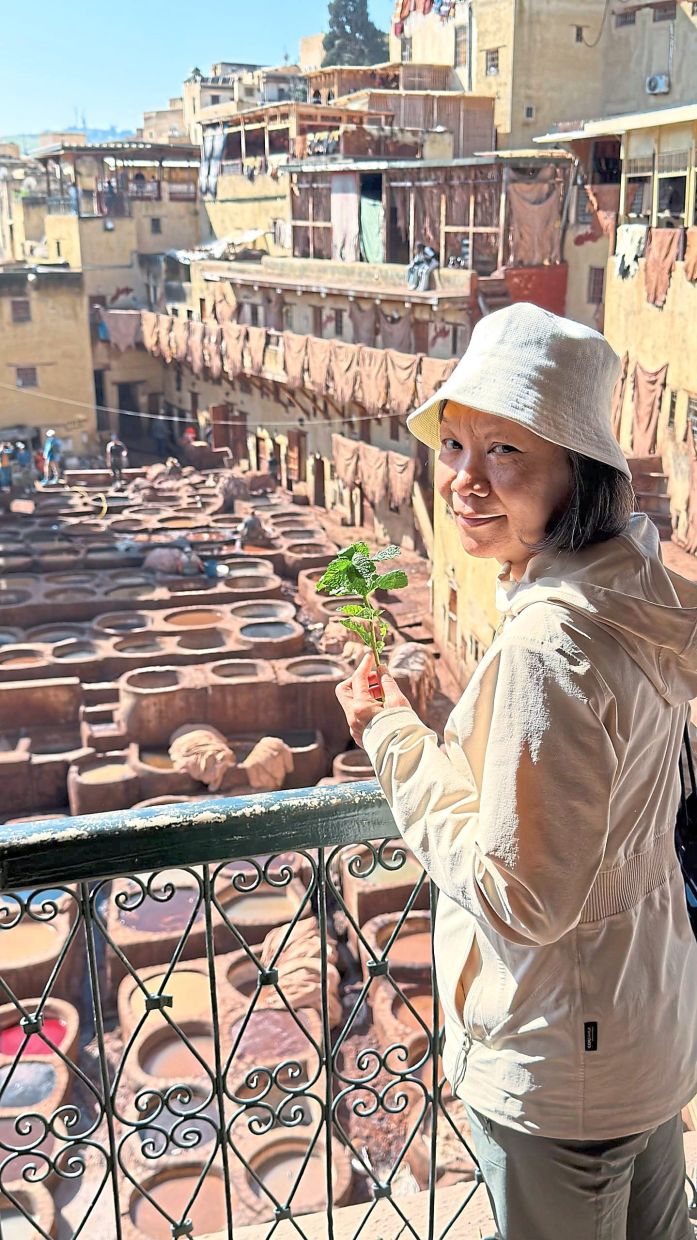
From above, the dye vats of Chouara Tannery spread out like a painter’s palette. The smell is strong and unapologetic, but everything is real.
This place does not try to please the camera. It remains loyal only to tradition.
Later, driving about 200km from Fes into the Rif Mountains, we reached Chefchaouen.
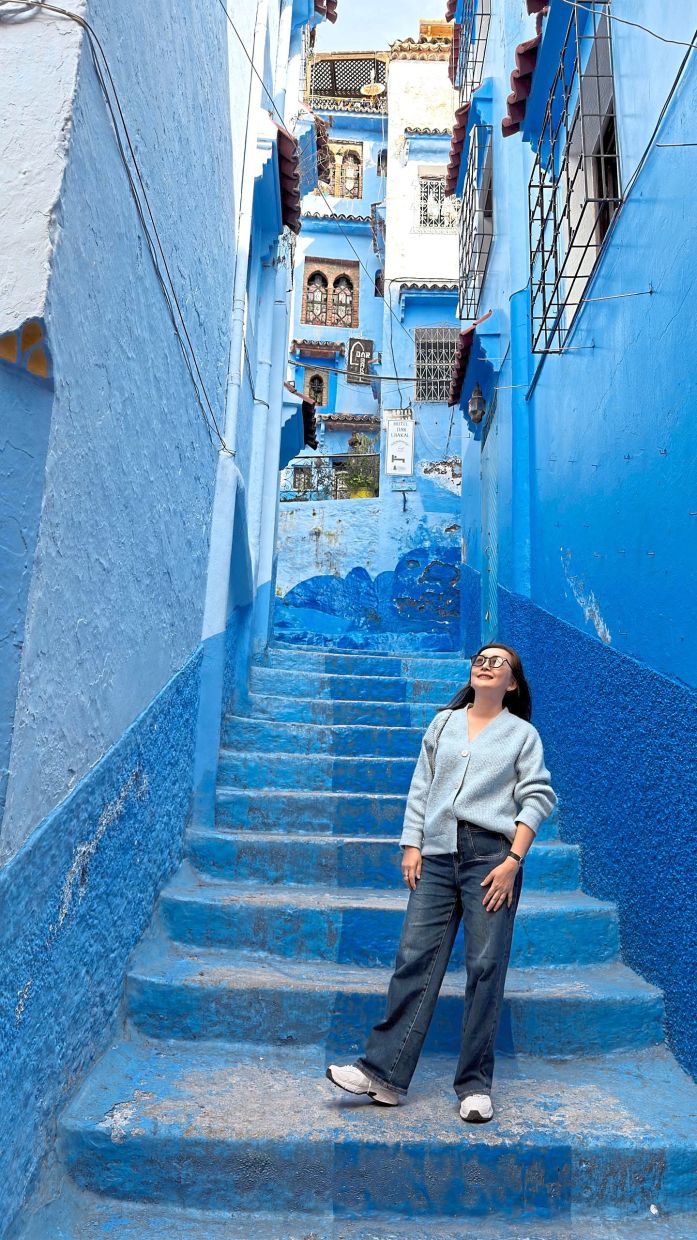
The entire town is painted in hues of blue: sky blue, lake blue, indigo, grayish blue. There are many explanations for this colour, among them, religious symbolism, mosquito deterrence, even psychological cooling.
Perhaps all are true. Perhaps none matter.
What matters is that people willingly travel across the world to see it.
Stone steps wind upward, arches overlap, and flowerpots overflow with sunlight from the windowsills. This town is not meant to be a spectacle for visitors, rather, it is meant to be embraced.
If Marrakesh is flame and Fes is ancient scripture, then Chefchaouen is a piece of blues music.
After Chefchaouen, we finally got to the capital city, Rabat.
Perhaps because it is the Moroccan capital, but everything here felt unusually orderly and clean. Inside the 12th-century Kasbah of the Udayas, white walls and blue doors lined the winding alleys, reminiscent of Andalusia. There were no noisy vendors here, only cats, sunlight, and sea breeze.
Nearby stood the unfinished Hassan Tower, which was surrounded by rows of stone columns. Ambition and history stood side by side here. Just next to it was the elegant Mausoleum of Mohammed V, balancing royal authority with spiritual grace through white stone and green tiles.
That evening we broke fast with local residents at a hotel. Traditional musicians played drums and strings, both solemn and festive. In that moment I suddenly understood something simple: Travel is not just about seeing places, it is about participating.
I have always believed that if travel becomes nothing more than an act of checking off a list filled with landmarks, it turns into a “physical labour”. The real scenery often appears only after you slow your pace.
Between red, white, and blue lies the layered story of a nation.
Between slow, quiet, and depth lies the true meaning of travel.
Morocco is not a place you need to finish in a hurry. Take your time, slowly.
Eventually, it will give you the answers.
The views expressed here are entirely the writer’s own.
Leesan, the globe-trotting traveller who has visited seven continents, including 164 countries and territories, enjoys sharing his travel stories and insights. He has also authored six books.