My travel companions and I flew into Zhengzhou in China one day early, not for retail therapy or not for cafe-hopping, but for a single determined purpose: to see the crown jewels of the Henan Museum, the over 3,000-year-old oracle bone inscriptions.
To put it more poetically, this was a pilgrimage to converse with the origin of Chinese writing.
The last thing I expected, however, was that the first “treasure” to greet me was a tidal wave of visitors.
It turns out that in recent years, people on the mainland have developed a real love for museums. That “I’m inhaling knowledge” energy the crowd brings to the museums is as fierce as when they’re fighting for train tickets during the Spring Festival rush.
Watching families queue outside the galleries, stroll inside the halls and stare intently at temperature-controlled cases – I suddenly felt like I was the slow student here, embarrassingly ignorant of the treasures before me.
Thankfully, our savvy local guide, Li Minghui, had fill in our knowledge gaps. She began not with the crowded cases but with the quieter corners of the museum – bone flutes whose soft notes still echo across millennia, swords that have lost none of their edge. Honestly, this guide really was a well of knowledge. Every sentence she delivered sank us deeper into the history of the artefacts.
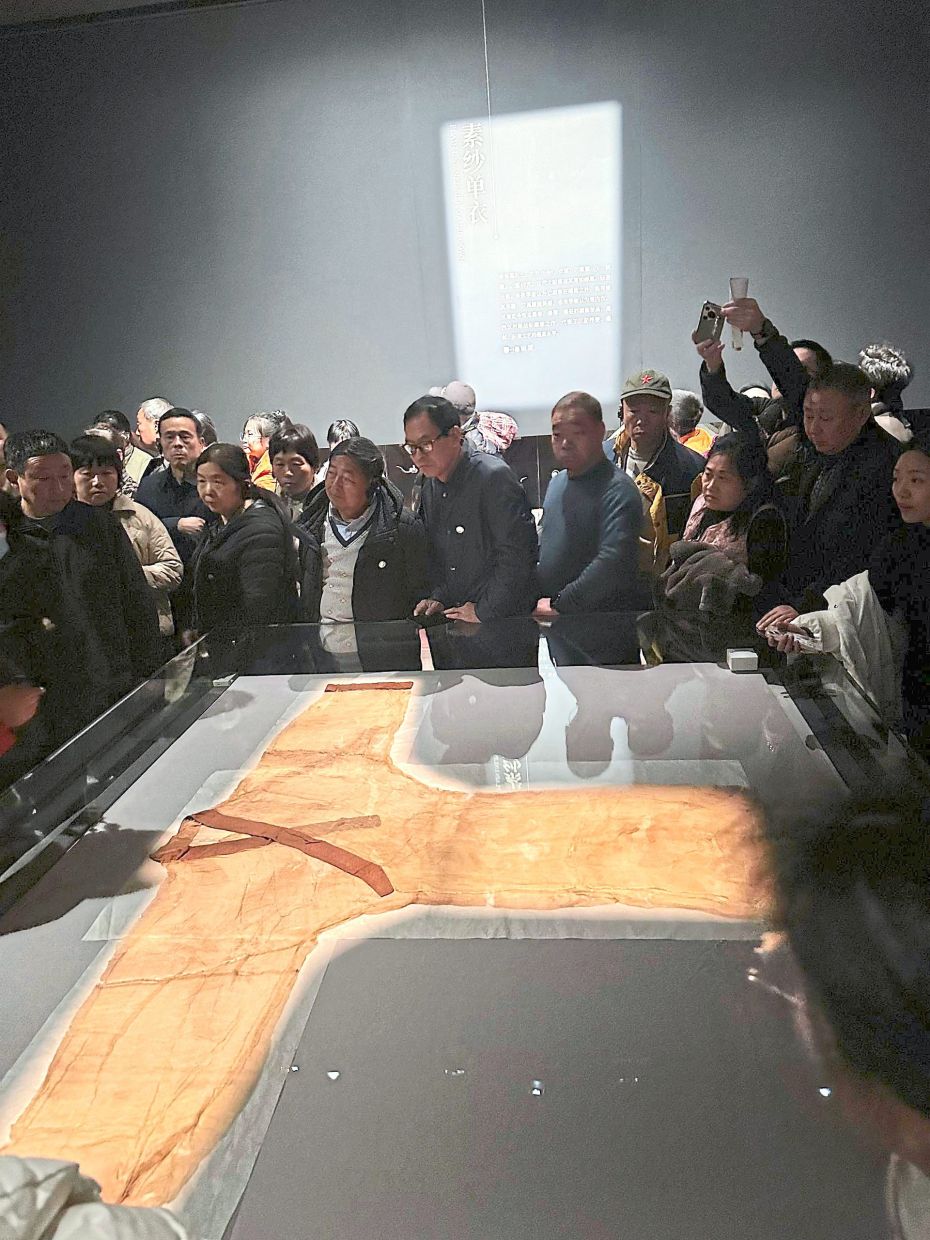
Only after she scanned the battlefield of crowd flow and deemed it safe did she lead us back to the oracle bone gallery, where we could finally study those inscribed shells and bones. Each of the fragments was etched with the wisdom of ancient ancestors.
Standing before the Chinese characters “Shang” and “Zhou”, I felt time tap my shoulder. These everyday Chinese characters that we use today, who knew their bloodline ran this deep?
Even more intriguing was that the true birthplace of oracle bone inscriptions lies 170km away at the Yinxu Museum. When the first inscribed bone was unearthed in 1899, it didn’t just shake China; it woke the world.
Ever since the pandemic, I’ve become very certain of one thing when visiting China: museums are non-negotiable. The more I travel, the more I realise that every artifact in a museum isn’t just a display piece. It’s a miracle dug out from the Earth, civilisations rediscovered through the sweat and persistence of archaeologists.
These artefacts aren’t decorations, they’re evidence for historians, and a window for ordinary people to understand their cultural roots.
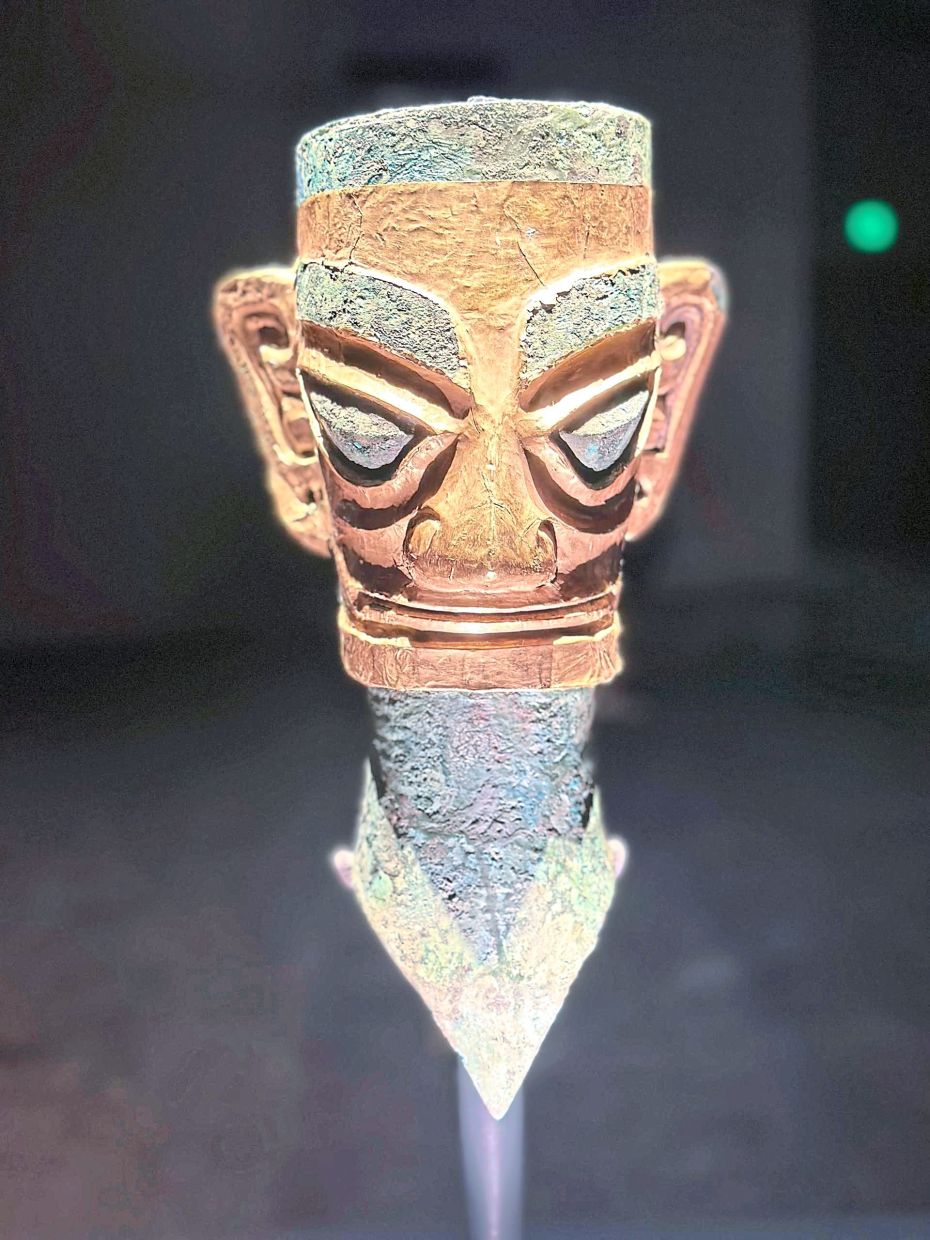
Not to mention the mind-bending discoveries that make scholars leap from their chairs – like Sanxingdui, 30km from Chengdu. Those mysterious bronze masks, each more extraterrestrial-looking than the last, forced humanity to push the timeline of Chinese civilisation back by a thousand years.
They also raise a provocative question: Did ancient civilisations across the world share some astonishing connection? China, Maya, Egypt, the Central Plains ... was there once a pulse linking them all?
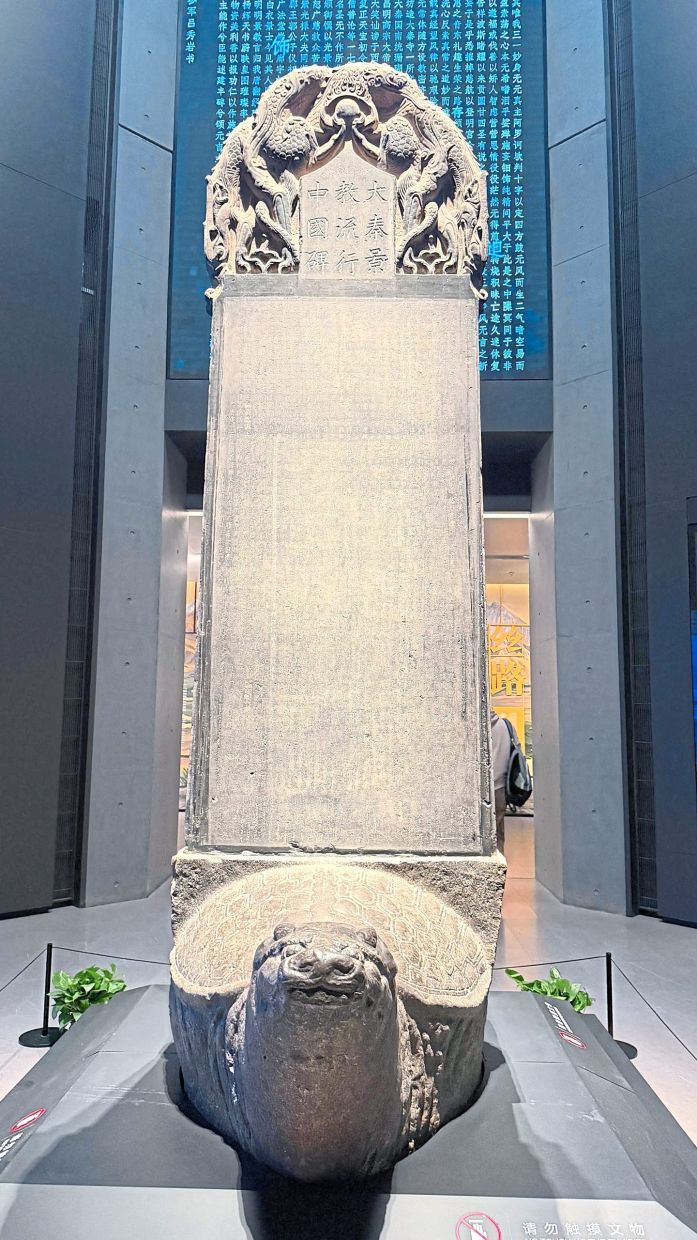
Artefacts like these don’t belong solely in academic papers as they are the shared heritage of humankind. This is why China is building world-class museums at an astonishing pace, and showcasing newly unearthed relics so more people can step directly into history. This commitment to “culture and tourism” deserves genuine applause.
So far, nothing has amazed me more than the astonishingly well-preserved “Lady Xin Zhui” displayed at the Hunan Museum in Changsha. Her skin remains looking supple, her hair and fingerprints are clearly visible, and even her muscles retain a hint of elasticity, as if time itself had paused on her body.
Born more than 2,200 years ago, she was the wife of Li Cang, Chancellor of the Changsha Kingdom. She died when she was 50.
Lady Xin Zhui was unearthed in 1972 from Tomb No.1 at Mawangdui, a burial complex for Western Han nobility. The tomb yielded more than 20,000 artefacts, from the gossamer-thin gauze robe and exquisitely crafted lacquerware to the richly detailed silk manuscripts and the iconic T-shaped silk banner.
Together, they form what scholars call an “underground Han dynasty museum”. These discoveries offer a sweeping view into the Han era, aesthetics, medicine, and cosmology, marking a true milestone in the history of Chinese archaeology.
But nothing quite tops the jaw-dropping discovery of 1970, when construction workers at Hejia Village in Xi’an accidentally unearthed three Tang dynasty vessels – the legendary “Two Jars and One Pot”.
Inside the jars and pot were over a thousand treasures made of gold, silver, giltware, jade, glass, crystal and agate, and they were dazzling beyond belief.
Among those treasures are today’s museum heavyweights. The brightest star, without question, is the agate cup with gold inlay and a beast-head handle. This is ranked the No.1 item at the Shaanxi History Museum, a national treasure so priceless it’s banned from ever leaving the country, even for educational purposes.
Which brings me to a painful chapter: looted treasures from the Old Summer Palace. The Dunhuang manuscripts were taken overseas, never to return. Perhaps this is why China today vigorously protects cultural relics. A total of 195 artefacts are now officially forbidden from being taken overseas for exhibition.
In April, I brought friends to the Hubei Provincial Museum, and the 2,500-year-old “bianzhong of Marquis Yi of Zeng” exhibit left everyone speechless. It is the largest, most complete, best-preserved ancient musical instrument ever found. What made it even more impressive was that the museum reconstructed an entire playable set and built a concert hall so visitors can hear Zhou-era music echo back to life.
When the first notes rang out, it felt like the dawn of civilisation cracked open for a moment.
A museum is not a cold cabinet; it’s a doorway into the past.
On every trip to China now, I’m hit by the same realisation: modern cities may rise overnight, but the civilisation beneath the ground ... now that takes a thousand years to build.
If you only visit scenic spots and skip the museums and galleries, all you see is China’s present. But step inside a museum, and you’ll meet China’s past, its roots, its soul.
So no matter how rushed your itinerary is, no matter how many stops are on your list – don’t forget to add a museum. It’s not just another attraction, it’s your chance to converse with an ancient civilisation.
The views expressed here are entirely the writer’s own.
Leesan, the globe-trotting traveller who has visited seven continents and 151 countries, enjoys sharing his travel stories and insights. He has also authored six books.