A few years ago, El Tunco beach in El Salvador was crawling with gang members who robbed and extorted people at will.
Now it is thronged with tourists, lured by the transformation of El Salvador from one of the region’s deadliest countries to one of its safest.
The turnaround began in 2022, when President Nayib Bukele declared war on gangs by imposing a state of emergency used to detain tens of thousands of suspected gang members.
The crackdown had a dramatic impact on crime, reducing the murder rate by around 98% over 2015 levels, to the general delight of Salvadorans.
But it has not been without controversy.
Thousands of innocent people were swept up in the crackdown, of whom around 8,000 have been released.
Suspected gang members are held incommunicado and have in some cases, been subjected to torture, according to NGOs and a group of Venezuelan migrants who were briefly detained in El Salvador last year after being deported by the United States.
The uncompromising approach of the world’s self-described “coolest dictator” has apparently caused little outrage in a region throttled by organised crime.
The innocent who suffer
Although his own country boasts some of the best beaches in the world, Costa Rican engineer Juan Gabriel Lopez chose the seaside town of El Tunco for a recent break with his wife.
The pair took in a gig by Colombian superstar Shakira, who performed five dates this month in El Salvador – the Whenever, Wherever singer’s first-ever concerts in the country.
Standing on a lively street in El Tunco, lined with bars, restaurants and souvenir shops selling T-shirts – some printed with Bukele’s face – Lopez was philosophical about rights abuses in El Salvador.
“As in any process of change, there will always be the innocent who suffer for the guilty,” he said.
He contrasted the situation of Costa Rica – long seen as a beacon of stability in Central America, now fighting a surge in crime linked to the drug trade – with that of El Salvador.
“We in Costa Rica would like to take this step,” he said of Bukele’s security crackdown.
Dutchman Camille Schyns, who was visiting El Tunco with his parents, said he was aware there are “quite a few human rights violations” in El Salvador.
“But at the same time (...) what Salvadorans tell me is that they like that security has increased a lot,” he told AFP.
Sit on a rock
Bukele, a savvy communicator, tirelessly promotes his country as the new bucket list destination on social media.
“If you want to see how safe El Salvador is, go to the ugliest, darkest place, sit on a rock, and wait for dawn,” the president boasts.
The United States State Department last year upgraded the nation to a “Level 1” travel advisory – the best-possible rating, on a par with Greece and Finland – saying El Salvador’s gang activity, violent crimes and murders have decreased in recent years.
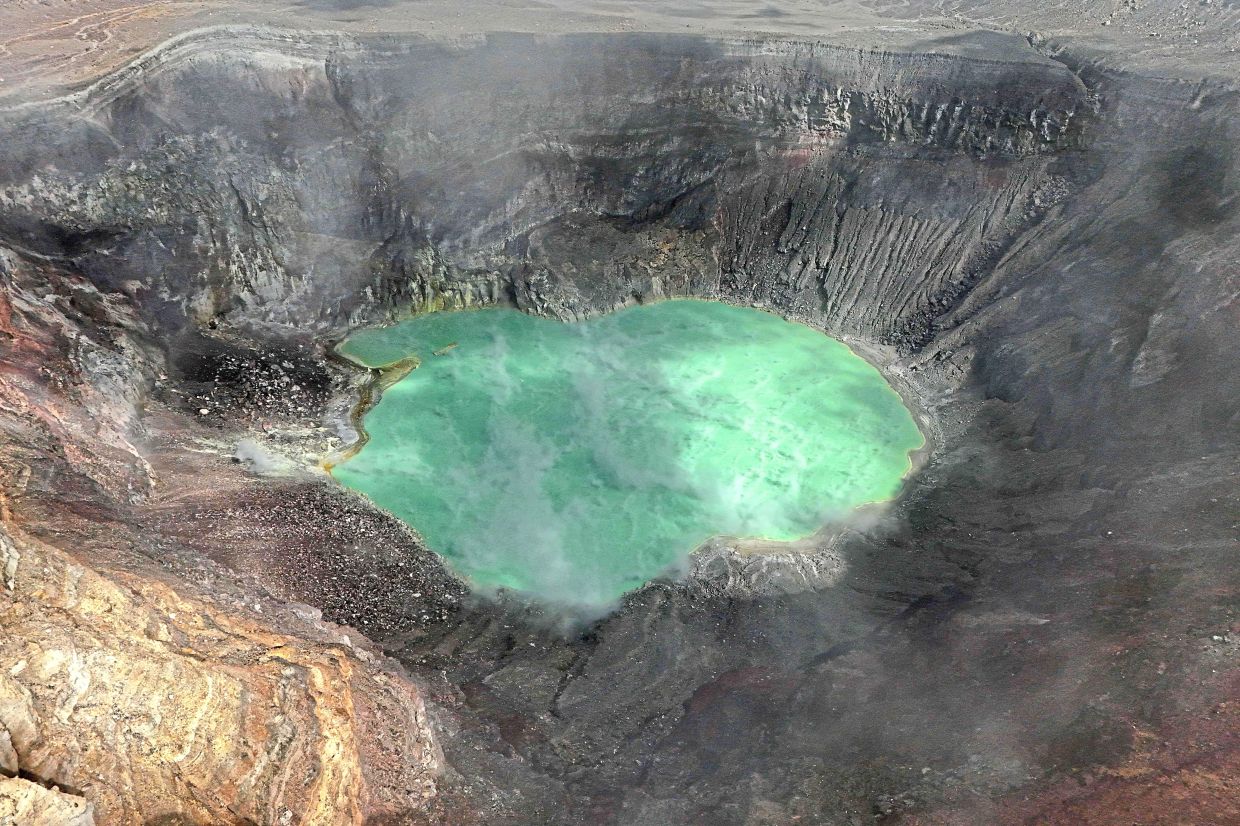
The country of six million people, which is dotted with volcanoes and pre-Hispanic archaeological sites, received 4.1 million visitors last year, 60% more than in 2019 when Bukele came to power. Tourism brought in US$3.6bil (RM14.17bil) in revenue last year, nearly 10% of GDP.
On the map
Attracting stars like Shakira is part of government strategy.
The pop diva attracted more than 144,000 visitors, almost half of them foreigners.
“El Salvador is now on the map as an event venue,” Tourism Minister Morena Valdez declared.
Many Shakira fans travelled from neighbouring Guatemala and Honduras, which remain plagued by gang violence.
“We wish we had the peace and tranquility we have here back in Guatemala,” 45-year-old Glendy Pineda told AFP.
Not everyone welcomed Shakira’s sojourn, however.
A group of prisoners’ relatives expressed disappointment that her “Women No Longer Cry” tour was being used by Bukele to “cover up injustice and his reprehensible acts.”
“In El Salvador, women, mothers, and relatives of innocent victims who suffer imprisonment, torture, and death, forced evictions, persecution, and rigged trials also weep,” they wrote in an open letter to the songstress. – AFP