It's been 114 years since a 3,103km border “split” the descendants of Genghis Khan into two. That line in Mongolia didn’t just cut across geographically, it sliced through people’s destiny.
From then on, the “brothers of the steppe” became citizens of different lands, separated by the direction of the wind. Some say it was history’s grudge; others think it was fate’s decree.
The same blood still flows rich with the scent of fermented mare’s milk – but neither side fully recognises the other as family any more.
Outer Mongolia and Inner Mongolia share the same roots. Yet today, one is called the Mongolian People’s Republic (Mongolia), while the other is known as the Inner Mongolia Autonomous Region of China. Two different political systems, flags, and passports – yet their language, faith, festivals, and nomadic soul remain strikingly alike.
People in Inner Mongolia still fondly call their northern neighbour Outer Mongolia, with a tone softened by nostalgia. After all, they still speak Mongolian, feast on roast mutton and lamb, and dance around bonfires during Naadam.
Over time, though, their rituals have evolved and minds have diverged. But through it all, both still bow before the same legendary “Son of Heaven”, Genghis Khan.
Their divided fate is a bit like that of the Korean Peninsula: one South, one North; one Mongolia, one Inner Mongolia.
They share the same roots, just pushed by history onto separate tracks, growing ever farther apart each year. So it’s little wonder that travellers often confuse the two.
They were once one, riding across the same vast steppe, herding sheep, roasting lamb, drinking milk under the same stars. During the Qing Dynasty, Mongolia was just ... Mongolia.
Mongolia
More than 50km from the capital, Ulaanbaatar, on the banks of the Tuul River stands a gleaming silver giant. It is the 40m-tall equestrian statue of Genghis Khan. The sunlight glints so fiercely off the steel that you can hardly keep your eyes open.
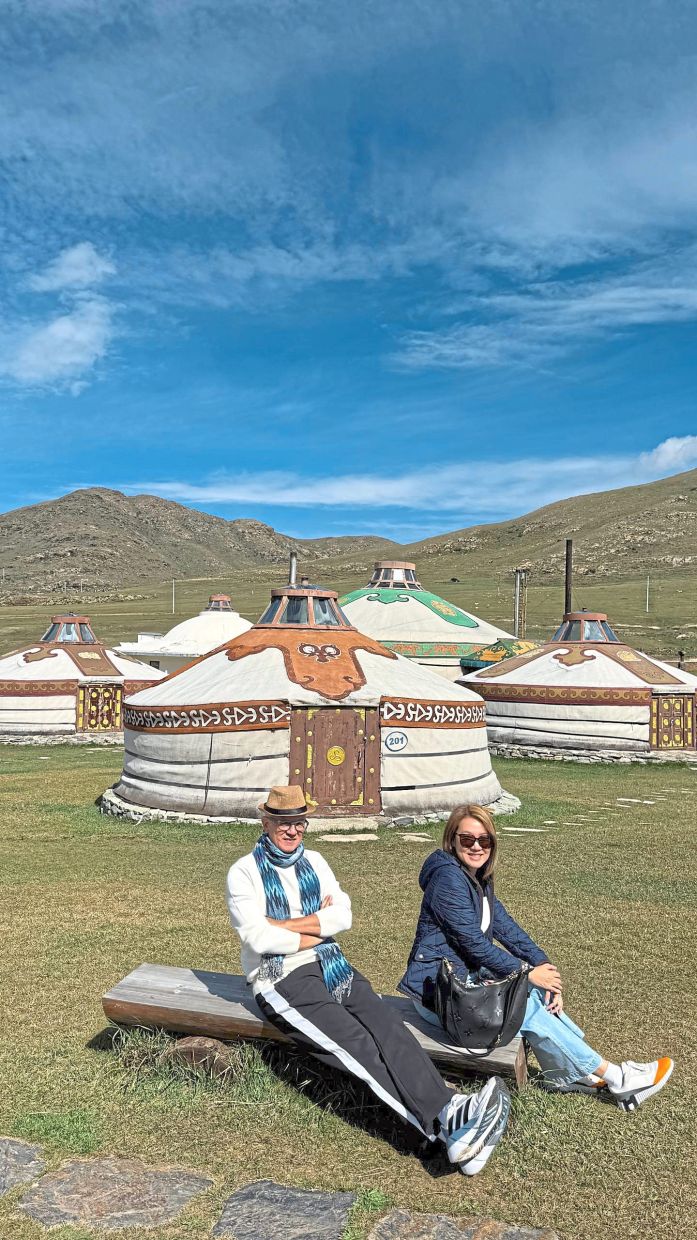
My Mongolian guide, Sasa, said to me in halting Mandarin: “Genghis Khan is our god.” She paused, then added quietly, “But where did he die? Where is he buried? No one knows.”
For centuries no one has found his true tomb. Even the wind of the steppe keeps that secret.
Mongolia is the world’s second-largest landlocked nation, sandwiched between China and Russia. It spans 1.56 million sq km, but has only 3.6 million people, a population density that really describes the word “sparse”. There are more than 66 million livestock, nearly 20 times the human count.
Around you there is only the sky, the steppe, and the Gobi desert. At an average altitude of 1,580m, even the air feels like chilled freedom.
Mongolians say the wind is their music. On this land, hoof beats are heard more often than car horns. Life remains simple – milk, vodka, felt tents. Yet modernisation has already blown through. Ulaanbaatar’s sleek new airport, its Korean fried chicken diners, and the flood of used Japanese cars all whisper to travellers: the steppe is changing its rhythm.
Mongolia’s economy leans heavily on mining, especially coal. Fuel and gas come almost entirely from Russia. The government is inefficient and the structure is fragile, but Mongolians still laugh. Except it’s not a laughter of comfort, but of endurance.
“We are poor,” Sasa said, “... but we’re happy. We have the sky. We have the steppe.”
That’s Mongolia in a nutshell, like the haunting tune of a morin khuur (horse-head fiddle) echoing through a yurt at dusk.
In the past decade, Mongolia’s ties with mainland China have cooled, while relations with Russia, Japan, and South Korea have warmed. Young people binge on K-dramas and learn Japanese while old herders still worship the Buddha and revere Genghis Khan. Tradition and modernity now ride side by side in the wind.
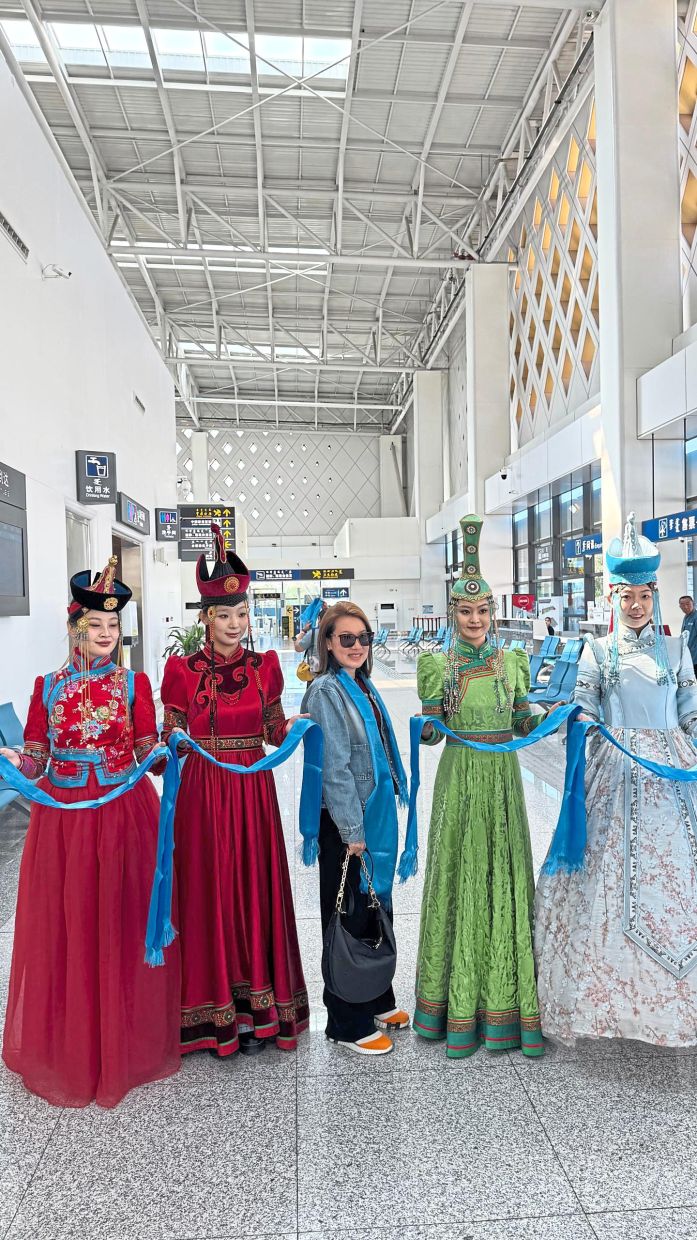
Inner Mongolia
Further south, across that 3,103km border, lies Inner Mongolia, all 1.18 million sq km of it. The capital, Hohhot, means “Blue City”, a name as poetic as it sounds.
One of China’s earliest autonomous regions, Inner Mongolia has long been woven into the country’s modernisation. The steppe remains and the sky is still vast, but the tempo now matches Beijing and Tianjin. The descendants of Genghis Khan wear suits, speak Mandarin, and send WeChat messages.
“Sinicisation” (assimilation of Chinese culture) is an undeniable reality. Unlike their northern cousins, Inner Mongolian Mongols have intermarried extensively with Han Chinese, creating a deeply blended culture.
Yet anyone who assumes the Mongol spirit has faded here would be mistaken.
Every year, Naadam roars on. It’s a beloved festival with lots of horse racing, wrestling, archery, and singing under the wide blue sky. These days, though, it feels more like a performance than something that celebrates daily life.
At over 1,000m in elevation, Inner Mongolia’s terrain shifts from the solemn Helan Mountains to the silent Kubuqi Desert. The air is dry, and the wind cuts like a blade. As one poet said, “Only here do you realise that the phrase ‘the grass bends low and the cattle appear’ isn’t a metaphor – it’s life itself.”
On the grasslands of Ordos in Inner Mongolia stands the grand Mausoleum of Genghis Khan. Majestic and monumental, yet ironically, it’s not a tomb at all, but a memorial temple.
My Inner Mongolian guide, Xiao Gao, said, “Legend says that when Genghis Khan was buried, everyone who knew the location was killed. Then a thousand horses galloped over the site to erase every trace of it.”
It seems brutal, yet fitting for an emperor of his stature: forever mysterious, never desecrated.
The real tomb may now lie buried beneath the grass, hidden by the wind and erased by time. Still, this symbolic mausoleum has become a spiritual shrine. Mongols from both sides come here to bow in silence – not to a monument, but to their shared ancestor.
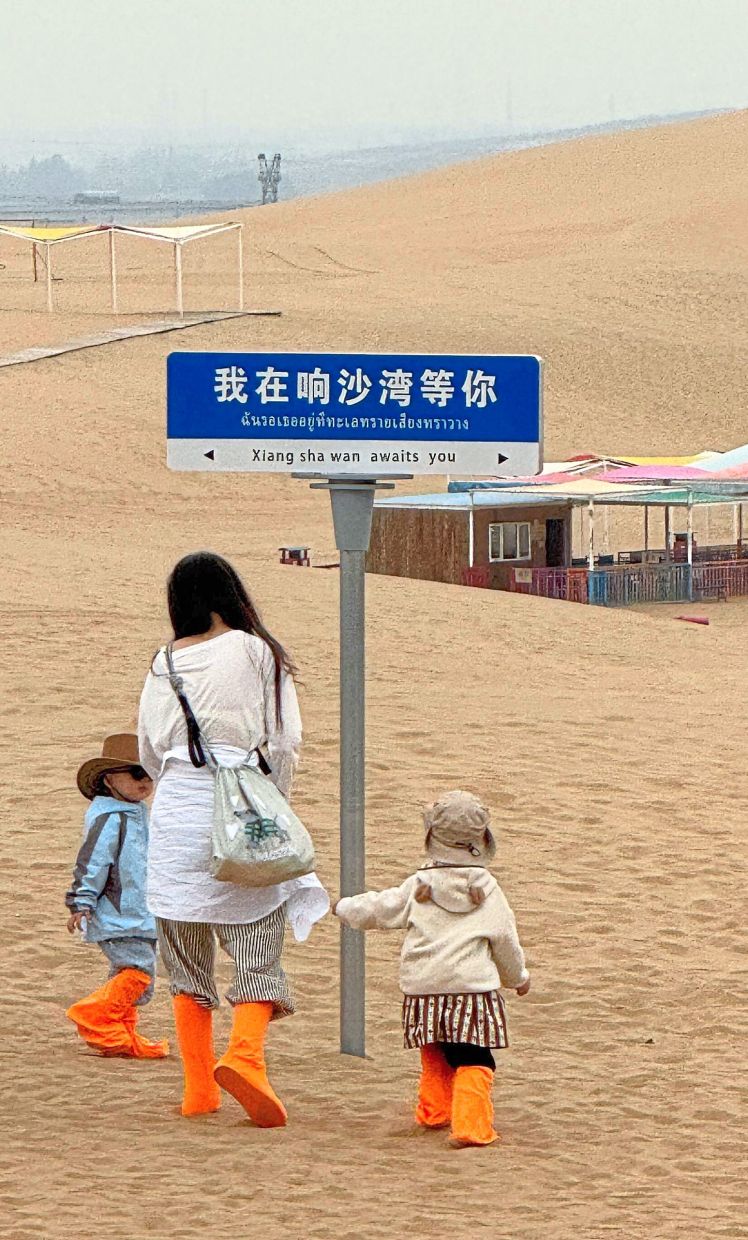
Two Mongolias, one sky
When the Qing Empire fell, Outer Mongolia declared independence while Inner Mongolia remained part of China. Over a century later, they walk on two very different paths. Mongolia kept its nomadic heart and Buddhist faith; Inner Mongolia embraced modernisation and the Chinese state.
One preserves the pride of the steppe, the other masters the art of co-existing.
And yet, I believe neither has truly changed. Both are still generous and fierce, still capable of laughing in the freezing wind, still living as if the sky were their home and horses their brothers.
One night on the plains outside Ulaanbaatar, I was sipping Chinggis Beer beneath a quilt of stars when Sasa suddenly asked me, “Do you think we’re very different from Inner Mongolians?”
I thought for a while and replied, “Only the passports are different. The wind’s the same, the horses are the same, the hearts are the same.”
She laughed and raised her glass. “Yes! We’re all children of the steppe.”
And at that moment, the border disappeared. The wind swept from the Gobi to the grassland – from Outer Mongolia to Inner Mongolia – crossing over 3,000km and a century of separation. At the horizon’s edge, the steppe was endless, and above it all, the same boundless blue sky.
The views expressed here are entirely the writer’s own.
Leesan, the globe-trotting traveller who has visited seven continents and 151 countries, enjoys sharing his travel stories and insights. He has also authored six books.