
Karaikudi, India does not seduce you quickly.
It does not throw itself at you with neon, skyscrapers, rooftop bars or the usual tourist nonsense designed to make people feel adventurous while holding a coconut with a straw in it.
It sits there quietly in southern Tamil Nadu, dusty, sun-baked and slightly aloof – like an old banker who knows exactly how much money everyone in the room owes him.
And then a door opens.
Not just any door. A massive wooden door, carved like it belongs to a forgotten empire.
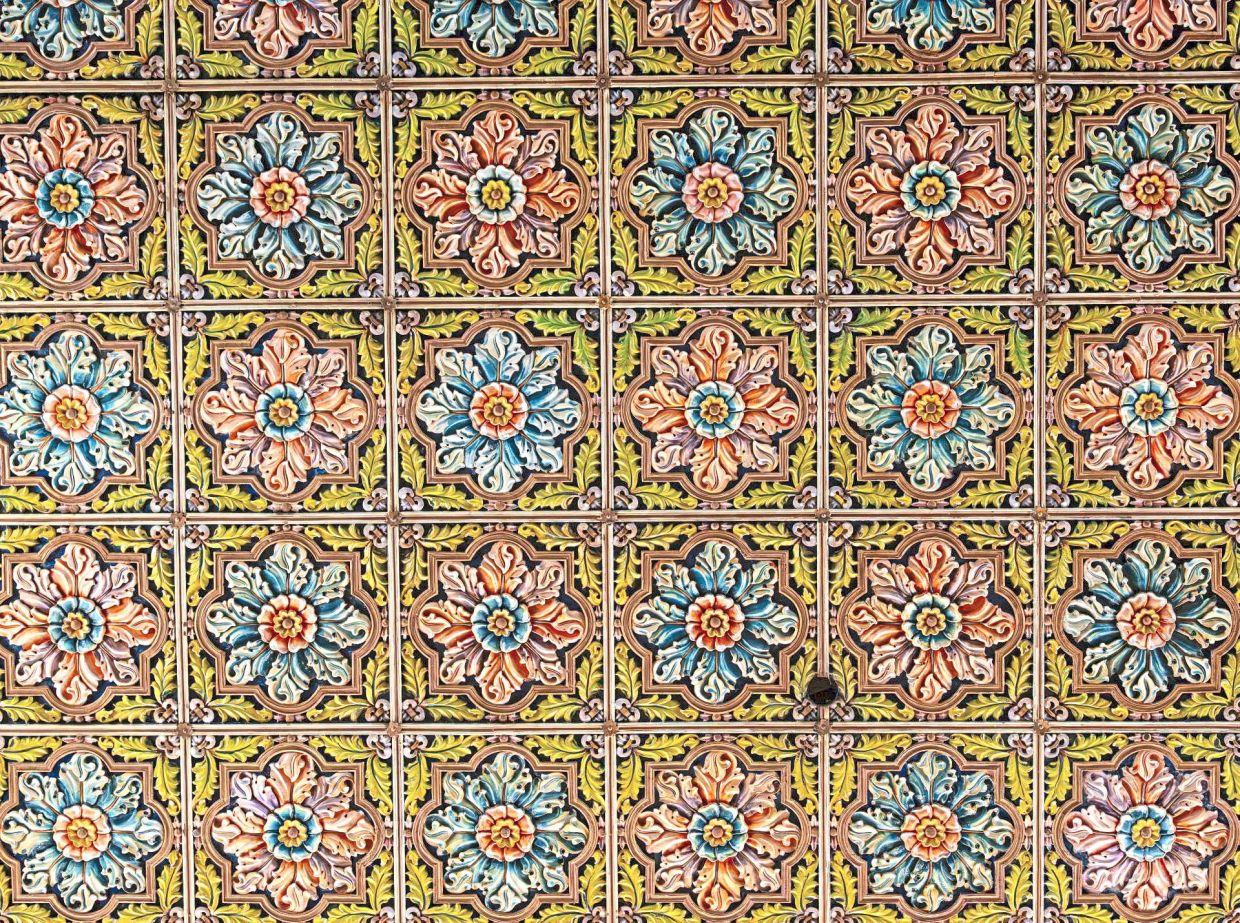
Behind it, a courtyard appears. Then another. Then a hall. Then a staircase. Burmese teak. Belgian mirrors. Italian marble. Athangudi tiles glowing underfoot like frozen pieces of stained glass. Chandeliers that probably crossed oceans before your grandparents were born.
You stand there blinking, trying to understand what you are looking at. A palace? Not quite. This was not built by kings.
This was built by bankers.
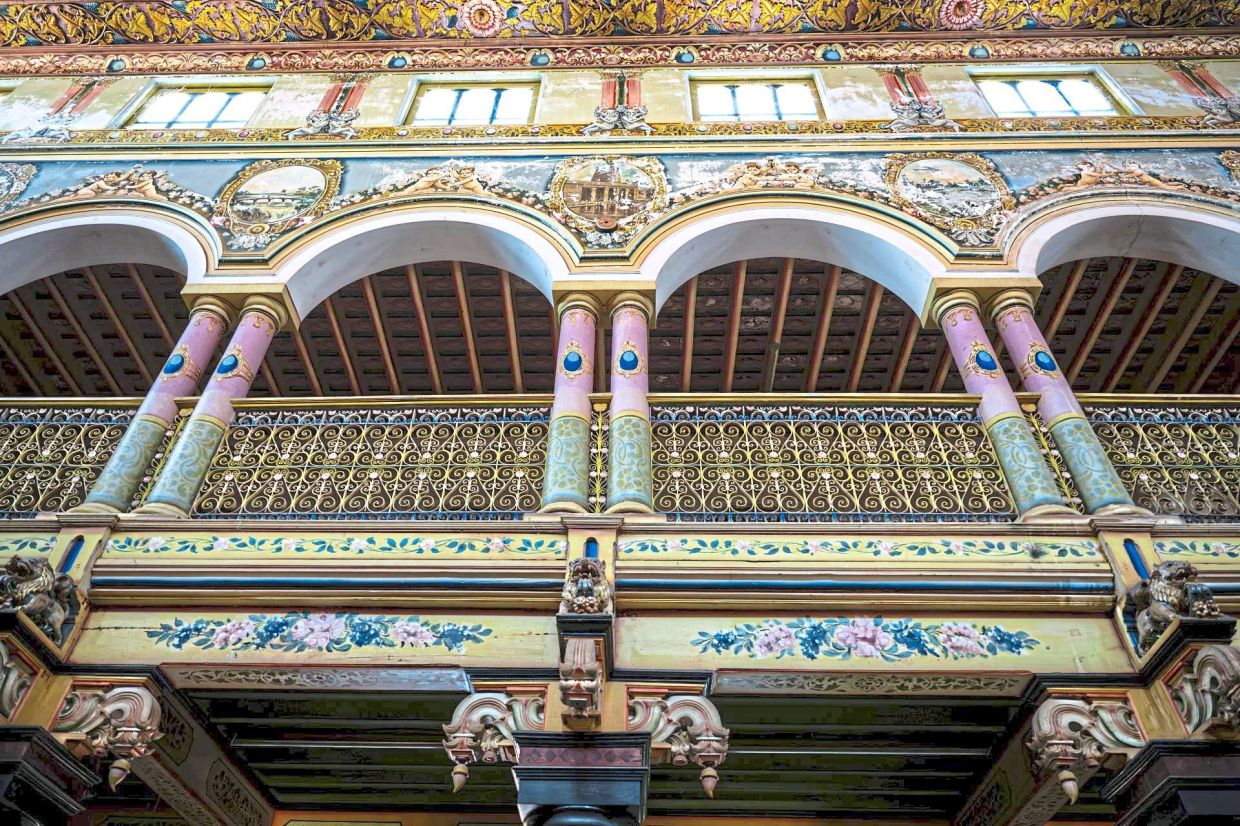
Welcome to Chettinad – a place where old money did not whisper. It built mansions the size of railway stations.
Getting there is surprisingly simple. Fly into Tiruchirappalli – Trichy to those who prefer fewer syllables and more common sense – and drive about 90 minutes south.
For travellers from Kuala Lumpur, it is almost too easy. Local airlines fly direct, dropping you into the Tamil heartland before the road carries you past rice fields, temple towers, roadside tea stalls and stretches of countryside that feel unchanged by the modern world’s obsession with speed.
Trichy was AirAsia’s first destination in India, a route that quietly stitched South-East Asia back to South India, carrying students, workers, pilgrims, families and the occasional fool like me looking for food, history and a good story.
Karaikudi gives you all three ... and then some.
The great houses here belonged to the Nattukottai Chettiars, one of the most extraordinary merchant-banking communities in Asia. Before the world had investment banks, private equity, fintech bros and people in fleece vests talking about “capital flows”, the Chettiars were already doing it – with ledgers, trust, family networks and terrifyingly sharp commercial instincts.
They financed plantations in then Malaya, trade in Burma, commerce in Singapore, business in Sri Lanka and had deals across Vietnam. Their reach stretched across the Indian Ocean like an invisible banking web.
The men left for years at a time. The women ran the homes, the families, the rituals, the memory.
And when the men came back, they brought the world with them. Teak from Burma, glass from Belgium, marble and mirrors from Italy. Spices, ideas, recipes, habits, stories.
Then they turned all of it into architecture.
Walking through Karaikudi today is like walking through a balance sheet written in stone, timber and tile. Every mansion says the same thing: We travelled, we traded, we returned and we built something that would outlive us.
One evening, over a couple of scotches with Meyyappan Jr of The Bangala (a renowned heritage hotel in Karaikudi), I began to understand the scale of it.
The stories came slowly, then all at once.
Rangoon (Yangon today, the capital of Myanmar) before the war. Penang when ships still mattered. Colombo before air-conditioned airports made travel boring. Singapore when fortunes could be made with a handshake and a notebook. Salt. Rice. Pearls from the Gulf of Mannar. Gemstones from Golconda.
Finance that moved across borders long before anyone invented the phrase “global capital”.
The Chettiars were global before globalisation got itself a LinkedIn profile.
And The Bangala, in many ways, is the perfect place to hear these stories. Once a 1920s Art Deco gentleman’s club, it has been transformed into one of India’s most quietly beautiful heritage stays.
No fake royal cosplay. No over-polished luxury pretending to be history. Just a graceful, deeply lived-in property with shaded verandahs, antique furniture, Athangudi tiles, lacquerware, books, silence and that rarest of hotel qualities: soul.
The force behind it is Meenakshi Meyyappan, known simply as Aachi.
More than two decades ago, when many of Chettinad’s mansions were sliding toward decay, she chose restoration over surrender. What began with four rooms became a 25-room retreat. A place where bougainvillea spills over walls, where the pool glows in the late afternoon, and where everything feels elegant without trying too hard.
But let us be honest. You do not come to this hotel only to sleep. You come to eat.
Chettinad food is not polite food. It does not tap you gently on the shoulder and ask for permission.
It enters the room, pulls up a chair, pours itself a drink and starts telling stories. This is one of India’s great cuisines: bold, intelligent, layered, aromatic and deeply connected to trade.
The same routes that made the Chettiars rich also shaped their kitchens. Star anise. Black rice. Seafood. Quail. Mutton. Pepper. Chillies. Roasted spices.
Ingredients that travelled, settled, married local traditions and produced something magnificent.
Here, a meal can feel like a lecture in history, except delicious. Pepper curry that rises slowly and then refuses to leave. Milagu masala kozhi, black pepper chicken with real depth.
Crab rasam, sharp and bright and smelling faintly of sea wind. Keerai masiyal, sambar, vegetables, chutneys, rice, pickles – all of it arriving with quiet confidence.
Then, just when you think you understand the rhythm, out comes tender coconut mousse. Or bread pudding with marmalade.
A colonial wink at the end of a Chettiar feast.
The astonishing part is that Aachi does not cook in the conventional sense. She conducts. She tastes. She corrects. A dish appears. One spoonful. A pause. Then she identifies what is missing – a spice, a note, a balance.
Back it goes. When it returns, it sings.
Of course, Chettinad food does not only live in heritage hotels. For the rougher, louder, everyday version, go to a mess like Sri Prima.
No romance. No mood lighting. No chef explaining his “concept”.
Just banana leaves, stainless steel tumblers, fast-moving servers and curries that arrive with the confidence of a courtroom verdict.
Mutton curry dark with roasted spices. Chicken gravy that clings to the rice like it has unfinished business. Rasam that wakes up parts of your face you had forgotten existed.
This is not food designed for Instagram.
This is food designed for hunger, memory and sweat.
The magic of Chettinad cooking is that it is often mistaken for heat. It is not. Heat is the cheap trick.
The real genius is structure – coriander, cumin, fennel, pepper, chilli, coconut, curry leaves, garlic, shallots, all working in layers. The best versions do not burn your mouth. They occupy it.
Beyond the food and mansions, Chettinad is held together by something older and deeper: clan, temple, ritual and return.
Across the region’s 77 villages, the Chettiar community is connected through nine clan temples. Families return for weddings, ceremonies and obligations that outlast geography. The Chettiars trace their roots to the ancient port of Kaveripoompattinam, and their history is tied to the great maritime world of the Cholas, whose fleets sailed toward South-East Asia a thousand years ago.
Trade was not an occupation here. It was inheritance.
Today, Karaikudi is quieter. Many of the mansions sit still, their courtyards empty, their rooms opened only for family functions or watched over by caretakers.
After World War II and the collapse of colonial trade networks, Chettiar families dispersed across India and the world. Some houses survived. Some decayed. Some were stripped. Some are being saved.
But the town still has weight. You feel it in the doors. In the tiles. In the pepper warming in a pan.
In the stories told over whisky by men whose families once had one foot in Tamil Nadu and the other in Rangoon, Penang, Colombo or Singapore.
Most small towns ask you to admire what they are. Karaikudi asks you to imagine what it was. And that is its power.
Because this dusty, understated town in Tamil Nadu was never really small. It was a nerve centre of money, movement, spice and ambition.
A place that helped finance an ocean. A place where women guarded vast homes while men chased opportunity across Asia. A place where the world came back in ships, trunks, spices, tiles, timber and stories.
Karaikudi does not shout. It does not need to. The palaces do the talking.
The words expressed here are entirely the writer’s own.
Abbi Kanthasamy blends his expertise as an entrepreneur with his passion for photography and travel.