Visiting world-renowned universities while on your holiday isn’t just about checking out the academic excellence, it’s also about immersing oneself in the history, art and culture of the institutions.
Of course, not every university is open to the public, and you can’t simply buy a ticket and walk in for a tour. During Ramadan, I was in Morocco to “explore” – albeit from the outside – what is known as the “oldest university in the world”.
I also went to Portugal, where I experienced first-hand the depth of a country’s academic sanctuaries.
Morocco
Fes (or Fez), the oldest of Morocco’s four ancient imperial cities, dates back over a thousand years. Its old quarter, Fes el Bali – often called the “City of Wisdom” – is a crossroads of civilisations, known across the world.
Within its maze you will find more than 9,000 narrow alleys, where no car or motorbike can pass; only donkeys and people are able to move freely here. It is said to be the largest pedestrian zone on Earth.
But don’t be fooled into thinking that Google Maps will help you navigate through the alleys. GPS often fails in this place, and your sense of direction will be compromised.
Thankfully, the solution is simple: ask someone. A blacksmith, a leather craftsman, a dye worker, a shop assistant ... everyone is helpful here.
Just ask: “Where is the oldest university?”. Nine times out of 10 they’ll all point in the same direction – the University of al-Qarawiyyin. The 10th person may not get it right the first time, but the people around will correct him.
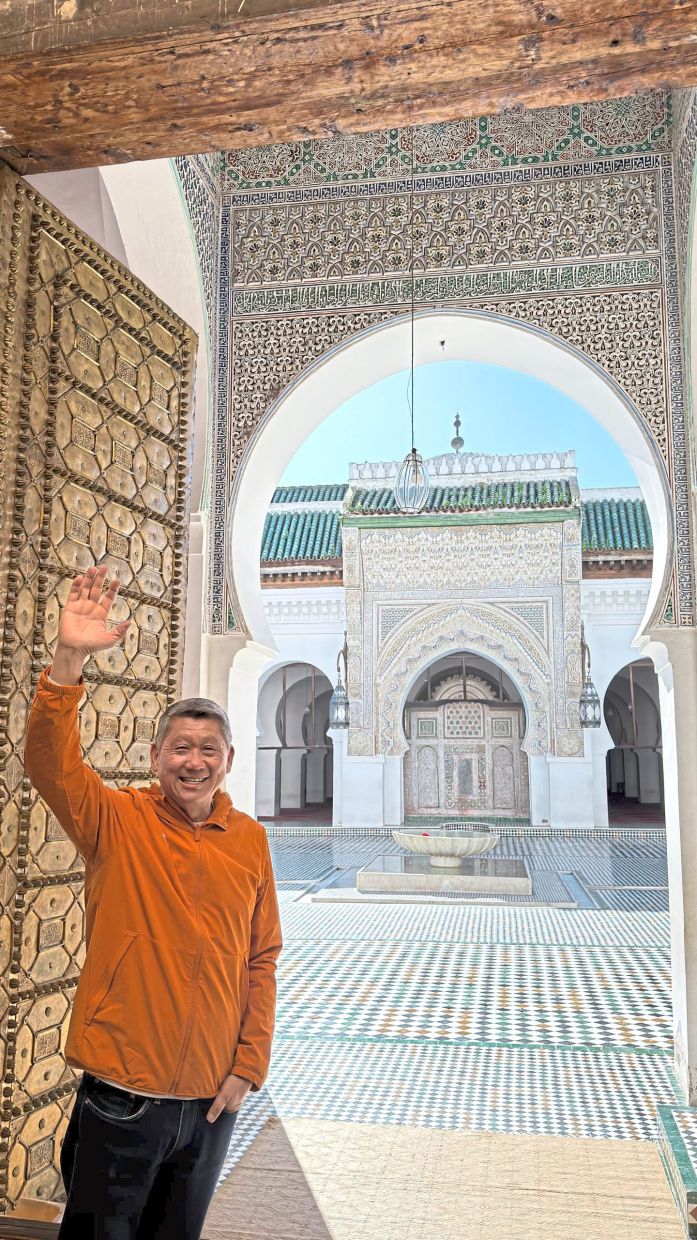
The university is deep within the labyrinth, but you won’t see a grand gate. Rather, you will see what looks like an understated entrance to a mosque, which you can easily miss if you don’t pay attention.
Who would imagine that behind such an unassuming doorway lies a wellspring of profound scholarship?
A small crowd of tourists usually gathers outside. A signboard reads: “Founded in 859; recognised by Unesco in 1983 as the ‘oldest existing, continually operating educational institution in the world’.”
Another plaque cites the Guinness World Records confirming the same claim. Even Oxford Scholastica lists it among the world’s oldest universities.
Of course, such titles are endlessly debated, especially among academics. Why? Because when the city of Fes was founded in 789, the very concept of a “university” did not yet exist. Its founder, Fatima al-Fihri (yes, a woman), originally intended to build a modest mosque with a library and teaching space.
It gradually evolved into a structured centre of higher learning.
As its reputation grew, students and scholars flocked to it, and the institution expanded, blending Moroccan architectural elegance with intellectual ambition.
Here, scholars studied not only Islamic theology but also astronomy, logic, medicine, mathematics, and philosophy. Particularly during the Renaissance, it became a vital bridge for cultural and scientific exchange.
Though theology remained central, its academic influence across the Islamic world was firmly established.
So, what defines a “university”? If measured by formal degree systems, al-Qarawiyyin came later than the University of Bologna (1088, first institution to be called a “university”) in Italy and the University of Oxford (1096, based on earliest evidence of teaching) in England.
But in the context of continuous teaching and intellectual transmission are the criteria, then al-Qarawiyyin predates them by more than two centuries.
And so, the debate over “the oldest” continues, with no definitive answer.
But one fact is beyond dispute – this institution has operated continuously in the same location for over a thousand years. That alone commands respect.
This was my third visit. From my observation, the buildings are mostly constructed of earthen bricks, typically one or two storeys high. This makes it naturally cool in the summer and warm in winter. The intricate wood carvings on windows and doors, rich in Moroccan-Islamic aesthetics, are irresistible to any camera lens.
My guide, Hamza, was born in the Sahara region and is himself a physics graduate from al-Qarawiyyin. He joked that he was the only “country bumpkin” from his arid hometown to make it into the university.
He shared that there are quite a number of Malaysian students enrolled there today. “In the Middle Ages, this was the intellectual heart of Islamic civilisation – almost like a combination of Harvard and Oxford,” he said.
A proud statement, perhaps, but not an exaggerated one.
Historically, the institution attracted or nurtured towering figures such as Ibn Khaldun, Ibn Rushd, Maimonides, and even Pope Sylvester II. Different civilisations met, clashed, and enriched one another here.
Today, this university has around 8,000 students, focusing mainly on traditional Islamic law, theology, and Arabic studies.
Its teaching style remains old-fashioned: Students sit in circles (halqa), listening to a teacher explain classical texts before engaging in discussion. Hamza mentioned that Chinese visitors often tell him this resembles the way Confucius once taught.
He had planned to sneak me into the library, but unfortunately, it was closed during Ramadan. According to him, this 9th-century library once housed over 30,000 books and around 4,000 manuscripts, including early versions of the Quran and other precious works like the Muqaddimah.
It is considered one of the oldest continuously operating libraries in the world.
Unesco once described Fes as a “city of knowledge and scent”. I rather like that.
If Marrakesh is a flamboyant red rose, and Casablanca a cool-toned white lover, then Fes is more like a yellowed old book that still carries a lingering fragrance.
And this “oldest university” is its most substantial chapter, a reclusive elder of sorts. It harbours no ambition for global rankings. Instead, it stands as a spiritual and intellectual centre where generations have been quietly nurtured over a millennia – unassuming, enduring, and deeply worthy of remembrance.
Portugal
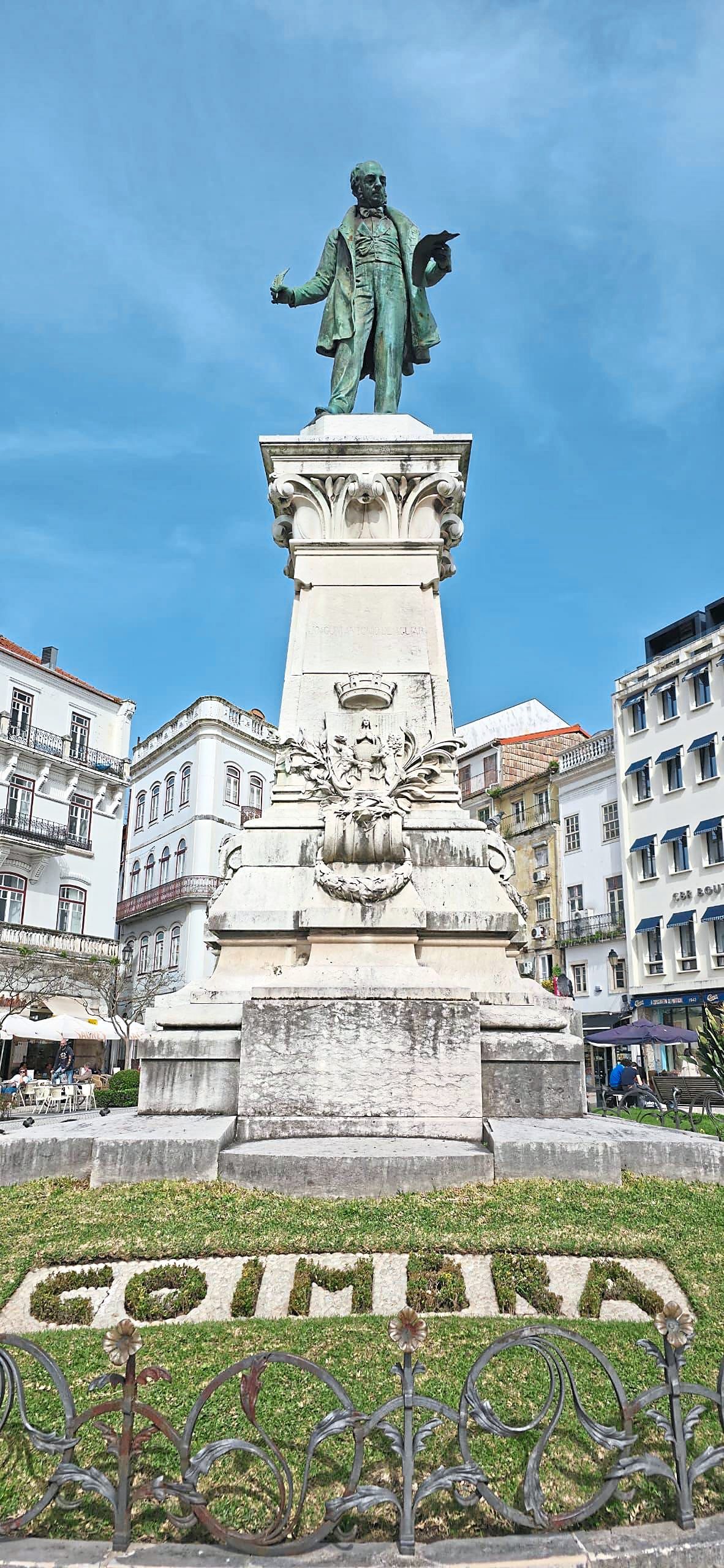
Romina, a seasoned Portuguese guide, smiled and said, “Let me show you one of Portugal’s true heavyweights, a legendary place that transformed from a 12th-century royal palace into a university.”
She went on to quote data from Oxford Scholastica, noting that the University of Coimbra ranks 12th among the world’s oldest universities. Founded in 1290, it is the oldest academic institution in the Portuguese-speaking world. If you want to learn Portuguese, there’s hardly a better place than here.
Today, it has more than 22,000 students, about 10% of whom are foreign.
As our group stepped into the university complex, we happened to meet a few students in traditional academic robes walking toward us. We exchanged nods and greetings. They are clearly used to encountering visitors from all over the world on campus.
The reason is simple – the university’s famous Baroque library, along with its medieval campus, was inscribed as a Unesco World Heritage Site in 2013.
In fact, the university is highly regarded across Europe for its strengths in the humanities, law, medicine, and the sciences. It has even produced a Nobel Prize laureate in Physiology or Medicine.
Interestingly, Sam Hou Fai, the current Chief Executive of Macao and a law graduate from China’s Peking University, is also an alumnus of Coimbra.
As we descended the stone steps, the atmosphere gradually shifted from an academic sanctuary to a lived-in neighbourhood.
Bakeries, tailor shops, and the bells of several medieval cathedrals rang at once, echoing through the old city. The old commercial streets remain lively, shop after shop, as if the centuries had never truly passed.
I am deeply fond of the atmosphere at Coimbra. Beneath its antique elegance, there is a warm, unmistakable sense of everyday life.
The combination of “historic architecture and ancient university” is itself a rare cultural asset. When a university with centuries of history opens its doors, allowing travellers from around the world to observe and experience it up close, it becomes more than just an educational institution.
It becomes a form of cultural tourism of profound meaning.
The views expressed here are entirely the writer’s own.
Leesan, the globe-trotting traveller who has visited seven continents, including 164 countries and territories, enjoys sharing his travel stories and insights. He has also authored seven books.