In the lobby of a brand new hotel in Roseau, the capital of Dominica, I chatted with one of its Afro-Caribbean employees.
I asked him, “Do you know South-East Asia?” His answer was crisp: “No. What’s that?”
I nodded and didn’t pursue it any further. I thought that answer was perfectly normal coming from someone who lives on a tiny volcanic island nation some 16,000km away from Malaysia.
For context, Dominica is just 751sq km and has a population of around 70,000. It’s a small country with not many people, yet refreshingly unspoiled.
The world is vast, and so much happens every single day, everywhere. Most people spend their entire lives within their own region, under their own patch of sky – busy working, raising families, getting through life.
How much “need” is there, really, to find out from someone who lives in some far-off corner of the world, what they ate growing up, or how they make a living? That’s why many of us have never even heard of countries like Grenada, St Lucia, St Vincent and the Grenadines, and Antigua – so-called “backwater countries”.
By the same token, people from these nations may have heard of Malaysia or Brunei, but would probably be just as lost trying to pinpoint their exact locations on a map.
I once asked a Malaysian friend: “Do you know the Caribbean?” He thought for a moment and said, “Isn’t that some kind of pirate organisation?”
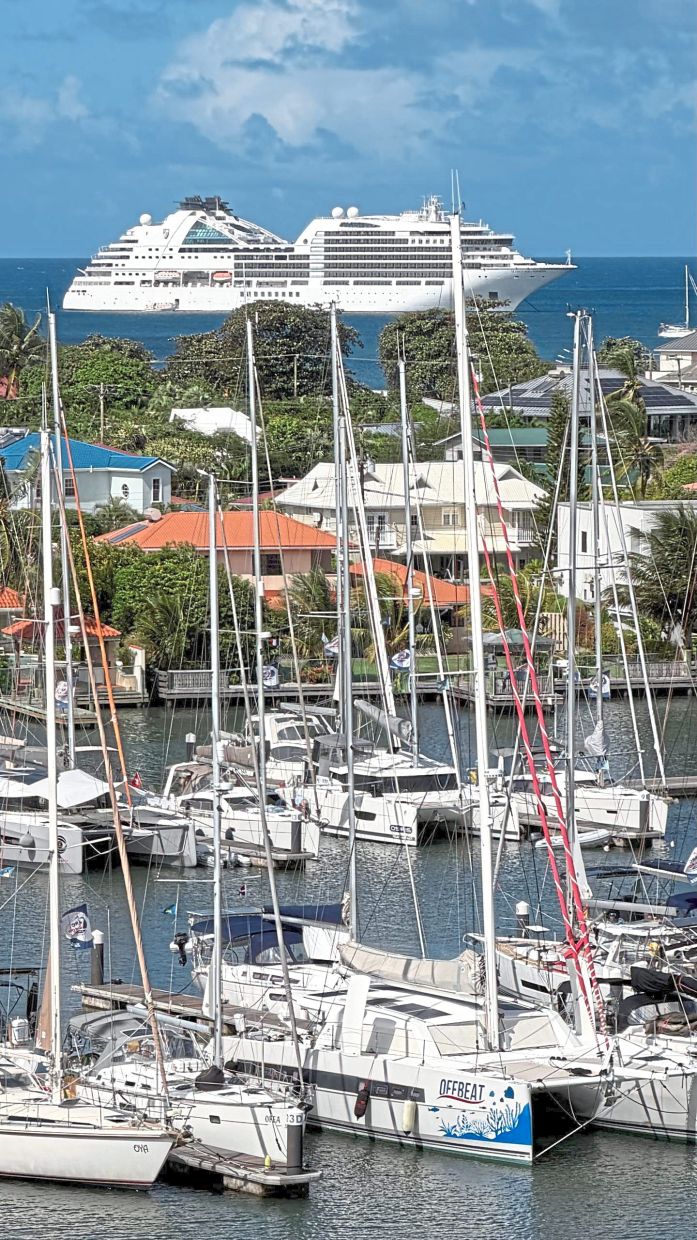
Most people may not know exactly where the Caribbean Sea is, but they do know Pirates Of The Caribbean. There were five films released over 15 years; some were box-office hits and crowd-pleasers. Though they have nothing to do with the Caribbean nations in real life, the name “Caribbean” became known all over the world because of these films.
(Avatar went one step further, turning China’s Zhangjiajie National Forest Park into an internationally-famous landmark, even though the movie itself may not actually have much to do with Zhangjiajie.)
In Trinidad, my favourite ride-hailing driver of all truly opened my eyes to his world. He was in his early 40s, bearded, and had a mixed heritage – Chinese father, Indian mother. This isn’t unusual there at all; people of similar backgrounds have become prime ministers and ministers in Trinidad.
He asked me, “Why hasn’t the mastermind behind 1MDB, Jho Low, been arrested?”
I froze for a second, then shot back, “Do you know where he is now?”
He smiled and changed the topic. He said driving was just his side gig – financial services were his real job. I jokingly asked, “So you know the inside story? Let’s hear it!”
No question about it, the Internet’s reach is staggering. TikTok, YouTube, Instagram ... each one is a living, evolving encyclopaedia.
It took me 48 days of continuous travel – across seven Central American countries, 11 Caribbean nations, plus Miami, Florida in the United States – to slowly grasp what the “Caribbean” really is. It’s not just turquoise waters and blue skies, but a depth of history and heritage, geography, ethnic makeup, and humanity.
What impressed me most was that their linguistic flexibility, religious faith, and cultural cohesion actually strengthened a shared sense of pride among the people. It’s all about the “Pride of the Caribbeans”, locals say.
Among the 13 nations, six countries plus two territories use a shared currency: the Eastern Caribbean Dollar (XCD) which is pegged to the US dollar at XCD2.7.
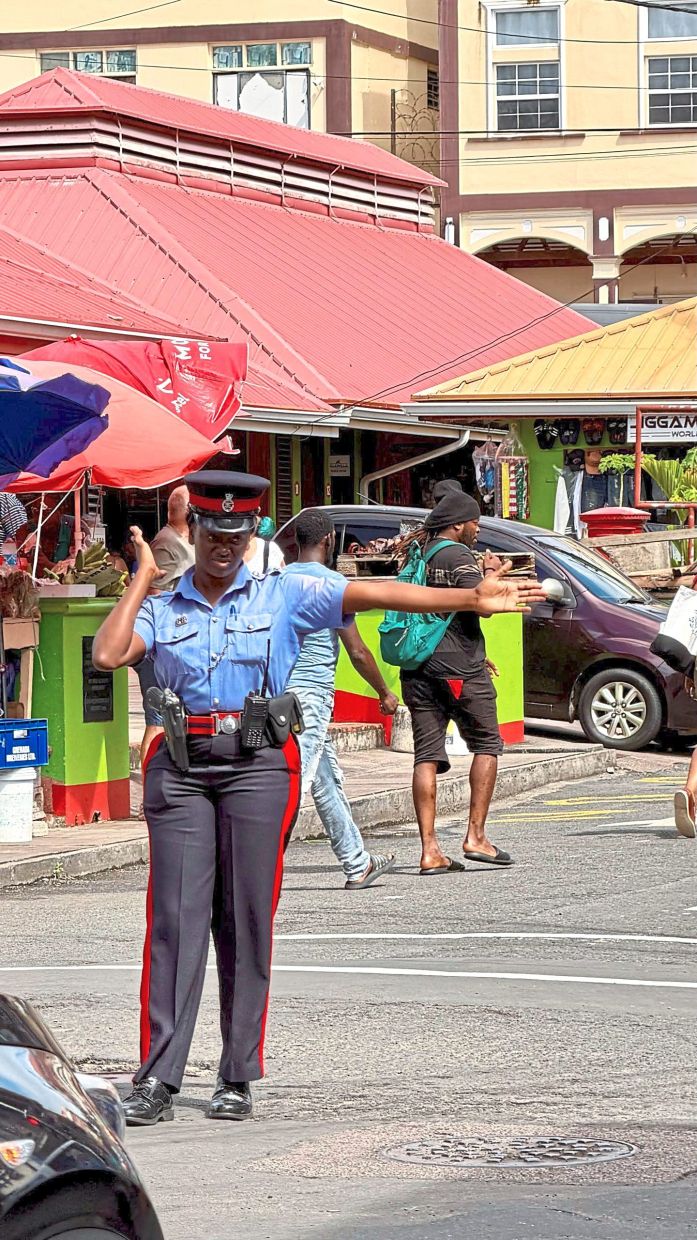
Around 500 years ago, Spain began colonising South America and ruled the region for three centuries. Then came the British, France, the Netherlands, and Portugal. It seemed like everybody wanted a piece of this place, especially these peanut-sized volcanic islands that are scattered across the sea.
Occupation, exploitation, plunder, colonisation, intermarriage, religious control, cultural assimilation ... all these foreign nations did everything.
Later, the US joined in – Puerto Rico and the US Virgin Islands remain under its administration to this day.
Over five centuries, the Caribbean gradually split into two spheres: a smaller Spanish-speaking zone and a larger English-speaking one. Religiously, however, it’s almost uniformly Christian.
To put it simply, two major groups emerged in the Caribbean. One is the Mestizo-mixed European and Indigenous Central American (Maya) folks, which can mostly be found in the Mesoamerican region.
The other is Creole, primarily of African descent mixed with Spanish, British, or French, and spread across the islands.
After 500 years of mixing and “remixing”, the question of “pure bloodlines” is only kept archived in history books. Today in the Caribbean, everyone is a child of God, and whether they speak English or Spanish, they are all bound together.
Their skin tone and tight curls may perhaps remind us of the African continent. Yet if you looked closer at their facial features and listen carefully to their language, or observe their daily habits, you’ll find that they’ve long diverged from their African origins.
What remains is a form shaped and tempered by time: African roots, a European framework, ultimately crystallising into a complete and mature Western culture and civilisation.
I won’t delve into their political systems.
In the Caribbean, I genuinely witnessed a rare level of civility and social harmony. At a fast food restaurant, a mother casually lifted her shirt to breastfeed her baby while calmly gnawing on a fried chicken. No one batted an eyelid, just the occasional smile or nod.
Before leaving the restaurant, people cleaned their tables. And it’s not just eateries – public restrooms across the Caribbean are generally clean, tidy, and do not smell bad.
This makes you wonder – have we misunderstood them all along?
The downside is that Caribbean island economies are extremely single-track. They rely almost entirely on year-round summer weather, blue seas, underwater worlds, and tropical rainforests to attract cruise passengers from Europe and North America, as well as island-hoppers like myself. Some Western territories are better at developing offshore finance, becoming tax and asset havens.
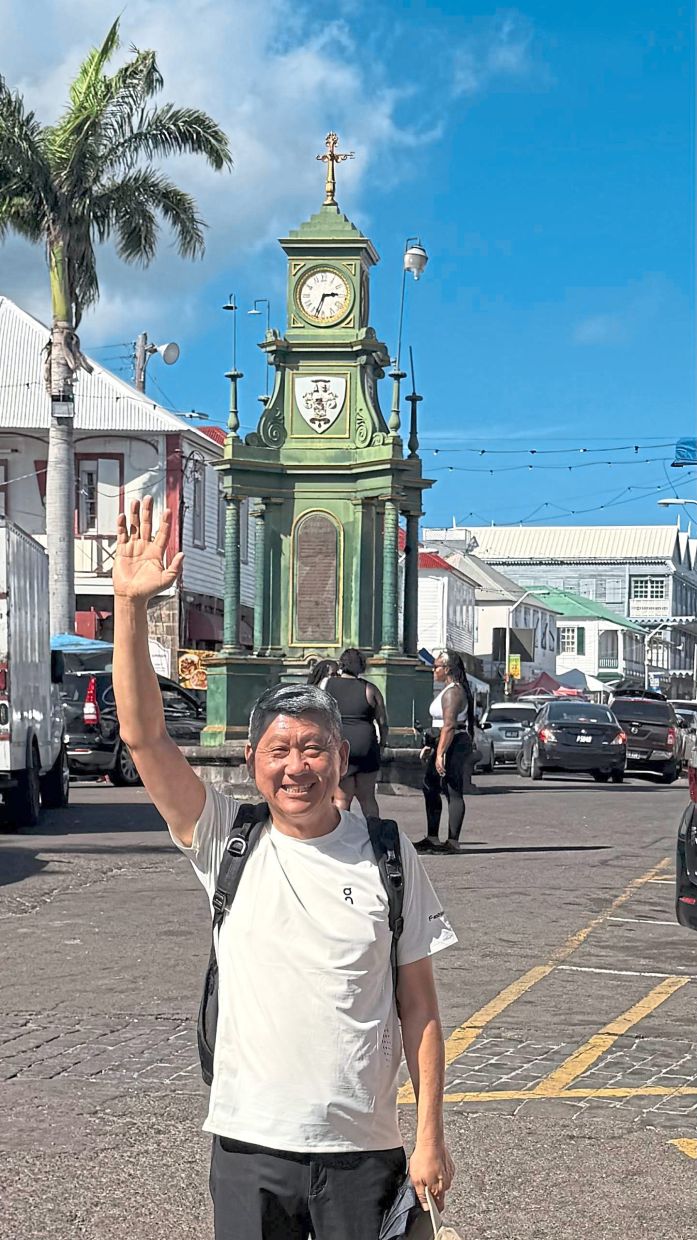
Reportedly, Jho Low even holds citizenship from St Kitts and Nevis, a country of just 261sq km with about 50,000 people. Yet its tiny airport hosts over a dozen private jets, and the sea-facing hills are lined with luxury villas.
The Caribbean is a collective term for a body of water covering about 2.75mil sq km, encompassing 13 island nations, 13 mainland countries, and 13 Western overseas territories. Through the interweaving of geopolitics, bloodlines, religion, and language, it has formed a region that is highly integrated yet distinctly individual.
The Caribbean is absolutely worth checking out, measured with our feet and felt with our hearts.
The views expressed here are entirely the writer’s own.
Leesan, the globe-trotting traveller who has visited seven continents, including 164 countries and territories, enjoys sharing his travel stories and insights. He has also authored six books.