
You may tend to stuff your hotel bill in your wallet and head on home after a holiday, but it is always better to take a moment and check.
Alongside the room rate, you may find terms such as “city tax”, “bed tax”, “cultural promotion levy” or “overnight stay tax”.
This can vary widely from country to country but even within a nation, the rate often differs, such as in Germany.
In France, too, an additional tax applies in Paris and the greater region.
“There is no standardised bed tax across Germany,” says Daniela Karbe-Gesler from the Taxpayers’ Association.
“Instead, cities and local authorities decide for themselves whether and at what rate they levy an overnight stay tax.”
Berlin charges a levy of 7.5% of the net accommodation fee, but completely different calculation models apply in other cities. Cologne, for example, levies 5%, in line with its own regulations.
The way the tax is invoiced causes further confusion.
Hotels can itemise the local overnight stay tax in different ways. It may appear as a separate line item on the bill or be included in the room rate. Both options are permitted in Germany. The Berlin tax authorities explicitly describe both possibilities.
In France, there is a tourist tax or “taxe de sejour”, charged per person, per night and varies according to the accommodation.
To calculate the actual tourist tax amounts due, multiply the rate applicable to each category of accommodation by the number of nights and the number of taxable persons. Children under 18 are exempt from the tax.
An additional tax can also be added by the counties and regions such as the Ile-de-France region which introduced an additional “Grand Paris” tax.
The situation also varies in the British isles. Manchester and Liverpool are the first and only British cities to charge a tourist tax to visitors staying in the city centre hotels or rental apartments. Further English destinations may charge a tourist tax in the coming years.
Some cities in Scotland charge or may charge a tax. Edinburgh began charging a visitor levy in the summer. Glasgow and Aberdeen are set to introduce levies in 2027.
Ireland and Wales do not charge tourist taxes, but in 2027, Welsh cities and towns may levy a tax in 2027.
Anyone who looks more closely at their bill will discover yet another difference, as not all services are taxed at the same rate.
The reduced value-added tax (VAT) rate of 7% applies to the accommodation itself, says Karbe-Gesler.
The situation is different for additional services. Parking spaces, spa facilities and drinks are generally taxed at 19% in Germany.
Since Jan 1, 2026, the reduced 7% tax rate again applied to food. For flat-rate hotel packages including breakfast and other services, the tax authorities allow a simplification rule: 15% of the flat-rate price may be subject to the standard tax rate of 19%, while the reduced tax rate applies to the remaining 85%.
In Germany, even if a VAT rate of 19% appears on your hotel bill for city tax, bed tax or accommodation tax, it is worth taking a closer look, as, depending on the wording of the local by-laws and the invoicing practice, the accommodation tax may either be shown as a separate charge entirely free of VAT (0%) or treated as part of the accommodation charge at 7%.
Any other treatment is not permitted. So if you see a charge of 19%, depending on where you are, ask the hotel to explain the invoice or, if necessary, have it corrected. – dpa
Malaysia’s tourism taxes
In Malaysia, foreign tourists are subject to a Tourism Tax of RM10 per room, per night. Malaysian citizens and permanent residents are exempt from this fee.
Additional taxes and/or fees are imposed in certain states, and this one applies to all guests. These taxes are charged per room, per night and the rates are based on a hotel’s star-rating tier.
For example, the Melaka Heritage Levy is RM5 per room, per night for five-star properties, while for budget hotels (two stars and below), it is RM3.
Penang collects a “local government fee”, sometimes known as a heritage fee, with the rate being RM3 for four-star hotels and higher. If you stay at hotels with a lower rating than that, the rate is RM2.
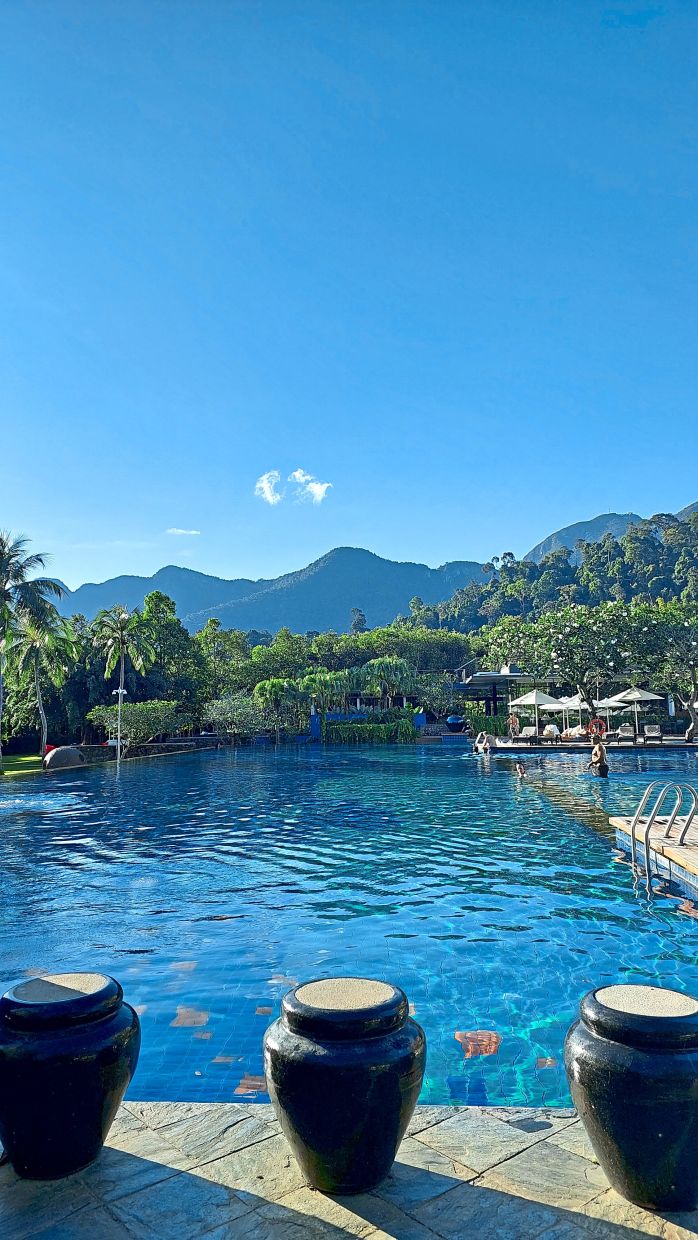
In Kedah, the Langkawi Tourism Promotion Fee go from RM2.50 for non-rated and budget hotels, to RM10 for five-star hotels. These rates also increase during Langkawi’s premiere event periods like the popular Langkawi International Maritime and Aerospace Exhibition (LIMA 2027) and Le Tour de Langkawi.
Selangor and Pahang, meanwhile, collect sustainability fees from all tourists – also charged per night, per room. In Selangor, it starts at RM2 for budget accommodations (two-star hotels and below) including homestays and Airbnb properties, and goes up to RM7 for five-star hotels.
Pahang charges RM3 (per room, per night) for all guests across all types of accommodation, as well as at tourist hotspots (per person/entry).
These taxes, fees and levies are collected by the hotels from guests at check-in – even if you’ve prepaid for your room online – on behalf of local councils to support cultural heritage preservation, environmental conservation and other sustainability efforts. – Melody L. Goh