
At Raffles London at the OWO, guests can sip martinis in a basement once used by British intelligence officers when the building was the Old War Office.
At NoMad London, a former magistrates court in Covent Garden, tourists can wander through prison cells where Oscar Wilde awaited trial.
In Grosvenor Square, a historic hub for United States-Britain relations, the Chancery Rosewood occupies the former US Embassy, the seat of one of the world’s most coveted ambassadorial positions.
These luxury hotels in England offer not just high thread count sheets or buzzy restaurants but something harder to replicate: access to spaces that were once closed to almost everyone but the most powerful.
History is an amenity here, one that travellers are paying more than £1,000 (RM5,506) a night for.
The conversion of older government buildings is a trend across Europe. Ex-ministries in Paris, France and Lisbon, Portugal and the former Rome headquarters of Italy’s central bank have reopened as hotels, as governments seek to reduce maintenance costs and upgrade to more modern office space.
No other city has quite the volume of recent conversions as London, however. As the British government sells off buildings it no longer needs, luxury hotel groups are becoming unlikely custodians of civic architecture.
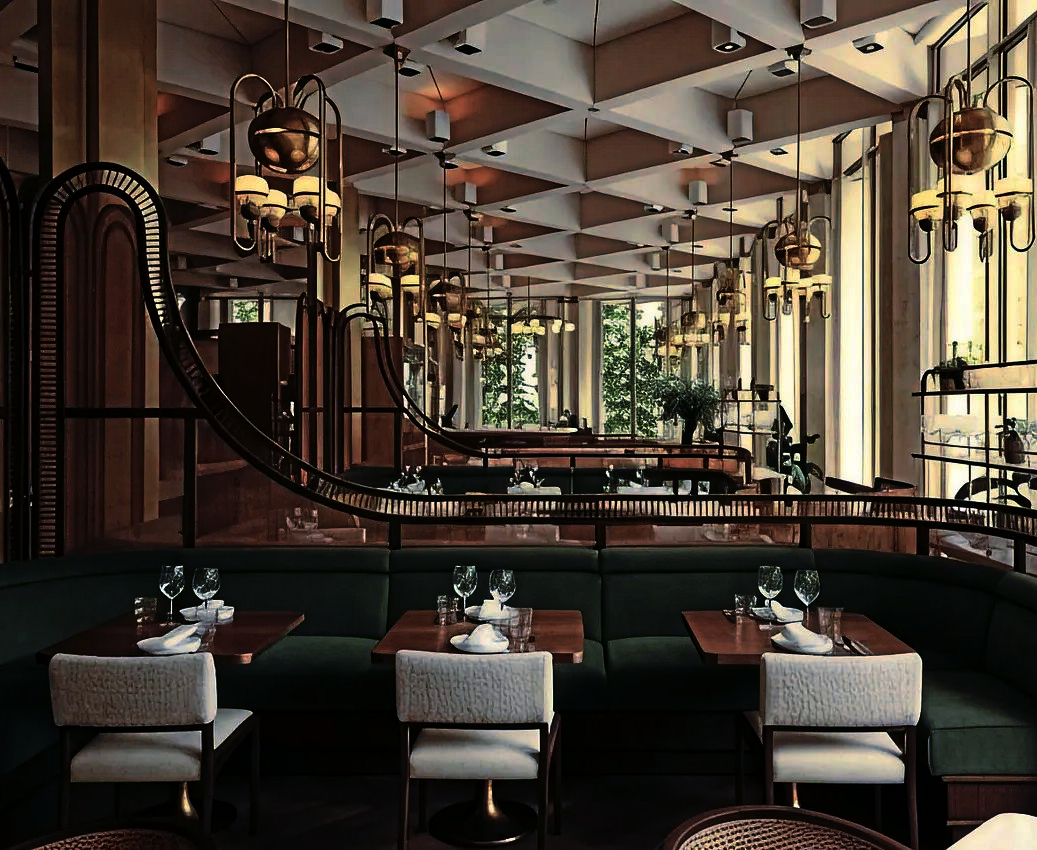
“These buildings are a gift,” says John O’Ceallaigh, associate director at hospitality consultancy PRCO and a guest at both Raffles London and the NoMad. “The domineering facades, the high ceilings and the period details are already in place. They have infinitely more character than another sleek-but-generic new-build.”
While visitors may find another marble spa forgettable, they’re likely to remember exploring a museum inside a former courthouse or sleeping in rooms steeped in history, O’Ceallaigh says. It can feel “strangely subversive ... to socialise and stay in spaces that were once impenetrable centres of power,” he says.
“Given the disdain so many of us feel for present-day politics, there can be a kind of illicit thrill that comes from being granted permission to play in these places.”
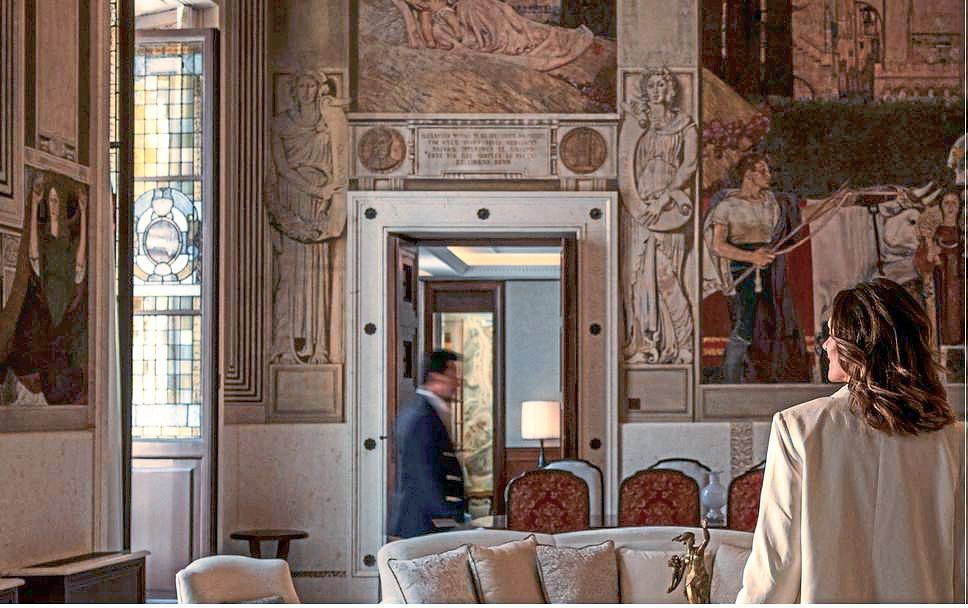
Later this year, Admiralty Arch, a grand neoclassical building and Edwardian gateway, will reopen as a Waldorf Astoria. The building served as offices until 2011 and has hosted notable people like Louis Mountbatten, Winston Churchill and Ian Fleming. Standing between Trafalgar Square and Buckingham Palace, it occupies one of London’s most historic ceremonial routes, used during Trooping the Colour and royal processions.
“For over a century its doors were closed to all but naval command and government officials,” says Jamie Reuben, principal at Reuben Brothers, the company that has bought the project and is developing the hotel. He says his vision is to return the national monument to public life for both Londoners and visitors to enjoy.
A bold reinvention
Finding new uses for these buildings has become increasingly urgent. While office demand in London may have recovered somewhat from its post-pandemic slump, occupiers have become far more selective, gravitating toward highly efficient buildings with modern services, stronger environmental credentials and amenities capable of tempting employees back from home.
The handsome exteriors of government buildings also often conceal issues that governments are increasingly unwilling to shoulder – ageing mechanical systems, outdated electrics and plumbing, and cellular office layouts.
Hotels have more flexibility: The brightest perimeter rooms can become guest suites, while darker internal spaces can be repurposed as kitchens, spas, storage, staff facilities and service corridors.
Geoff Hull, a director at EPR architects, which is in charge of the Raffles’ redesign, says that over the past two decades, Britain’s need for large government buildings has fundamentally changed, as hybrid work and a smaller civil service has reduced demand for office space.
Private developers – like the Hinduja Group, which renovated the OWO, and the Reuben Brothers, which are converting Admiralty Arch – are also more likely to have the means to renovate these properties. Raffles London reopened the Old War Office in 2023 after a £1.4bil (RM7.7bil) redevelopment that included adding three new floors above the existing building and excavating six basement levels beneath it.
Fire regulations, ageing structures, water ingress, and modern heating and cooling systems all had to be accommodated. Because it’s a protected historic building, even seemingly minor changes like cutting new doorways required approval from local planning authorities in consultation with Historic England, Hull says.
The renovation process took some eight years.
Making buildings designed to project authority and exclusivity also feel warm and welcoming is another challenge. At the Old War Office, architects persuaded Historic England to allow additional entrances, transforming what had long felt like a fortress into a hotel that spills onto Whitehall through restaurants, bars and public spaces.
It’s just business
The British government sold Admiralty Arch for some £60mil (RM330.13mil) in 2012 and the Old War Office for £350mil (RM1.926bil) in 2016. These sales and resulting conversions are not without pushback, with one editorial in the Guardian in 2015 calling the sale of the Old War Office “public theft”.
The decision to dispose of strategically located government buildings is not without risk, says David Brock, head of Historic England’s government historic estates unit. But for Historic England, those compromises are often preferable to watching landmark buildings fall vacant.
“The government just isn’t using as many buildings as it used to,” Brock says. “The civil service in particular has a smaller bureaucracy.”
The architects and developers behind these conversions hope they will tap into a burgeoning desire among luxury travellers to stay at places with stories, and the hotels have turned institutional history into a selling point.
“Guests don’t want cookie-cutter hotels any more,” says Richard Tubb, project director at EPR, who led the transformation of the NoMad. “They want experiences. They want authenticity. They want to feel like they’re actually in that location, not just another repeat hotel.”
That authenticity has become part of the luxury proposition itself. NoMad leans into its former history and is home to the Bow Street Museum of Crime & Justice, which tells stories about London’s first law enforcement service.
Tour guides at the Raffles explain hidden secrets of the building’s previous lives, detailing how Boy Scouts once cycled through the building’s vast corridors delivering dispatches during World War II. Guests can order a cocktail in the basement Spy Bar, where MI5 officers once shared intelligence, and stay in rooms once used not only by spies and prime ministers but also as war rooms.
Reviews of the NoMad London and Raffles London at the OWO on Google and Tripadvisor frequently highlight the property’s rich heritage, like the historical tours at the Raffles. One guest said that as a history enthusiast, he was delighted by the heritage tour and unique atmosphere.
Based on the number of rooms above US$1,000 (RM4,089) a night, London remains one of the world’s strongest luxury hotel markets, attracting affluent international visitors. Average daily rates and revenue per available room in the city’s luxury hotel market have both continued to rise this year, despite geopolitical uncertainty and the loss of tax-free shopping in 2021 post-Brexit.
Heritage buildings only strengthen that appeal, according to real estate analytics firm CoStar. “These buildings lend themselves really well to luxury because they’re distinct,” says Cristina Balekjian, director of hospitality analytics at CoStar.
“When you have that history, it makes the hotel feel more special.”
The pipeline shows little sign of slowing. This month, plans were approved by London authorities to turn the former Belgravia police station, once a part of the Met Police, into a 206-room hotel. At the city’s most historic sites, buildings designed to project the power of the state are now selling access to it, one suite or cocktail at a time. – SARAH RAPPAPORT/Bloomberg