If you’ve ever travelled to Italy, you may have visited its capital, Rome, which is also known as the Eternal City. This name comes from the old belief that Rome would last even as other empires rose and fell.
Walking through the city today, you will see ancient ruins, grand churches and old squares; while the Roman Empire ended in 476 CE, remnants of its history are still around.
If you visit during the Catholic Holy Week or even in the weeks leading to Christmas, brace yourself for the throngs of people. Rome is the global centre of Catholic celebrations, where hundreds of thousands of pilgrims visit annually to either attend papal events at the Vatican, or to pay their respects.
(The Vatican City is located in Rome, but is officially recognised as a country – the smallest in the world.)
Travelling during peak periods takes a bit more effort to plan, but you can still enjoy yourself if you are patient enough.
Book popular attractions in advance so you don’t miss out on things. Arriving super early will not guarantee you front-of-line spots – but paying for some kind of VIP pass or luxury service may help. You can still try your luck and go early, though.
It is also important to dress modestly, especially if you’re planning on entering churches and cathedrals. Some would even require women to cover their heads so pack a scarf or shawl with you.
Rome is full of surprises, and the best way to find these ancient gems is on foot – you never know what you’ll stumble across.
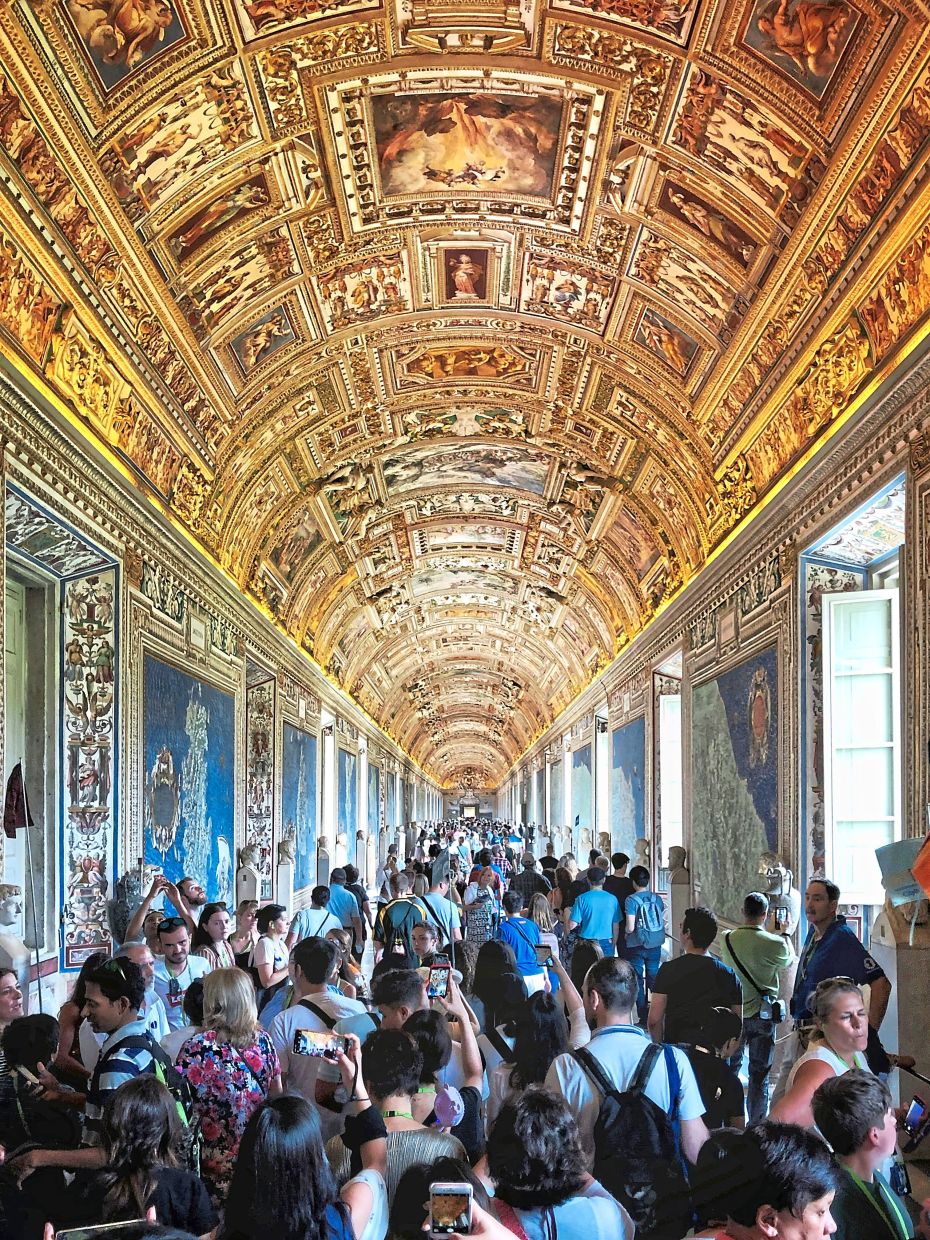
Vatican Museums
There’s no better place to explore the artistic and historical depth of Rome than the Vatican Museums, located in the Vatican City. Established in the early 16th century, the complex is now one of the largest museum spaces in the world.
The interior is a feast for the eyes, with beautiful frescoes, detailed tapestries and elegant corridors showcasing art from different periods.
Inside, the galleries hold centuries of treasures, with displays ranging from ancient sculptures to Renaissance masterpieces, including works from known Italian artists such as Raphael and Leonardo da Vinci.
Beyond art, the Vatican Museums also has sections and collections featuring much older cultures. One example is the Gregorian Egyptian Museum, where ancient artefacts transport visitors back to early Egyptian civilisation.
The tour concludes at the Sistine Chapel, an important space for both art and religion.
Here, visitors often look up to admire Michelangelo’s frescoes, painted between 1508 and 1512.
Scenes from the Bible’s Book Of Genesis, including the famous “Creation of Adam”, fill the ceiling. The chapel is also where papal conclaves – closed-door gatherings of cardinals to elect a new pope – take place.
Before exiting, visitors usually make their way to the Bramante Staircase, redesigned in 1932 by architect and engineer Giuseppe Momo. Its striking spiral design makes it one of the most photographed spots in the complex.
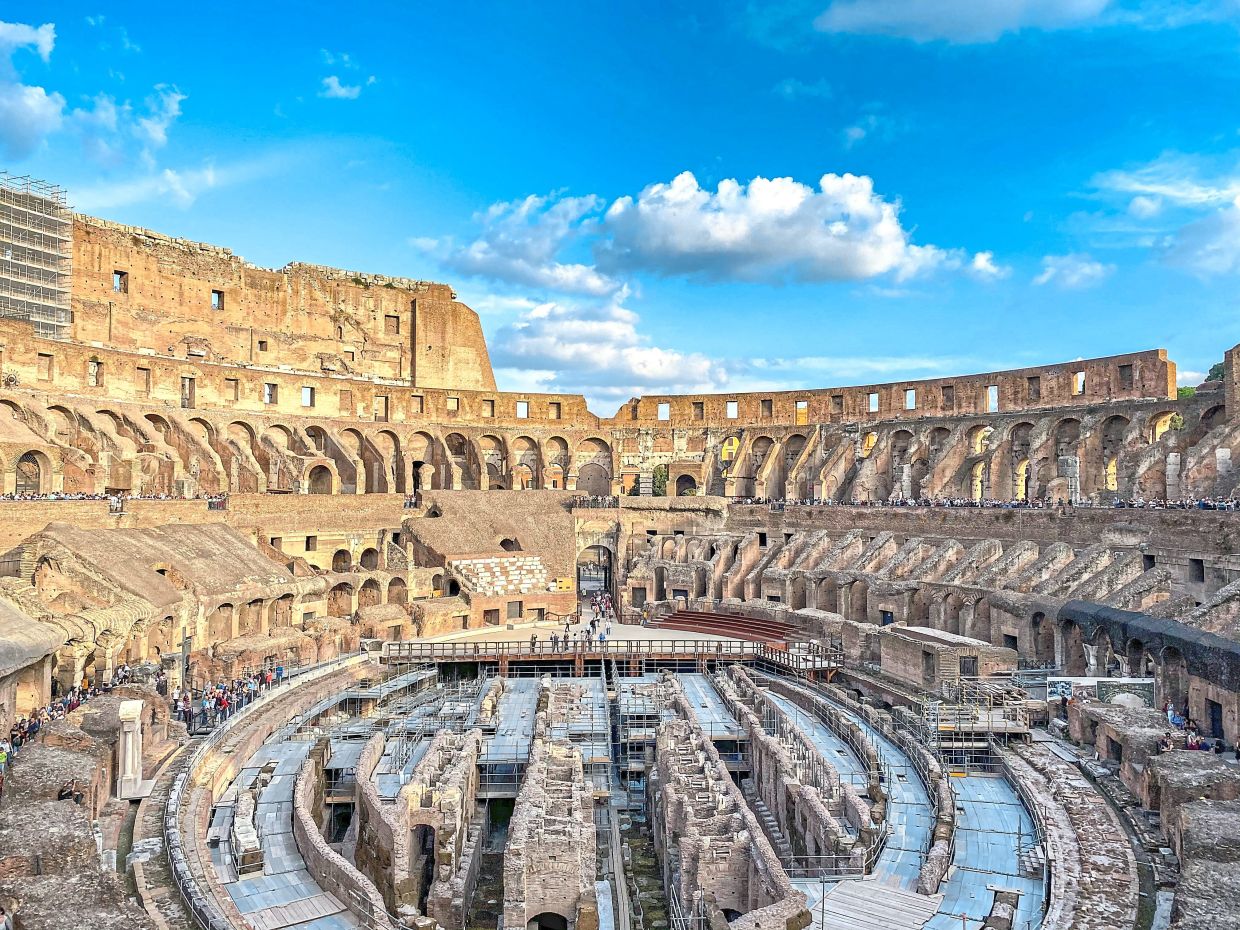
Colosseum
A short walk from the Vatican City will take you into the heart of ancient Rome, where the Colosseum towers over its surrounds. Also called the Flavian Amphitheatre, it was declared one of the New Seven Wonders of the World in 2007.
The complex, which took about eight to 10 years to complete, was constructed by Emperor Vespasian around the year 72 CE, and was completed by his son Titus in 80 CE.
Nearly 2,000 years later, the colossal stone arena still dominates the cityscape, a reminder of Rome’s power and history.
Imagine standing in the Colosseum, built for grand public spectacles such as gladiatorial combats and wild beast hunts, where the roar of tens of thousands of spectators erupted through the arena as the action unfolded.
A free public “entertainment”, these gory events were not only a display of power but to keep people happy, distract them from daily problems and political issues, as well as to keep them loyal to the emperor.
There were two different types of gladiators: slaves/prisoners and volunteers. Slaves and prisoners were forced to fight as a form of punishment or public execution. But it is said that there were people who willingly accepted this brutal profession in pursuit of fame, prize money or simply, a passion for combat.
Throughout the Roman Empire, amphitheatres in Pompeii (in Italy’s Campania region) and Tunisia hosted similar events, but the Colosseum was the grandest and most famous.
After the fall of the empire, the Colosseum gradually found new purposes, with sections of the arena turned into homes, workshops and even a small chapel.
Centuries later, a wealthy Roman family fortified it, but earthquakes left much of the building in ruins.
In the mid 1700s, Pope Benedict XIV declared it a sacred site, which helped preserve it.
Today, the Colosseum draws hundreds of thousands of visitors from all over the world each year. On Good Friday, thousands gather here for the Way of the Cross procession led by the Pope.
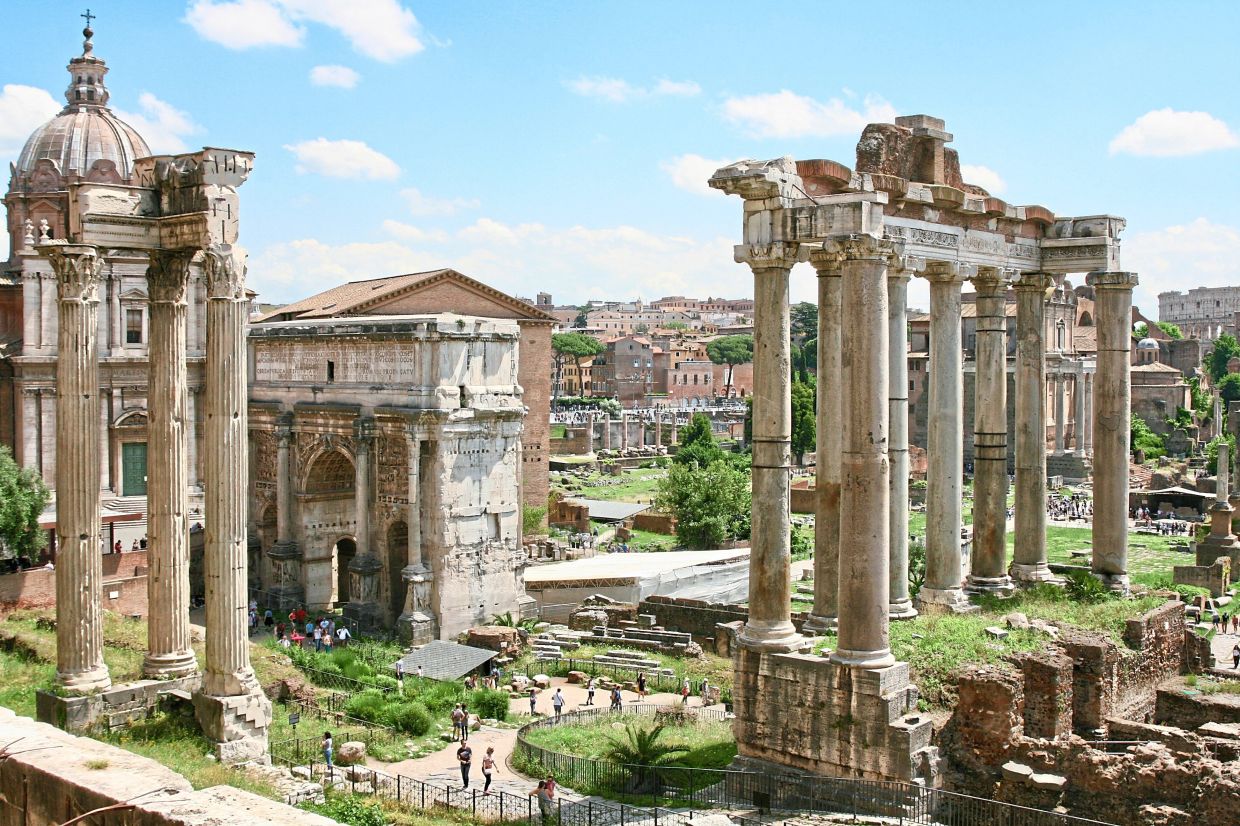
Roman Forum
Long before it became the “heart” of the Roman Empire, the Roman Forum – or at least its surrounding area – used to be a graveyard of sorts.
The valley nestled between Palatine Hill and Capitoline Hill, looked very different then, featuring mostly marsh land.
By around 600 BCE (some 2,600 years ago), engineers had drained the area and constructed the cloaca maxima, one of the earliest sewer systems in the world.
With the land finally usable, the Roman Forum gradually came alive, serving as the political, religious and commercial centre for centuries. Temples and government buildings were built, markets thrived with traders, and the public area hosted ceremonies and elections.
Following the fall of Rome, the Forum was left to ruin, eventually becoming grazing fields known as campo vaccino for centuries, burying and erasing much of the city’s former grandeur.
Remnants of the ancient city were unearthed during excavations in the 18th and 19th centuries, giving us a glimpse into the lives of the people who once shaped the empire.
The towering granite columns that dominate the site are all that remain of the Temple of Saturn, which was once the city’s state treasury.
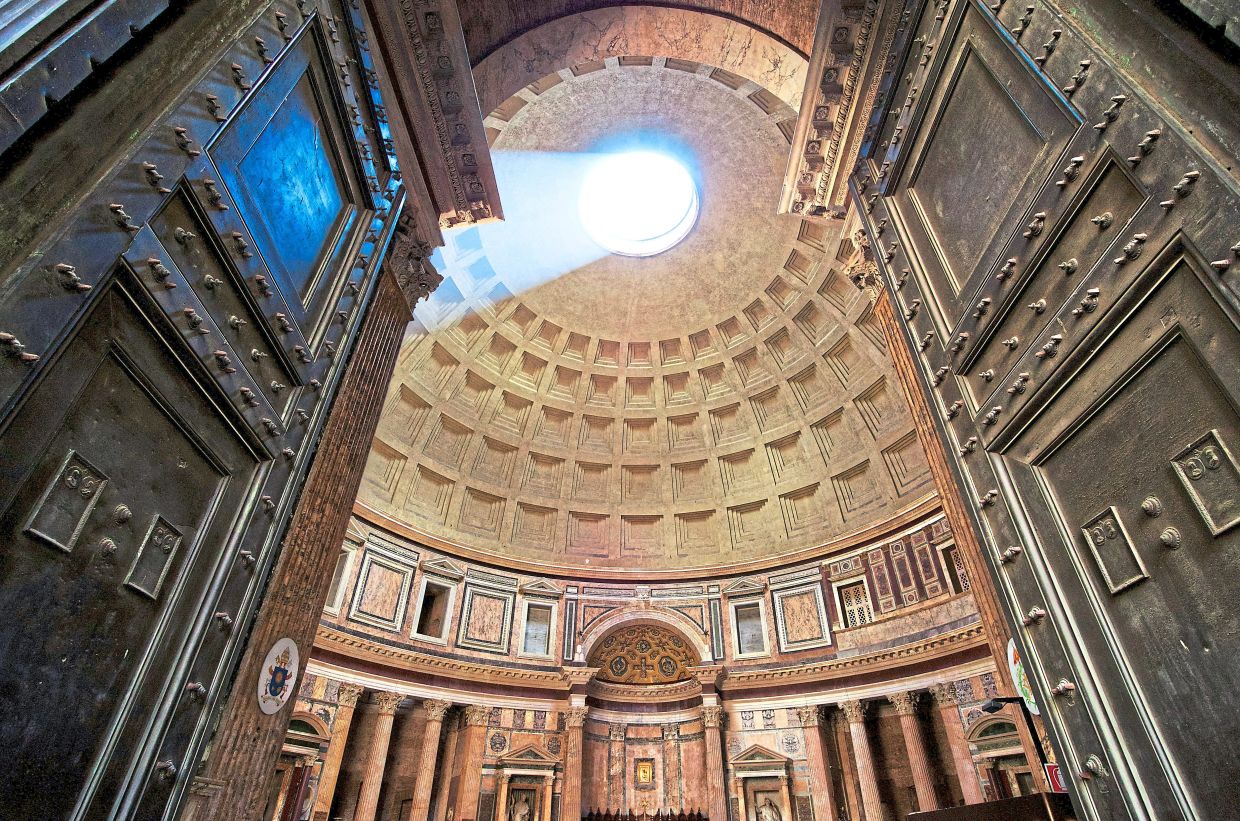
Pantheon
Stepping into the Pantheon, your eyes are naturally drawn upward. The massive dome is the largest unreinforced concrete dome in the world, built nearly 2,000 years ago.
The present building dates from around 118 CE to 125 CE, during Emperor Hadrian’s reign, replacing an earlier temple from 27 BCE.
Originally built as a temple for all Roman gods, the Pantheon was converted into a church in 609 CE.
It was this small but crucial change that kept the Pantheon standing through the centuries, while many nearby structures were dismantled for their raw materials.
Today, the Pantheon is officially known as the Basilica of St Mary and the Martyrs, and still serves as a place of worship.
The structure is an engineering marvel. While heavier materials were used at the base, lighter, specially-adjusted mixtures were used for the top parts, allowing the massive structure to hold and stand safely.
Roman builders mixed pozzolana (volcanic ash) and lime, to make concrete for the Pantheon’s upper sections.
Some studies even suggest the concrete can “self-heal”, as lime reacts to water and can therefore seal tiny cracks over time.
At the centre of the dome is the oculus, a circular opening that lets in sunlight and sometimes rain. But it never floods, because the centre of the floor is slightly elevated to drain water.
The Pantheon is 43m high, roughly the height of a 13-storey building, making the space feel grand. As you walk around, you can see tombs of notable figures, including Renaissance painter Raphael, and unified Italy’s first king, Victor Emmanuel II.
Castel Sant’Angelo
Sitting on the banks of the Tiber River is a fortress with a storied past: Castel Sant’Angelo.
Built between 135 CE and 139 CE as Emperor Hadrian’s mausoleum, it was meant to house the emperor, his family, and his successors.
Over the centuries, the building’s purpose shifted dramatically – it became a fortress, a papal residence and even a prison.
Being so close to the Vatican, the castle had great strategic value. The Passetto di Borgo, a hidden elevated passage connecting the fortress to the city, once served as a secret escape route for the Pope in times of danger.
Atop the castle, a statue of the Archangel Michael “watches” over Rome.
Legend has it that the statue was erected because of a vision. In 590 CE, during a period of
the plague, Pope Gregory I “saw” the archangel sheathing his sword, a sign that the plague had finally come to an end.
This also inspired the name change from the Mausoleum of Hadrian to Castel Sant’Angelo, or Castle of the Holy Angel, as a tribute to the “appearance”.
Today, visitors can explore its exhibition spaces. From the top, panoramic views stretch across the river Tiber, St Peter’s Basilica and the surrounding city.
Piazza di Spagna
Piazza di Spagna, or “Spanish Square”, gets its name from the 17th-century Palazzo di Spagna, the Baroque palace that now houses the Spanish Embassy to the Holy See, which is the authority of the Roman Catholic Church, headed by the Pope.
For centuries, the square has been a meeting point for travellers, locals and artists alike.
At the centre of the square is the Fontana della Barcaccia, or Fountain of the Ugly Boat. Shaped like a half-sunken vessel, it was designed by Pietro Bernini and his son Gian Lorenzo in the 1620s.
The fountain is in front of the famous Spanish Steps, a staircase that leads you to the Trinita dei Monti church. The 135 travertine steps, built between 1723 and 1725, were designed to connect the bustling piazza below with the hilltop church.
At the foot of the steps, you will find streets such as Via dei Condotti, Via Frattina and Via del Babuino, that are lined with historic villas, boutiques and cosy cafes.
A short walk from the square brings you to Piazza del Popolo, where a short climb up Pincian Hill rewards you with a view of Rome’s skyline.
Piazza Navona
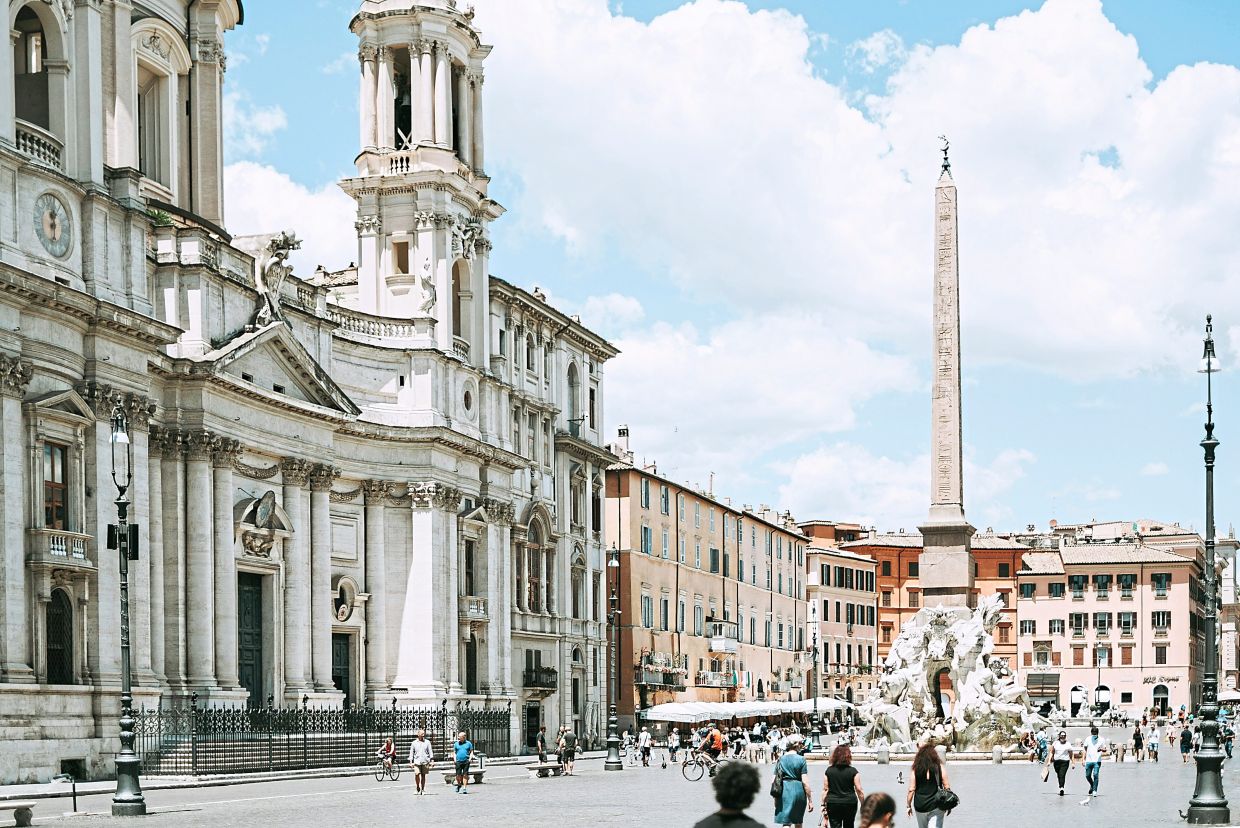
Piazza Navona is known for its long, oval shape, a reminder of its past as an ancient racetrack of the Stadium of Domitian in the first century.
Centuries later, the square is still lively, with music from street performers and bustling cafes.
At the southern end is a replica of the Fontana del Moro, or Moor Fountain, by sculptor Luigi Amici. The original sculptures were designed by Giacomo della Porta in 1575, and Gian Lorenzo Bernini added the figure of a Moor person wrestling a dolphin in the mid 1600s.
But they were moved to the Borghese Gallery.
At the north end is the Fontana del Nettuno, or Fountain of Neptune. It features Neptune, the Roman god of the sea, surrounded by sea creatures.
The fountain was once called the Calderari, named after the metalworkers who worked nearby.
Dominating the centre is Bernini’s Fontana dei Quattro Fiumi, or Fountain of the Four Rivers, unveiled in 1651. It depicts the Nile, Ganges, Danube and Rio de la Plata, symbolising the Catholic Church’s global influence.
St Paul Outside the Walls
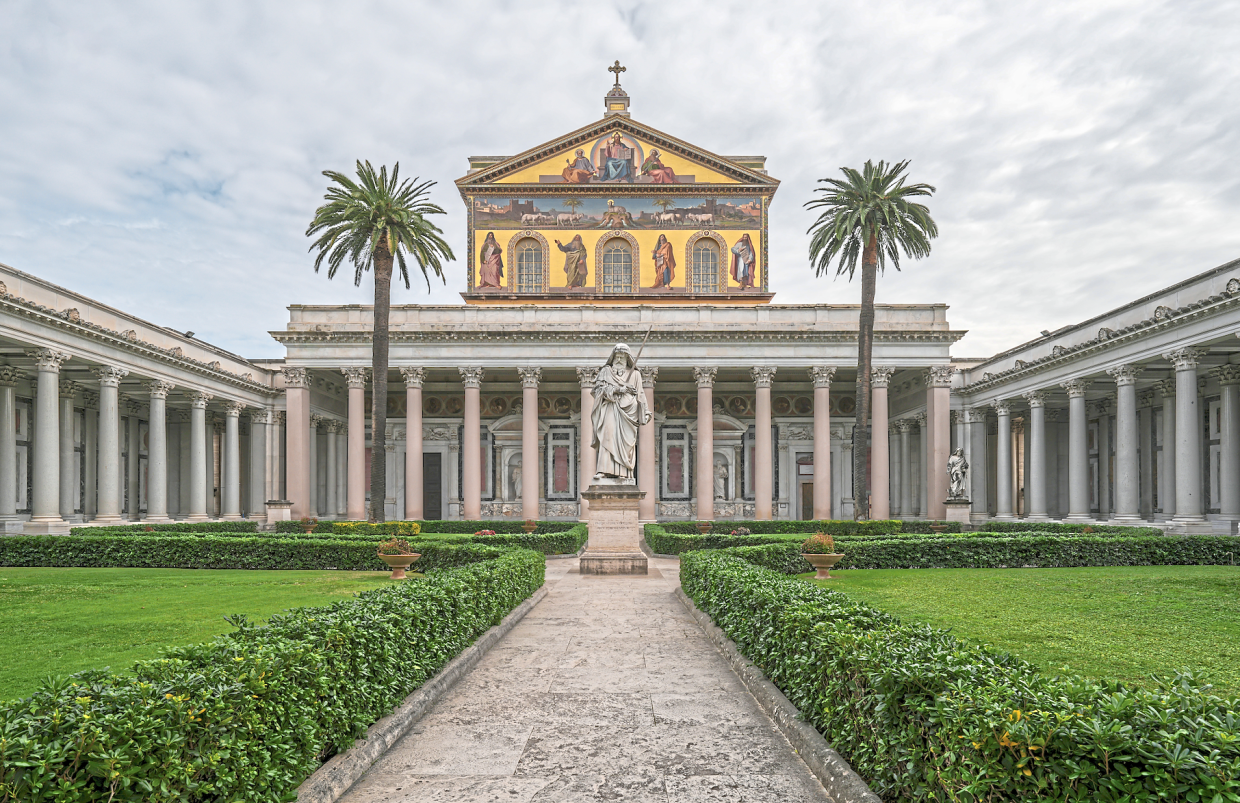
One of Rome’s four major papal basilicas, St Paul Outside the Walls, is the burial site of Paul the Apostle, an influential figure in Christianity.
Located just outside the ancient Aurelian Walls, its quiet atmosphere is a welcome contrast to the bustling city centre.
A church was first built on this site in the 4th century under Emperor Constantine. Although a fire in 1823 destroyed much of the building, it was rebuilt soon after following the original design.
Today, the basilica’s vast interior – with marble columns and gold mosaics – makes it both a spiritual space and an architectural wonder.
During Easter, St Paul Outside the Walls hosts special Masses, drawing pilgrims who venture beyond the main tourist area to honour the Apostle.
Visiting here is more than a sightseeing stop, it is a chance to connect with centuries of history and learn about the spiritual significance that has drawn people for generations.