In Henan, China our local tour operator knows that whenever I lead a tour, it is never just about ticking off scenic landmarks. So, she had specially arranged for us to visit the Chinese Writing Museum in Anyang.
Some may wonder – isn’t a museum simply a place to keep cold collections of artefacts? And that this is perhaps a little dull for tourists? Where’s the excitement in that?
But this was different.
Our host had thoughtfully invited a professional docent who gently unfolded for us the fascinating stories behind each unearthed piece of oracle bone script. Just beside the museum lies the very site where these ancient inscriptions were first discovered in 1899. This was Yinxu, the famed archaeological ruins of the Shang Dynasty.
The significance of oracle bone inscriptions extends far beyond archaeology. They remind us that Chinese civilisation is not merely legend or mythology, but a fully developed ancient civilisation with recorded history, political systems, and philosophical thought.
Even more remarkable is this: Despite evolving over thousands of years, the Chinese written language has remained unbroken. From those early characters carved on turtle shells and animal bones to the Chinese script we read and write today, it forms one of the world’s rarest cultural miracles – a living script that has never lost its lineage.
In a way, oracle bone script is more than a set of symbols etched into bone. Instead, it feels like a long letter, written by Chinese civilisation 3,300 years ago, addressed to future generations. A message literally – and figuratively – etched in memory.
Standing there, I felt something stir deep within me. Knowledge encountered during travel is no longer confined to the pages of a book; it becomes something alive, something warm.
Perhaps because some of us have read classical Chinese texts like Records Of The Grand Historian, there is often an uncanny sense of familiarity when standing inside these museums. History no longer feels distant. It is suddenly close enough to touch.
Whether it is the delicate mystery of the Mawangdui Han Tombs, or the solemn grandeur of the Terracotta Warriors, one feels both the weight of time and the warmth of civilisation.
And then there is Sanxingdui.
Every visit there feels like stepping through a portal. Those extraordinary bronze masks –strange, enigmatic, yet oddly familiar – ignite the imagination. A civilisation from over 3,000 years ago, expressed in such bold and mysterious forms, offers not only visual astonishment but also profound questions about human origins and creativity.
Today, many of China’s archaeological museums are built directly over excavation sites.
Through glass floors beneath our feet, we can see the layers of history exactly where they were uncovered. It is a silent but overwhelming force. History is no longer merely displayed; it is presented in place.
Combined with striking modern architecture – high ceilings, open spaces, and dramatic designs – these museums have become works of art in their own right, inviting visitors to pause and linger.
Travel, after all, has never been merely about eating, shopping, and sightseeing. I have always believed it is more like opening a skylight, allowing us to see the world, and in turn, to see ourselves.
That is the true meaning behind the old saying: “Reading 10,000 books is not as valuable as travelling 10,000 miles.”
Since China’s “Culture + Tourism” initiative began in 2018, the dimension of travel has been noticeably elevated. Tourism has shifted from simple sightseeing toward immersive and participatory experiences.
Museums across the country are largely free to the public, encouraging people to step out and engage directly with culture.
This is more than policy. It is an invitation – to feel the warmth of civilisation during our journeys, and to reflect upon ourselves in the process.
To know others, and to know oneself, that is how we travel steadily and meaningfully.
In Wuhan, we were fortunate enough to attend a special performance: a reconstructed concert using the ancient bianzhong bronze bells excavated from the tomb of Marquis Yi of Zeng.
These were sounds from more than 2,0000 years ago, awakened once again. As the music filled the hall, it felt as if we had entered an ancient royal court, becoming part of history ourselves.
That kind of awe cannot be replaced by any landscape.
That, to me, is one of travel’s most precious bonuses. Every journey is hard-earned.
Some people must temporarily set aside demanding work. Others must rearrange the rhythms of daily life just to make time for this shared adventure.
Group travel may seem to sacrifice some personal freedom – we move together, dine together, listen together – but what it gains is something else: a collective warmth.
And those who truly love travel never easily miss an opportunity to experience something fully.
Because they understand that since we are already here, we might as well live it wholeheartedly.
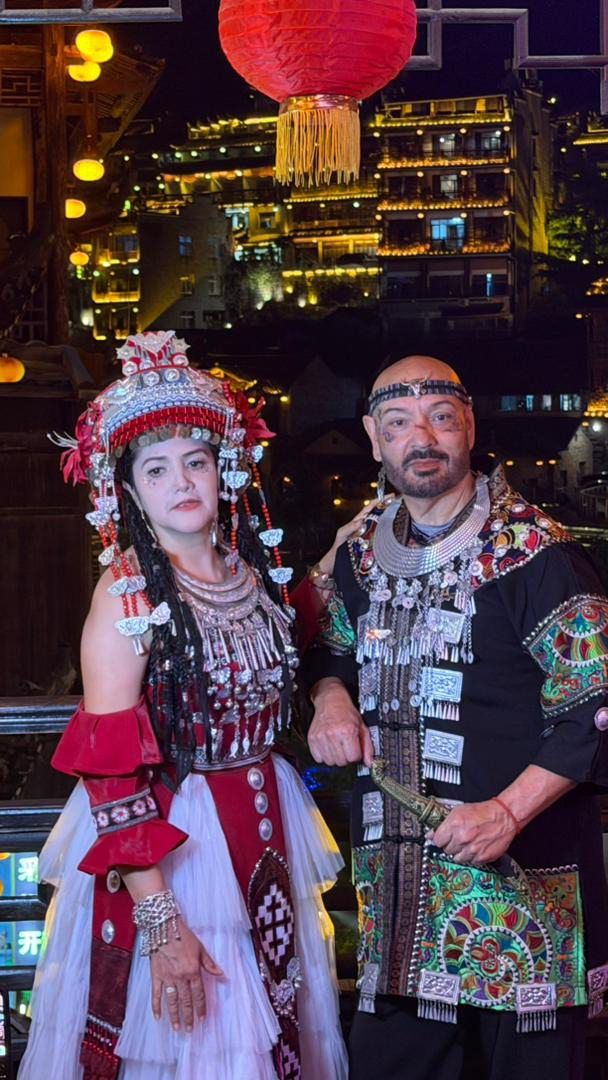
In the world of immersive performances, director Wang Chaoge understands travellers’ hearts perhaps better than anyone.
From the Again series to Only Henan and Unique Dream Of Red Mansions, she creates not just shows, but participation. The audience is no longer a spectator but part of the story.
Whether one is a lead character or a nameless passerby, everyone finds a place within the experience.
That feeling – that life is theatre, and theatre is life – is one of the most moving expressions of cultural tourism.
When travellers stop being mere tourists, when they begin to encounter surprise and genuine emotion, their inner world is quietly nourished.
It is a gentle force, like clear flowing water. Unobtrusive, yet enduring.
That is the true value of cultural travel.
One of my travel companions, Karen, is an avid supporter of table tennis champion Sun Yingsha. She has flown across China multiple times to cheer her on, turning each sporting event into a cultural journey.
Another friend, Amy, is passionate about concerts. From Beijing’s Bird’s Nest Stadium to the stages in Chongqing, she travels for the energy and emotion of live performances – then happily hunts down local delicacies afterward.
As for the Foos, after completing a half-marathon in Hangzhou, the couple made a special visit to Alibaba’s logistics centre, blending sport with industrial exploration.
Travel today is no longer simply about where to go. It is about what to encounter, and what to experience.
Culture, sports, music, exhibitions, festivals – these layered dimensions make every journey richer, and far more memorable.
As for me, I have a particular weakness for coffee.
Prompted by a leader’s remark that Yunnan’s small-bean coffee is world-renowned, I led a group deep into Pu’er, exploring the subtle relationship between coffee and tea.
Today, Yunnan coffee holds a growing place on the global stage, especially with the rising quality of Geisha varietals.
Many local coffee estates now offer complete cultural tourism experiences – from cultivation and harvesting to roasting, tasting, logistics, branding workshops, vegetarian cuisine, and overnight stays.
Travellers are no longer mere consumers. They become participants.
And in that participation lies a double reward: knowledge and experience.
A few years ago, we emphasised eco-tourism, learning to coexist harmoniously with nature.
Today, train journeys, river cruises, and even home-visit experiences have expanded human connection in richer ways. The meaning of travel continues to evolve.
Just look around the festivals happening around the world: The joyful splashing of Thailand’s Songkran Festival; the fiery intensity of Spanish bullfighting; the beauty of Japan’s cherry blossom season; the romance of Dutch tulips and French lavender; and the dazzling brilliance of Guizhou’s azaleas.
Behind every tradition and every landscape lies cultural expression. With thoughtful planning and storytelling, they become irresistible invitations for travellers.
At the end of the day, travel has never truly been about how many places we have seen.
It is about encountering the unfamiliar and feeling its warmth.
And cultural tourism is what allows that warmth to be seen, remembered, and carried home.
The views expressed here are entirely the writer’s own.
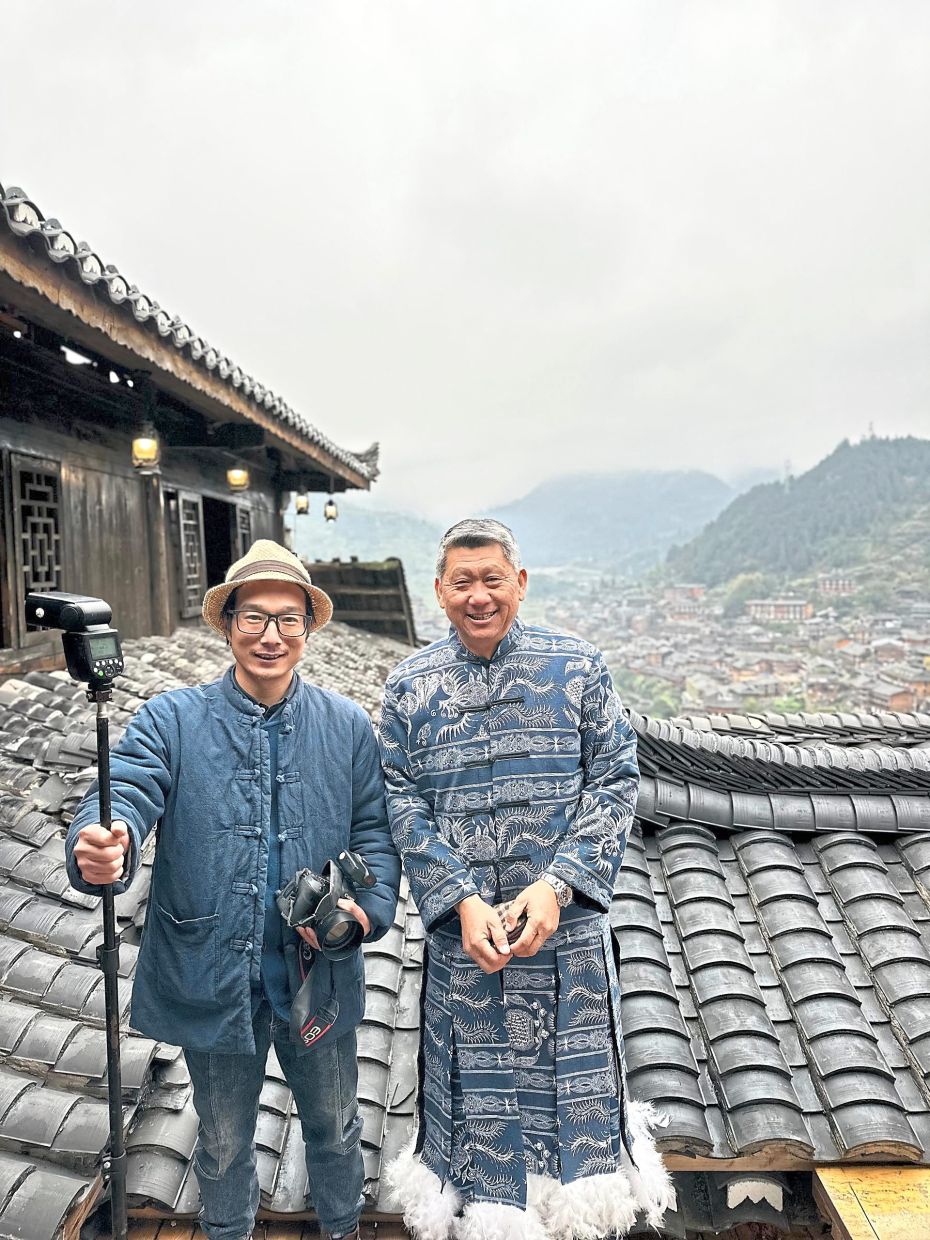
Leesan, the globe-trotting traveller who has visited seven continents, including 164 countries and territories, enjoys sharing his travel stories and insights. He has also authored seven books.