
This year’s spring Mount Everest climbing season was said to be exceptional. Reportedly, it was the busiest season, with more than 2,000 people – including climbers, Sherpas, technical support personnel, officials – at the Everest Base Camp (EBC).
The Nepal government issued as many as 494 climbing permits, said to be the most in Everest climbing history.
On May 21, it was reported that as many as 275 people had reached the summit. It took almost 40 years since Edmund Hillary and Sherpa Tenzing successfully summited the world’s highest mountain – on May 29, 1953 – for the number of successful climbers to rise to that many.
In total, 1,008 climbers made it to the summit this season, including Malaysia’s Khafiz al Kicok. Mount Everest is Khafiz’s third 8,000m mountain after Manaslu in Nepal and K2 in Pakistan.
The previous record-breaking number of successful summits was in 2019, when 877 people made it.
This season also recorded five deaths; since 1953, the average number of deaths on Everest ranges from five to eight.
It could have been a disastrous season, however, as it did not start well. The climb to Camp 1 was halted for almost two weeks because there was a “Titanic-sized” serac at the Khumbu Icefall.
The Khumbu is a moving river of ice that changes the contours of the ground all the time, with crevasses that can swallow a house whole.
The Khumbu “kills” more people than anywhere else on the 8,849m slopes.
The “icefall doctors” – experienced high altitude Sherpas preparing the route – had to wait until the serac looked stable before they could start working on the paths and letting people continue their journey.
I think one of the possible reasons why there were so many successful summits this year was the unusually long period of stable weather on the mountain itself. Of course, the state-of-the-art technology that tracks and monitors both human and physical geographical movements on Mount Everest also helps.
Not forgetting also the quality of guides, guiding companies and many support systems that are available to climbers – all these factors are important in keeping everyone safe.
Everest is a huge business enterprise now. As long as you can afford it, anyone can climb the majestic mountain thanks to the available equipment and training facilities.
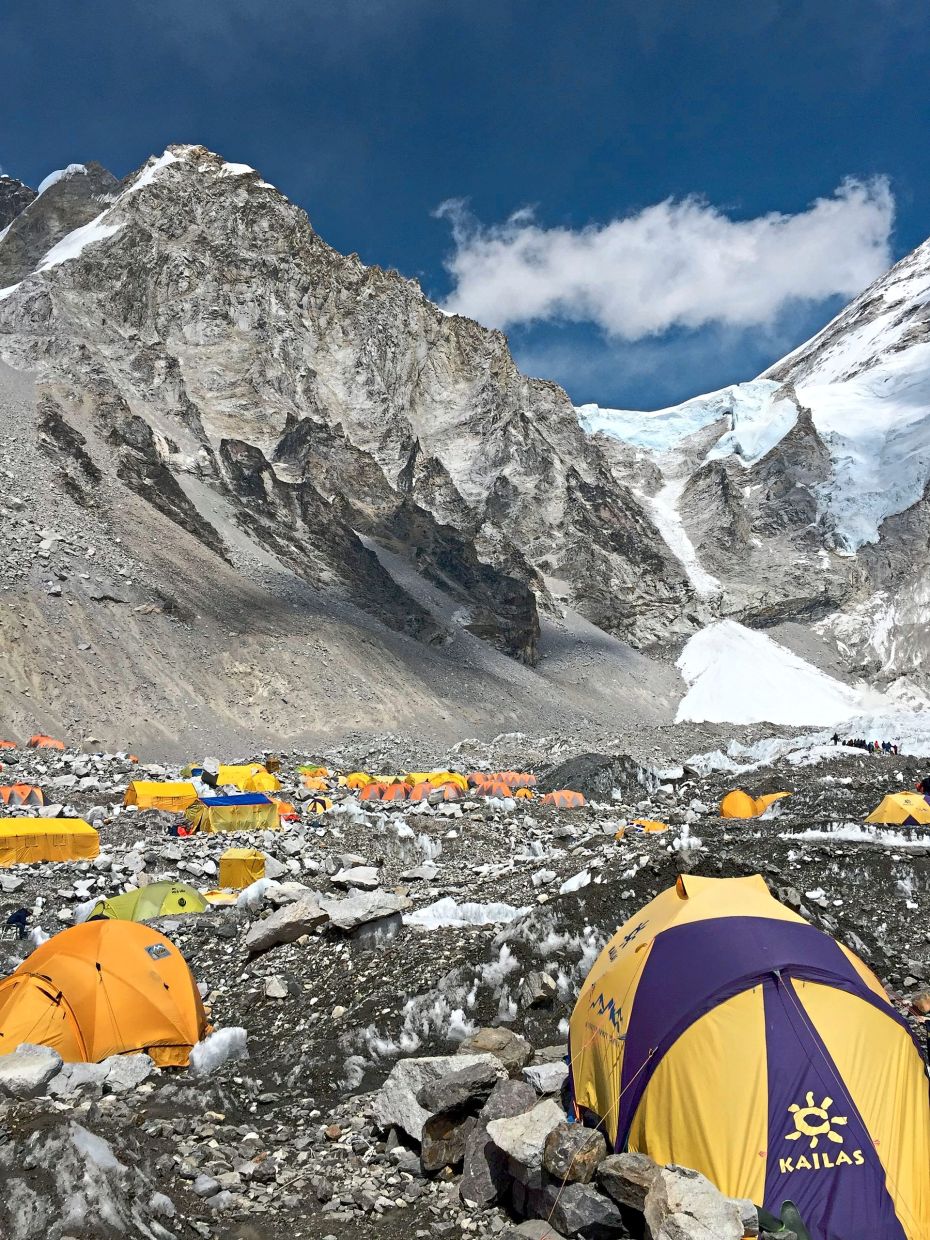
The Sagarmatha National Park where Everest stands is the busiest in the months of April, May and early June.
The villages and settlements along the way – from Lukla airport to Phakding, Monjo, Namche Bazar, Khumjung, Tengboche, Pangboche, Lobuche and Gorak Shep – are filled with climbers during climbing season. Not all are headed to the peak, however, as some are trekking to the EBC.
Imagine seeing hundreds of climbers trekking up the treacherous slopes; at certain points only one person is allowed to climb at a time, causing a bottleneck of sorts.
Think human traffic jam at 8,000m above sea level.
Incredibly, though, this recent spring season was probably the most successful in Everest history, with a few records broken like pieces of seracs at the Khumbu. For example, American climber Tyler Andrews set the fastest ascent from EBC to the peak (nine hours, 55 minutes and 43 seconds).
He broke the previous record of 10 hours and 56 minutes set by Nepali Lhakpa Gelu Sherpa 23 years ago.
Also, Kami Rita Sherpa, 58, reached the peak for the 32nd time; his first was in 1994.
An amazing woman, 52-year-old Lhakpa Sherpa, successfully climbed the mountain for the 11th time this year, the most number of times for any woman. She is the subject of the 2024 Netflix documentary, Mountain Queen: The Summits Of Lhakpa Sherpa.
However, the question many are asking is this: What is becoming of Mount Everest? With as many as 2,000 people on the slopes at any climbing season, surely the issue of garbage and human waste need to be seriously considered. Sagarmatha National Park, where the mountain stands, has even been labelled the “world’s highest garbage dump”.
With each person generating an average of 8kg of trash during their climbing expedition, you can imagine just how much waste is up there on the slopes.
That doesn’t even include the amount of human faeces left behind ...
And with climate change, the waste is now spilling into glaciers, which then flow into major rivers and streams – the main sources of water for millions of people in Nepal.
This is the biggest concern for the Sagarmatha Pollution Committee (SPCC), a non-profit NGO run by local Sherpas. The committee organises teams to collect garbage on the mountain each season, but climbers are now also required to bring back a set weight of their own trash and waste, to make things easier for everyone.
The writer, a National Journalism Laureate, is an avid trekker and climber. He succeeded in reaching the 4,130m Annapurna Base Camp at the age of 71 years, 10 months and 14 days on Sept 23, 2025. He will attempt to trek to the EBC in Nepal this September.