Japan has long been a favourite holiday destination for many Malaysians. No matter the season, there is always something to experience all around the country.
Winter draws skiers to the powdery slopes of Hokkaido, spring brings cherry blossoms in many parts of Japan, summer comes alive with colourful festivals, while autumn paints the countryside in shades of red and gold.
Beyond its famous attractions, the East Asian country’s extensive rail network has also become a must-do “Japan travel experience”. Connecting major cities with smaller towns and rural regions, trains there allow visitors to see how the country’s landscape transforms while on board – from city skylines to the coast and mountain villages.
Travelling by train opens the door to parts of Japan that many visitors often overlook.
To plan your train journey in Japan, you need to first figure out which rail passes you would need. A rail pass allows one to explore multiple destinations within a set period of time, but on a single fare.
For many first-time visitors, the Shinkansen is often the go-to choice for long-distance travel in Japan, but there are others to consider too, especially those that take you to lesser-known towns.
Cities like Tokyo, Osaka and Kyoto are must-visit places, but their popularity has brought new challenges. During peak travel periods, overly crowded trains, long queues at attractions and limited accommodation options have become increasingly frequent.
According to Nippon.com, a media agency under the Nippon Communications Foundation, Japan welcomed some 42.7 million international visitors last year, which ignited worries of overtourism at popular destinations.
As a result, the Japanese government has implemented some new policies to counter overtourism. One of them is to increase the departure tax to JPY3,000 (RM77); this came into effect on July 1.
Travellers willing to explore outside the “Golden Route” (Tokyo, Kyoto, Osaka and Mount Fuji) can check out Japan’s extensive rail network, which covers areas that may be harder to access via regular public transport.
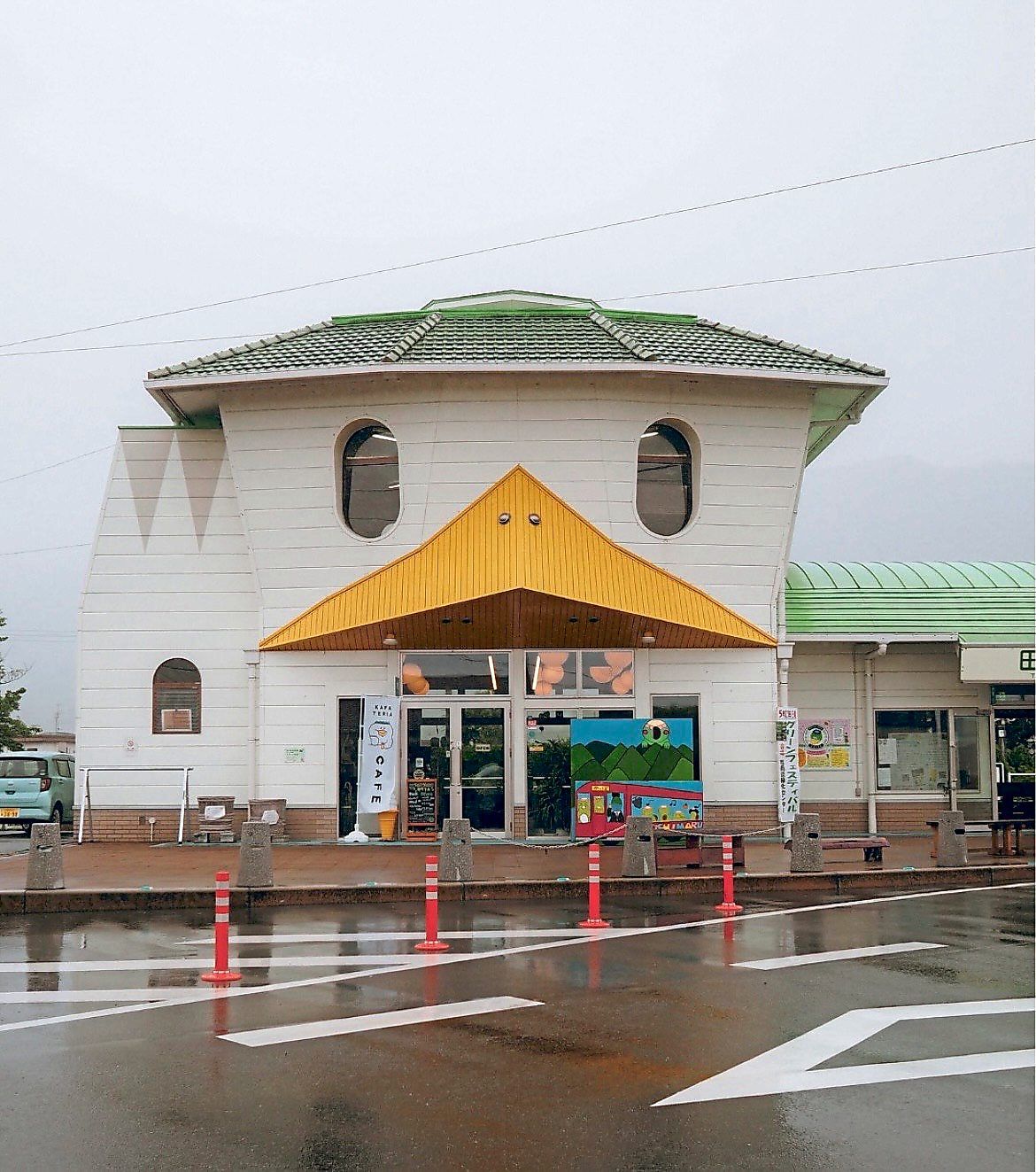
Destinations such as Nagoya, Kanazawa and Fukuoka are great choices as they are less crowded and easy to reach by train.
The same can be said for the Tohoku region located in the northeastern part of the Honshu island, Japan’s largest island. There are six prefectures in the region with a variety of things to see and do.
Trading city crowds
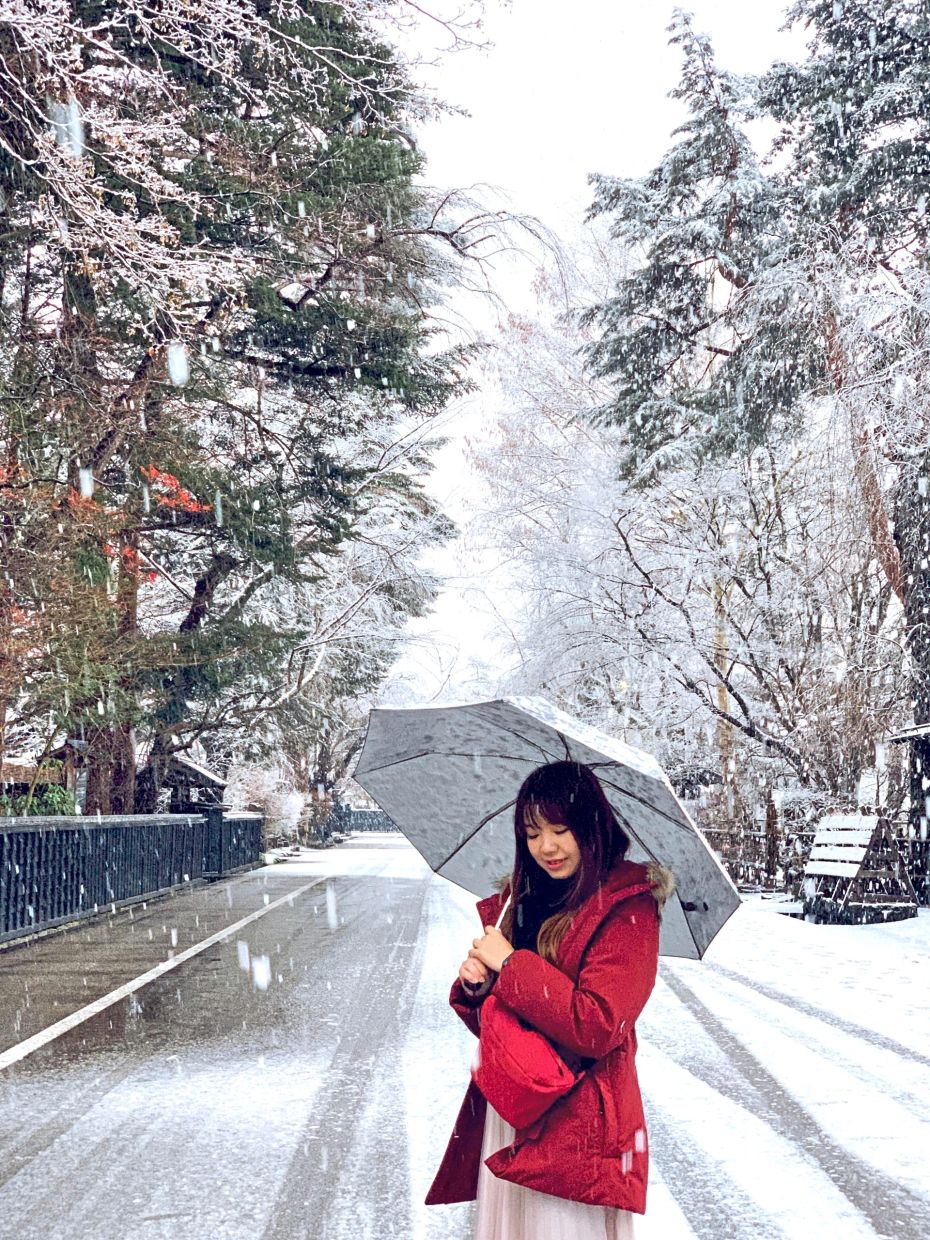
For Adeline Lee, 34, travelling by rail was more than just a way to reach Tohoku – it became part of the holiday experience itself.
Instead of flying or renting a car, she boarded the Shinkansen from Tokyo to the northern region, hoping to enjoy the journey at a slower pace.
“I didn’t want to fly because I wanted to see the countryside along the way,” she said.
“Travelling by train also meant I wasn’t as tired when I arrived, so I still had the energy to explore.”
The roughly three-hour Shinkansen ride was her first experience on Japan’s famous bullet train, and it quickly became one of the trip’s highlights.
“I was impressed by how comfortable, clean and punctual it was,” she said. “I could just sit back, relax and watch the landscapes shift, from the busy city to the countryside of Tohoku. I could even take photos of the passing scenery. If I had driven, I wouldn’t have been able to enjoy those little moments.”

Lee’s train journey took her from Tokyo to Akita, before continuing to Aomori, a prefecture known for its apples, by regional bus. Using a combination of trains and buses, she explored attractions – like the Akita Dog Museum – that were accessible by public transport.
Marketing manager Jessica FD (who wish to be known only by her first name), 36, shared a similar experience. After several trips to Japan, she set her sights on Kyushu, leaving the well-known Golden Route behind for a rail journey through the country’s southern island.
“I wanted to visit places where tourism isn’t overwhelming and I can actually immerse myself in local life. My goal is to explore all 47 prefectures, so Kyushu felt like the perfect place to start,” she said.
Travelling from Tokyo to Kyushu on the Shinkansen took over five hours, but Jessica, who is from Barcelona, Spain, said it didn’t feel less convenient than flying.
“Once you factor in getting to the airport, checking in, boarding, landing and travelling into the city, you are already looking at a similar amount of time,” she said.
“I’d much rather be sitting comfortably watching the Japanese countryside roll past the window than dealing with the whole airport ordeal.”
Lee also found exploring Tohoku by rail to be a much more pleasant experience.
“It gave me the chance to appreciate a side of Japan that I probably wouldn’t have experienced in the bigger cities,” she said.
Jessica agreed, saying some of her favourite memories came after stepping away from the busy cities.
“A few months ago, we stayed at a ryokan in Saga surrounded by nature,” she said. “There was no noise and no rush. We spent the day enjoying good food, soaking in an onsen and going on slow walks. It’s the kind of experience that’s hard to find in cities like Tokyo or Osaka.”
More than transport
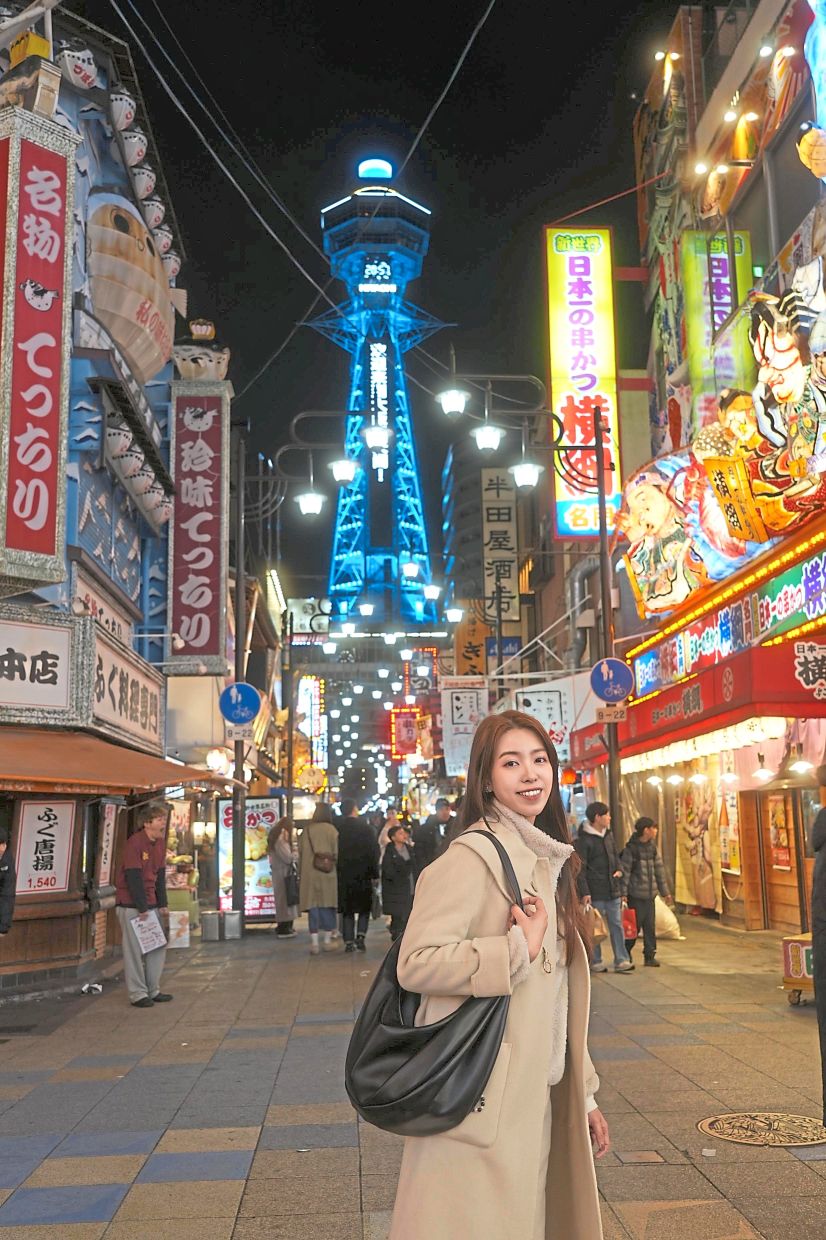
Each trip to Japan has left fashion designer Lavender Lim, 32, wanting to return.
While she had explored Kyushu by bus on a previous visit, she’s already planning to return – this time by train.
Her appreciation for train travel began after riding the Aoniyoshi sightseeing train between Osaka and Kyoto with her partner, Edison Tang.
“Besides the beautiful scenery, taking the train is part of the itinerary for me,” she said. “I also get to eat cute bento stuff onboard.”
The experience has also changed the way Lim looks at train travel.
It sparked her interest in exploring more of Japan by rail. After hearing so many good things about the train journey to Kyushu, she is determined to experience it for herself.
“Now I want to see what it’s like.”
What excites Lim the most is the variety of rail experiences Japan has to offer.
“There’s the Shinkansen, sightseeing trains and even sleeper trains,” she said.
Although the bullet trains are known for their speed, Lim admits she’d happily trade a faster journey for one with a little more “character”.
“I would even prefer slower trains with unique vintage designs like the Aoniyoshi train,” she said.

Planning is key
While Japan’s rail network makes travelling around the country convenient for tourists, exploring beyond the major cities requires some strategic planning.
Lee said one of the biggest adjustments was getting around after arriving at smaller stations.
“Unlike Tokyo, where trains run frequently throughout the day, rural areas have fewer train services and limited local transport,” she said.
“After arriving at a station, travellers may need to continue their journey by regional bus or taxi, depending on where they are headed.”
Jessica encountered similar challenges while travelling around Kyushu.
“The Shinkansen and limited express trains connect the major cities perfectly, but once you are within each prefecture, the local network can be quite limited,” she added.
“If you miss a train, you could easily be waiting more than an hour for the next one.”
She believes trains are ideal for long distance travel, but renting a car is also convenient if you plan to visit several attractions in one particular area or prefecture in a day.
“Driving gives you more freedom and flexibility,” she said.
Lee explained that driving would make it easier to explore more rural areas and visit places that are harder to reach via public transport.
Lim meanwhile encourages travellers to plan ahead, especially when booking popular rail routes.
“Train tickets can sell out fast, especially if you are hoping for seats with better views,” she said.
“I always recommend planning and booking early.”
Jessica recommends researching transport options before deciding whether to travel by train or car.
“I always check how many connections are involved and whether the places I want to visit actually have a station nearby,” she said. “And always have a backup plan.”
Lee’s advice is to not rush through the itinerary.
“Take your time, enjoy the journey and let the train ride become part of the adventure.”