With only a few weeks left to catch Robert Rauschenberg And Asia exhibition at Ilham Gallery in Kuala Lumpur, local art lovers have a timely chance to discover how travel, cultural encounters and a keen curiosity about the world shaped the work of one of America’s most influential artists.
Rauschenberg (1925–2008), a key figure in Neo-Dada, Pop Art and Conceptual Art, was also known for his international artistic collaborations.
Organised by Hong Kong’s M+ in collaboration with Ilham Gallery, the Robert Rauschenberg And Asia exhibition is part of extended celebrations marking the centenary of his birth.
Following a successful run at M+ from November last year to April, the exhibition has drawn local audiences to Ilham Gallery. It also marks a major collaboration between the two institutions, with support from the Robert Rauschenberg Foundation in New York.
At Ilham Gallery, the show feels part art exhibition, part travelogue of a creative wanderer. Robert Rauschenberg And Asia explores a distinctive chapter of the artist’s career, shaped by the exchange of ideas and cultural perspectives across borders.
It brings together 40 works Rauschenberg created during, and in response to, his travels across Asia between 1964 and 1990.
During this period, Rauschenberg drew inspiration from Asia’s people, places and materials, while building relationships with artists, craftspeople, critics and supporters across the region. These experiences broadened his artistic vision, connecting local influences with wider ideas about culture, identity and a changing world.
In addition to paintings, the show highlights drawings, photographs, and editions Rauschenberg made during his travels.
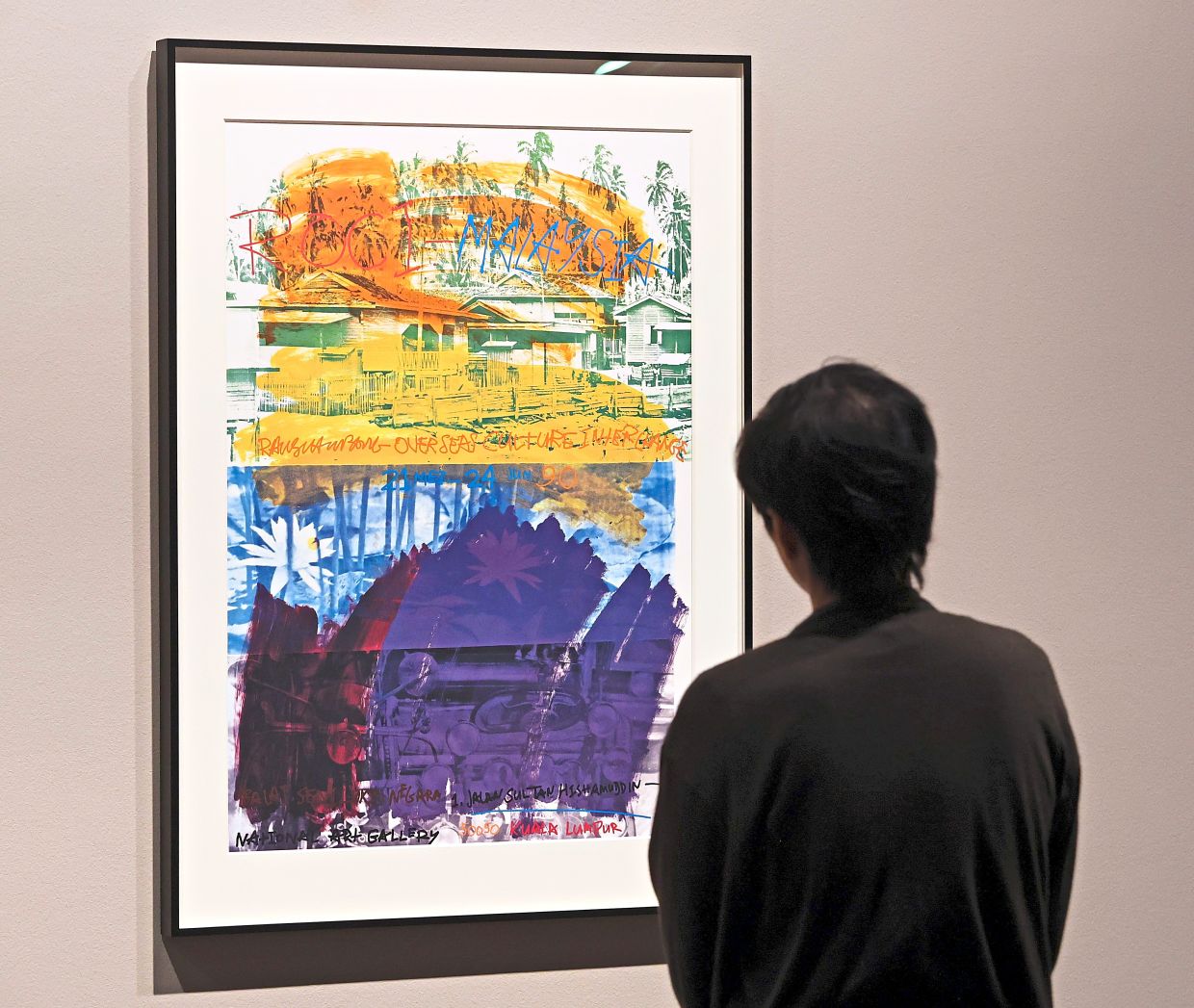
For Kuala Lumpur audiences, the exhibition carries a special connection. In 1990, Rauschenberg presented more than 200 works at the National Art Gallery as part of his Rauschenberg Overseas Culture Interchange (ROCI) project.
As Ilham Gallery revisits this ambitious international journey, guided tours are available for visitors who would like to learn more about the works and the stories behind them. Admission is free, and the exhibition runs until Nov 1.
Here are five highlights from the exhibition.
Malaysia: connecting local experiences
The exhibition brings Rauschenberg’s work back to Malaysia, which hosted the final international presentation of his ROCI project in 1990 at the National Art Gallery, then located on Jalan Sultan Hishamuddin in Kuala Lumpur.
On view in the exhibition is the Iban Parade (Perarakan Iban)/ROCI Malaysia (1990), one of the artworks inspired by and featuring photographs Rauschenberg took during travels throughout the country in 1989.
To get a feel for Malaysia, Rauschenberg travelled to Kuala Lumpur, Melaka, Penang, Kelantan, Terengganu and Sarawak. These experiences informed 20 works for the ROCI Malaysia exhibition, including Malaysian King (Yang Teragung), a mixed-media piece now in the National Art Gallery’s collection.
The Malaysian section also offers a closer look at how Rauschenberg came to exhibit here, including his connection with Syed Ahmad Jamal (1929–2011), then director of the National Art Gallery. A timeline of his travels and activities, media coverage, notably by veteran art critic Ooi Kok Cheun, and records of his return to exhibit at Taksu Gallery in 1997 further trace the artist’s ties to Malaysia.
An added highlight is an untitled mixed-media portrait of Rauschenberg in 1995 by legendary Malaysian artist Ibrahim Hussein (1936–2009), who struck up a friendship with the American artist during his travels to Malaysia.
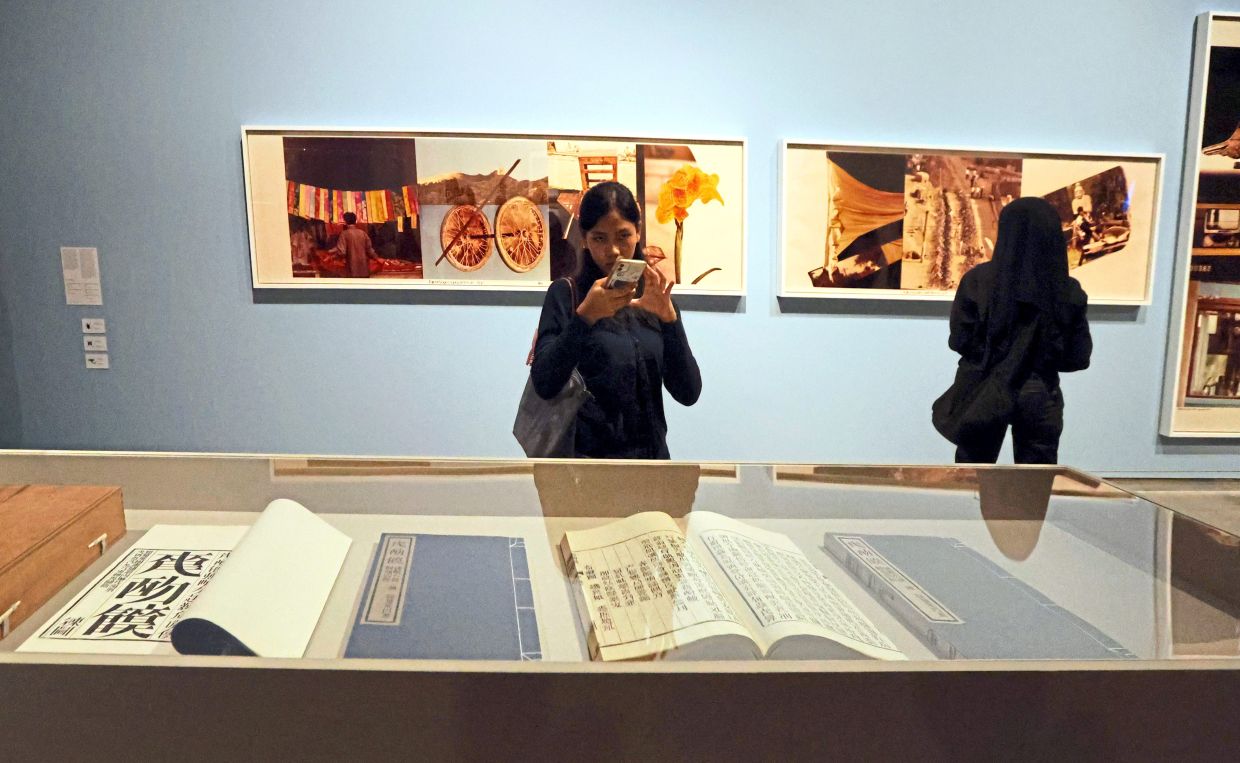
China: looking beyond familiar images
The first works visitors encounter at Ilham Gallery are Rauschenberg’s 7 Characters series, offering an early glimpse of how his travels across China in 1982 opened up new possibilities for his art.
His time in the Jingxian region brought him into contact with local materials, paper mills and skilled artisans, whose knowledge and techniques became part of his wider exploration of how art could cross cultural borders.
In works such as Chinese Summerhall, he brought together photography, images and observations from his travels, showing how exposure to different places could broaden his artistic perspective.
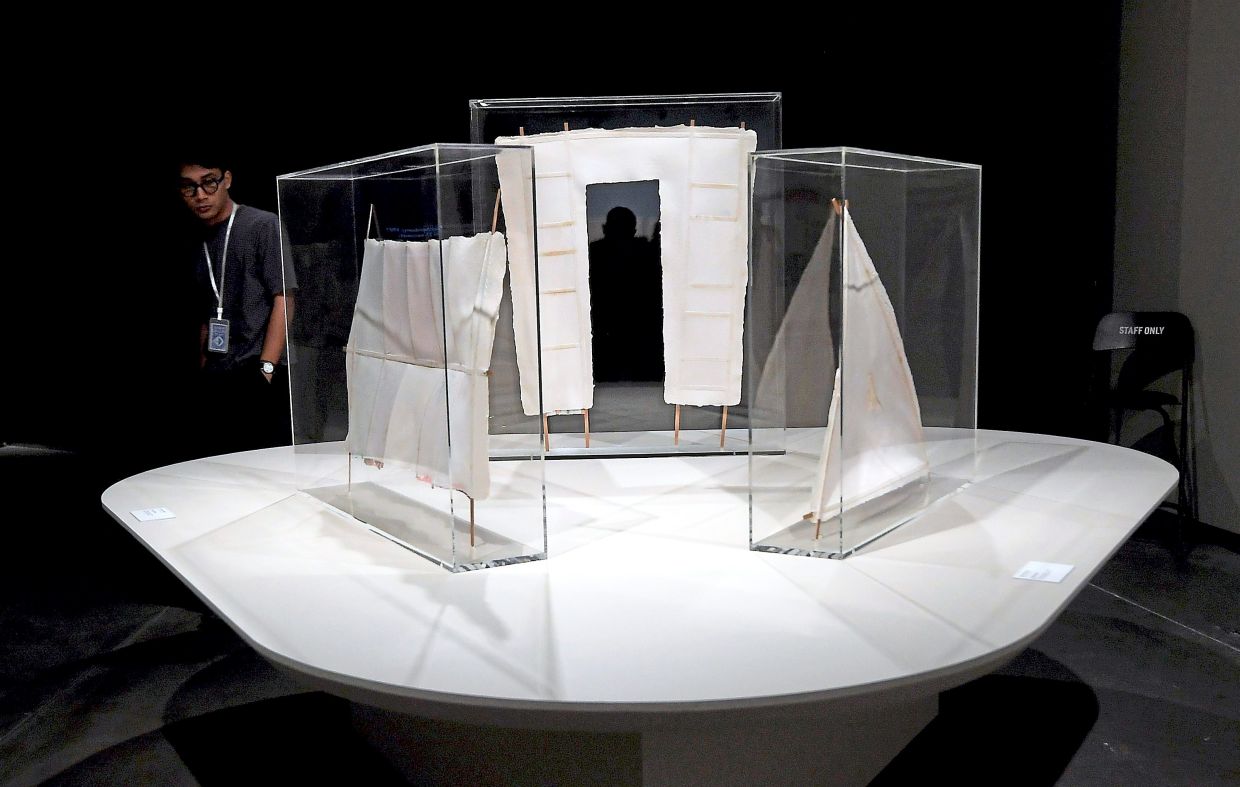
India: finding inspiration in everyday life
For craft enthusiasts, the India section offers a closer look at how traditional papermaking informed Rauschenberg’s artistic practice.
Before embarking on the ROCI project, Rauschenberg’s 1975 visit to Ahmedabad, India, sparked an interest in handmade paper and collaboration with local papermakers.
This experience informed his Bones and Unions series, both on display at Ilham Gallery, where the paper’s texture and qualities take centre stage.
The works also highlight his appreciation of the artisans behind the process, reflecting an approach to art shaped by travel, collaboration and a willingness to explore unfamiliar materials and techniques.
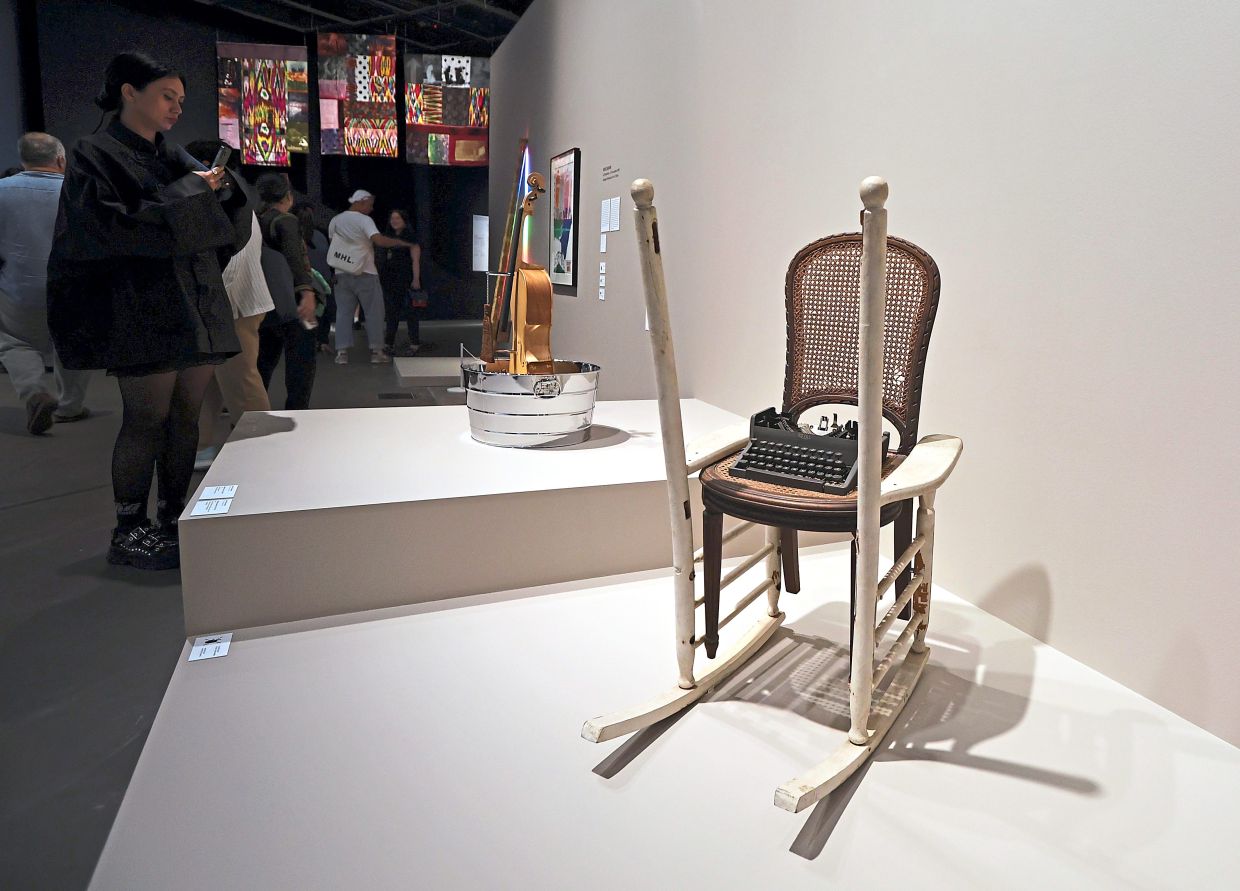
Tibet: seeing new possibilities in found objects
For fans of found-object art, the Tibet section offers a closer look at Rauschenberg’s playful approach to materials and form. In works such as Tibetan Garden Song, Honky Tonk and Magnetic Script, everyday objects are assembled into structures that feel part sculpture, part theatrical set.
Created around his December 1985 visit to Lhasa for the Rauschenberg Overseas Culture Interchange (ROCI), these works reveal how he looked beyond an object’s original purpose, finding new possibilities in its shape, texture and associations.
Rather than simply repurposing discarded materials, Rauschenberg used them to explore how objects carry meaning from one place and culture to another.
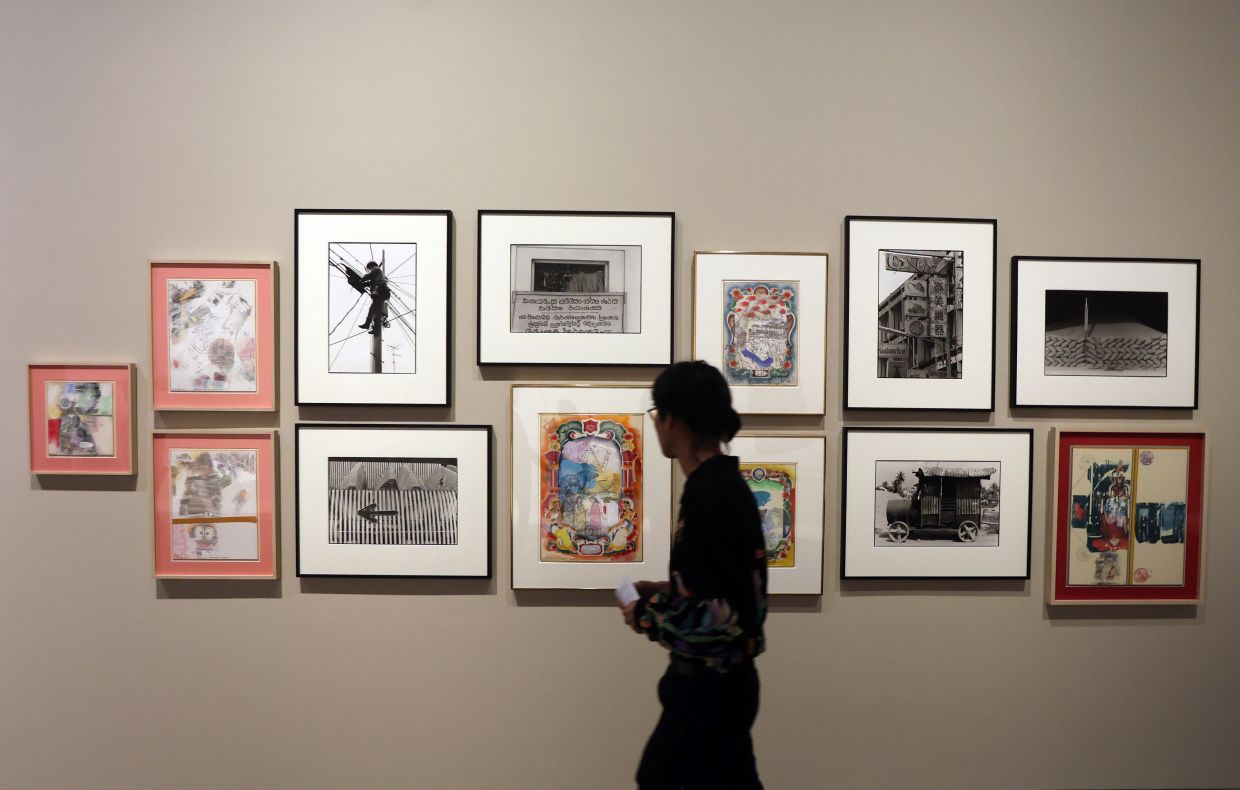
Japan: experimenting with materials
Japan was an important stop on Rauschenberg’s ROCI journey, inspiring works such as the Kyoto series and the Tokyo, Japan prints.
The section also features Bamhue, which pairs bamboo with neon lights, and Happy Birthday Baby Leech, a mix of printed images, paint, fabric and gold-leafed bamboo poles.
In Axis South, Rauschenberg experimented with ceramics, combining printed images with a traditional craft. These works show how he took inspiration from Japan while exploring new materials and ways of making art, often bringing together elements that might not usually be seen side by side.
Robert Rauschenberg And Asia is showing at Ilham Gallery in Kuala Lumpur until Nov 1.