




SUBANG JAYA: The way children learn is changing, with classrooms no longer the only environments shaping their development.
From childcare centres and sensory gyms to digital platforms and therapy settings, young children are shaped by an expanding network of experiences.
This is prompting educators and support systems to rethink how early childhood education can better accommodate different needs.
At a recent series of discussions hosted by Sunway University’s School of Education, experts highlighted inclusion as an increasingly important part of early childhood education.
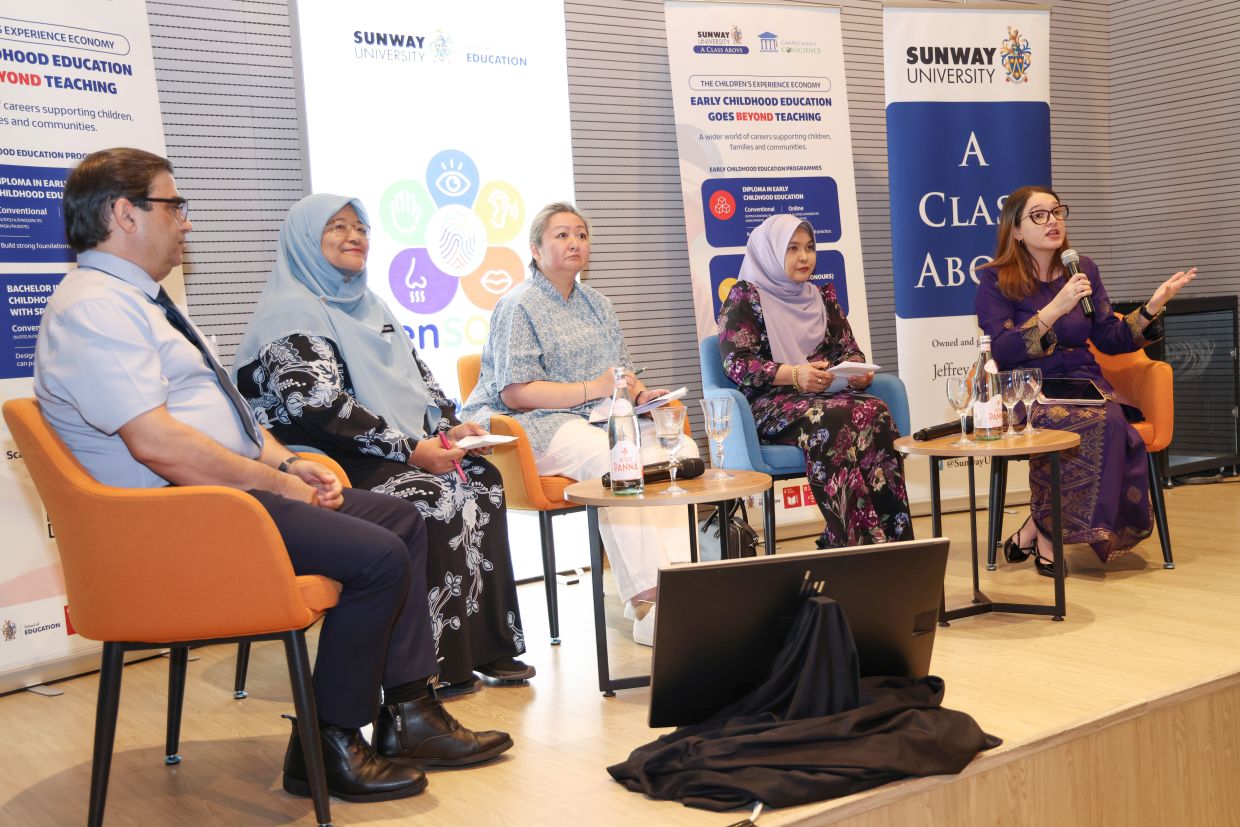
Sunway University PhD candidate and discussion moderator Desiree Kaur said the focus should be on adapting the environment rather than expecting children to conform to it.
South-east Asian Ministers of Education Organization Regional Centre for Special Educational Needs (Seameo Sen) director and Sunway University Adjunct Prof Jamilah Kadir described an effective inclusive classroom as one built around “intentional diversity”, where children of different abilities learn and play together.
Jamilah said a classroom can be lively, where "children with different abilities" converge while being "very playful and happy".
“This is where they discover together about life," she said before adding that labelism has yet to come into play.
Sunway University Assoc Prof Dr Amanallah Soltani said inclusion also meant ensuring every child could participate meaningfully.
“This is where every child can feel safe, valued, seen, can participate as well as fully engage in every activity with different ways to communicate, play, learn, and express themselves,” he said.
However, many neurodivergent children continue to encounter barriers when entering early childhood centres, including requirements such as being toilet-trained or being able to sit still.
Jamilah said such requirements could become a form of gatekeeping.
“If we give parents a set of checklists that the child must pass before they can enter a classroom, then that is not education - it is gatekeeping,” she said.
“The child should not have to be ready for the classroom; the classroom should be ready for the child.”
Amanallah said this required educators to reconsider approaches that focused primarily on changing the child through isolated therapies.
“I thought that I needed to change my mindset. This is not something wrong with the child - something is wrong with the environment,” he explained.
“Inclusive education is about changing something in the classroom, changing the teaching strategy, adapting them with a specific child,” said Amanallah.
The discussion also highlighted the importance of support beyond the classroom.
We Rock the Spectrum Kid’s Gym founder Nori Abdullah said meaningful learning depended on creating an environment that supported children across different aspects of their lives.
“If you want somebody to be able to learn, then the environment has to be conducive to it,” she said before adding that it ultimately includes other stakeholders such as the family and parents.
Nori also called for society to move beyond simply tolerating differences towards accepting and valuing them.
“What do we, overall, as a society, know or understand about people who are different and how far are we willing to go beyond tolerance to acceptance, that people are different and we want to value everybody for who they are?” she asked.
From a regulatory perspective, Social Welfare department childcare centre (Taska) regulatory division chief assistant director Norhida Abdul Aziz said inclusion had to be balanced with safety.
“It’s not only about opening the door; it is to make sure that beyond the door, the kids are safe - both the ones with special needs and the ones without,” she said.
“I want the children to feel a sense of belonging so that they will actively want to go every day and not feel left out.”
Norfida said her division had introduced targeted modules covering Autism, Down Syndrome and Cerebral Palsy for early childhood carers to help raise standards across the sector.
Looking ahead, Jamilah proposed structural changes to Malaysia’s early education system, including a mandated co-teaching model supported by allied health professionals in inclusive classrooms.
She said having therapists within school settings could reduce the financial burden on lower-income families while allowing children to receive support when needed.
At the regional level, Seameo Sen is advancing the Asean Seameo Joint Roadmap on Early Childhood Care and Education for 2026–2030, which aims to guide early childhood care and education standards across South-East Asia.
Seameo is a regional intergovernmental organisation set up in 1965 to advance cooperation in education, science and culture, with a focus on Special Educational Needs (Sen).
Jamilah said Malaysia had established many of the necessary policies, but greater attention was now needed on implementation at ground level.
“The policies are there, but how do we make sure that they are translated into layman's terms at ground level?” she asked.
Jamilah stated that an inclusive education teaches children respect, acknowledgement and that the world is diverse.
“The world itself is inclusive in nature, so why do we need a classroom or a school that is exclusive?”
The discussions coincided with Sunway University’s efforts to strengthen the preparation of future early childhood educators through new programmes.
Sunway University's School of Education has introduced three new programmes in early childhood education, namely Bachelor in Early Childhood Education with Special Needs (Honours), Diploma in Early Childhood Education (Conventional) and Diploma in Early Childhood Education (Open and Distance Learning, ODL).
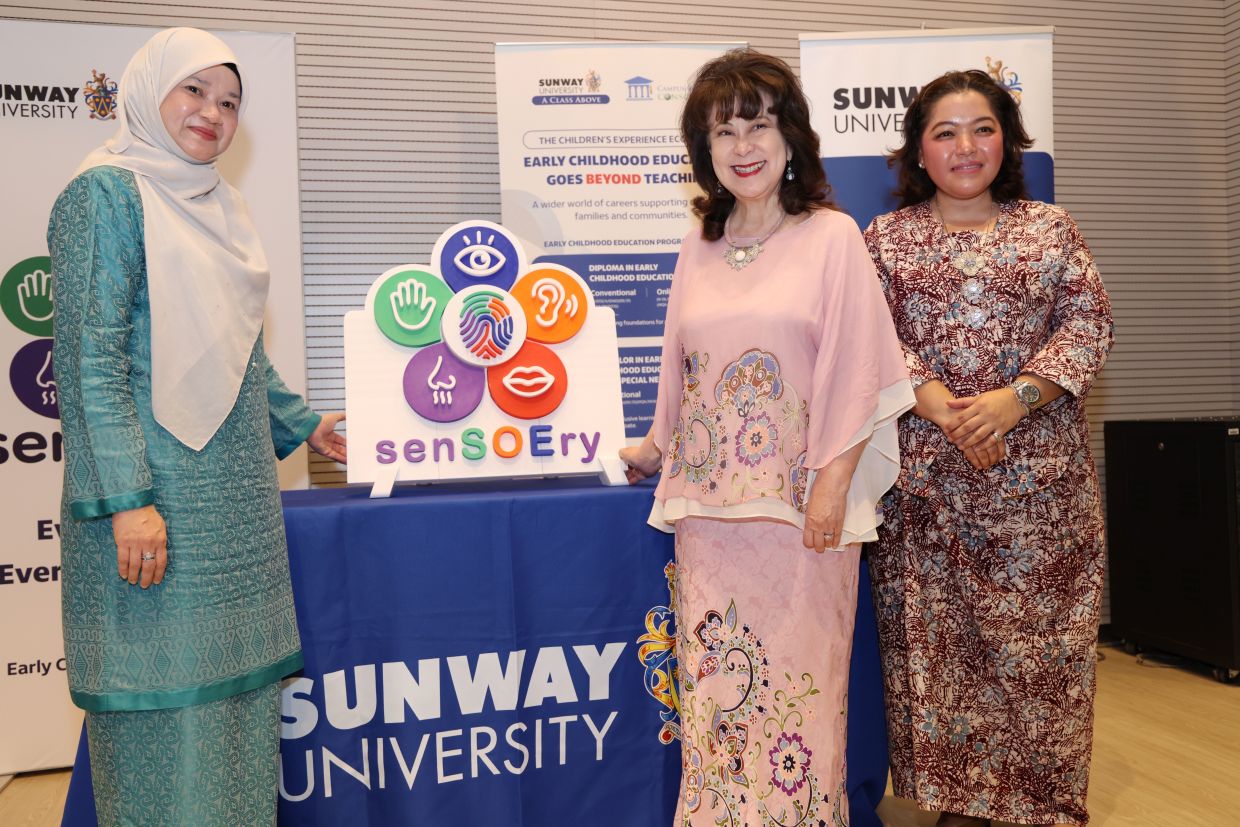
The programmes were officially launched by Education Minister Datuk Seri Fadhlina Sidek alongside Sunway Education Group chief executive officer Prof Datuk Elizabeth Lee.
Fadhlina highlighted the importance of early learning and said the government was working towards making preschool education compulsory under the 13th Malaysia Plan.
“The best start for children begins with the best preparation for those who educate them,” she said, describing early childhood education as one of the most important stages in a child’s growth and exploration of the world.
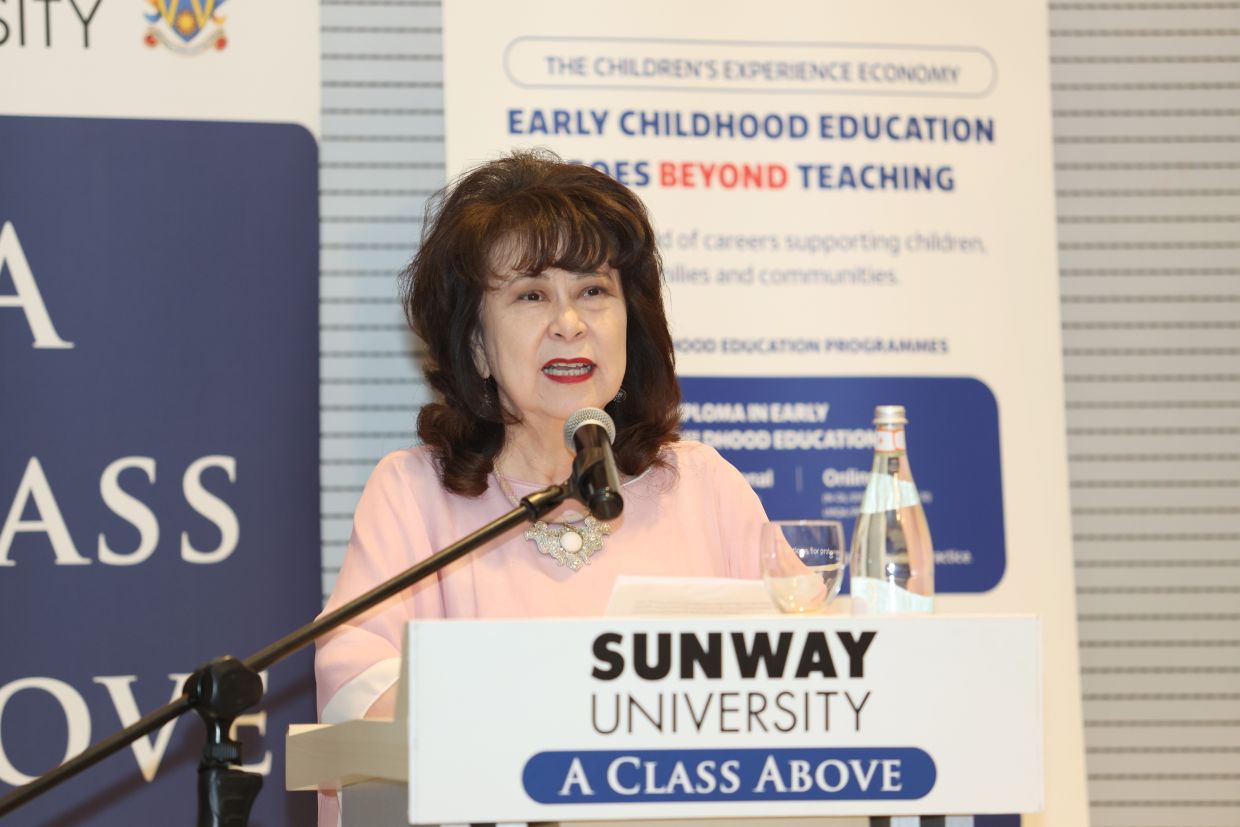
Prof Lee said quality early childhood education helps establish a child’s cognitive, emotional and social foundations for life.
“Quality early childhood education nurtures curiosity, creativity, communication skills and a lifelong love of learning and it teaches children how to think, not merely what to think,” she said.
"By strengthening the quality of early childhood education and advancing inclusive pedagogical practices, we are helping to ensure that no child is left behind, especially those who need our support the most," concluded Prof Lee.
To learn more about these new programmes, visit https://sunwayuniversity.edu.my/school-of-education/courses.



