I have spent this lifetime going around the world – or at least to as many as 164 countries and territories.
And I’ve gone far enough and even deep enough to realise something: The one thing that has been with me on all my travels across borders, oceans, and time zones is not the aeroplane, nor the passport.
It’s my luggage.
I’ve always treated the luggage as a tool. I check for size (20, 24 or 28 inches), material (aluminium or soft shell), whether is is impact-resistant or expandable, and test the wheels (do they glide smoothly or “screech” when being pulled).
Of course, I also look at the brand – is the bag worth paying so much, and is it worthy of being seen with me?
Yet every time I stop in front of a baggage carousel in some far-flung airport, I also realise that your bag is actually a private item.
It’s a companion.
It knows where I’m going.
It knows where I came from.
And it knows who I am – perhaps better than anyone else.

The first time I became truly aware of the meaning of the word “luggage” was back when I was just flying constantly for work, dragging my suitcase in and out of hotels, conference rooms and airports.
One night, alone in a hotel room, a question surfaced: Why do we call everything we carry with us “luggage”?
In Chinese, the word is revealing. “Xing” means to set out, to be on the road, to depart because you must. “Li” means burden, as well as the odds and ends – the things you cannot leave behind.
Put together, the word is anything but romantic.
Xing belonged to the ancient times – official assignments, military conscription, forced transfers. The kind of departure where you go not because you want to, but because you have to. Sort of like how the Chinese poet Su Dongpo had to carry what little “li” he had when he was exiled three times to Huangzhou, Huizhou, and Danzhou.
No matter how relaxed or reluctant the journey is, you are always “carrying” something.
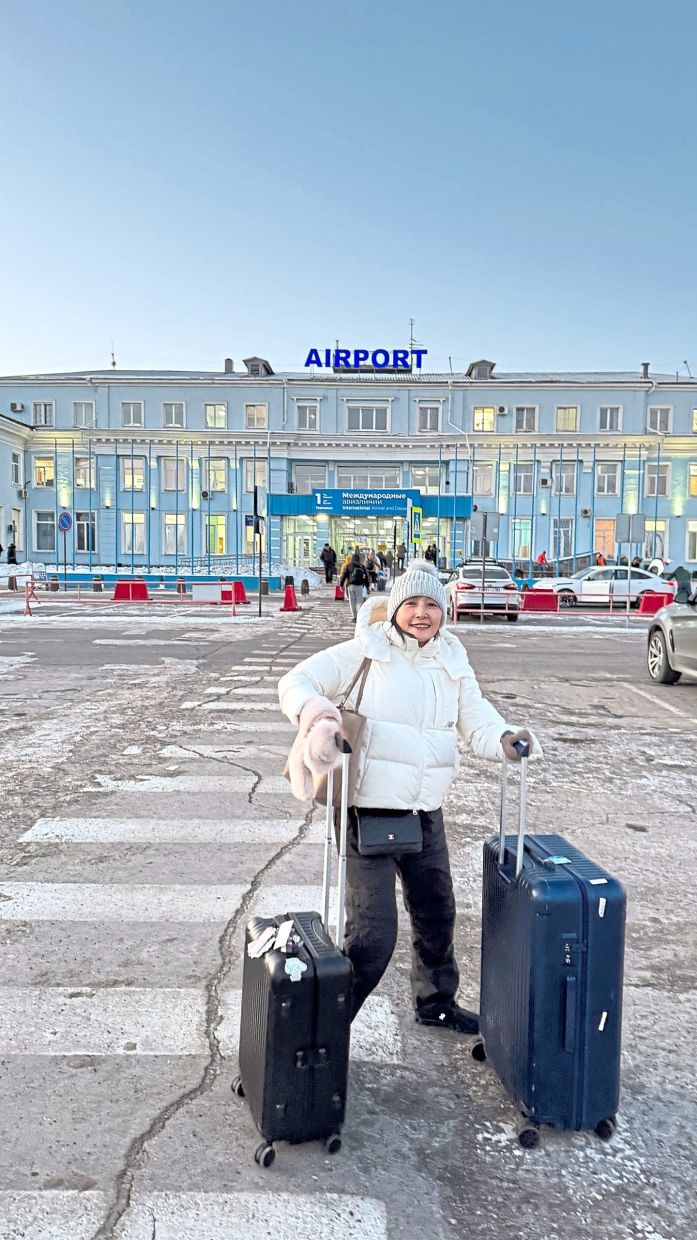
The first time you travelled far with a backpack, you were afraid it won’t be enough. Afraid that the weather would change and that you wouldn’t be able to adapt to the situation. You were afraid you’d miss something. So the bag grew heavier as you travelled further, as if stuffing your entire former self inside, dragging it along your journey.
And during every trip, you ask yourself: “Why did I bring this? Why did I pack that?”
No wonder your suitcase weighs 23kg – and sometimes even more!
But as you travel more, you realise that you usually only use a few of the things you take along with you. The rest is psychological comfort. Many of us have experience this.
In places that move at an unhurried pace like the small Caribbean islands, people travel light. Locals carry small bags that are lighter than light, holding exactly what they need for the day and nothing more.
When I witnessed this myself, I thought, “Oh, perhaps the weight of one’s luggage depends on one’s circumstance in life.”
Most of us stuff our suitcases with so many extras (instant noodles, snacks, medicine, cosmetics) because we might need them during our trip. “Just in case,” we often tell ourselves.
But here’s the truth: The more certain you are of your life, the lighter your luggage becomes.
When you know where you’re going, how long you’ll stay, and who you want to become, you dare to carry only the essentials.
Now flip it around – when you’re unsure about the next stop, unsure about relationships, unsure about the future, you instinctively pack an extra jacket, an extra pair of shoes, an extra item because, “maybe I’ll need this or that”.
That’s not stuff. That’s anxiety.
Not weight, but hesitation.
But back to the baggage carousel. There have been times when I stand by the carousel until the last bag arrives ... except it’s still not mine.
It’s a strange feeling. You’re not missing a few outfits. What you miss is the assurance that “you will be OK”.
You’ve felt that too, haven’t you?
When something like this used to happen to me, I realised how much of myself I had stored in my luggage – identity, habits, routines, a sense of order. Lose the suitcase, and the person becomes oddly exposed, panicked, stripped bare.
Yet it was precisely in that moment that I discovered something else: I could still keep going. I bought new clothes. The world didn’t stop.
In fact, I moved even lighter than before.
That’s when my luggage finally fulfils its mission – by reminding me that it is not my whole self, only an accessory. Something replaceable.
These days, I carry less and less whenever I travel. Not because I’ve mastered packing tricks, but because I finally understand that I don’t need to carry every “what if” item with me.
I no longer treat luggage as a container for security. It’s just a companion. It walks with me, arrives with me, then rests quietly in the corner of my hotel room till it’s time to leave.
When luggage is no longer just “luggage”, it stops being a burden. And what truly stays with you is never what was inside the suitcase, but what you slowly learned to let go of along the way.
So, just go. Take what you can carry. And leave what you can’t for your next chapter in life.
The views expressed here are entirely the writer’s own.
Leesan, the globe-trotting traveller who has visited seven continents, including 164 countries and territories, enjoys sharing his travel stories and insights. He has also authored six books.