A building that resembles a cloud, a tree canopy or even a spaceship invites curiosity, encouraging visitors to explore its spaces and discover their own interpretations.
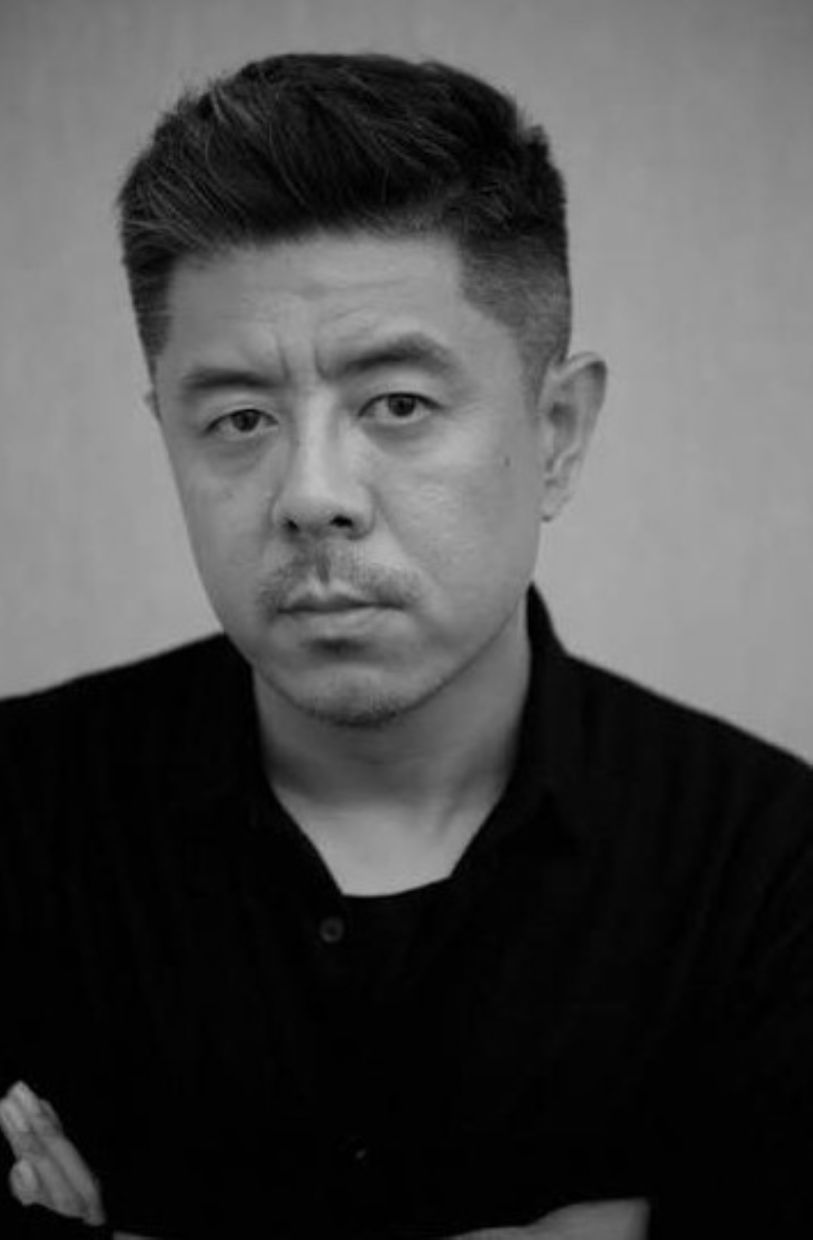
For Chinese architect Ma Yansong, this sense of wonder lies at the heart of the Lucas Museum of Narrative Art in Los Angeles, California, the United States, which opened to the public Sept 22.
Designed by Ma and his Beijing-founded practice MAD Architects, the museum celebrates visual storytelling through art forms ranging from illustration and comics to photography and cinema.
Founded by filmmaker George Lucas and his wife Mellody Hobson, it explores how images shape our collective memory, with works spanning subjects from everyday life to fantasy.But the building itself also tells a story – one about imagination, nature and the human experience.
"A building is not an object you look at – it's a story you walk through," says Ma, who collaborated with Lucas on the project for more than a decade, in an email interview with StarLifestyle.
The relationship began when Ma won an international design competition in 2014. Originally proposed for Chicago, the project eventually found its home in Los Angeles' Exposition Park.
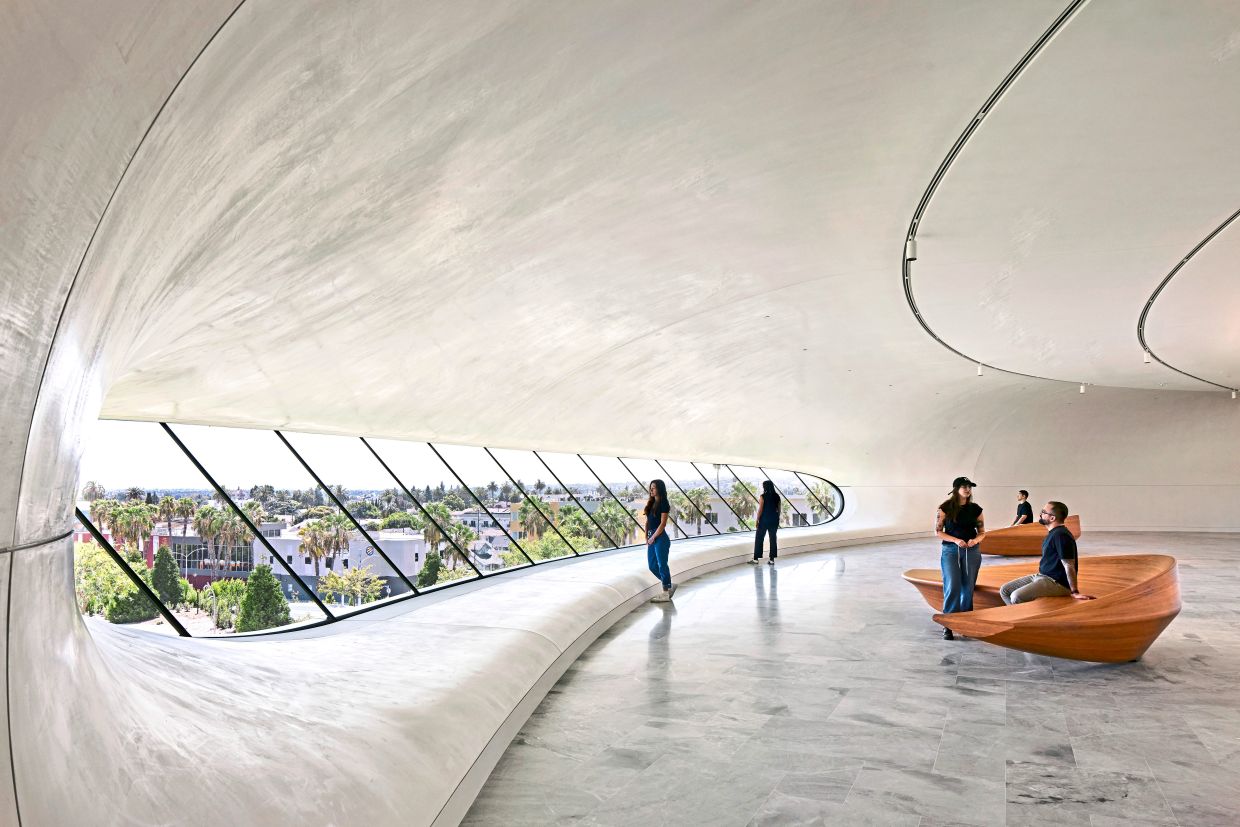
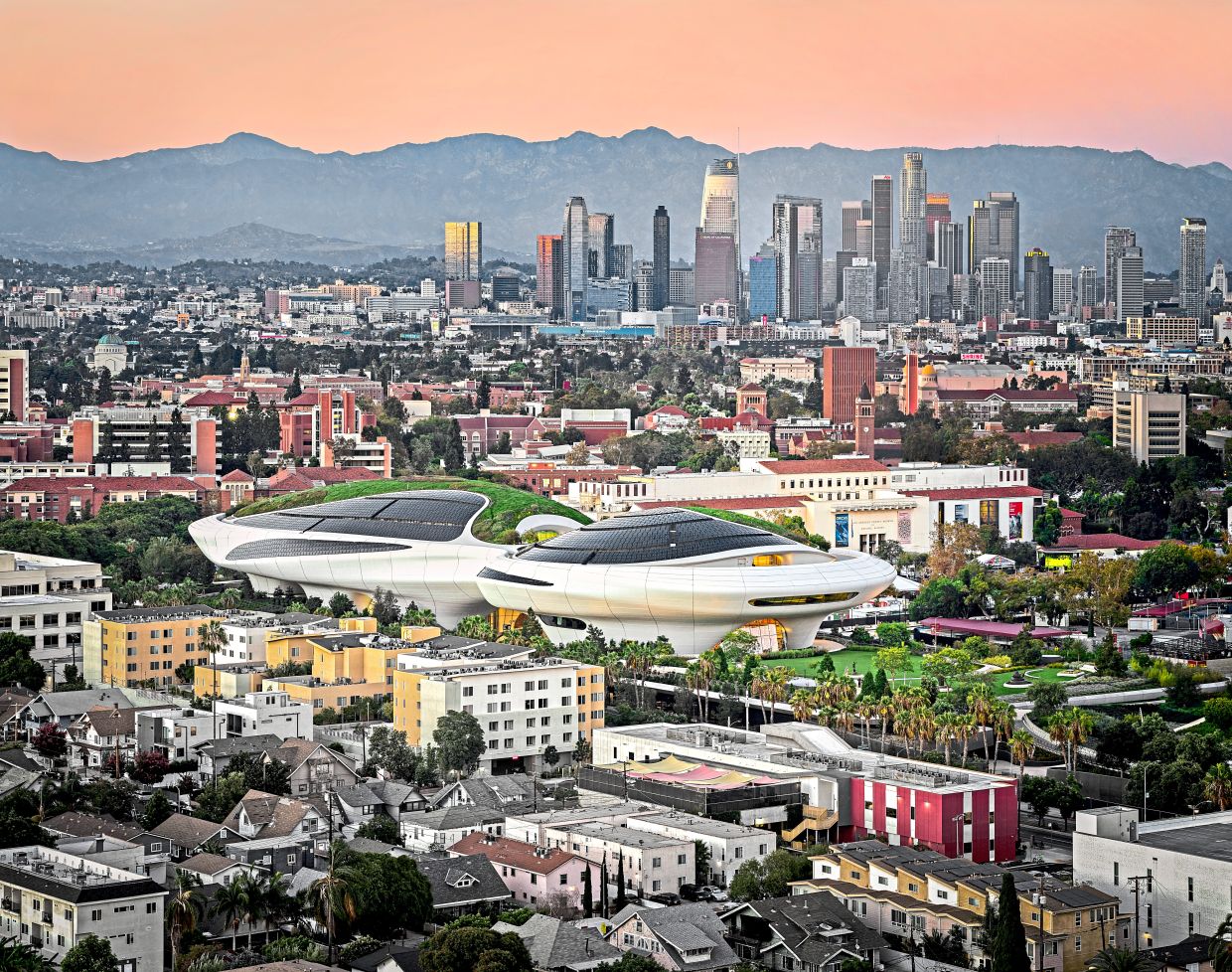
Rather than creating another imposing cultural landmark, Ma envisioned a fluid, organic structure that appears to rise from the ground. Its sweeping curves and oval windows contrast with the hard geometry often associated with modern urban architecture.
"My vision then was a building that would grow out of the earth itself, standing before those inflexible boxes as something alive," he says.
For Ma, the unusual form is not an end in itself but a means of evoking emotion.
"Emotion comes first. Before any form, I ask: What should a person feel here?" he says. "Then light, curves, scale and the path you walk all serve that feeling."
The five-storey museum occupies a 300,000sq ft (27,870sq m) building on a 13-acre (5.2ha) campus. It comprises over 100,000sq ft (9,290sq m) of gallery space, two cinematic theatres, a library and facilities for learning, dining and events.
The galleries explore themes such as family, love, work, play and fantasy, bringing different forms of narrative art into conversation.
Nature is equally central to the design. What was once a parking lot has been transformed into a landscaped campus by Mia Lehrer and her team at Studio-MLA, with more than 200 new trees, native and drought-tolerant plants, meadows and winding paths.
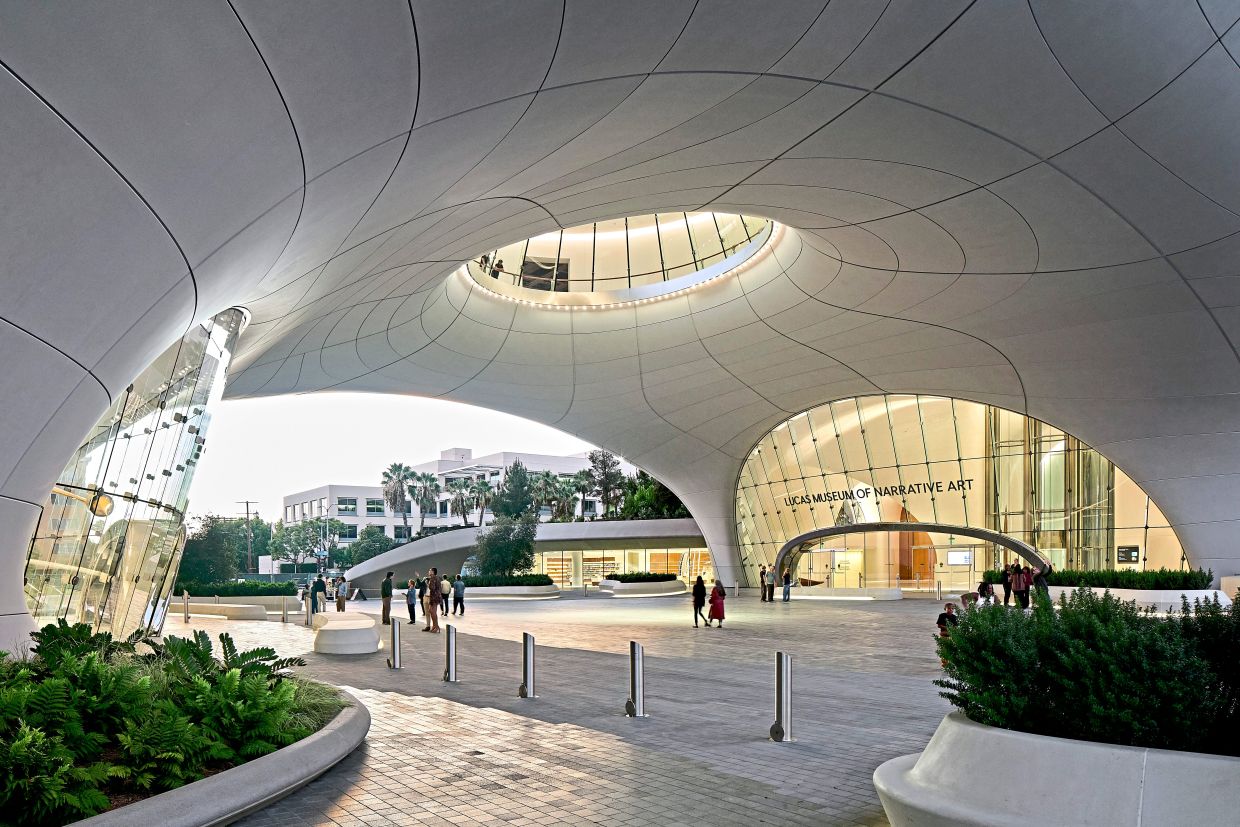
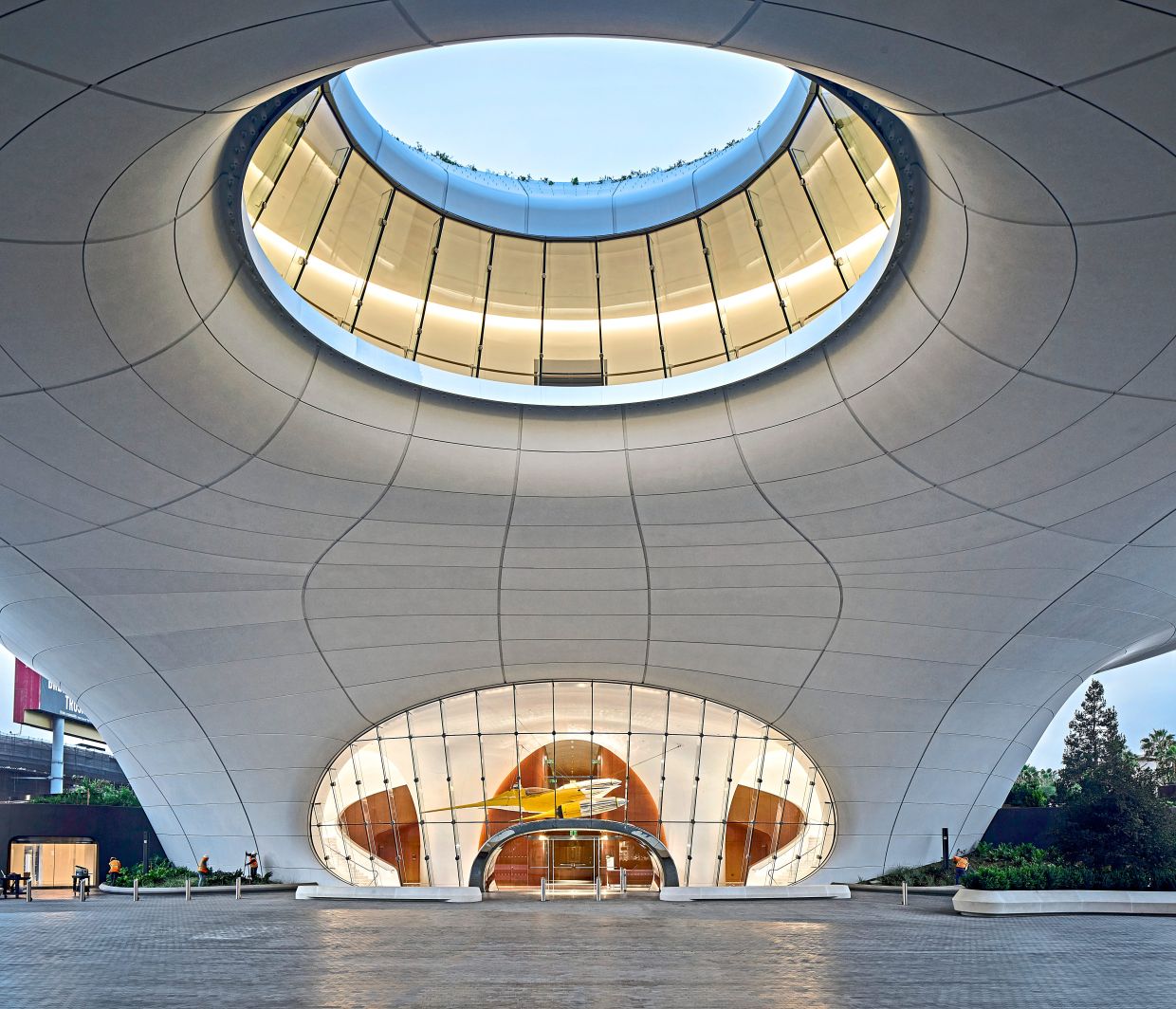
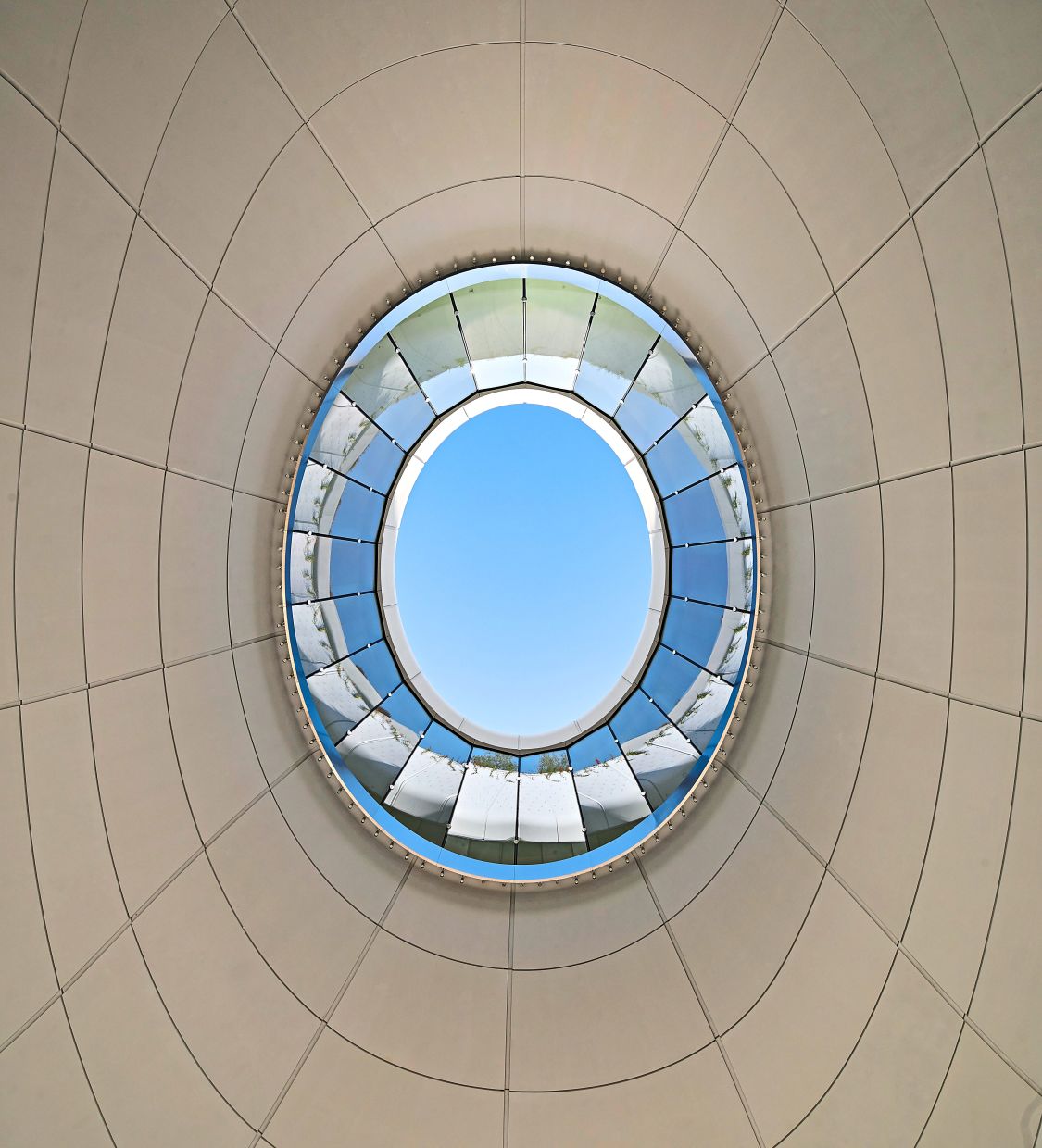
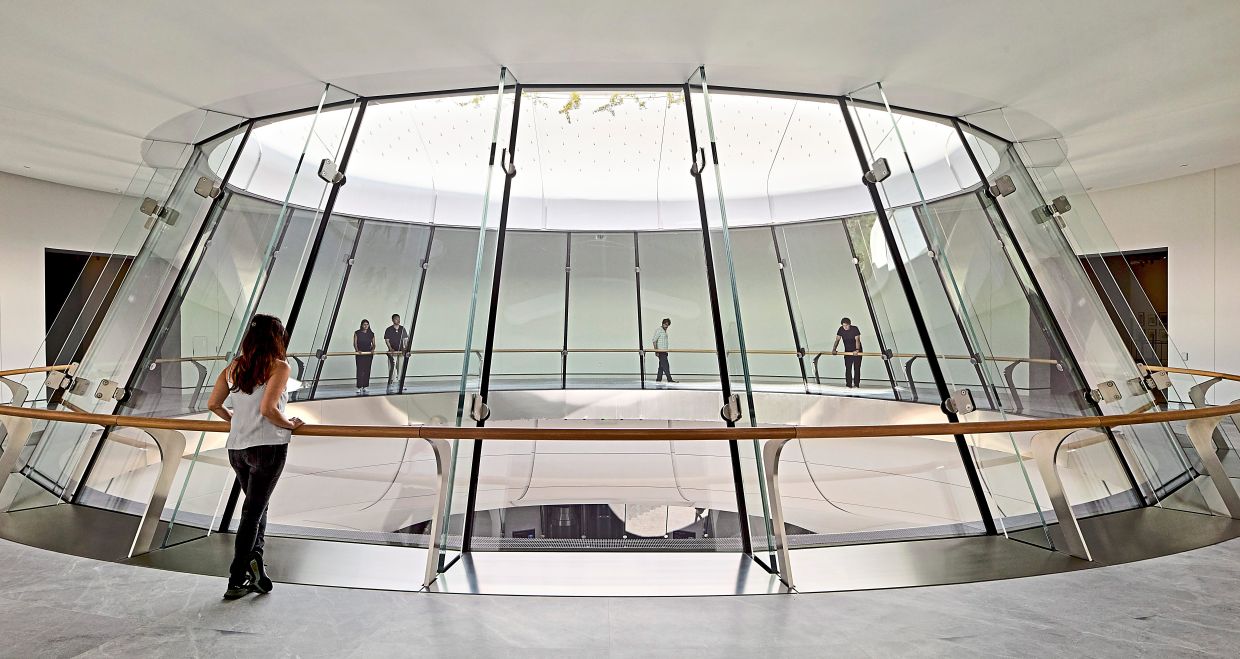
The building is raised above the ground, creating a covered public space beneath it. At its heart, an elliptical opening called the Oculus frames the sky, drawing natural light into the central courtyard.
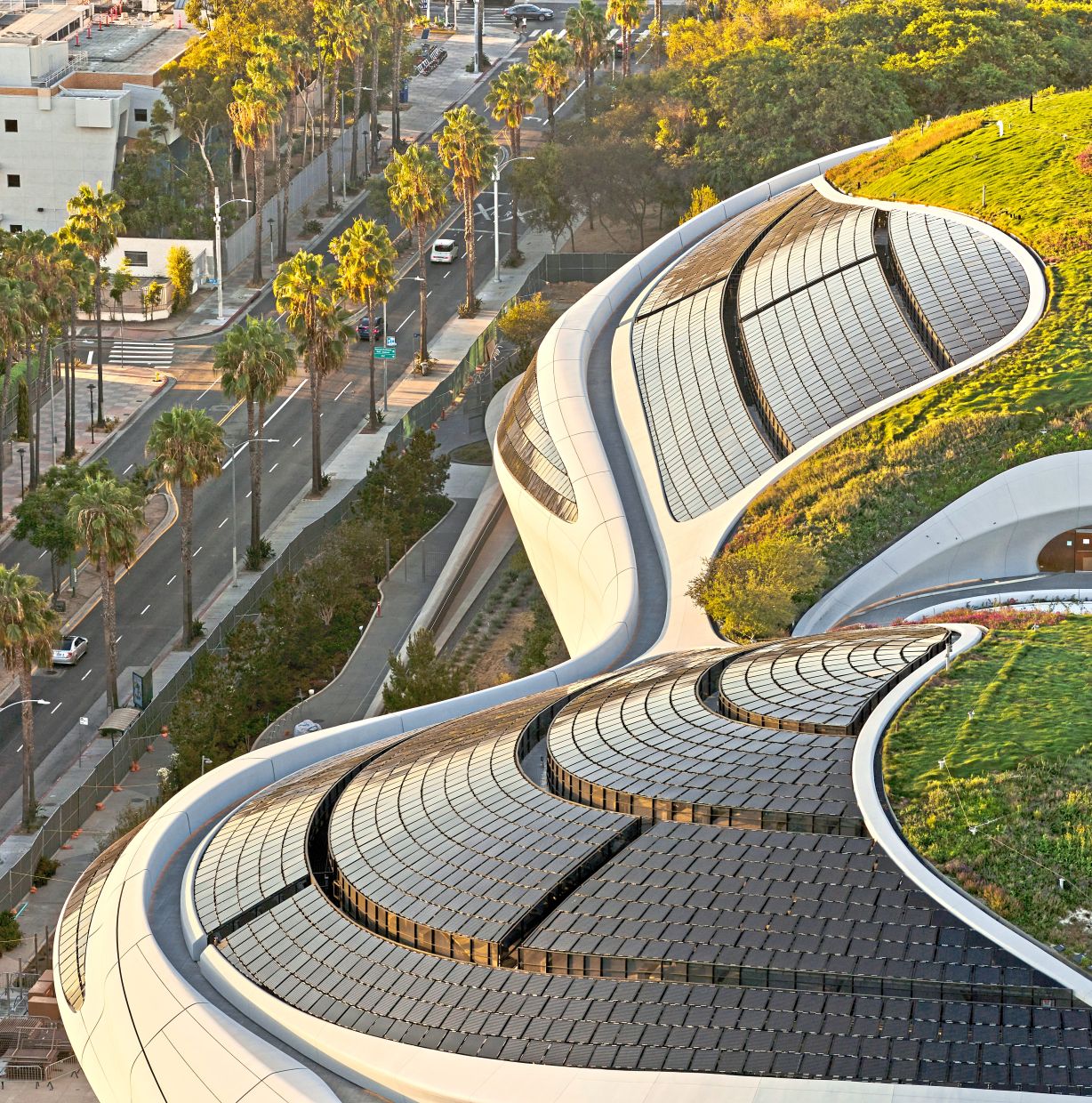
Sustainability is incorporated into the landscape too. Rainwater is captured for irrigation, a fountain contributes to cooling, and rooftop solar panels provide clean energy.
"If a museum wants to give people the room to dream, the first thing it must give back is the ground," Ma says.
"And everything beneath it belongs to the people of Los Angeles: the plaza, the shade, the park with hundreds of trees, the paths that let you wander in from any direction."
The landscape and public spaces are integral to his vision, rather than merely being a backdrop to the architecture. By allowing visitors to approach from different directions, Ma hopes the museum will feel more like a place for people to gather than a sealed monument.
The campus offers shaded areas and green spaces for the surrounding community, while the building's public facilities extend the experience beyond its galleries.
For Ma, this connection between architecture and everyday life is essential.
Growing up in old Beijing, surrounded by courtyards and gardens, shaped his understanding of the natural world. He believes cities can accommodate the demands of modern life without losing their connection to nature.
"Shanshui is an emotion," he shares.
This philosophy also forms his view of architecture as something more than a functional structure.
"I often compare a building to a body with skin, bones and systems that keep it alive; a building has walls, structure and light. But a functional body is only interesting when it carries a soul."
For Ma, that soul emerges when people bring their own memories and experiences into a place, finding reasons to return long after their first visit.
He sees the need for such spaces in contemporary cities, where development can prioritise economic growth and efficiency over human experience.
Asked what cities are missing, he gives a one-word answer: dreams.
"When a city is driven only by economics and power, its towers become monuments to capital and authority – and monuments like that have nothing to do with human beings," he says.
His other projects, including the Harbin Opera House in China and the Absolute Towers in Canada, similarly explore how architecture can respond to landscapes and human emotions.
"When I was young, I wanted to be different. Now I want to move people," he says.
The museum also reflects Ma's belief that storytelling can bring people together across cultures. His work draws on Eastern philosophy and Western architectural education, alongside contemporary art, cinema and science fiction.
He sees this exchange of perspectives as an opportunity to develop greater empathy.
That outlook informs his interest in Malaysia, where the coexistence of Malay, Chinese, Indian and Indigenous cultures offers fertile ground for architectural exploration. He is currently working on a project in the country and hopes to respond to its cultural mix and tropical climate rather than import a design language from elsewhere.
"Creating something new matters more than guarding origins," he says.
The Lucas Museum, meanwhile, represents the culmination of a long creative partnership. For Ma, sustaining the original vision through years of planning and construction required patience and determination.
"A building takes ten years and ten thousand decisions, and every decision is a chance for the dream to be negotiated away," he says.
"My job is to keep the feeling of the first sketch alive until opening day."
Ultimately, the museum aims to offer more than a place to view art. By bringing visual storytelling into conversation with architecture and nature, Ma hopes it will encourage visitors to imagine possibilities beyond the world as it is.
"The story I hope it tells is simple – everybody can dream," he says.
Built for dreams
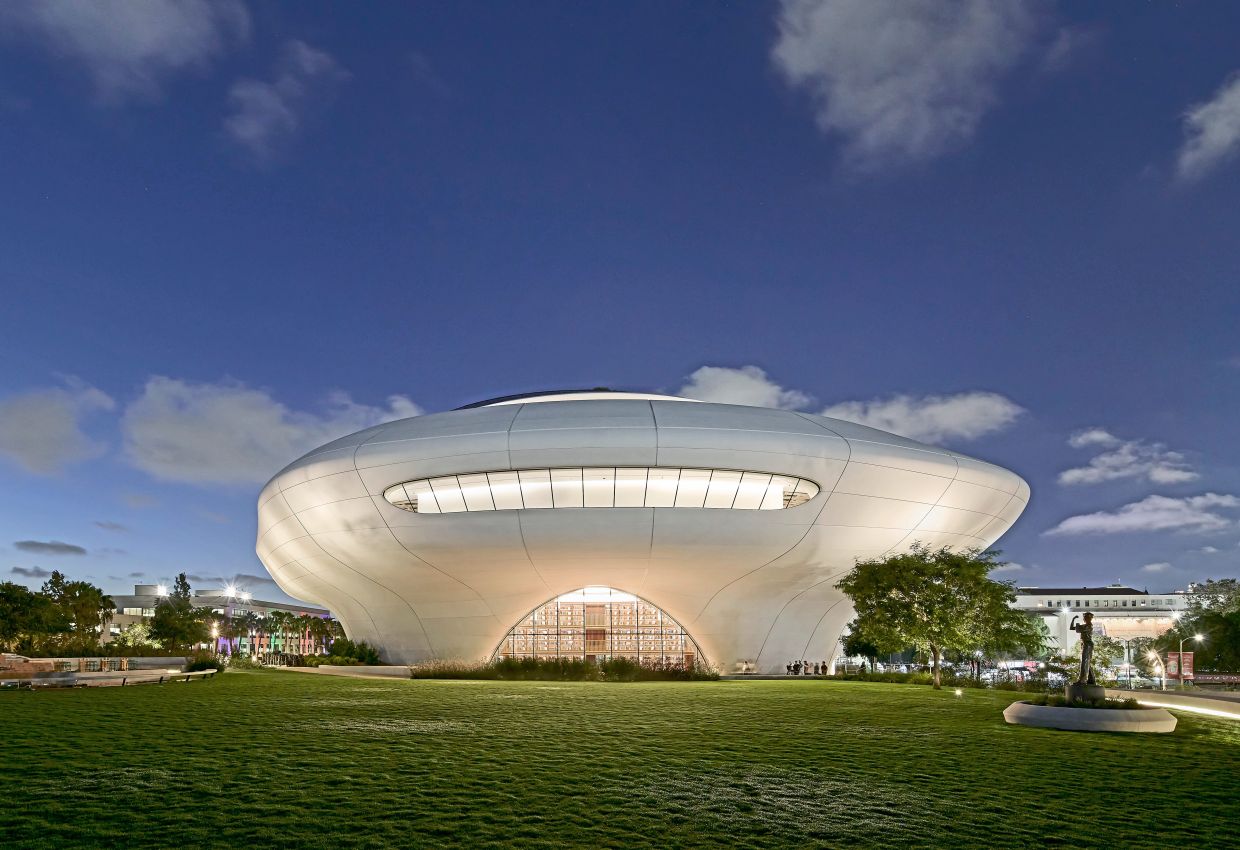
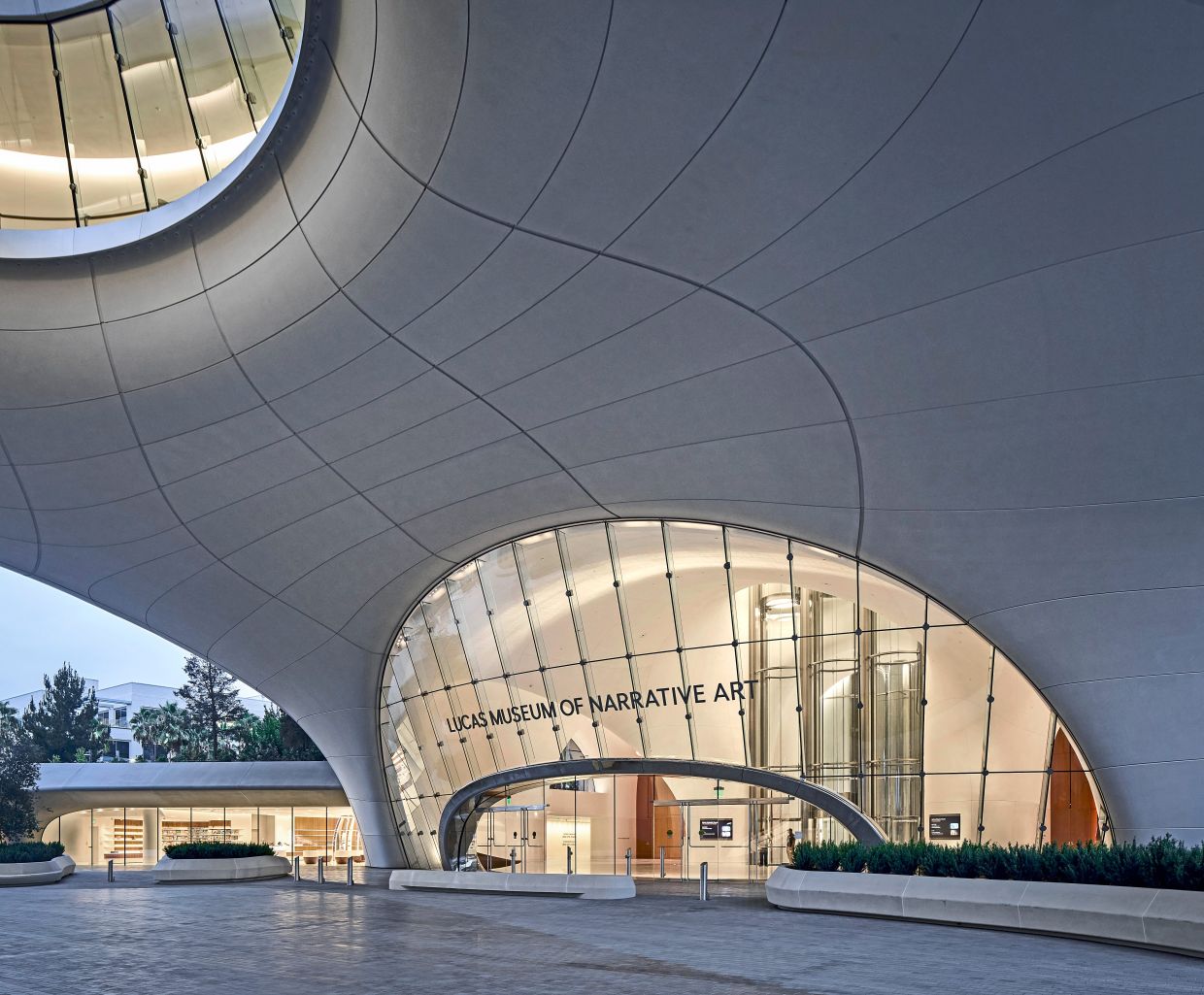
An exterior night view of the museum, which resembles a giant space ship.
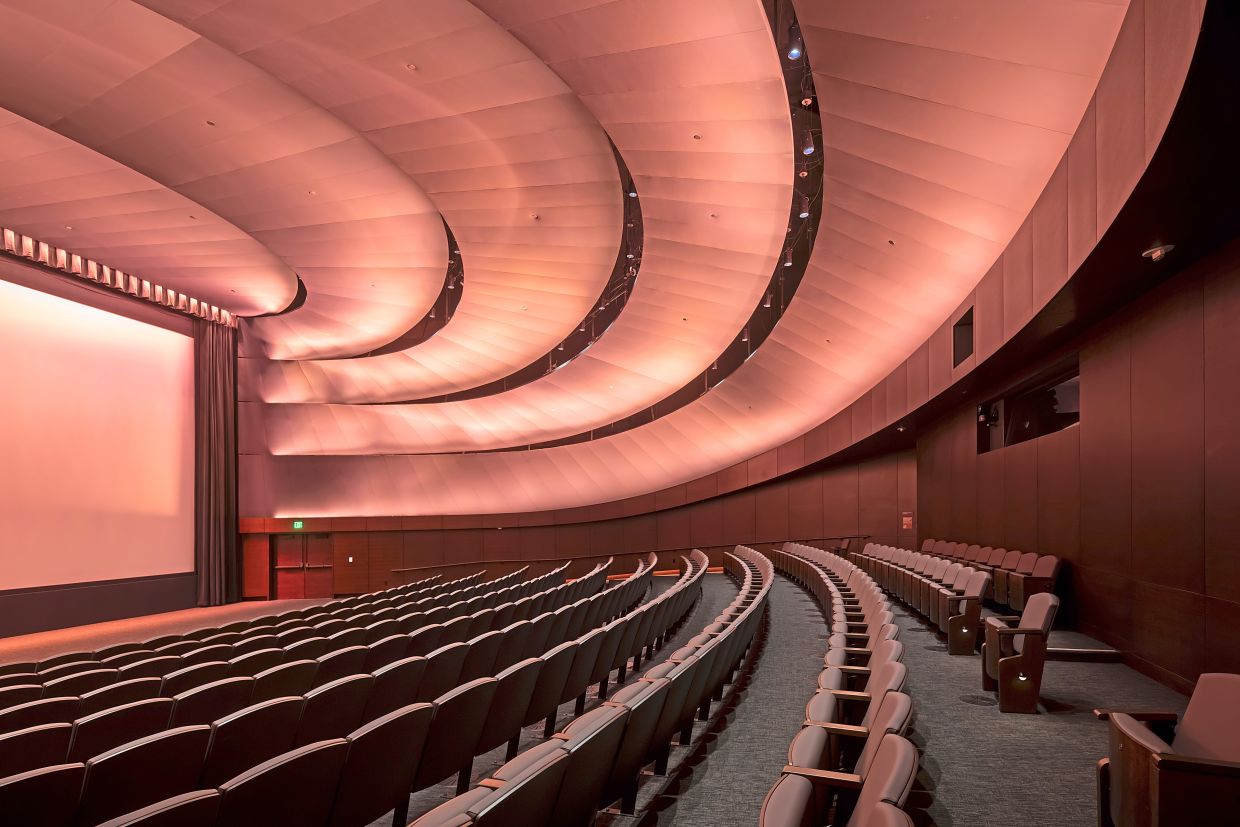
The Lucas Museum's Robert Flaherty Theater features documentaries, visual storytelling history, digital cinema and profiles of artists in the museum.
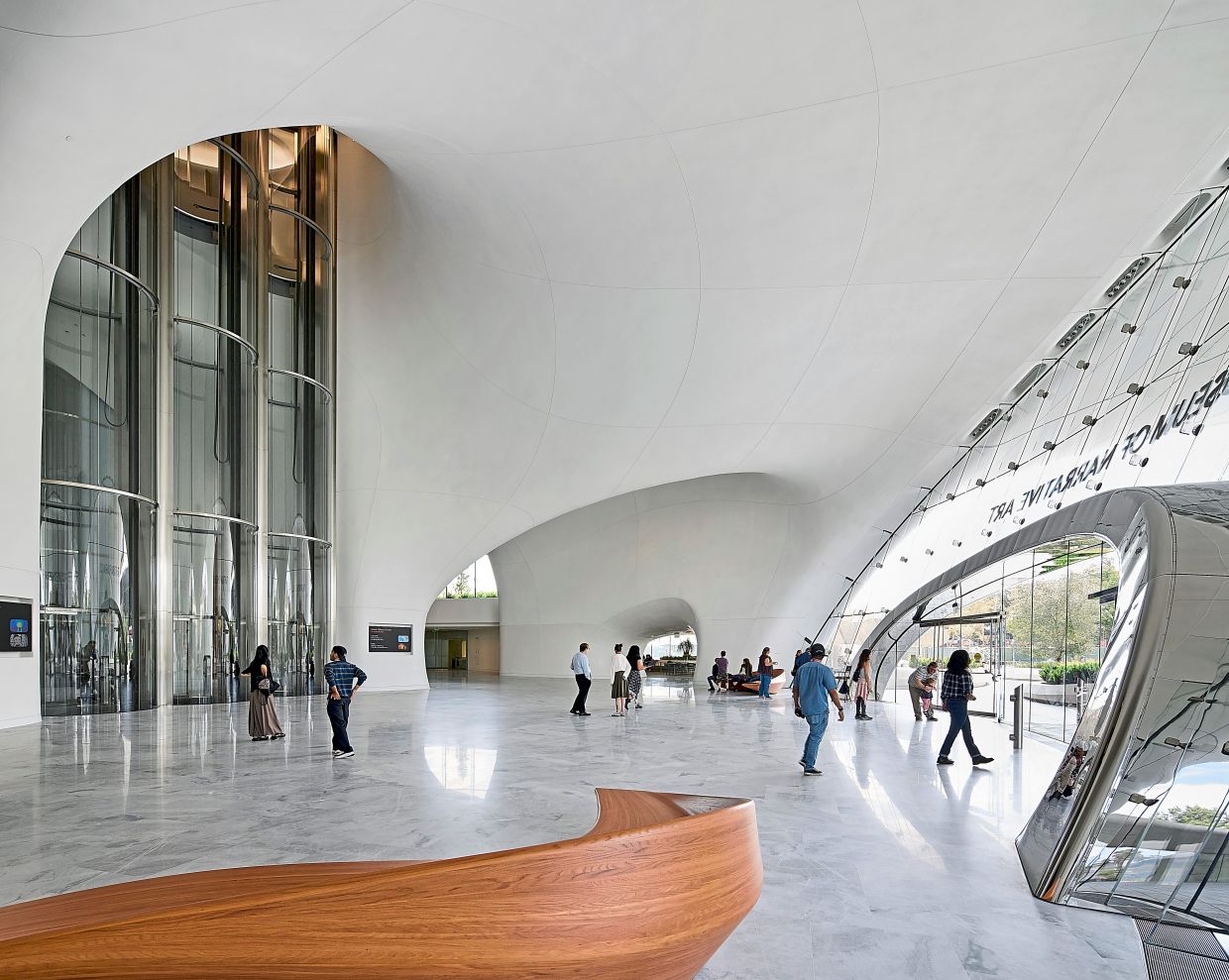
A view of the campus and parkland from the interior of the Lucas Museum.
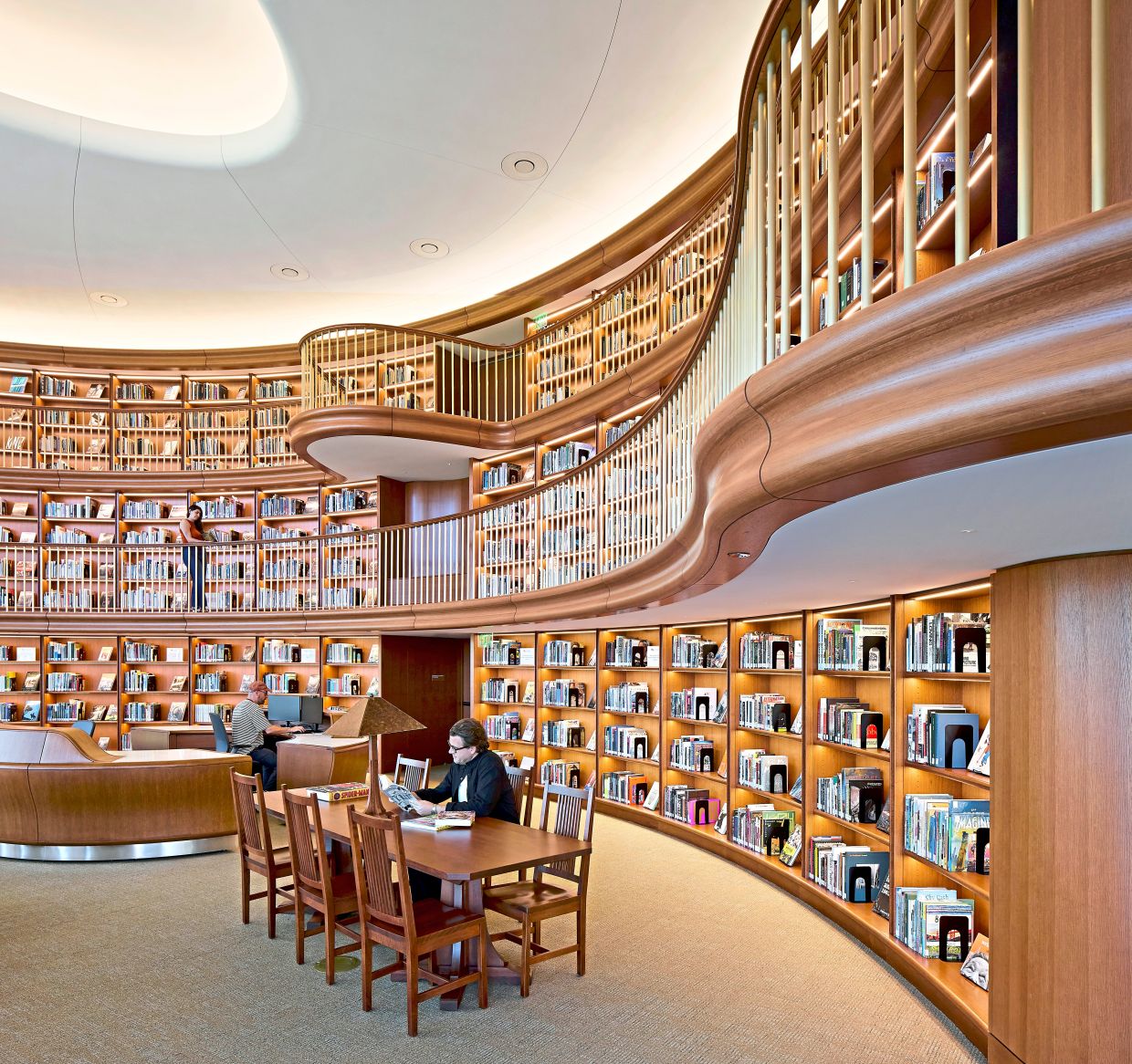
The Lucas Museum's library, with its curved luxurious wood-panelled surroundings, offers visitors a quiet space to research narrative art.
The curved futuristic exterior of the Lucas Museum.
The museum's futuristic architecture stands out amidst LA's skyscrapers.
The Oculus, a massive, central elliptical opening four storeys above the public plaza, serves as a key spatial and visual centerpiece.
The Lucas Plaza located below the Oculus.
The Lucas Museum spans five storeys and boasts 100,000sq ft (9,290sq m) of gallery space.
The Oculus, with a massive 90ft (27.4m) diameter, hovers four storeys above the open-air plaza.
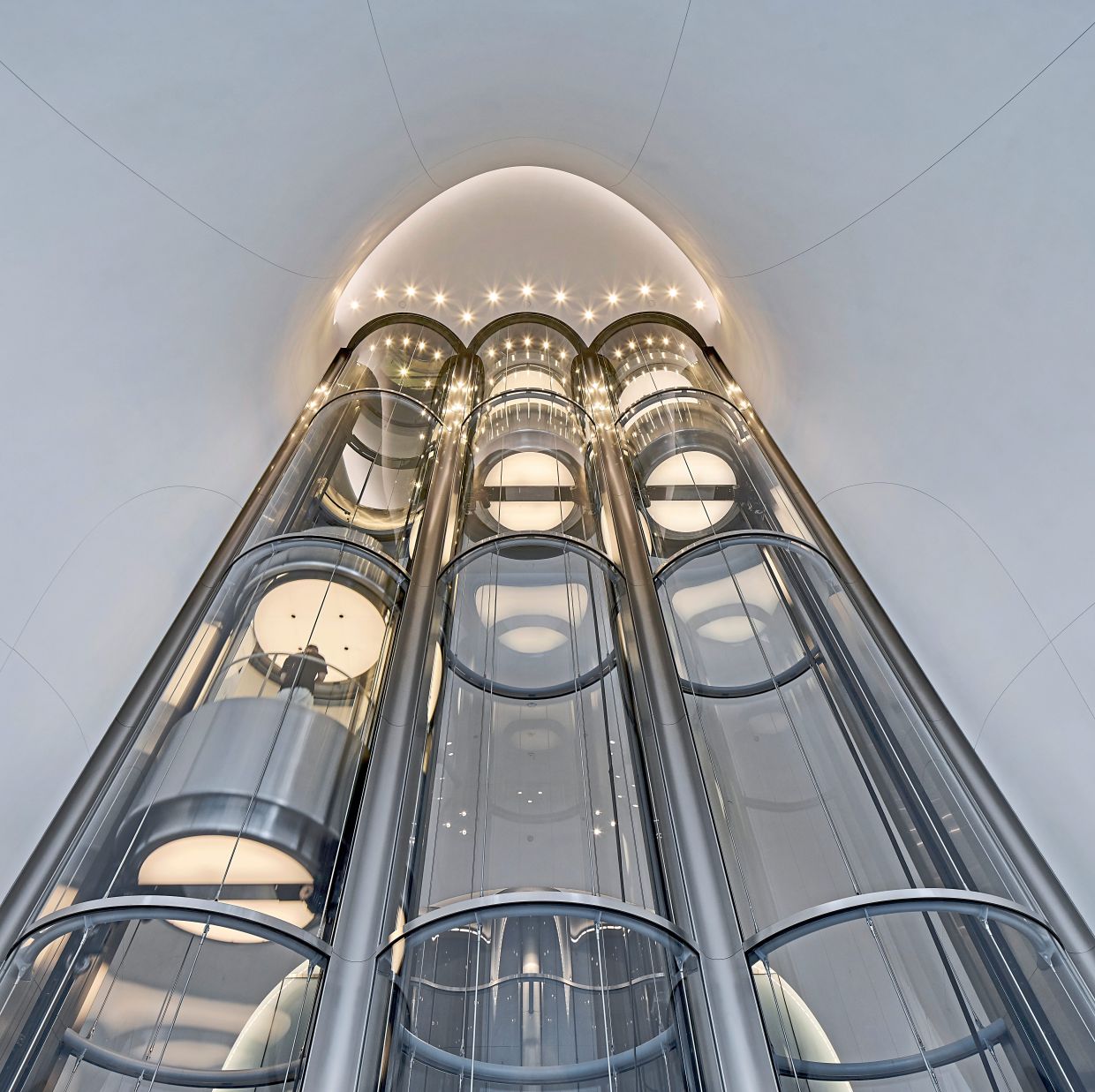
Cylindrical glass elevators transport visitors up and down the different levels of the museum.
Lucas Plaza, the central semi-enclosed public courtyard located beneath the main structure of the Lucas Museum.
Curved glass railings enclose the perimeter, preserving unobstructed views.
A building is not an object you look at – it's a story you walk through, says Ma. Photo: MAD Architects