
After Patrick De Maeseneire and Betty Evenepoel bought a small apartment on Ibiza, they gave their architect one clear directive for the renovation: “Bring in light,” De Maeseneire said.
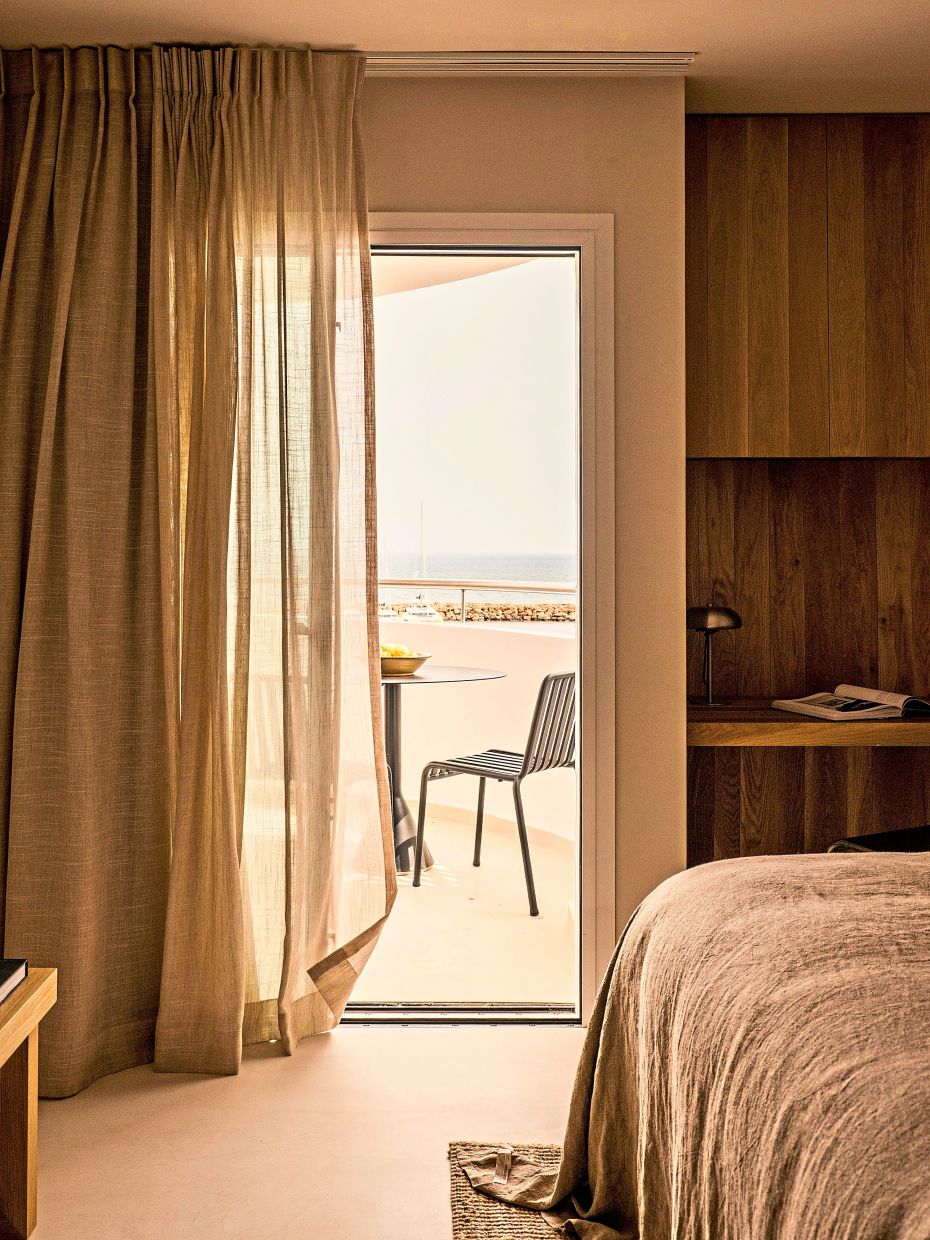
That’s because the 990sq ft (92sq m), two-bedroom unit in Santa Eularia des Riu was surprisingly dark despite having windows that looked directly onto the Mediterranean Sea.
“Small rooms, a cramped layout, dark colours and dark floors throughout” were among the problems, said De Maeseneire, the CEO of Colosseum Dental Group and the chair of Barry Callebaut, a chocolate company. “It felt closed in, not at all connected to the light and the sea that make Ibiza what it is.”
For some 40 years, De Maeseneire, 68, and his wife, Evenepoel, 67, who live in Switzerland, have considered Spain’s Balearic island one of their favourite vacation spots. They have embraced it all: the rugged natural beauty and the thumping electronic music scene.
A few years ago, however, prices at their favourite hotels skyrocketed to more than US$1,000 (RM4,082) per night on some occasions. At the same time, De Maeseneire began considering retirement. With the possibility of more, and extended, stays on Ibiza in their future, they decided to buy an apartment.
“At a certain point, Betty and I agreed it was time to have a small place to come home to, with nothing more than carry-on luggage,” De Maeseneire said.
Even though the apartment was dark, they liked its location, near the water in a pedestrian- friendly area, and saw its potential. They bought the unit for a little less than €900,000 euros (RM4.1mil) in 2023 and hired Studio Go Ibiza, a firm founded by Belgian-born architect Sam De Ridder, to transform it.
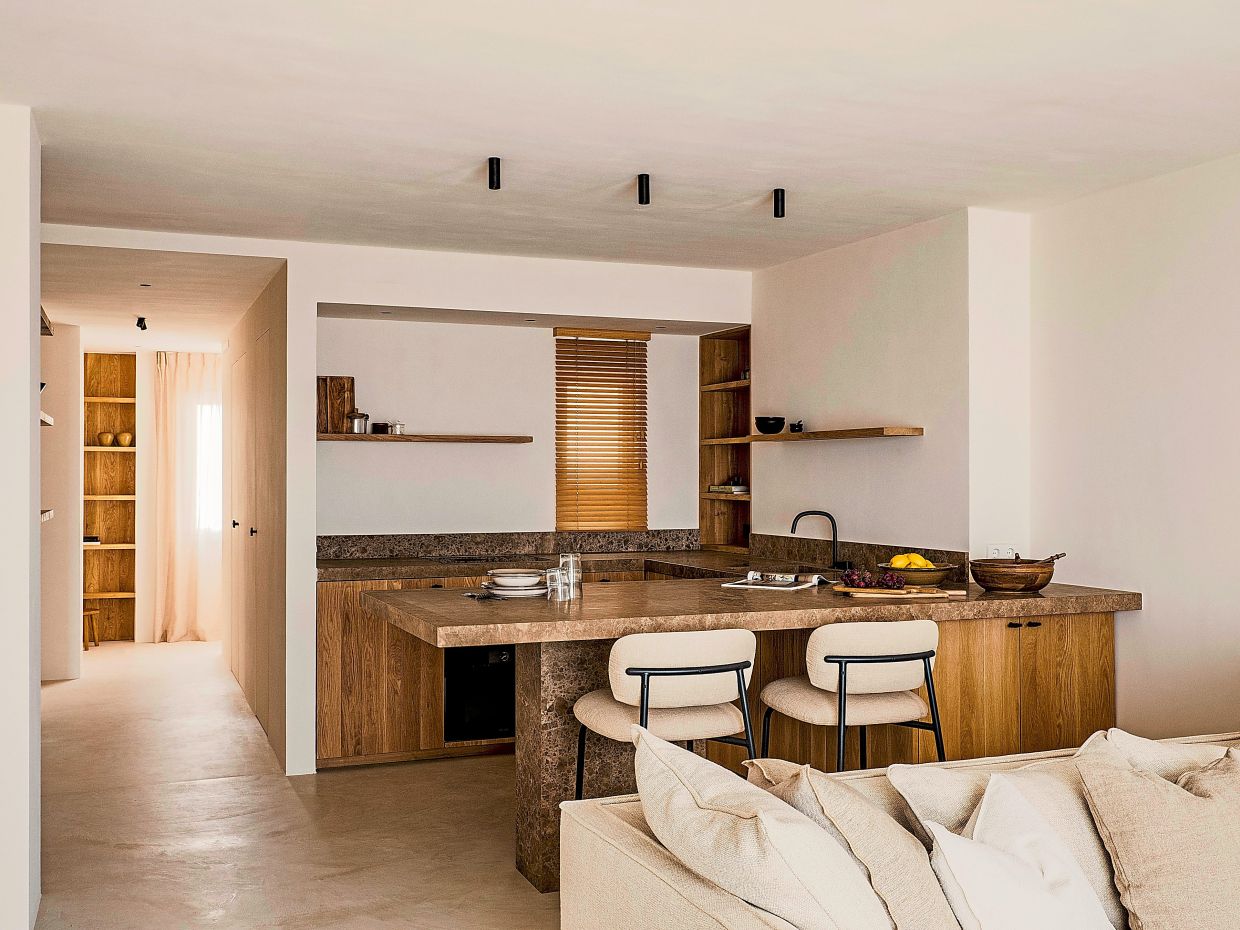
By reconfiguring the floor plan, De Ridder said, “we completely changed the openness” of the apartment. That overhaul included demolishing walls that had separated the kitchen from the rest of the living space and straightening a hallway that zigzagged through the unit.
“I really wanted to make it so that from every point in the flat you could see the Mediterranean,” De Ridder said. “Because, psychologically, if you see the sea, it feels bigger. Your eye goes deeper.”
That’s why he built a large peninsula between the kitchen and the living room, which he equipped with counter stools, as the apartment’s main dining area.
“It allows you to have a look at the Mediterranean because you’re sitting a little bit higher” compared with a dining chair, he said.
De Ridder also knew that De Maeseneire and Evenepoel would dine out most nights, but he envisioned the peninsula as an ideal place for casual breakfasts and late afternoon grazing.
“It’s part of the Mediterranean culture to have tapas,” he said.
Aiming to make the apartment feel larger than it is, De Ridder set out to make different rooms visually blend together.
“We used three systems, or tricks, to make it look like one big space,” he said.
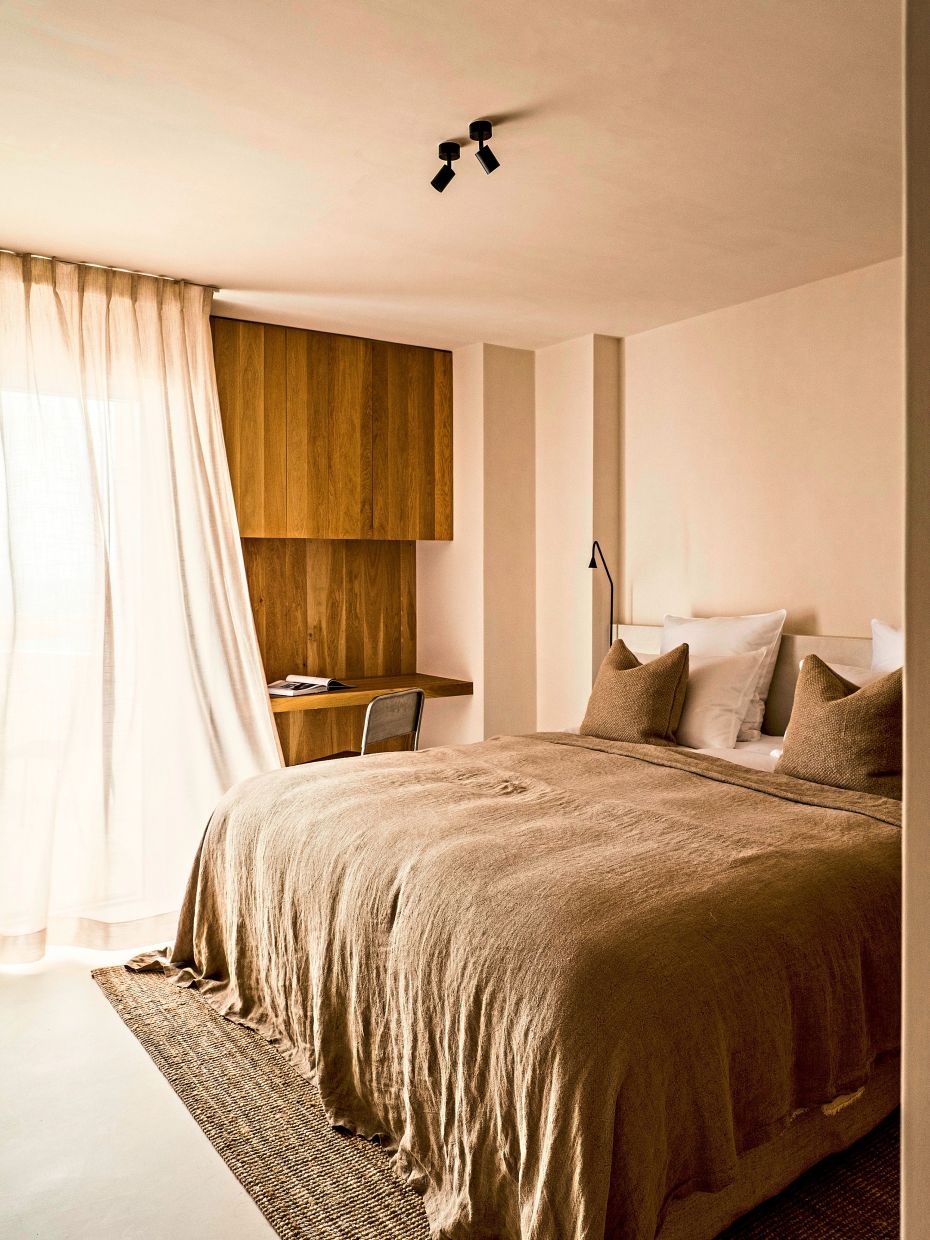
This included employing a limited palette of materials with similar colours; integrating doors to storage rooms and closets into walls without visible hinges or trim; and using lighting to help define different functional zones within the open space.
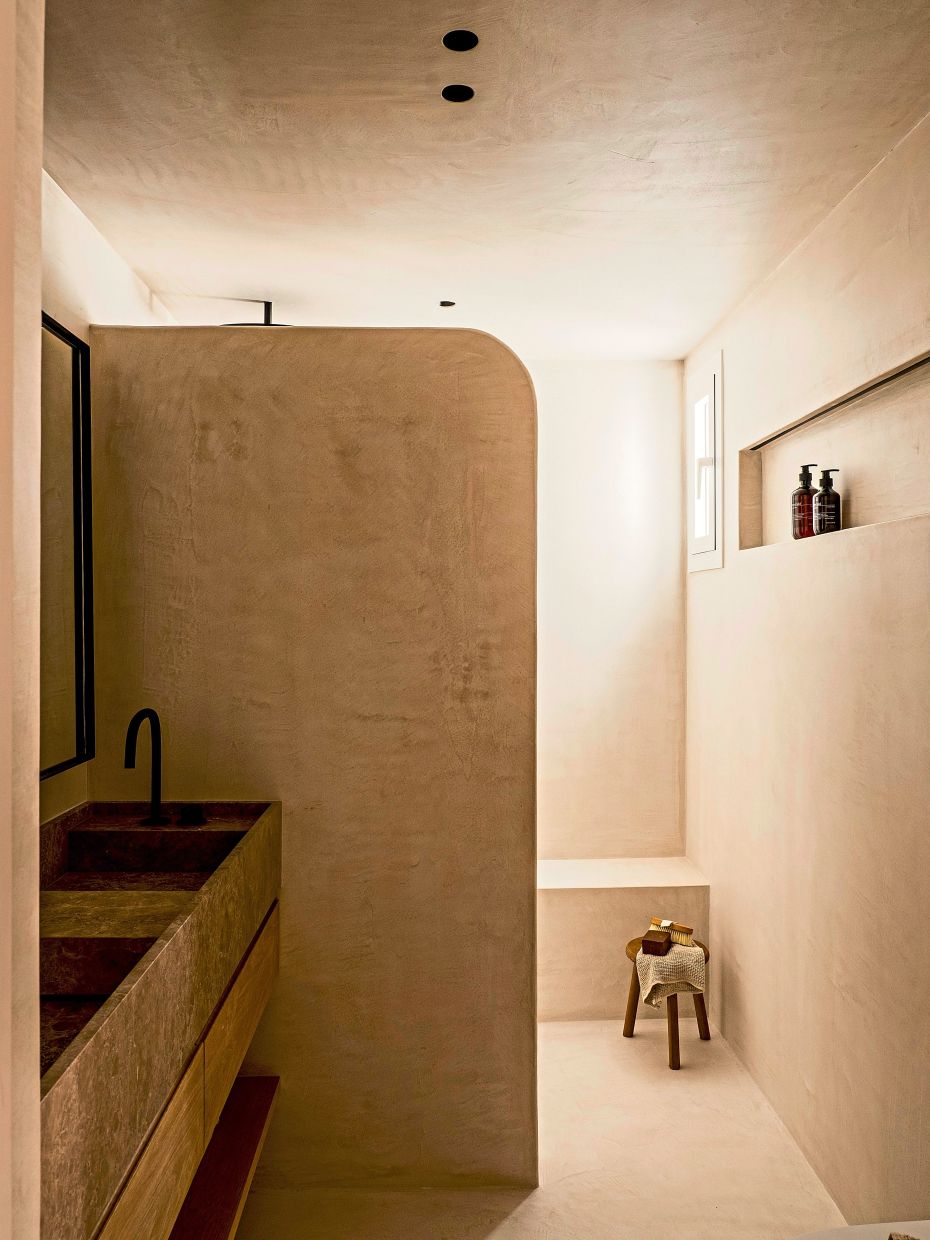
The floors are coated in warm white Mortex microcement, which provides a continuous hard-wearing surface.
The walls and ceilings are finished in Keim mineral paint of a similar hue. Gauzy Belgian linen blinds and curtains cover the windows.
Throughout the home, built-in cabinets and shelves are made from reclaimed Venetian oak, and kitchen counters and bathroom vanities are made from a single type of sandy-coloured marble.
With these changes, natural light now dances through the apartment.
“You have not just the direct sunlight, but also the sunlight reflecting off the water that touches the ceiling,” De Ridder said. “Even in the evening, there’s a golden glow.”
While the apartment previously seemed cramped and dark, it now appears fresh and airy, especially when windows and doors are open to the unit’s sea-facing balcony.
The renovation took about a year to complete at a cost of about €250,000 euros (RM1.1mil). De Maeseneire and Evenepoel began enjoying their reimagined home last summer.
They still like the energy of the island’s electronic music clubs, De Maeseneire said, but they appreciate the calm, quiet moments just as much, including days when they host their two grandchildren in their new home away from home.
“It’s a genuine retreat,” De Maeseneire said, noting that having a place of their own makes them feel more connected to Ibiza.
“The love for the island is intact,” he said. “If anything, owning a home there has deepened it.” – ©2026 The New York Times Company